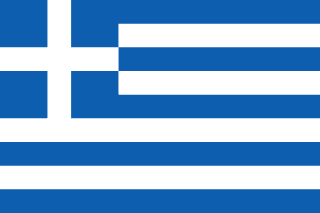
Greece
Hellenic Republic
Population: UN WPP 2024, revision 1, projection for 1 July 2026. Sources and methodology.
Geography and territory
Greece occupies the southeastern tip of Europe, at the foot of the Balkan Peninsula, forming a natural bridge among Europe, Asia, and Africa. Covering 131,957 square kilometers and home to about 9.9 million people, it borders Albania, North Macedonia, and Bulgaria to the north and Turkey to the northeast. Three seas frame the country: the Ionian to the west, the Aegean to the east, and the Mediterranean to the south, giving Greece one of the longest coastlines in Europe, stretching more than 13,600 kilometers.
The Greek mainland is overwhelmingly mountainous, with the Pindus range running like a spine through the country and Mount Olympus, home of the gods in Greek mythology, standing as its highest point at 2,917 meters. Flat, arable land is scarce and concentrated mainly in Thessaly, Macedonia, and Thrace. The Peloponnese peninsula, tethered to the mainland by the narrow Isthmus of Corinth and cut through by an artificial canal since 1893, holds outsized historical importance.
Greece counts roughly 6,000 islands and islets, of which only about 227 are inhabited. The major island groups include the Cyclades, the Dodecanese, the Ionian Islands, the Eastern Aegean Islands, and the Sporades. Crete, the largest of the Greek islands, ranks as the fifth largest in the entire Mediterranean. The climate along the coasts and islands is classically Mediterranean, with hot, dry summers and mild winters, while the mountainous interior turns more continental, complete with winter snow.
History
Greece is the cradle of Western civilization. The Minoan civilization on Crete (2700–1450 BC) and the Mycenaean civilization (1600–1100 BC) were among Europe’s earliest great civilizations. After a dark age, the Greek city-states, or poleis, began to flourish from the eighth century BC onward. Athens gave rise to democracy, philosophy, theater, and much of Western scientific thought, while Sparta became renowned as a military power.
The fifth century BC marked the Golden Age of Athens, when figures such as Pericles, Socrates, Plato, Herodotus, Sophocles, and Phidias produced works and ideas that remain foundational to civilization today. The Greco-Persian Wars, in which the Greeks turned back the vast Persian Empire in legendary battles at Marathon, Thermopylae, and Salamis, became enduring symbols of resistance. In the fourth century BC, Alexander the Great, king of Macedon, built the largest empire the ancient world had seen, spreading Hellenic culture from Egypt to India.
After centuries of Roman and then Byzantine rule, the latter with its capital at Constantinople and thoroughly Greek in language and culture, Greece fell under Ottoman control in the fifteenth century, a domination that would last nearly four hundred years. The Greek War of Independence (1821–1829), backed by European powers and by the wider Philhellenic movement (Lord Byron famously died fighting for the Greek cause), restored Greek sovereignty. The twentieth century brought war, Nazi occupation, civil conflict, and a military dictatorship (1967–1974). Greece joined the European Economic Community in 1981.
Culture and society
Greece’s contribution to world culture is immeasurable. Western philosophy was born there with Socrates, Plato, and Aristotle. Democracy, historical writing, tragic and comic theater, the Olympic Games, Euclidean geometry, Hippocratic medicine, and rhetoric are all Greek legacies that endure today. The Greek alphabet gave rise to both the Latin and Cyrillic scripts, and the scientific and philosophical vocabulary of virtually every European language owes a deep debt to Greek.
Modern Greece keeps a rich and vibrant culture alive. Greek music ranges from rebetiko, an urban folk style born in the 1920s, to contemporary sounds, passing through the celebrated compositions of Mikis Theodorakis and Manos Hadjidakis, an Academy Award winner. Modern Greek poetry claims two Nobel laureates in Literature, Giorgos Seferis in 1963 and Odysseas Elytis in 1979. Greek cinema, led by directors such as Theo Angelopoulos and Yorgos Lanthimos, enjoys wide international acclaim.
Greek society places family at its center, alongside a deep tradition of hospitality known as filoxenia, literally “love of the stranger,” and an active street and café culture. The Greek Orthodox Church holds significant cultural and social weight, and religious holidays, especially Orthodox Easter, the most important celebration of the year, even outranking Christmas, set the rhythm of the social calendar. Greek nightlife is famous in its own right, with tavernas, bars, and clubs that stay lively well into the early hours.
Economy
The Greek economy rests primarily on the services sector, which accounts for roughly 80 percent of national output. Tourism is the standout pillar: Greece welcomes more than 30 million international visitors each year, drawn by its beaches, archaeological heritage, islands, and cuisine. Tourism, directly and indirectly, generates close to a fifth of the country’s GDP.
The Greek merchant marine is one of the largest in the world, controlling roughly a fifth of the global commercial fleet and dominating segments such as tanker and bulk-carrier shipping, a legacy of the country’s long maritime tradition and its thousands of islands. Shipping remains a strategic industry that generates substantial employment and revenue, much of it earned abroad and repatriated to the Greek economy. Agriculture, though diminished in relative importance compared with past decades, still matters: Greece ranks among the world’s leading producers of olive oil, olives, cotton, tobacco, pistachios, and horticultural products, while fishing and aquaculture add further contributions to both domestic consumption and export earnings.
Greece endured a severe financial crisis beginning in 2009 that led to international bailouts, austerity measures, and a deep recession. In the years since, the country has shown meaningful signs of recovery, with GDP growth, falling unemployment, and improved public finances. A growing technology and startup scene in Athens, together with investment in renewable energy and sustainable tourism, points toward the economic diversification the country still needs.
Food and cuisine
Greek cuisine is among the oldest and healthiest in the world, built on the foundations of the Mediterranean diet. Olive oil is the essential ingredient: Greece is the world’s third-largest producer and has the highest per capita olive oil consumption on the planet. Tomatoes, cucumbers, onions, peppers, eggplants, zucchini, legumes, aromatic herbs such as oregano and thyme, and feta cheese, protected by designation of origin, form the backbone of a flavorful kitchen.
Greek salad (horiatiki), tzatziki (yogurt with cucumber and garlic), moussaka (a layered eggplant and ground meat bake topped with béchamel), souvlaki (grilled meat skewers), gyros, dolmades (stuffed grape leaves), and spanakopita (spinach and feta pie) are staples found in every taverna in the country. Meze, small shared plates, amount to an entire culinary and social culture of their own.
Greek desserts carry a distinctly Eastern-influenced sweetness: baklava (layered pastry with nuts and honey), loukoumades (honey-soaked doughnuts), galaktoboureko (custard-filled pastry), and kataifi are all irresistible. Thick, creamy Greek yogurt has become a globally famous product in its own right. Greek wines, made from native varieties such as Assyrtiko from Santorini and Agiorgitiko from Nemea, are enjoying a genuine renaissance. Ouzo, the anise-flavored spirit, and tsipouro round out the national roster of drinks that accompany meals.
Tourism and landmarks
Greece packs more archaeological sites per square kilometer than perhaps any other country on Earth. Athens is the natural starting point, home to the Acropolis and the Parthenon, the pinnacle of classical art, along with the Temple of Olympian Zeus, the ancient Agora, the Plaka neighborhood, and the Acropolis Museum. Cape Sounion, with its Temple of Poseidon perched on cliffs above the Aegean, offers one of the most spectacular sunsets in the Mediterranean.
The Greek islands are a dream destination the world over. Santorini, with its whitewashed houses and blue domes overlooking a volcanic caldera, is one of the most iconic images of the Mediterranean. Mykonos combines cosmopolitan flair and nightlife with idyllic beaches. Crete offers the Palace of Knossos, cradle of Minoan civilization, dramatic gorges such as Samaria, and crystalline beaches. Rhodes, Corfu, Naxos, Paros, and Zakynthos, home of the famous Navagio, or Shipwreck Beach, are equally captivating.
On the mainland, Delphi, seat of the famed Oracle of Apollo, Olympia, birthplace of the Olympic Games, Mycenae, with its Lion Gate, and Epidaurus, with its acoustically perfect ancient theater, are essential visits. The monasteries of Meteora, perched atop towering rock pillars, and Mount Athos, an autonomous monastic republic, embody Orthodox spirituality. Thessaloniki, the country’s second city, offers Byzantine walls, the White Tower, and a lively cultural and food scene. Greece counts 18 UNESCO World Heritage Sites in all.
Fun facts about Greece
- The first Olympic Games were held at Olympia in 776 BC and continued every four years for more than a thousand years until Roman Emperor Theodosius banned them in 393 AD.
- Greece has more than 6,000 islands, but only around 227 are permanently inhabited.
- The Greek alphabet, developed around 800 BC, was the first to include vowels and is the direct ancestor of both the Latin and Cyrillic alphabets.
- The English phrase “to take the bull by the horns” traces back to the Greek myth of Heracles and the Cretan bull.
- Greece is the world’s third-largest producer of olive oil, and some of its olive trees are more than 2,000 years old and still bear fruit.
Greece in numbers
Latest World Bank and UNDP observations, each with its own year. “World median” is the middle value among the countries that report the same indicator; “#” ranks from the highest value.
Population since 1960
Greece had 8.3 million people in 1960 and 10.4 million in 2025 — 25% more.
The population peaked at 11.1 million in 2010 and has since declined.
People
79.2% of people live in towns and cities (world median 63.4%). 12.9% are under 15 and 24.4% are 65 or older — one of the oldest age structures in the world. Women have 1.24 children on average, below the replacement level of about 2.1 needed to keep a population stable in the long run without migration.
Economy
The economy grew by 2.1% in real terms in 2025. Consumer prices rose by 2.5% in 2025. Services make up the largest share of output (67.4% of GDP); agriculture contributes 3.6%.
Development and environment
UNDP rates human development in Greece as very high, with an index of 0.908 in 2023 (rank 34 of 193). 86.3% of people use the internet and 100.0% have access to electricity. Forest covers 36.9% of the land (world median 32.8%).
Sources: World Bank, World Development Indicators (CC BY 4.0), most recent observation from 2015 onward; UNDP Human Development Report 2025. Retrieved 2026-10-10. Sector shares need not add up to 100% because taxes and subsidies on products are excluded. Missing values are left blank rather than estimated. Sources and methodology.
Climate of Greece
Averaged across Greece, the warmest month is August (24.2 °C) and the coolest is January (5.1 °C), a seasonal swing of 19.1 °C. The annual mean is 14.3 °C.
About 679 mm of precipitation falls in a typical year. December is the wettest month (99 mm) and August the driest (20 mm). The wettest stretch is November to January, with 40% of the year's total.
Show monthly values as a table
| Month | Mean °C | Low °C | High °C | Precipitation, mm |
|---|---|---|---|---|
| January | 5.1 | 1.5 | 8.7 | 85 |
| February | 6.2 | 2.3 | 10.2 | 68 |
| March | 8.9 | 4.4 | 13.4 | 62 |
| April | 12.3 | 7.3 | 17.4 | 46 |
| May | 17.1 | 11.5 | 22.7 | 45 |
| June | 21.5 | 15.6 | 27.5 | 34 |
| July | 24.1 | 18.1 | 30.1 | 24 |
| August | 24.2 | 18.3 | 30.2 | 20 |
| September | 20.1 | 14.7 | 25.6 | 45 |
| October | 15.3 | 10.7 | 20.0 | 67 |
| November | 10.6 | 6.6 | 14.6 | 85 |
| December | 6.3 | 2.9 | 9.8 | 99 |
Figures are 1991–2020 averages across the whole land area of Greece, from the World Bank Climate Change Knowledge Portal, CRU TS 4.08 (CC BY 4.0). They are not readings from one weather station: the capital, the coast and high ground can be much warmer, cooler, wetter or drier.
Travel essentials for Greece
The practical details visitors ask about first. Traffic in Greece drives on the right, like most of the world. Mains electricity is 230 V at 50 Hz, so devices made only for 110–120 V (common in North America) need a converter unless they are dual-voltage — most phone and laptop chargers are.
- Emergency number
- 112
- Driving side
- Right
- Plug types
- Type C, Type FC: two round pins (Europlug); F: two round pins with side earth clips (Schuko)
- Voltage
- 230 V50 Hz
- Dialling code
- +30From abroad: your exit code, then 30 and the number
- Currency
- Euro (EUR)
- Time zone
- EET (UTC+2)Current local time in Greece
Compiled from IEC plug and voltage standards, national emergency-service listings and the UN road-traffic conventions. Emergency numbers and local coverage can change — confirm them locally on arrival. Greece's internet domain is .gr.
Where Greece ranks in the world
Each position counts only the countries with data in that ranking guide. First place is the highest value — for price levels, the most expensive. Select a card to see the full table.
- Population96th of 1969.9 millionUN projection, July 2026
- Land area95th of 195128,900 km²World Bank, 2023
- Population density104th of 19481 per km²World Bank, 2023
- GDP (nominal)52nd of 187$256.2BWorld Bank, 2024, current US$
- GDP per capita46th of 187$24,626World Bank, 2024, current US$
- Life expectancy32nd of 19481.8 yearsWorld Bank, 2024
- Price level33rd of 16571 (US = 100)ICP 2021, household consumption
Bordering countries of Greece


Compare Greece with another country
Frequently asked questions about Greece
What is the capital of Greece?
The capital of Greece is Athens.
What is the population of Greece?
The UN World Population Prospects projection for Greece is 9,897,115 people (9.9 million) on 1 July 2026. National statistical offices may publish different estimates.
What language is spoken in Greece?
The official language of Greece is Greek.
What currency is used in Greece?
The currency of Greece is the Euro (EUR).
How big is Greece?
Greece covers an area of 131,957 km².
What type of government does Greece have?
Greece is a parliamentary republic.
Which countries border Greece?
Greece shares land borders with Albania, North Macedonia, Bulgaria, Turkey.
What is the highest point in Greece?
The highest point in Greece is Mount Olympus (2,917 m).


