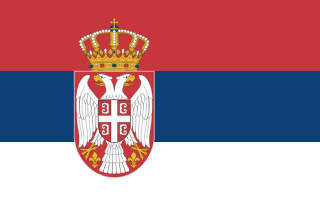
Serbia
Republic of Serbia
Population: UN WPP 2024, revision 1, projection for 1 July 2026. Sources and methodology.
Geography and territory
Serbia sits at the crossroads of Central and Southeast Europe, in the heart of the Balkan Peninsula. Landlocked but far from isolated, the country covers 77,474 square kilometers and is home to a population of about 6.6 million, making it one of the more populous nations of the western Balkans. It has long served as a natural corridor linking the continent’s east and west. Its landscape is defined by rivers: the Danube alone winds through nearly 600 kilometers of Serbian territory, and its meeting with the Sava River at Belgrade creates one of the most dramatic river confluences anywhere in Europe.
The country splits neatly into two geographic halves. To the north lies Vojvodina, a broad stretch of the Pannonian Plain prized for its rich soil and large-scale farming, making it one of the continent’s most productive agricultural regions. South of the Sava and Danube, the terrain rises into rugged hill country and mountains, with the Carpathians to the east and the Dinaric Alps to the southwest. Resort areas such as Kopaonik, Tara, and Zlatibor draw visitors year-round, offering skiing in winter and hiking amid forested peaks in summer.
Serbia’s climate is a moderate continental one, delivering warm, sometimes scorching summers and cold, snowy winters in the highlands. Rainfall is generally moderate and fairly evenly distributed through the year, supporting both the grain fields of the north and the orchards and vineyards that dot the hillier south. The country protects this natural variety through five national parks, the most spectacular of which is Djerdap, home to the Iron Gates gorge on the Danube—one of the largest and most striking river canyons in Europe, where limestone cliffs tower above the water on both the Serbian and Romanian banks.
Beyond its rivers and mountains, Serbia’s territory also includes vast tracts of forest, particularly across the central highlands, where oak and beech woodlands shelter deer, wild boar, and the occasional brown bear. Wetland reserves along the Danube, such as those near the town of Zasavica, provide refuge for otters and hundreds of migratory bird species, underscoring the ecological diversity packed into a relatively compact landlocked nation.
History
Serbian history is a story of medieval splendor, centuries of foreign rule, and repeated national rebirth. Slavic tribes settled the Balkans around the seventh century, gradually forming principalities that coalesced into a powerful medieval Serbian state. Under Emperor Stefan Dušan in the fourteenth century, that kingdom expanded across much of the Balkans and produced the Zakonik, one of the most sophisticated legal codes of medieval Europe.
The 1389 Battle of Kosovo opened nearly five centuries of Ottoman rule, a period that paradoxically strengthened rather than erased Serbian identity. Monasteries and epic oral poetry became the vessels through which language, faith, and memory survived. Uprisings in 1804 and 1815 slowly won back autonomy, and full independence was formally recognized at the 1878 Congress of Berlin.
The twentieth century brought upheaval on a grand scale. The 1914 assassination of Archduke Franz Ferdinand in Sarajevo, carried out by a Bosnian Serb nationalist, triggered the First World War, in which Serbia suffered catastrophic losses relative to its population. In its aftermath, Serbia became the driving force behind the creation of Yugoslavia, a multiethnic state that endured Nazi occupation, decades of communist rule under Tito, and finally the violent breakup of the 1990s, a decade scarred by war, sanctions, and international isolation. Modern Serbia emerged as an independent republic in 2006 following Montenegro’s peaceful secession, and the country is today a candidate for European Union membership, working to align its institutions and economy with European standards while navigating a complex regional neighborhood.
Culture and society
Serbian culture draws deeply on Byzantine artistic tradition and Orthodox Christian spirituality. Medieval monasteries such as Studenica, Sopoćani, and Gračanica house some of the finest surviving Byzantine frescoes anywhere, and several are recognized by UNESCO as World Heritage sites. In literature, Serbia’s most celebrated figure is Ivo Andrić, the Nobel laureate whose novel The Bridge on the Drina remains a landmark of world fiction.
Music runs through everyday Serbian life. Traditional folk melodies, often carried by the haunting single-stringed gusle, sit alongside a thriving contemporary music scene. Novi Sad’s EXIT festival, staged each summer inside the historic Petrovaradin Fortress, has grown into one of Europe’s premier music events, drawing hundreds of thousands of visitors from across the continent.
Serbians are known for warm, generous hospitality and close-knit family traditions. Chief among these is the Slava, a family’s celebration of its patron saint—a custom unique within Christianity and recognized by UNESCO as intangible cultural heritage, marked with special bread, candles, and multigenerational gatherings that can stretch across an entire day. Sport, too, occupies an outsized place in national pride, led above all by tennis champion Novak Djokovic, widely regarded as one of the greatest players in the sport’s history. Serbia also fields formidable teams in basketball, water polo, and volleyball, and it is common to see neighborhood courts and pitches full of children practicing the same sports that have brought the country Olympic and world championship medals.
Economy
Serbia’s economy has been reshaped substantially since market reforms began in the early 2000s. As one of the larger emerging economies of Southeast Europe, the country has drawn steadily growing foreign investment, aided by its central location, skilled workforce, and competitive costs. Its status as a candidate for EU accession continues to push forward the modernization of its regulatory and business environment.
Industry remains a core strength, with automotive manufacturing, food processing, information technology, and mining all playing significant roles. Agriculture continues to matter greatly as well, particularly in Vojvodina, whose fertile plains yield grain, fruit, and sugar beet in abundance. In recent years, the technology sector has surged, and Belgrade has emerged as a notable hub for software development and digital services in Eastern Europe.
Economic activity and entrepreneurial energy concentrate heavily in Belgrade and Novi Sad, where a growing number of multinational companies have established regional offices and outsourcing centers. Tourism, too, is expanding steadily, buoyed by the country’s cultural riches, natural beauty, food scene, and affordability relative to Western Europe. Serbia still faces real challenges, including elevated youth unemployment, a persistent informal economy, an aging population, and the ongoing work of structural reform required for closer European integration.
Food and cuisine
Serbian cuisine is hearty, smoky, and deeply satisfying, shaped by Ottoman, Hungarian, and Austrian influence over the centuries. Grilled meat sits at its center: ćevapi (small grilled sausages of minced meat), pljeskavica (a Serbian-style meat patty), and ražnjići (skewers) are staples of the roštilj grills found on nearly every street corner across the country.
Home cooking is generous and comforting. Ajvar, a roasted red pepper and eggplant relish, is something of a national condiment, painstakingly prepared by families each autumn during the traditional preserving season. Prebranac (a rich baked bean stew), sarma (cabbage rolls stuffed with meat and rice), pasulj (bean soup), and djuveč (a baked rice and vegetable dish) all showcase a culinary tradition built on fresh ingredients and bold, savory flavors.
Serbian desserts include Moskva torte, a cream-and-almond cake associated with Belgrade, delicate vanilice cookies, and various Ottoman-influenced pastries such as baklava. Coffee culture also runs deep, with strong, unfiltered Serbian coffee traditionally sipped slowly over long conversations in cafés and courtyards. A growing wine culture is taking root in regions like Fruška Gora and Negotin, whose vintages are earning increasing international recognition. No Serbian celebration, however, is complete without šljivovica, the potent plum brandy widely regarded as the country’s national drink and often offered as a warm welcome to guests.
Tourism and landmarks
Belgrade, the capital, ranks among Europe’s liveliest and most affordable cities to visit. The Kalemegdan Fortress, perched where the Danube meets the Sava, offers sweeping views over both rivers. The bohemian Skadarlija quarter, numerous Orthodox churches, the vast Temple of Saint Sava—among the largest Orthodox churches on earth—and the city’s famed floating river clubs, or splavovi, all contribute to Belgrade’s distinctive energy.
Novi Sad, Serbia’s second city, is known for its elegant Austro-Hungarian old town and the imposing Petrovaradin Fortress, sometimes called the “Gibraltar of the Danube.” Further south, the Zlatibor highlands offer green pastureland and crisp mountain air, while Tara National Park protects rare black pine forests and a dramatic canyon carved by the Drina River. The Djerdap gorge, with its Iron Gates passage on the Danube, ranks among the most breathtaking natural landscapes in the country.
The medieval monasteries scattered across central and southern Serbia, including Studenica, Žiča, and Manasija, form an essential cultural circuit for travelers drawn to Byzantine art and quiet, sacred settings. The Fruška Gora wine route pairs vineyard visits with sixteenth-century monasteries tucked into rolling hills, while Drvengrad, the wooden village built by filmmaker Emir Kusturica, and historic spa towns such as Vrnjačka Banja appeal to those seeking experiences beyond the typical tourist trail. For travelers with more time, the countryside villages of Šumadija offer a glimpse of rural Serbian life largely unchanged for generations.
Fun facts about Serbia
- Belgrade is one of the oldest continuously settled cities in Europe, with human habitation stretching back more than 7,000 years.
- Serbia is the world’s largest exporter of raspberries, supplying roughly a third of the global market.
- The Serbian Slava, a family’s celebration of its patron saint, is the only tradition of its kind recognized by UNESCO as intangible cultural heritage.
- Novak Djokovic, born in Belgrade, holds the record for the most Grand Slam singles titles in tennis history.
- Djerdap National Park contains Lepenski Vir, one of Europe’s most important prehistoric archaeological sites, featuring sculptures more than 8,000 years old.
- Serbia has five national parks and sits at the meeting point of the Danube and Sava rivers, giving Belgrade one of Europe’s most dramatic riverfront settings.
Serbia in numbers
Latest World Bank and UNDP observations, each with its own year. “World median” is the middle value among the countries that report the same indicator; “#” ranks from the highest value.
Population since 1960
Serbia had 6.6 million people in 1960 and 6.5 million in 2025 — almost the same number.
The population peaked at 7.9 million in 1990 and has since declined.
People
62.6% of people live in towns and cities (world median 63.4%). 14.3% are under 15 and 23.1% are 65 or older — one of the oldest age structures in the world. Women have 1.64 children on average, below the replacement level of about 2.1 needed to keep a population stable in the long run without migration.
Economy
The economy grew by 2.0% in real terms in 2025. Consumer prices rose by 3.9% in 2025. Services make up the largest share of output (59.7% of GDP); agriculture contributes 3.3%.
Development and environment
UNDP rates human development in Serbia as very high, with an index of 0.833 in 2023 (rank 62 of 193). 87.7% of people use the internet and 100.0% have access to electricity. Forest covers 39.2% of the land (world median 32.8%).
Sources: World Bank, World Development Indicators (CC BY 4.0), most recent observation from 2015 onward; UNDP Human Development Report 2025. Retrieved 2026-10-10. Sector shares need not add up to 100% because taxes and subsidies on products are excluded. Missing values are left blank rather than estimated. Sources and methodology.
Climate of Serbia
Averaged across Serbia, the warmest month is August (21.8 °C) and the coolest is January (0.8 °C), a seasonal swing of 21.0 °C. The annual mean is 11.4 °C.
About 764 mm of precipitation falls in a typical year. June is the wettest month (90 mm) and January the driest (48 mm).
Show monthly values as a table
| Month | Mean °C | Low °C | High °C | Precipitation, mm |
|---|---|---|---|---|
| January | 0.8 | −2.2 | 3.7 | 48 |
| February | 2.3 | −1.4 | 6.0 | 49 |
| March | 6.6 | 2.0 | 11.2 | 49 |
| April | 11.4 | 6.3 | 16.6 | 57 |
| May | 16.0 | 10.6 | 21.5 | 80 |
| June | 19.6 | 14.1 | 25.1 | 90 |
| July | 21.5 | 15.5 | 27.5 | 72 |
| August | 21.8 | 15.6 | 28.0 | 55 |
| September | 17.1 | 11.4 | 22.8 | 73 |
| October | 11.9 | 7.0 | 16.9 | 66 |
| November | 6.4 | 2.8 | 10.0 | 62 |
| December | 1.7 | −1.1 | 4.6 | 63 |
Figures are 1991–2020 averages across the whole land area of Serbia, from the World Bank Climate Change Knowledge Portal, CRU TS 4.08 (CC BY 4.0). They are not readings from one weather station: the capital, the coast and high ground can be much warmer, cooler, wetter or drier.
Travel essentials for Serbia
The practical details visitors ask about first. Traffic in Serbia drives on the right, like most of the world. Mains electricity is 230 V at 50 Hz, so devices made only for 110–120 V (common in North America) need a converter unless they are dual-voltage — most phone and laptop chargers are.
- Emergency number
- 112
- Driving side
- Right
- Plug types
- Type C, Type FC: two round pins (Europlug); F: two round pins with side earth clips (Schuko)
- Voltage
- 230 V50 Hz
- Dialling code
- +381From abroad: your exit code, then 381 and the number
- Currency
- Serbian Dinar (RSD)
- Time zone
- CET (UTC+1)Current local time in Serbia
Compiled from IEC plug and voltage standards, national emergency-service listings and the UN road-traffic conventions. Emergency numbers and local coverage can change — confirm them locally on arrival. Serbia's internet domain is .rs.
Where Serbia ranks in the world
Each position counts only the countries with data in that ranking guide. First place is the highest value — for price levels, the most expensive. Select a card to see the full table.
- Population110th of 1966.6 millionUN projection, July 2026
- Land area111th of 19584,090 km²World Bank, 2023
- Population density105th of 19479 per km²World Bank, 2023
- GDP (nominal)74th of 187$90.1BWorld Bank, 2024, current US$
- GDP per capita69th of 187$13,678World Bank, 2024, current US$
- Life expectancy79th of 19476.0 yearsWorld Bank, 2024
- Price level77th of 16549 (US = 100)ICP 2021, household consumption
Bordering countries of Serbia


Compare Serbia with another country
Frequently asked questions about Serbia
What is the capital of Serbia?
The capital of Serbia is Belgrade.
What is the population of Serbia?
The UN World Population Prospects projection for Serbia is 6,641,964 people (6.6 million) on 1 July 2026. National statistical offices may publish different estimates.
What language is spoken in Serbia?
The official language of Serbia is Serbian.
What currency is used in Serbia?
The currency of Serbia is the Serbian Dinar (RSD).
How big is Serbia?
Serbia covers an area of 77,474 km².
What type of government does Serbia have?
Serbia is a parliamentary republic.
Which countries border Serbia?
Serbia shares land borders with Hungary, Romania, Bulgaria, North Macedonia, Kosovo, Montenegro, Bosnia and Herzegovina, Croatia.
What is the highest point in Serbia?
The highest point in Serbia is Midzor (2,169 m).


