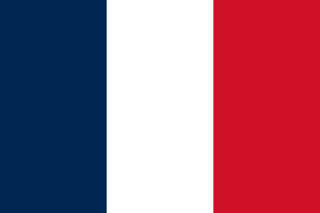
France
French Republic
Population: UN WPP 2024, revision 1, projection for 1 July 2026. Sources and methodology.
Geography and territory
France is the largest country in the European Union and the third largest in Europe, spanning 549,087 square kilometers within its metropolitan borders and home to about 66.7 million people. Positioned in Western Europe, it shares frontiers with Belgium, Luxembourg, and Germany to the northeast, Switzerland and Italy to the east, and Monaco, Spain, and Andorra to the south, while the Atlantic Ocean and the English Channel frame its western and northern coasts. That geography gives France simultaneous access to the Mediterranean and the Atlantic — a rare strategic advantage in Europe.
The French landscape is remarkably varied. Gentle plains and rolling hills define the Paris Basin and Normandy in the north and west. In the southeast, the French Alps rise to Mont Blanc, which at 4,808 meters is the highest peak in Western Europe. The Pyrenees trace a natural border with Spain in the southwest, the Massif Central occupies a broad volcanic plateau across the center-south, and the Vosges and Jura ranges run along the eastern frontier.
Beyond its European territory, France holds an extensive network of overseas departments and territories scattered across the Atlantic, Pacific, and Indian Oceans — French Guiana in South America, Guadeloupe and Martinique in the Caribbean, Réunion and Mayotte in the Indian Ocean, and French Polynesia and New Caledonia in the Pacific. Major rivers including the Loire, Seine, Rhine, Rhône, and Garonne have shaped settlement and commerce across the country since antiquity.
France’s coastline stretches for thousands of kilometers, from the chalk cliffs of Normandy and the granite shores of Brittany in the north to the sun-baked beaches of the Mediterranean coast in the south. Corsica, a mountainous Mediterranean island, adds yet another distinct landscape to the national territory, with rugged peaks rising directly from the sea. This geographic breadth gives France an unusually wide range of climates within a single country, from oceanic conditions along the Atlantic seaboard to a true Mediterranean climate around Provence and the Côte d’Azur, and alpine conditions at higher elevations.
History
France’s history is among the most consequential in the Western world. The cave paintings at Lascaux, roughly 17,000 years old, testify to humanity’s early presence in the region. Celtic Gauls inhabited the territory before Julius Caesar’s Roman conquest in the first century BCE, and Roman Gaul flourished for centuries until Frankish invasions gave rise to the kingdom that would eventually bear France’s name. Clovis I, baptized in 496, founded the Merovingian dynasty and laid early groundwork for the French nation.
Medieval France grew into a major feudal power. Charlemagne extended Frankish rule across much of Western Europe, and the Capetian dynasty consolidated royal authority from 987 onward. The Hundred Years’ War against England (1337–1453), with Joan of Arc as its enduring symbol, helped forge a distinct national identity. The Renaissance and the Enlightenment later established France as an intellectual capital of Europe, home to thinkers such as Voltaire, Rousseau, and Montesquieu.
The French Revolution of 1789 upended not just France but the entire Western political order, proclaiming liberty, equality, and fraternity as founding ideals. Napoleon Bonaparte carried revolutionary ideas across Europe before his defeat at Waterloo, and the nineteenth century saw France cycle through republics, monarchies, and empires. The twentieth century’s two world wars left deep scars on the country, which has lived under the Fifth Republic, founded by Charles de Gaulle, since 1958.
Culture and society
Few nations have shaped world culture as disproportionately as France. French served for centuries as the language of diplomacy, high culture, and European aristocracy. In literature, figures such as Molière, Victor Hugo, Marcel Proust, Albert Camus, Gustave Flaubert, and Simone de Beauvoir produced works of lasting universal reach, and France has won more Nobel Prizes in Literature than any other country.
French visual art has repeatedly redirected the course of art history. Impressionism emerged in France through Monet, Renoir, Degas, and Cézanne, while Rodin reshaped modern sculpture. Cinema itself was born in France, when the Lumière brothers gave the first public film screening in 1895, and the country remains a major force in world film. Parisian fashion houses — Chanel, Dior, Louis Vuitton, Hermès, Yves Saint Laurent — continue to set global trends.
French society rests on a strong sense of national identity, the constitutional principle of secularism known as laïcité, and a comprehensive welfare state. Public education, universal health care, and an extensive social safety net form the backbone of the French social model. Cultural life is exceptionally dense, with thousands of museums, theaters, and festivals nationwide, and the Tour de France, held every July since 1903, remains the world’s most famous cycling event.
France is also a genuinely diverse and multicultural society, shaped by successive waves of immigration from former colonies in North Africa, West Africa, and Southeast Asia, as well as from elsewhere in Europe. This diversity is visible in the food, music, and street life of major cities, even as national identity and the French language remain unifying threads across the country. Regional identities also endure strongly: Brittany, Alsace, the Basque Country, and Corsica each preserve distinct languages, customs, and culinary traditions within the broader French nation.
Economy
France is the second-largest economy in the eurozone and one of the largest in the world by nominal GDP. It runs a diversified, advanced economy with real strength in both industry and services; the service sector alone accounts for roughly four-fifths of output, with tourism a critical piece — France remains the single most-visited country on Earth, drawing tens of millions of international travelers annually.
Industrially, France is a global heavyweight in aerospace and defense, home to Airbus and Dassault. Nuclear power anchors its energy sector: France generates a larger share of its electricity from nuclear plants than any other country. The automotive industry, led by Stellantis (parent of Peugeot and Citroën) and Renault, along with pharmaceutical giant Sanofi and LVMH — the world’s largest luxury goods conglomerate — round out a formidable industrial base.
Agriculture, too, is a major strength: France is the European Union’s leading agricultural producer, excelling in grain, wine, dairy, meat, and horticulture. Its wines and spirits, from Champagne to Bordeaux to Cognac, remain global benchmarks of quality. A growing technology sector has taken root around Paris, anchored by Station F, billed as the world’s largest startup incubator.
France is also a founding member of the European Union and a permanent member of the United Nations Security Council, giving it outsized influence over European economic policy and global diplomacy alike. Paris hosts the headquarters of major international bodies, including UNESCO, and the country’s high-speed TGV rail network and extensive infrastructure underpin both its domestic economy and its role as a gateway for trade across Western Europe.
Food and cuisine
French gastronomy is widely regarded as among the most refined culinary traditions on Earth, and in 2010 UNESCO added the French gastronomic meal to its list of Intangible Cultural Heritage. French cooking rests on exceptional ingredients, precise technique, and a deep cultural attachment to the meal as a social ritual — a tradition running from elevated haute cuisine down to the neighborhood bistro, and one that has shaped culinary practice worldwide.
France produces more than 400 varieties of cheese, from Camembert and Brie to Roquefort and Comté — prompting Charles de Gaulle’s famous quip about the impossibility of governing a country with hundreds of cheeses. Bread, and the baguette above all, holds an almost sacred place at the French table; the country gets through billions of baguettes every year. French pastry, meanwhile, has given the world the croissant, tarte tatin, éclair, macaron, and mille-feuille.
Wine culture is inseparable from French culinary identity. Regions such as Bordeaux, Burgundy, Champagne, the Loire Valley, and Alsace produce some of the most celebrated wines on the planet. France also holds more Michelin-starred restaurants than any other country, and chefs including Auguste Escoffier, Paul Bocuse, Alain Ducasse, and Joël Robuchon have shaped the standards of fine dining worldwide.
Tourism and landmarks
France is the world’s leading tourist destination. Paris, the City of Light, needs little introduction: the Eiffel Tower, the Louvre (the most-visited museum on the planet), Notre-Dame Cathedral, the Champs-Élysées, the Arc de Triomphe, the hillside district of Montmartre, and the Musée d’Orsay all draw visitors by the millions. Nearly every corner of the city carries centuries of history, art, and romance.
Outside the capital, the châteaux of the Loire Valley form one of Europe’s most impressive collections of historic architecture, with Chambord, Chenonceau, and Amboise among the standouts. The French Riviera delivers the glamour of Nice, Cannes, and Saint-Tropez. The vineyards of Bordeaux and Burgundy attract wine lovers from around the world, while Normandy preserves both the D-Day landing beaches and the dramatic tidal island of Mont Saint-Michel.
Provence enchants with lavender fields, colorful markets, and the same quality of light that captivated Van Gogh and Cézanne. The French Alps are a premier skiing destination, home to resorts like Chamonix and Courchevel. Alsace blends French and Germanic influences in its storybook villages, Lourdes draws millions of religious pilgrims each year, and the Dordogne region shelters the prehistoric Lascaux caves. In all, France counts 49 UNESCO World Heritage sites.
Fun facts about France
- The Eiffel Tower was originally built as a temporary structure for the 1889 World’s Fair and nearly faced demolition in 1909 — it was saved because of its usefulness as a radio antenna.
- Thanks to its overseas territories, France spans more time zones than any other country in the world.
- The Louvre is the largest art museum on Earth; viewing every work on display for just 30 seconds each would take roughly 100 days.
- French remained the official language of the English court for more than 300 years after the Norman Conquest of 1066.
- France produces close to 10 billion baguettes every year, and a law regulates exactly how a “traditional” baguette must be made.
France in numbers
Latest World Bank and UNDP observations, each with its own year. “World median” is the middle value among the countries that report the same indicator; “#” ranks from the highest value.
Population since 1960
France had 47.4 million people in 1960 and 68.7 million in 2025 — 45% more.
People
78.8% of people live in towns and cities (world median 63.4%). 16.2% are under 15 and 22.5% are 65 or older — one of the oldest age structures in the world. Women have 1.61 children on average, below the replacement level of about 2.1 needed to keep a population stable in the long run without migration.
Economy
The economy grew by 0.8% in real terms in 2025. Consumer prices rose by 0.9% in 2025. Services make up the largest share of output (70.9% of GDP); agriculture contributes 1.4%.
Development and environment
UNDP rates human development in France as very high, with an index of 0.920 in 2023 (rank 26 of 193). 88.7% of people use the internet and 100.0% have access to electricity. Forest covers 32.9% of the land (world median 32.8%).
Sources: World Bank, World Development Indicators (CC BY 4.0), most recent observation from 2015 onward; UNDP Human Development Report 2025. Retrieved 2026-10-10. Sector shares need not add up to 100% because taxes and subsidies on products are excluded. Missing values are left blank rather than estimated. Sources and methodology.
Climate of France
Averaged across France, the warmest month is July (19.8 °C) and the coolest is January (4.3 °C), a seasonal swing of 15.5 °C. The annual mean is 11.6 °C.
About 850 mm of precipitation falls in a typical year. November is the wettest month (91 mm) and March the driest (57 mm). Rain is spread fairly evenly through the year.
Show monthly values as a table
| Month | Mean °C | Low °C | High °C | Precipitation, mm |
|---|---|---|---|---|
| January | 4.3 | 1.4 | 7.3 | 73 |
| February | 4.9 | 1.2 | 8.6 | 59 |
| March | 7.7 | 3.3 | 12.1 | 57 |
| April | 10.4 | 5.6 | 15.3 | 64 |
| May | 14.0 | 9.0 | 19.0 | 72 |
| June | 17.5 | 12.3 | 22.7 | 69 |
| July | 19.8 | 14.3 | 25.2 | 60 |
| August | 19.6 | 14.2 | 25.1 | 65 |
| September | 16.3 | 11.3 | 21.4 | 74 |
| October | 12.4 | 8.5 | 16.5 | 83 |
| November | 7.7 | 4.5 | 11.0 | 91 |
| December | 4.9 | 2.0 | 7.9 | 83 |
Figures are 1991–2020 averages across the whole land area of France, from the World Bank Climate Change Knowledge Portal, CRU TS 4.08 (CC BY 4.0). They are not readings from one weather station: the capital, the coast and high ground can be much warmer, cooler, wetter or drier.
Travel essentials for France
The practical details visitors ask about first. Traffic in France drives on the right, like most of the world. Mains electricity is 230 V at 50 Hz, so devices made only for 110–120 V (common in North America) need a converter unless they are dual-voltage — most phone and laptop chargers are.
- Emergency number
- 112Police 17 · Ambulance 15 · Fire 18
- Driving side
- Right
- Plug types
- Type C, Type EC: two round pins (Europlug); E: two round pins, earth pin in the socket
- Voltage
- 230 V50 Hz
- Dialling code
- +33From abroad: your exit code, then 33 and the number
- Currency
- Euro (EUR)
- Time zone
- CET (UTC+1)Current local time in France
Compiled from IEC plug and voltage standards, national emergency-service listings and the UN road-traffic conventions. Emergency numbers and local coverage can change — confirm them locally on arrival. France's internet domain is .fr.
Where France ranks in the world
Each position counts only the countries with data in that ranking guide. First place is the highest value — for price levels, the most expensive. Select a card to see the full table.
- Population23rd of 19666.7 millionUN projection, July 2026
- Land area48th of 195538,950 km²World Bank, 2023
- Population density71st of 194127 per km²World Bank, 2023
- GDP (nominal)7th of 187$3.16TWorld Bank, 2024, current US$
- GDP per capita25th of 187$46,103World Bank, 2024, current US$
- Life expectancy19th of 19483.0 yearsWorld Bank, 2024
- Price level18th of 16591 (US = 100)ICP 2021, household consumption
Bordering countries of France


Compare France with another country
Frequently asked questions about France
What is the capital of France?
The capital of France is Paris.
What is the population of France?
The UN World Population Prospects projection for France is 66,746,401 people (66.7 million) on 1 July 2026. National statistical offices may publish different estimates.
What language is spoken in France?
The official language of France is French.
What currency is used in France?
The currency of France is the Euro (EUR).
How big is France?
France covers an area of 549,087 km².
What type of government does France have?
France is a semi-presidential republic.
Which countries border France?
France shares land borders with Belgium, Luxembourg, Germany, Switzerland, Italy, Monaco, Spain, Andorra, Brazil (French Guiana), Suriname (French Guiana), Netherlands (Saint Martin).
What is the highest point in France?
The highest point in France is Mont Blanc (4,808 m).