Austria
Republic of Austria
Population: UN WPP 2024, revision 1, projection for 1 July 2026. Sources and methodology.
Geography and territory
Austria is a landlocked country in Central Europe covering 83,879 square kilometers, positioned at a historic crossroads between Western, Eastern, and Southern Europe. It shares borders with eight neighbors: Germany and the Czech Republic to the north, Slovakia and Hungary to the east, Slovenia and Italy to the south, and Switzerland and Liechtenstein to the west. This central location has shaped Austria’s identity for centuries, turning it into a meeting point of cultures, trade routes, and political power.
The Alps dominate the Austrian landscape, covering roughly two-thirds of the national territory. The Grossglockner, rising to 3,798 meters in the Hohe Tauern range, is the country’s highest peak. The alpine regions are cut by deep valleys, dramatic gorges, glaciers, and extensive coniferous forests, while to the east the terrain opens onto the Pannonian plain, characterized by vineyard-covered hills and the low-lying Vienna Basin.
The Danube River is Austria’s principal waterway, flowing west to east across the northern part of the country and through Vienna, the only major European capital situated directly on this historic river. Austria is also dotted with pristine alpine lakes, including the Wolfgangsee, Worthersee, Attersee, and the Neusiedler See, a shallow steppe lake shared with Hungary and recognized as a UNESCO World Heritage Site. Climate varies from continental in the eastern lowlands to alpine in the mountains and temperate in the sheltered valleys.
Administratively, Austria is a federation of nine states, each with its own regional government and capital, ranging from the wine country of Burgenland in the east to the mountainous Vorarlberg in the far west. This federal structure mirrors the country’s geographic diversity, with each state cultivating its own dialect, culinary specialties, and folk traditions even within a relatively compact national territory. Extensive networks of protected national parks, such as Hohe Tauern, the largest in the Alps, safeguard glaciers, alpine meadows, and wildlife across the mountainous regions.
History
Austria’s history places it at the center of many of Europe’s defining events. The region was once part of the Roman Empire, forming the province of Noricum, and later belonged to the Holy Roman Empire. The Habsburg dynasty, which ruled Austria beginning in 1282, built one of the most powerful and long-lasting empires in European history, at various points controlling Spain, the Low Countries, parts of Italy, and much of Central and Eastern Europe.
The Austro-Hungarian Empire, formally established in 1867, became one of Europe’s great powers, a sprawling multiethnic and multilingual state governed from Vienna that encompassed territory now belonging to Austria, Hungary, the Czech Republic, Slovakia, Slovenia, Croatia, Bosnia, and parts of Italy, Poland, Ukraine, and Romania. The assassination of Archduke Franz Ferdinand in Sarajevo in 1914 triggered the First World War, whose outcome dissolved the empire and left behind a small Austrian republic.
The interwar years were turbulent, culminating in Nazi Germany’s annexation of Austria in the 1938 Anschluss. After the Second World War, Austria was occupied by the Allied powers until 1955, when the Austrian State Treaty restored full sovereignty in exchange for a commitment to permanent neutrality, formalizing the country’s independence that traces its modern origin to 1918 and the empire’s dissolution. Since then Austria has developed into a stable, prosperous democracy, joining the European Union in 1995 and establishing Vienna as a major diplomatic hub, home to agencies of the United Nations, OPEC, and the OSCE.
Culture and society
Few nations have shaped classical music as profoundly as Austria. Vienna served as the musical capital of Europe for centuries, and composers such as Wolfgang Amadeus Mozart (born in Salzburg), Joseph Haydn, Franz Schubert, the Strauss family, Gustav Mahler, Anton Bruckner, and Arnold Schoenberg are woven into the fabric of world musical heritage. Ludwig van Beethoven, though born in Bonn, spent most of his working life and produced the bulk of his output in Vienna.
Beyond music, Austria has produced thinkers who reshaped modern intellectual life. Sigmund Freud founded psychoanalysis in Vienna, Ludwig Wittgenstein transformed the philosophy of language, and economists Friedrich Hayek and Ludwig von Mises, of the Austrian School of Economics, left a lasting mark on economic theory. In the visual arts, Gustav Klimt, Egon Schiele, and Oskar Kokoschka led the Vienna Secession, a pioneering movement in European modernism.
Austrian society pairs a deep cultural tradition with an exceptionally high standard of living, and Vienna has repeatedly been ranked among the world’s most livable cities. Viennese coffeehouse culture, recognized by UNESCO as an element of intangible cultural heritage, remains a cherished social institution where patrons linger for hours over a newspaper and a melange, the classic Viennese coffee with milk, often alongside a slice of cake. Traditions such as the grand Vienna Opera Ball keep the country’s imperial-era elegance alive in the present day.
Economy
Austria has a highly developed and diversified economy, with a gross domestic product of roughly $579.47 billion and one of the highest standards of living in the European Union. Its prosperity rests on a skilled workforce, a strong industrial base, and a geographic position that links Western Europe with Central and Eastern European markets.
Austrian industry is particularly strong in metalworking, machinery, electrical equipment, chemicals, and automotive components. Companies such as Voestalpine in steel, Red Bull, the energy-drink maker founded in Austria that grew into a global phenomenon, and Swarovski in crystal, alongside a robust timber and paper industry, anchor the manufacturing sector. Services, including banking, insurance, and consulting, make up the largest share of overall economic output.
Tourism is a major economic driver, with millions of international visitors arriving each year for both winter skiing and summer cultural and nature tourism, with Tyrol, Salzburg, and Vienna as the principal destinations. Hydropower, harnessed from the abundant rivers and lakes of the Alps, supplies a majority of the country’s electricity, making Austria one of the leaders in renewable energy production within Europe and reflecting a very high overall level of human development.
Austria’s export-oriented small and medium-sized enterprises, often family-owned and highly specialized, form the backbone of the so-called Mittelstand economy, supplying precision components and niche manufactured goods to global markets. Vienna, meanwhile, functions as a financial and logistical gateway to Central and Eastern Europe, with many multinational corporations basing their regional headquarters there to take advantage of the city’s stability, infrastructure, and proximity to emerging markets in the region.
Food and cuisine
Austrian cuisine reflects centuries of imperial history, absorbing influences from the many peoples once united under the Austro-Hungarian crown. The Wiener Schnitzel, a breaded and fried veal cutlet, is the country’s signature dish, even though its exact origins are still debated with Italy’s milanesa. Tafelspitz, boiled beef served with apple-horseradish sauce and chives, was reportedly the favorite dish of Emperor Franz Joseph and remains a staple of classic Viennese cooking.
Austrian pastry-making is legendary and constitutes a culinary heritage of its own. The Sachertorte, a dense chocolate cake layered with apricot jam, was created in 1832 at Vienna’s Hotel Sacher and remains the country’s most famous dessert worldwide. Apfelstrudel, its paper-thin pastry wrapped around apples, raisins, cinnamon, and breadcrumbs, is another essential classic, while Kaiserschmarrn, a shredded sugared pancake, apricot dumplings, and Palatschinken crepes round out an exceptional dessert tradition.
Vienna’s coffeehouse culture, with roots stretching back more than 150 years, is inseparable from the country’s culinary identity. Historic cafes such as the Central, Demel, Sacher, and Sperl serve coffee on a silver tray with a glass of water, an enduring ritual of Viennese life. Austrian beer is of consistently high quality, with brands like Stiegl and Gosser, while Austrian wines, especially the white Gruner Veltliner and Rieslings from the Wachau Valley, a UNESCO World Heritage Site, have earned growing international recognition.
Tourism and landmarks
Vienna ranks among Europe’s most beautiful and culturally rich cities. Schonbrunn Palace, the Habsburgs’ summer residence and a UNESCO World Heritage Site, rivals Versailles in its grandeur. Vienna’s historic center, also a World Heritage Site, contains St. Stephen’s Cathedral, the Hofburg Imperial Palace, the State Opera House, the Kunsthistorisches Museum with its collection of Old Masters, and the Albertina Museum. The Prater park, with its iconic giant Ferris wheel, adds a lighter note of leisure to the capital.
Salzburg, Mozart’s birthplace, enchants visitors with its baroque old town, another World Heritage Site, the Hohensalzburg fortress, the filming locations of The Sound of Music, and the prestigious Salzburg Festival, one of the world’s leading celebrations of classical music and opera. Innsbruck, the capital of Tyrol, blends imperial architecture with immediate access to ski slopes and has hosted the Winter Olympics twice, in 1964 and 1976.
The Austrian Alps offer some of Europe’s finest skiing, at resorts such as St. Anton, Kitzbuhel, Lech, and the Hintertux glacier, while the Grossglockner High Alpine Road ranks among the most spectacular scenic drives in the world. The Salzkammergut lake district, home to Hallstatt, arguably Austria’s most photographed village and a World Heritage Site, together with the vineyard-lined Wachau Valley and the thermal lakes of Carinthia, complete a rich and varied tourism landscape.
Fun facts about Austria
- The Schonbrunn Zoo in Vienna, founded in 1752, is the oldest continuously operating zoo in the world.
- Austria has produced an extraordinary concentration of celebrated classical composers relative to its small population.
- One of the world’s oldest known postcards was sent from Austria in the nineteenth century.
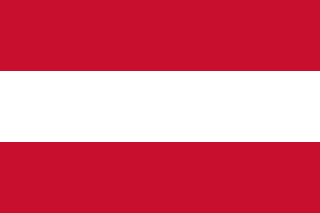
- Austria’s red-white-red flag is one of the oldest national flags still in use, with a legendary origin traced to Duke Leopold V’s blood-soaked tunic after a medieval battle.
- The Semmering Railway, opened in 1854, was the first mountain railway of its kind in the world and is recognized as a UNESCO World Heritage Site.
- Vienna hosts major international organizations, including agencies of the United Nations, making it one of the world’s key diplomatic hubs alongside New York and Geneva.
Austria in numbers
Latest World Bank and UNDP observations, each with its own year. “World median” is the middle value among the countries that report the same indicator; “#” ranks from the highest value.
Population since 1960
Austria had 7.0 million people in 1960 and 9.2 million in 2025 — 31% more.
People
69.7% of people live in towns and cities (world median 63.4%). 14.1% are under 15 and 21.1% are 65 or older — one of the oldest age structures in the world. Women have 1.31 children on average, below the replacement level of about 2.1 needed to keep a population stable in the long run without migration.
Economy
The economy grew by 0.6% in real terms in 2025. Consumer prices rose by 3.5% in 2025. Services make up the largest share of output (64.1% of GDP); agriculture contributes 1.3%.
Development and environment
UNDP rates human development in Austria as very high, with an index of 0.930 in 2023 (rank 22 of 193). 91.9% of people use the internet and 100.0% have access to electricity. Forest covers 47.3% of the land (world median 32.8%).
Sources: World Bank, World Development Indicators (CC BY 4.0), most recent observation from 2015 onward; UNDP Human Development Report 2025. Retrieved 2026-10-10. Sector shares need not add up to 100% because taxes and subsidies on products are excluded. Missing values are left blank rather than estimated. Sources and methodology.
Climate of Austria
Averaged across Austria, the warmest month is July (17.0 °C) and the coolest is January (−2.1 °C), a seasonal swing of 19.1 °C. The annual mean is 7.4 °C.
3 months have a national mean temperature below freezing.
About 1,121 mm of precipitation falls in a typical year. July is the wettest month (139 mm) and February the driest (55 mm). The wettest stretch is June to August, with 36% of the year's total.
Show monthly values as a table
| Month | Mean °C | Low °C | High °C | Precipitation, mm |
|---|---|---|---|---|
| January | −2.1 | −5.1 | 0.9 | 56 |
| February | −1.0 | −4.5 | 2.6 | 55 |
| March | 2.7 | −1.5 | 6.9 | 72 |
| April | 7.1 | 2.4 | 11.9 | 75 |
| May | 11.5 | 6.7 | 16.2 | 111 |
| June | 15.1 | 10.3 | 19.9 | 132 |
| July | 17.0 | 12.0 | 22.0 | 139 |
| August | 16.8 | 12.0 | 21.7 | 131 |
| September | 12.5 | 8.1 | 16.9 | 108 |
| October | 7.9 | 4.1 | 11.8 | 91 |
| November | 2.8 | −0.2 | 5.8 | 81 |
| December | −1.3 | −4.0 | 1.4 | 70 |
Figures are 1991–2020 averages across the whole land area of Austria, from the World Bank Climate Change Knowledge Portal, CRU TS 4.08 (CC BY 4.0). They are not readings from one weather station: the capital, the coast and high ground can be much warmer, cooler, wetter or drier.
Travel essentials for Austria
The practical details visitors ask about first. Traffic in Austria drives on the right, like most of the world. Mains electricity is 230 V at 50 Hz, so devices made only for 110–120 V (common in North America) need a converter unless they are dual-voltage — most phone and laptop chargers are.
- Emergency number
- 112
- Driving side
- Right
- Plug types
- Type C, Type FC: two round pins (Europlug); F: two round pins with side earth clips (Schuko)
- Voltage
- 230 V50 Hz
- Dialling code
- +43From abroad: your exit code, then 43 and the number
- Currency
- Euro (EUR)
- Time zone
- CET (UTC+1)Current local time in Austria
Compiled from IEC plug and voltage standards, national emergency-service listings and the UN road-traffic conventions. Emergency numbers and local coverage can change — confirm them locally on arrival. Austria's internet domain is .at.
Where Austria ranks in the world
Each position counts only the countries with data in that ranking guide. First place is the highest value — for price levels, the most expensive. Select a card to see the full table.
- Population99th of 1969.1 millionUN projection, July 2026
- Land area113th of 19582,520 km²World Bank, 2023
- Population density81st of 194111 per km²World Bank, 2023
- GDP (nominal)29th of 187$534.8BWorld Bank, 2024, current US$
- GDP per capita14th of 187$58,269World Bank, 2024, current US$
- Life expectancy30th of 19482.0 yearsWorld Bank, 2024
- Price level19th of 16589 (US = 100)ICP 2021, household consumption
Bordering countries of Austria


Compare Austria with another country
Frequently asked questions about Austria
What is the capital of Austria?
The capital of Austria is Vienna.
What is the population of Austria?
The UN World Population Prospects projection for Austria is 9,107,266 people (9.1 million) on 1 July 2026. National statistical offices may publish different estimates.
What language is spoken in Austria?
The official language of Austria is German.
What currency is used in Austria?
The currency of Austria is the Euro (EUR).
How big is Austria?
Austria covers an area of 83,879 km².
What type of government does Austria have?
Austria is a federal parliamentary republic.
Which countries border Austria?
Austria shares land borders with Germany, Czech Republic, Slovakia, Hungary, Slovenia, Italy, Switzerland, Liechtenstein.
What is the highest point in Austria?
The highest point in Austria is Grossglockner (3,798 m).
