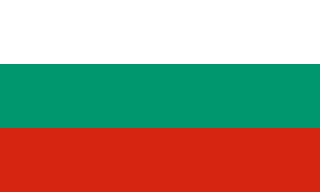
Bulgaria
Republic of Bulgaria
Population: UN WPP 2024, revision 1, projection for 1 July 2026. Sources and methodology.
Geography and territory
Bulgaria lies in southeastern Europe, occupying the eastern part of the Balkan Peninsula. Covering 110,993 square kilometers, it borders Romania to the north, with the Danube River forming a natural boundary along much of that frontier, Serbia and North Macedonia to the west, Greece and Turkey to the south, and the Black Sea to the east, where the country has a coastline of roughly 378 kilometers.
Bulgaria’s terrain is remarkably varied for a country of its size. The Balkan mountain range, known locally as Stara Planina, runs east to west across the country, dividing it into two distinct halves. To the south rise the Rhodope, Pirin, and Rila mountains, home to Musala, the highest peak in the entire Balkan Peninsula at 2,925 meters. The Danubian Plain in the north and the Thracian Plain in the south form the country’s principal agricultural regions.
Bulgaria’s climate is moderate continental, with cold winters and hot summers inland, while the Black Sea coast enjoys milder conditions. The country supports exceptional biodiversity, protected across three national parks and eleven nature parks, and forests cover roughly a third of the national territory. Bulgaria also holds one of the largest concentrations of thermal springs in Europe, with more than 600 mineral water sources scattered across the country, several of which have been used for bathing and healing since Roman times.
Beyond its mountains and plains, Bulgaria is administratively divided into 28 provinces radiating out from Sofia, the capital and largest city, which sits in a broad valley at the foot of Mount Vitosha. The country’s river network, fed largely by the Danube and its tributaries in the north and by shorter rivers draining the southern mountains toward the Aegean and the Black Sea, has shaped settlement patterns for millennia. Fertile lowland soils, combined with a favorable growing climate, have long made Bulgaria one of the more productive agricultural regions of the Balkans.
History
Bulgaria is one of the oldest nations in Europe, with a history reaching back to the Thracians, a people who inhabited the region from the second millennium BCE and left behind a spectacular legacy of tombs and gold treasures. The First Bulgarian Empire was founded in the year 681 by Khan Asparuh, becoming one of the earliest Slavic political entities and a regional power that rivaled the Byzantine Empire.
During the ninth century, Bulgaria played a pivotal role in the history of Slavic civilization. The brothers Cyril and Methodius, and later their disciples Clement and Naum of Ohrid, developed the Glagolitic script and then the Cyrillic alphabet on Bulgarian soil. That alphabet spread throughout the Orthodox Slavic world and today is used by more than 250 million people. The Second Bulgarian Empire, from 1185 to 1396, brought another golden age of culture before the Ottoman conquest.
Ottoman rule lasted nearly five centuries, ending with liberation in 1878 with Russian assistance following the Russo-Turkish War; independence was formally proclaimed on 22 September 1908. The twentieth century proved turbulent for Bulgaria, which fought in the Balkan Wars and in both World Wars, allying with the losing side in each, before becoming a socialist state under Soviet influence after 1944. The democratic transition began in 1989, and Bulgaria has since moved steadily toward a market economy, joining NATO in 2004 and the European Union in 2007.
Culture and society
Bulgarian culture is remarkably rich and distinctive, shaped by the convergence of Thracian, Slavic, and Ottoman influences. Bulgarian folk music is recognized worldwide for its intricate asymmetrical rhythms and for the extraordinary vocal style of ensembles such as Le Mystère des Voix Bulgares, whose recordings were included on the Voyager Golden Record launched into space by NASA in 1977.
Folk traditions remain very much alive through celebrations such as Kukeri, a pagan winter ritual in which men in elaborate masks and animal skins dance to drive away evil spirits, recognized by UNESCO as intangible cultural heritage. The festival of Baba Marta, celebrated on March 1, welcomes the arrival of spring with the exchange of martenitsi, small red-and-white thread amulets worn on the wrist.
One particularly curious cultural quirk in Bulgaria is that the gestures for yes and no are reversed compared with most of the rest of Europe: nodding the head up and down signals “no,” while shaking it side to side signals “yes.” Bulgarian society places great value on education, the arts, and hospitality. The Bulgarian Orthodox Church holds considerable influence over social life, and monasteries such as Rila are regarded as guardians of national identity.
Family remains a strong social anchor, and multigenerational households, especially in smaller towns and villages, are still common. Bulgaria has produced internationally recognized figures in sports, science, and the arts, and its state-supported system of music and ballet schools has sent a disproportionate number of world-class musicians and dancers abroad relative to the country’s modest population. Traditional costumes, richly embroidered and regionally distinct, are still worn during folk festivals and national holidays, keeping centuries-old craftsmanship alive alongside a fast-modernizing urban culture.
Economy
The Bulgarian economy has undergone a significant transformation since the fall of communism in 1989. With a gross domestic product of roughly $130.78 billion, Bulgaria today is an open market economy fully integrated into the European Union, though it remains in the process of converging with the income levels of Western Europe. On January 1, 2026, Bulgaria adopted the euro as its official currency, becoming the twenty-first member of the eurozone and retiring the Bulgarian lev, which for years had been fixed at a stable peg to the European currency. The country maintains one of the lowest corporate tax rates in the EU, a flat rate of 10 percent.
The services sector accounts for around 65 percent of GDP, followed by industry and agriculture. Bulgaria is a major producer of tobacco, grains, sunflowers, and roses: the Rose Valley near Kazanlak produces roughly 85 percent of the world’s rose oil, an essential ingredient in luxury perfumery. The technology sector has grown rapidly in recent years, with Sofia emerging as a regional hub for software development and IT services.
Tourism contributes significantly to the economy, with the Black Sea coast drawing sun-and-sand visitors while the ski resorts of Bansko, Borovets, and Pamporovo attract winter tourism. Bulgaria also has a notable wine industry with roots stretching back to Thracian times. Economic challenges include rural depopulation, the emigration of young, skilled workers, and the ongoing need to modernize infrastructure.
Food and cuisine
Bulgarian cuisine is rich and flavorful, blending Balkan, Ottoman, and Mediterranean influences. Bulgarian yogurt is perhaps the country’s most famous food product: it contains Lactobacillus bulgaricus, a unique bacterial strain discovered by Bulgarian physician Stamen Grigorov in 1905, which gives the yogurt its distinctive tang and remarkable probiotic properties. Yogurt appears throughout Bulgarian cooking, from the cold soup tarator to salads and desserts.
Among the country’s most emblematic dishes are shopska salad, made with tomato, cucumber, pepper, and grated sirene cheese; kavarma, a slow-cooked meat and vegetable stew; Bulgarian musaka, distinct from its Greek counterpart and built around potatoes and eggs; and banitsa, a flaky pastry filled with cheese and eggs eaten daily at breakfast. Kebapche and kyufte, grilled preparations of minced meat, appear at nearly every casual meal.
Bulgaria has a winemaking tradition stretching back millennia, with native grape varieties such as Mavrud, Melnik, and Gamza. Rakia, a fruit brandy usually distilled from grapes or plums, is the national spirit and is served as an aperitif at virtually every social gathering. Bulgarian meals tend to be generous and shared among family, reflecting a food culture built on hospitality and togetherness.
Tourism and landmarks
Bulgaria offers a surprising range of attractions, from Black Sea beaches to mountain ski resorts. The Rila Monastery, founded in the tenth century and designated a UNESCO World Heritage Site, is the country’s most important cultural monument. Set at 1,147 meters amid forested mountains, its brightly painted architecture and nineteenth-century frescoes are of extraordinary beauty.
Sofia, the capital, is one of the oldest cities in Europe, with more than 7,000 years of continuous history. The gold-domed Alexander Nevsky Cathedral is the city’s defining landmark. Plovdiv, the country’s second city and European Capital of Culture in 2019, preserves an old town of Bulgarian National Revival houses alongside a beautifully preserved second-century Roman theater. Veliko Tarnovo, once the capital of the Second Bulgarian Empire, is dominated by the dramatic Tsarevets fortress perched above the city on a rocky ridge.
The Black Sea coast is home to cities such as Varna and Burgas, as well as the old town of Nesebar, a UNESCO World Heritage Site. The Pirin Mountains, also protected by UNESCO, offer spectacular alpine scenery. The Thracian tombs at Kazanlak and Sveshtari, decorated with ancient frescoes, stand as unique testimony to a long-vanished civilization. Nature lovers can head to Central Balkan National Park, home to old-growth forests and impressive waterfalls.
Fun facts about Bulgaria
- Bulgaria is the birthplace of the Cyrillic alphabet, developed in the ninth century and now used by more than 250 million people worldwide.
- Nodding the head up and down means “no” in Bulgaria, and shaking it side to side means “yes,” the reverse of most of the rest of Europe.
- The country produces roughly 85 percent of the world’s rose oil, a prized ingredient in high-end perfumes.
- NASA’s Voyager Golden Record includes a Bulgarian folk song, “Izlel ye Delyo Haydutin,” as a representative sample of music from Earth.
- Sofia has natural hot mineral springs right in the city center, and residents fill bottles for free at public fountains.
- Bulgaria joined the eurozone on January 1, 2026, becoming its twenty-first member and retiring the lev after decades of a fixed peg to the euro.
Bulgaria in numbers
Latest World Bank and UNDP observations, each with its own year. “World median” is the middle value among the countries that report the same indicator; “#” ranks from the highest value.
Population since 1960
Bulgaria had 7.9 million people in 1960 and 6.4 million in 2025 — 18% fewer.
The population peaked at 9.0 million in 1988 and has since declined.
People
74.2% of people live in towns and cities (world median 63.4%). 14.4% are under 15 and 22.2% are 65 or older — one of the oldest age structures in the world. Women have 1.72 children on average, below the replacement level of about 2.1 needed to keep a population stable in the long run without migration.
Economy
The economy grew by 3.1% in real terms in 2025. Consumer prices rose by 4.6% in 2025. Services make up the largest share of output (63.3% of GDP); agriculture contributes 2.5%.
Development and environment
UNDP rates human development in Bulgaria as very high, with an index of 0.845 in 2023 (rank 55 of 193). 82.4% of people use the internet and 100.0% have access to electricity. Forest covers 36.4% of the land (world median 32.8%).
Sources: World Bank, World Development Indicators (CC BY 4.0), most recent observation from 2015 onward; UNDP Human Development Report 2025. Retrieved 2026-10-10. Sector shares need not add up to 100% because taxes and subsidies on products are excluded. Missing values are left blank rather than estimated. Sources and methodology.
Climate of Bulgaria
Averaged across Bulgaria, the warmest month is July (22.1 °C) and the coolest is January (−0.2 °C), a seasonal swing of 22.3 °C. The annual mean is 11.3 °C.
1 month has a national mean temperature below freezing.
About 657 mm of precipitation falls in a typical year. June is the wettest month (75 mm) and August the driest (42 mm).
Show monthly values as a table
| Month | Mean °C | Low °C | High °C | Precipitation, mm |
|---|---|---|---|---|
| January | −0.2 | −3.7 | 3.3 | 50 |
| February | 1.8 | −2.1 | 5.8 | 43 |
| March | 5.8 | 1.0 | 10.6 | 48 |
| April | 10.6 | 5.3 | 15.9 | 52 |
| May | 15.7 | 10.0 | 21.4 | 70 |
| June | 19.8 | 13.9 | 25.7 | 75 |
| July | 22.1 | 15.9 | 28.3 | 59 |
| August | 22.1 | 15.9 | 28.3 | 42 |
| September | 17.4 | 11.6 | 23.4 | 47 |
| October | 12.2 | 7.3 | 17.2 | 62 |
| November | 7.0 | 3.0 | 11.1 | 55 |
| December | 1.5 | −1.8 | 4.7 | 56 |
Figures are 1991–2020 averages across the whole land area of Bulgaria, from the World Bank Climate Change Knowledge Portal, CRU TS 4.08 (CC BY 4.0). They are not readings from one weather station: the capital, the coast and high ground can be much warmer, cooler, wetter or drier.
Travel essentials for Bulgaria
The practical details visitors ask about first. Traffic in Bulgaria drives on the right, like most of the world. Mains electricity is 230 V at 50 Hz, so devices made only for 110–120 V (common in North America) need a converter unless they are dual-voltage — most phone and laptop chargers are.
- Emergency number
- 112
- Driving side
- Right
- Plug types
- Type C, Type FC: two round pins (Europlug); F: two round pins with side earth clips (Schuko)
- Voltage
- 230 V50 Hz
- Dialling code
- +359From abroad: your exit code, then 359 and the number
- Currency
- Euro (EUR)
- Time zone
- EET (UTC+2)Current local time in Bulgaria
Compiled from IEC plug and voltage standards, national emergency-service listings and the UN road-traffic conventions. Emergency numbers and local coverage can change — confirm them locally on arrival. Bulgaria's internet domain is .bg.
Where Bulgaria ranks in the world
Each position counts only the countries with data in that ranking guide. First place is the highest value — for price levels, the most expensive. Select a card to see the full table.
- Population109th of 1966.7 millionUN projection, July 2026
- Land area101st of 195108,560 km²World Bank, 2023
- Population density126th of 19459 per km²World Bank, 2023
- GDP (nominal)66th of 187$113.3BWorld Bank, 2024, current US$
- GDP per capita60th of 187$17,597World Bank, 2024, current US$
- Life expectancy80th of 19475.8 yearsWorld Bank, 2024
- Price level92nd of 16545 (US = 100)ICP 2021, household consumption
Bordering countries of Bulgaria


Compare Bulgaria with another country
Frequently asked questions about Bulgaria
What is the capital of Bulgaria?
The capital of Bulgaria is Sofia.
What is the population of Bulgaria?
The UN World Population Prospects projection for Bulgaria is 6,667,659 people (6.7 million) on 1 July 2026. National statistical offices may publish different estimates.
What language is spoken in Bulgaria?
The official language of Bulgaria is Bulgarian.
What currency is used in Bulgaria?
The currency of Bulgaria is the Euro (EUR).
How big is Bulgaria?
Bulgaria covers an area of 110,993 km².
What type of government does Bulgaria have?
Bulgaria is a parliamentary republic.
Which countries border Bulgaria?
Bulgaria shares land borders with Romania, Serbia, North Macedonia, Greece, Turkey.
What is the highest point in Bulgaria?
The highest point in Bulgaria is Musala (2,925 m).


