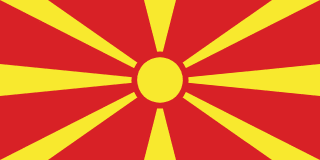
North Macedonia
Republic of North Macedonia
Population: UN WPP 2024, revision 1, projection for 1 July 2026. Sources and methodology.
Geography and territory
Landlocked in the heart of the Balkan Peninsula, North Macedonia covers 25,713 square kilometers of southeastern Europe. It shares borders with Serbia and Kosovo to the north, Bulgaria to the east, Greece to the south, and Albania to the west. The terrain is largely mountainous, threaded with fertile valleys and lake basins that sit between ranges belonging to the Dinaric and Rhodope mountain systems.
The Vardar River, the country’s principal waterway, runs from northwest to southeast, passing through the capital, Skopje, before eventually reaching the Aegean Sea in Greece. Mount Korab, straddling the border with Albania, tops out at 2,764 meters and is the nation’s highest point. The landscape unfolds around broad valleys — Pelagonia, Polog, and Ovče Pole among them — ringed by mountains, producing a striking contrast between cultivated lowlands and rugged peaks.
Among North Macedonia’s natural treasures, Lake Ohrid stands out as one of Europe’s true wonders. Shared with neighboring Albania and estimated to be between three and five million years old, it ranks among the oldest lakes on Earth and shelters more than 200 endemic species, earning it a reputation as a living museum of evolution. To its south, Lake Prespa, split between North Macedonia, Albania, and Greece, adds further ecological richness. Climate here is continental in the interior, softened by Mediterranean influence around the southern lake basins.
History
The Macedonian region carries a history stretching back millennia. Paeonians and other ancient peoples inhabited the land before the rise of the Kingdom of Macedon under Philip II and Alexander the Great, though the historical link between antiquity’s Macedon and today’s republic remains a sensitive topic in relations with Greece. Successive empires — Roman, Byzantine, and Bulgarian — governed the territory over the centuries that followed.
The arrival of Slavic peoples in the sixth century reshaped the region’s ethnic makeup. Ohrid rose to prominence as a religious and intellectual center: Saints Clement and Naum of Ohrid, disciples of Cyril and Methodius, founded one of Europe’s earliest centers of learning there and helped spread the Cyrillic alphabet across the Slavic world. Ottoman rule, beginning in the fourteenth century and lasting into the early twentieth, left a deep cultural imprint still visible in the region’s architecture, cuisine, and customs.
Following the Balkan Wars and the First World War, the territory became part of the Kingdom of Serbs, Croats and Slovenes, later Yugoslavia, and under Tito’s leadership it developed as one of that federation’s constituent republics with a distinct national identity. Independence came peacefully on September 8, 1991. A long-running dispute with Greece over the country’s name, however, was not resolved until 2018, when the Prespa Agreement established “Republic of North Macedonia” as the official name, clearing the way for NATO membership in 2020 and continuing negotiations toward European Union accession.
Culture and society
North Macedonia’s culture is a fascinating blend of Slavic, Ottoman, Mediterranean, and broader Balkan influences. Its Orthodox Christian heritage is expressed through an extraordinary wealth of medieval churches and monasteries adorned with frescoes of remarkable artistic quality. The icons and wall paintings found in Ohrid’s churches, such as St. John at Kaneo and St. Sophia, rank among the finest examples of Byzantine art anywhere in the Balkans and are prized for both their age and state of preservation.
Musical tradition here runs deep, marked by the asymmetrical rhythms characteristic of Balkan folk music. The zurla, a piercing double-reed instrument, and the tapan drum accompany festive gatherings across the country. The Ohrid Summer Festival, held every year since 1961, ranks among the region’s most prestigious cultural events, staging music, theater, and dance in historic venues including Ohrid’s ancient amphitheater. Traditional craftsmanship endures too, from woodcarving to silver filigree to handwoven carpets.
Macedonian society is notably multiethnic: ethnic Macedonians form the majority, alongside a substantial Albanian community that makes up roughly a quarter of the population, plus smaller Turkish, Roma, and Serbian communities. Skopje’s Old Bazaar, one of the largest surviving Ottoman-era marketplaces outside Istanbul, offers vivid testimony to this diversity. Hospitality is a core value, and shared family meals anchor social life throughout the country. Football and handball are the most widely followed sports.
Economy
North Macedonia’s economy is modest by European standards, but the country has maintained notable macroeconomic stability and has drawn foreign investment through its Technological Industrial Development Zones, which offer attractive tax incentives. The economy rests on services, manufacturing, and agriculture.
Industry includes textiles, processed food, chemicals, steel, and automotive component manufacturing, with special economic zones drawing international automotive and electronics firms and creating skilled jobs. Agriculture remains an important pillar as well: the country is one of the world’s leading producers of oriental tobacco, and wine, fruit, and vegetables round out a strong primary sector.
Tourism is an emerging growth area, anchored by Ohrid as the flagship destination while Skopje gains traction as a cultural city break. Mining, particularly of chromium, zinc, and lead, contributes meaningfully to exports, and remittances sent home by Macedonians working abroad form a significant income stream. Key challenges include unemployment, which remains among the highest in Europe, a sizable informal economy, emigration of skilled workers, and the ongoing task of completing structural reforms needed to advance European integration. NATO membership, secured in 2020, and the prospect of eventual EU accession continue to shape the government’s economic policy priorities, particularly around institutional reform and regional connectivity.
Food and cuisine
North Macedonian cuisine celebrates Balkan and Mediterranean flavors with a strong Ottoman imprint, favoring generous, hearty dishes built from fresh, local ingredients. Tavče gravče — white beans baked in a clay pot with peppers and spices — is widely regarded as the national dish, served as either a side or a main course at nearly every table.
Grilled meat is a cornerstone of the everyday menu. Kebapi, a local cousin of the Balkan ćevapi, pljeskavica (a mixed-meat patty), selsko meso (pork and mushrooms baked in a clay dish), and turli tava (a mixed meat and vegetable stew) appear on menus across the country. Ottoman influence shows clearly in burek (a flaky pastry filled with meat or cheese), pastrmajlija (an oval Macedonian flatbread topped with meat), and the varied meze spreads that open any festive meal.
North Macedonia also has a notable winemaking tradition dating to antiquity. Native grape varieties such as Vranec (red) and Smederevka (white) yield distinctive wines that are gaining international recognition, with the Tikveš region serving as the country’s viticultural heartland. Rakija, especially grape- or plum-based, is the ubiquitous spirit of choice. For dessert, Ottoman-inspired sweets such as tulumba, kadaif, and lokum share the table with Ohrid’s own walnut-and-honey cake.
Tourism and landmarks
Ohrid is unquestionably North Macedonia’s crown jewel. Recognized by UNESCO for both its cultural and natural heritage, the town sits on the shore of its namesake lake and, according to local tradition, once held more than 365 churches — one for every day of the year. The cliffside Church of St. John at Kaneo, perched dramatically above the water, offers one of the most photographed views in the Balkans. The ancient Greco-Roman theater, Samuel’s Fortress, and the Monastery of St. Naum complete an exceptional historic ensemble.
Skopje, the capital, has undergone a striking urban transformation through the controversial “Skopje 2014” project, which filled the city center with neoclassical statues, ornamental bridges, and monumental buildings. The Old Bazaar (Stara Čaršija), one of the largest surviving Ottoman marketplaces in the Balkans, provides a lively contrast, offering an authentic taste of shopping, food, and craft. Kale Fortress, the Mother Teresa Memorial House — marking her Skopje birthplace — and fifteenth-century Turkish baths round out the capital’s attractions.
Just 15 kilometers from Skopje, Matka Canyon offers a natural oasis: an emerald-green lake ringed by cliffs, caves, and medieval monasteries, popular with hikers, kayakers, and cavers exploring its many grottoes. Mavrovo National Park provides skiing in winter and hiking in summer, with the partially submerged Church of St. Nicholas as its iconic image. Bitola, the country’s second city, retains elegant Ottoman- and Habsburg-era architecture along its pedestrian Širok Sokak promenade and lies near Heraclea Lyncestis, a Roman archaeological site famed for its extraordinary mosaics. The wine routes of Tikveš and the mountain villages of the east round out a varied and affordable range of travel experiences, and North Macedonia’s compact size means most of these highlights can be reached on a single well-planned road trip.
Fun facts about North Macedonia
- Ohrid is said to have once held more than 365 churches, traditionally one for each day of the year, earning it the nickname “Jerusalem of the Balkans”
- Lake Ohrid is one of the oldest lakes on the planet, estimated to be between three and five million years old
- Mother Teresa was born in Skopje in 1910 to a family of Albanian origin, and the city preserves a memorial house in her honor
- A devastating 1963 earthquake leveled much of Skopje, and its reconstruction involved renowned Japanese architect Kenzo Tange
- The country changed its name in 2019, dropping simply “Macedonia” after a historic accord with Greece ended a dispute that had lasted nearly three decades
North Macedonia in numbers
Latest World Bank and UNDP observations, each with its own year. “World median” is the middle value among the countries that report the same indicator; “#” ranks from the highest value.
Population since 1960
North Macedonia had 1.4 million people in 1960 and 1.8 million in 2025 — 27% more.
The population peaked at 2.1 million in 1990 and has since declined.
People
62.9% of people live in towns and cities (world median 63.4%). 16.5% are under 15 and 18.5% are 65 or older — an ageing population. Women have 1.40 children on average, below the replacement level of about 2.1 needed to keep a population stable in the long run without migration.
Economy
The economy grew by 3.5% in real terms in 2025. Consumer prices rose by 4.1% in 2025. Services make up the largest share of output (57.0% of GDP); agriculture contributes 6.0%.
Development and environment
UNDP rates human development in North Macedonia as very high, with an index of 0.815 in 2023 (rank 68 of 193). 93.1% of people use the internet and 100.0% have access to electricity. Forest covers 40.8% of the land (world median 32.8%).
Sources: World Bank, World Development Indicators (CC BY 4.0), most recent observation from 2015 onward; UNDP Human Development Report 2025. Retrieved 2026-10-10. Sector shares need not add up to 100% because taxes and subsidies on products are excluded. Missing values are left blank rather than estimated. Sources and methodology.
Climate of North Macedonia
Averaged across North Macedonia, the warmest month is August (21.3 °C) and the coolest is January (0.0 °C), a seasonal swing of 21.3 °C. The annual mean is 10.8 °C.
About 673 mm of precipitation falls in a typical year. November is the wettest month (68 mm) and August the driest (41 mm). Rain is spread fairly evenly through the year.
Show monthly values as a table
| Month | Mean °C | Low °C | High °C | Precipitation, mm |
|---|---|---|---|---|
| January | 0.0 | −3.7 | 3.6 | 53 |
| February | 1.8 | −2.4 | 6.0 | 47 |
| March | 5.7 | 0.9 | 10.5 | 54 |
| April | 10.0 | 4.7 | 15.3 | 54 |
| May | 14.7 | 9.0 | 20.5 | 67 |
| June | 18.7 | 12.6 | 24.8 | 61 |
| July | 21.1 | 14.6 | 27.6 | 46 |
| August | 21.3 | 14.6 | 27.9 | 41 |
| September | 16.8 | 10.8 | 22.8 | 56 |
| October | 11.7 | 6.5 | 16.9 | 61 |
| November | 6.2 | 2.2 | 10.3 | 68 |
| December | 1.3 | −2.2 | 4.8 | 66 |
Figures are 1991–2020 averages across the whole land area of North Macedonia, from the World Bank Climate Change Knowledge Portal, CRU TS 4.08 (CC BY 4.0). They are not readings from one weather station: the capital, the coast and high ground can be much warmer, cooler, wetter or drier.
Travel essentials for North Macedonia
The practical details visitors ask about first. Traffic in North Macedonia drives on the right, like most of the world. Mains electricity is 230 V at 50 Hz, so devices made only for 110–120 V (common in North America) need a converter unless they are dual-voltage — most phone and laptop chargers are.
- Emergency number
- 112
- Driving side
- Right
- Plug types
- Type C, Type FC: two round pins (Europlug); F: two round pins with side earth clips (Schuko)
- Voltage
- 230 V50 Hz
- Dialling code
- +389From abroad: your exit code, then 389 and the number
- Currency
- Macedonian Denar (MKD)
- Time zone
- CET (UTC+1)Current local time in North Macedonia
Compiled from IEC plug and voltage standards, national emergency-service listings and the UN road-traffic conventions. Emergency numbers and local coverage can change — confirm them locally on arrival. North Macedonia's internet domain is .mk.
Where North Macedonia ranks in the world
Each position counts only the countries with data in that ranking guide. First place is the highest value — for price levels, the most expensive. Select a card to see the full table.
- Population150th of 1961.8 millionUN projection, July 2026
- Land area144th of 19525,220 km²World Bank, 2023
- Population density115th of 19472 per km²World Bank, 2023
- GDP (nominal)133rd of 187$17.0BWorld Bank, 2024, current US$
- GDP per capita82nd of 187$9,292World Bank, 2024, current US$
- Life expectancy70th of 19476.6 yearsWorld Bank, 2024
- Price level109th of 16539 (US = 100)ICP 2021, household consumption
Bordering countries of North Macedonia


Compare North Macedonia with another country
Frequently asked questions about North Macedonia
What is the capital of North Macedonia?
The capital of North Macedonia is Skopje.
What is the population of North Macedonia?
The UN World Population Prospects projection for North Macedonia is 1,804,063 people (1.8 million) on 1 July 2026. National statistical offices may publish different estimates.
What language is spoken in North Macedonia?
The official language of North Macedonia is Macedonian.
What currency is used in North Macedonia?
The currency of North Macedonia is the Macedonian Denar (MKD).
How big is North Macedonia?
North Macedonia covers an area of 25,713 km².
What type of government does North Macedonia have?
North Macedonia is a parliamentary republic.
Which countries border North Macedonia?
North Macedonia shares land borders with Serbia, Kosovo, Albania, Greece, Bulgaria.
What is the highest point in North Macedonia?
The highest point in North Macedonia is Mount Korab (2,764 m).


