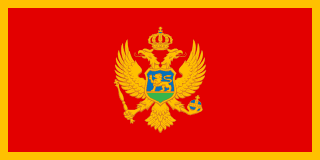
Montenegro
Montenegro
Population: UN WPP 2024, revision 1, projection for 1 July 2026. Sources and methodology.
Geography and territory
Montenegro is one of Europe’s smallest nations, covering just 13,812 square kilometers, yet it packs in a geographic diversity that has earned it the nickname “the pearl of the Mediterranean.” Tucked into the southeastern corner of Europe on the Adriatic coast of the Balkan Peninsula, it shares borders with Croatia to the northwest, Bosnia and Herzegovina to the north, Serbia to the northeast, Kosovo to the east, and Albania to the southeast.
The country’s name, which translates roughly to “black mountain” in old Venetian and Italian, refers to the dark, densely forested peaks that dominate its interior. Along the coast, the Adriatic shoreline stretches for about 293 kilometers and includes the Bay of Kotor, often described as Europe’s southernmost fjord and one of the most spectacular stretches of coastline anywhere on the Mediterranean. Mountains rise sharply from the water’s edge, culminating at Bobotov Kuk, which reaches 2,522 meters in the Durmitor massif.
The contrast between Montenegro’s Mediterranean coast and its mountainous interior is dramatic; within a matter of miles, the terrain climbs from sea level to elevations above 2,000 meters. Lake Skadar, shared with neighboring Albania, is the largest lake in the Balkans and an internationally important wetland. The canyon of the Tara River plunges 1,300 meters deep, making it the deepest canyon in Europe and second in the world only to the Grand Canyon. Forests cover more than 60 percent of the country, sustaining an unusually rich biodiversity for such a small territory.
History
Montenegro’s history is defined by a fierce independence that its people defended for centuries against empires far larger than their own. Slavic tribes arrived in the region during the seventh century, and the principality of Zeta, the forerunner of the modern Montenegrin state, took shape in the eleventh century. The forbidding mountains of the interior served as a natural fortress, allowing Montenegro to preserve a level of autonomy that eluded most of its neighbors even at the height of Ottoman expansion.
While the rest of the Balkans fell under Ottoman rule, Montenegro’s mountain strongholds were among the very few territories never fully subdued. For centuries, the vladikas, prince-bishops of the Petrović-Njegoš dynasty, governed the country from the historic capital of Cetinje, combining Orthodox religious authority with political and military leadership. One of them, Petar II Petrović-Njegoš, is regarded as the greatest poet in Serbian and Montenegrin literature, remembered above all for his epic work “The Mountain Wreath.”
Montenegro won international recognition as an independent state at the Congress of Berlin in 1878. Following the Balkan Wars and the First World War, it joined the Kingdom of Serbs, Croats, and Slovenes, which later became Yugoslavia. After Yugoslavia’s breakup in the 1990s, Montenegro remained loosely federated with Serbia until a referendum on May 21, 2006, led to a formal declaration of independence on June 3 of that year. In the years since, the country has pushed steadily toward European integration, joining NATO in 2017 and continuing its bid for membership in the European Union.
Culture and society
Montenegrin culture reflects the country’s position at a crossroads, between the Mediterranean traditions of its coast and the Orthodox Slavic heritage of its mountains. Epic poetry and oral storytelling have long been central to the national culture, traditionally accompanied by the gusle, a single-stringed instrument used to narrate tales of heroism through long winter nights. Njegoš’s “The Mountain Wreath” remains the touchstone work capturing the Montenegrin spirit of resilience and honor.
Social life traditionally centers on clan and extended family, with a deep-rooted sense of honor and loyalty. Montenegrins are known for generous hospitality and a distinctive, self-deprecating sense of humor, often directed at their own supposed fondness for leisure, a stereotype locals happily embrace. The concept of “fjaka,” a state of blissful, meditative relaxation, is taken seriously enough that some towns hold good-natured competitions for who can do the least.
Orthodox Christianity carries significant weight in Montenegrin cultural life, with monasteries such as Ostrog and those around Cetinje serving as important spiritual centers. Along the coast, centuries of Venetian and Italian contact left a visible mark on local architecture, cuisine, and daily rhythms. Traditions such as the centuries-old Kotor Carnival and a lively calendar of summer coastal festivals keep cultural life vibrant, while water polo and soccer stand out as the country’s most popular sports, having produced a number of internationally recognized athletes despite Montenegro’s small population.
Economy
Montenegro’s economy, with a gross domestic product of roughly $9.2 billion, is among the smallest in Europe, in keeping with a population of just over 600,000. Even so, the country has seen meaningful economic growth since gaining independence in 2006, driven largely by tourism, construction, and services. Montenegro uses the euro as its currency despite not being a member of the eurozone, an arrangement that has provided a useful degree of monetary stability.
Tourism is by far the most important sector of the economy, contributing, directly and indirectly, to more than a fifth of GDP. The dramatic Adriatic coastline, anchored by destinations such as Kotor, Budva, Sveti Stefan, and the Bay of Kotor, draws millions of visitors annually. Luxury tourism has expanded considerably, with marina developments such as Porto Montenegro in Tivat now hosting some of the largest superyachts in the world. Winter mountain tourism and ecotourism are both growing niches as the country works to extend its appeal beyond the summer season.
Agriculture, concentrated along the coast and around Lake Skadar, produces fruit, vegetables, olive oil, and wine. The energy sector leans heavily on hydropower, and the country has begun investing in additional renewable capacity. Fishing and food processing round out a compact economic base. Montenegro’s principal challenges include an overreliance on seasonal tourism, the need to diversify beyond that dependence, ongoing infrastructure development, and continued reform in pursuit of European Union membership.
Food and cuisine
Montenegrin cuisine is a delicious fusion of Mediterranean and Balkan traditions, and it changes noticeably as one moves from coast to interior. Along the Adriatic, cooking centers on fresh fish, shellfish, olive oil, vegetables, and aromatic herbs. Seafood risotto, brodetto (a hearty fish stew), grilled sardines, and octopus cooked under a peka, a domed lid covered in embers, are all coastal specialties built around the day’s catch.
Further inland, in the mountains, the food turns heartier and more meat-centered. Njeguški steak, a pork cutlet stuffed with cheese and smoked ham and named for the mountain village of Njeguši, is the country’s most iconic dish. Cicvara, a creamy cornmeal porridge enriched with cheese and butter, kačamak, a cheesy mashed-potato dish, fried dough called priganice, and grilled meats are all staples of highland cooking. Smoked Njeguši ham and artisanal cheeses from the northern mountains rank among the country’s finest culinary exports.
Montenegrin wine deserves particular mention. The native Vranac grape produces robust, expressive red wines that have begun earning international recognition, with the area around Lake Skadar serving as the country’s wine-growing heart, home to producers who blend tradition with modern technique. Grape rakija and medovača, a honey-based brandy, are traditional drinks central to social gatherings. Sweets include priganice drizzled with honey, krofne (Balkan-style doughnuts), and various desserts carrying the imprint of centuries of Ottoman influence.
Tourism and landmarks
The Bay of Kotor is Montenegro’s crown jewel and one of the most breathtaking sights on the Mediterranean. Surrounded by mountains that rise sharply from deep blue water, this fjord-like inlet shelters a string of remarkable historic towns. Kotor itself, a UNESCO World Heritage Site, is a beautifully preserved walled Venetian town of winding lanes, palaces, and Romanesque churches, overlooked by a hilltop fortress reached by a climb of some 1,350 steps and rewarded with sweeping views.
Budva is the country’s main tourist hub, with a walled old town and the well-known beaches of Mogren and Jaz. The island-hotel of Sveti Stefan, linked to the mainland by a narrow isthmus, is one of Montenegro’s most photographed landmarks and a highly exclusive luxury resort. Nearby, the tiny village of Perast, home to two artificial islets known as Our Lady of the Rocks and Saint George, retains an intact Venetian charm rarely found elsewhere.
The mountainous interior is equally striking. Durmitor National Park, another UNESCO World Heritage Site, offers high-alpine scenery, glacial lakes led by the famous Black Lake, and the Đurđevića Tara Bridge, which spans the Tara canyon at a height of 172 meters. Ostrog Monastery, built directly into a sheer vertical cliff face, ranks among the most striking pilgrimage sites in the Balkans. Cetinje, the historic royal capital, and Lake Skadar National Park, with its pelicans, herons, and island monasteries, round out a remarkably rich array of attractions for such a compact country.
Fun facts about Montenegro
- The Tara River Canyon plunges 1,300 meters deep, making it the deepest canyon in Europe and second only to the Grand Canyon worldwide.
- Montenegro is one of the world’s youngest states, having declared independence in 2006 after a referendum decided by a razor-thin margin of 55.5 percent.
- Ostrog Monastery is built directly into a sheer cliff face and draws pilgrims of many faiths, not only the Orthodox Christian majority.
- Montenegro has used the euro as its currency since 2002, even though it has never joined the eurozone.
- The country’s name comes from Venetian traders, who called it “Monte Negro,” or black mountain, after the dark forests they saw covering its peaks from the sea.
Montenegro in numbers
Latest World Bank and UNDP observations, each with its own year. “World median” is the middle value among the countries that report the same indicator; “#” ranks from the highest value.
Population since 1960
Montenegro had 480,579 people in 1960 and 623,129 in 2025 — 30% more.
People
65.6% of people live in towns and cities (world median 63.4%). 17.9% are under 15 and 18.3% are 65 or older — an ageing population. Women have 1.80 children on average, below the replacement level of about 2.1 needed to keep a population stable in the long run without migration.
Economy
The economy grew by 2.7% in real terms in 2025. Consumer prices rose by 3.9% in 2025. Services make up the largest share of output (63.4% of GDP); agriculture contributes 3.4%.
Development and environment
UNDP rates human development in Montenegro as very high, with an index of 0.862 in 2023 (rank 48 of 193). 88.9% of people use the internet and 100.0% have access to electricity. Forest covers 61.5% of the land (world median 32.8%).
Sources: World Bank, World Development Indicators (CC BY 4.0), most recent observation from 2015 onward; UNDP Human Development Report 2025. Retrieved 2026-10-10. Sector shares need not add up to 100% because taxes and subsidies on products are excluded. Missing values are left blank rather than estimated. Sources and methodology.
Climate of Montenegro
Averaged across Montenegro, the warmest month is August (20.1 °C) and the coolest is January (0.6 °C), a seasonal swing of 19.5 °C. The annual mean is 9.9 °C.
About 1,284 mm of precipitation falls in a typical year. November is the wettest month (156 mm) and August the driest (60 mm).
Show monthly values as a table
| Month | Mean °C | Low °C | High °C | Precipitation, mm |
|---|---|---|---|---|
| January | 0.6 | −2.8 | 4.1 | 113 |
| February | 1.4 | −2.4 | 5.2 | 104 |
| March | 4.6 | 0.4 | 8.9 | 99 |
| April | 8.7 | 4.3 | 13.1 | 101 |
| May | 13.4 | 8.6 | 18.3 | 105 |
| June | 17.1 | 12.2 | 22.2 | 86 |
| July | 19.7 | 14.3 | 25.3 | 69 |
| August | 20.1 | 14.5 | 25.7 | 60 |
| September | 15.3 | 10.2 | 20.4 | 124 |
| October | 10.6 | 6.2 | 15.1 | 123 |
| November | 5.9 | 2.3 | 9.6 | 156 |
| December | 1.4 | −1.8 | 4.6 | 144 |
Figures are 1991–2020 averages across the whole land area of Montenegro, from the World Bank Climate Change Knowledge Portal, CRU TS 4.08 (CC BY 4.0). They are not readings from one weather station: the capital, the coast and high ground can be much warmer, cooler, wetter or drier.
Travel essentials for Montenegro
The practical details visitors ask about first. Traffic in Montenegro drives on the right, like most of the world. Mains electricity is 230 V at 50 Hz, so devices made only for 110–120 V (common in North America) need a converter unless they are dual-voltage — most phone and laptop chargers are.
- Emergency number
- 112
- Driving side
- Right
- Plug types
- Type C, Type FC: two round pins (Europlug); F: two round pins with side earth clips (Schuko)
- Voltage
- 230 V50 Hz
- Dialling code
- +382From abroad: your exit code, then 382 and the number
- Currency
- Euro (EUR)
- Time zone
- CET (UTC+1)Current local time in Montenegro
Compiled from IEC plug and voltage standards, national emergency-service listings and the UN road-traffic conventions. Emergency numbers and local coverage can change — confirm them locally on arrival. Montenegro's internet domain is .me.
Where Montenegro ranks in the world
Each position counts only the countries with data in that ranking guide. First place is the highest value — for price levels, the most expensive. Select a card to see the full table.
- Population166th of 196626,233UN projection, July 2026
- Land area155th of 19513,450 km²World Bank, 2023
- Population density138th of 19446 per km²World Bank, 2023
- GDP (nominal)150th of 187$8.3BWorld Bank, 2024, current US$
- GDP per capita72nd of 187$13,270World Bank, 2024, current US$
- Life expectancy59th of 19477.9 yearsWorld Bank, 2024
- Price level80th of 16548 (US = 100)ICP 2021, household consumption
Bordering countries of Montenegro


Compare Montenegro with another country
Frequently asked questions about Montenegro
What is the capital of Montenegro?
The capital of Montenegro is Podgorica.
What is the population of Montenegro?
The UN World Population Prospects projection for Montenegro is 626,233 people (626,233) on 1 July 2026. National statistical offices may publish different estimates.
What language is spoken in Montenegro?
The official language of Montenegro is Montenegrin.
What currency is used in Montenegro?
The currency of Montenegro is the Euro (EUR).
How big is Montenegro?
Montenegro covers an area of 13,812 km².
What type of government does Montenegro have?
Montenegro is a parliamentary republic.
Which countries border Montenegro?
Montenegro shares land borders with Croatia, Bosnia and Herzegovina, Serbia, Kosovo, Albania.
What is the highest point in Montenegro?
The highest point in Montenegro is Bobotov Kuk (2,522 m).


