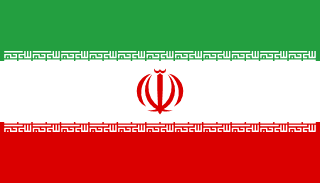
Iran
Islamic Republic of Iran
Population: UN WPP 2024, revision 1, projection for 1 July 2026. Sources and methodology.
Geography and territory
Iran is the second-largest country in the Middle East, covering 1,648,195 square kilometers in a strategic position between the Persian Gulf to the south and the Caspian Sea to the north. Its terrain is dominated by mountain ranges that frame a vast interior plateau: the Zagros Mountains stretch more than 1,500 kilometers from the northwest to the southeast, while the Alborz range lines the Caspian coast and contains Mount Damavand, Iran’s highest point and the tallest peak in the Middle East at 5,610 meters. Iran borders Turkey, Iraq, Pakistan, Afghanistan, Turkmenistan, Azerbaijan, and Armenia.
The country’s interior holds two vast deserts: the Dasht-e Kavir, an immense salt desert at the center of the plateau, and the Dasht-e Lut, recognized as one of the hottest places on Earth, where surface temperatures have been recorded above 70 degrees Celsius. By contrast, the northern provinces along the Caspian enjoy a humid subtropical climate with lush forests fed by abundant rainfall.
Iran possesses substantial underground water resources that have been tapped for millennia through qanats, an ingenious system of subterranean channels invented in ancient Persia more than 3,000 years ago and recognized by UNESCO as a World Heritage site. The country has more than 2,400 kilometers of coastline split between the Persian Gulf and the Caspian Sea, supporting marine ecosystems of considerable biodiversity, from coral reefs and mangrove stands along the Gulf to sturgeon fisheries in the Caspian.
History
Iran is heir to one of the oldest and most storied civilizations in human history. The Achaemenid Empire, founded by Cyrus the Great in the sixth century BCE, was the first great universal empire, stretching from Egypt to India and establishing principles of religious tolerance and efficient administration enshrined in the Cyrus Cylinder, often regarded as an early declaration of human rights. Persepolis, the ceremonial capital built by Darius I, still stands as a majestic testament to that grandeur.
After the conquest of Alexander the Great, Persia was reborn under the Parthian and Sasanian empires, which rivaled Rome for centuries. The Arab conquest of the seventh century introduced Islam, but Persian culture endured and flourished, producing a scientific and literary golden age that gave the world figures such as Avicenna, Omar Khayyam, Rumi, and Hafez. The Safavid, Qajar, and Pahlavi dynasties shaped modern Iran, with the Safavids establishing Shia Islam as the state religion in the 16th century.
The Islamic Revolution of 1979, led by Ayatollah Khomeini, overthrew the monarchy of Shah Mohammad Reza Pahlavi and established a theocratic republic unique in the world, with the new government formally proclaimed on April 1, 1979. The war with Iraq that followed, from 1980 to 1988, was one of the most devastating conflicts of the 20th century. Since then, Iran has navigated periods of international isolation and economic sanctions while pursuing its aspirations as a regional power, maintaining an independent foreign policy that has often put it at odds with Western nations.
Culture and society
Iranian culture rests on a literary and artistic tradition spanning more than 2,500 years that has profoundly shaped the wider region. Persian poetry ranks among the richest in the Islamic world: Hafez, Rumi, Saadi, Ferdowsi, and Omar Khayyam are read and recited not only in Iran but around the globe. Ferdowsi’s Shahnameh, the national epic recounting Persia’s mythic history in roughly 60,000 verses, is one of the longest literary works ever composed by a single author.
Iranian architecture is renowned for mosques crowned with turquoise-tiled domes, geometric Persian gardens, and labyrinthine bazaars. Isfahan, with its grand Imam Square, historic bridges, and dazzling mosques, was once celebrated as “half the world” for its splendor. Iranian cinema has earned international acclaim through directors such as Abbas Kiarostami, Asghar Farhadi, and Jafar Panahi, honored at Cannes, Berlin, and the Academy Awards.
Contemporary Iranian society is complex, blending a largely young, urban population with theocratic institutions and long-standing traditions. Persian hospitality is legendary, embodied in the concept of taarof, an elaborate system of courtesy that shapes nearly every social interaction, from bargaining in a bazaar to greeting a guest at the door. Nowruz, the Persian new year that coincides with the spring equinox, is the country’s most important celebration, uniting the nation in rituals of renewal and hope that stretch across ethnic and religious lines.
Economy
Iran holds the world’s second-largest natural gas reserves and its fourth-largest oil reserves, making hydrocarbons the backbone of an economy valued at roughly $362.68 billion. International sanctions tied to Iran’s nuclear program have, however, significantly constrained its ability to export and to access global financial markets, fueling inflationary pressure and currency devaluation.
Beyond oil, Iran has built a diversified industrial base that includes automotive manufacturing, petrochemicals, steel production, pharmaceuticals, and food processing. The country is among the world’s leading producers of saffron, pistachios, dates, and Caspian caviar. Its Persian carpet industry, though it has lost global market share over time, remains a globally recognized symbol of craftsmanship.
Iran’s technology sector has grown notably despite external restrictions, supported by a lively startup ecosystem in Tehran and other major cities that spans e-commerce, ride-hailing, and financial technology. The country maintains one of the most active scientific communities in the Middle East, with high rates of academic publication in fields ranging from engineering to medicine. Informal trade and cross-border commerce also play a significant economic role, while the government continues to pursue plans to reduce dependence on oil and diversify sources of national income.
Food and cuisine
Persian cuisine is one of the world’s great culinary traditions, marked by a harmonious balance of sweet, sour, and aromatic flavors. Rice sits at the heart of the Iranian table, prepared using a distinctive technique that produces tahdig, a crisp, golden crust that forms at the bottom of the pot and is considered the most prized part of the dish. Chelo kebab — rice served with lamb or chicken marinated in saffron and lemon juice — stands as the national dish.
Persian stews, known as khoresh, are refined preparations that combine meat with fruit, herbs, and spices in slow, careful cooking. Ghormeh sabzi, a stew of fresh herbs with beans and dried lime, and fesenjan, a chicken stew with ground walnuts and pomegranate molasses, represent Persian culinary sophistication at its finest. Fresh herbs, served at every meal as sabzi khordan, are an essential part of the Iranian diet.
Iran is the world’s largest producer of saffron, the most expensive spice on Earth, which flavors both the cuisine and the culture of the country. Persian sweets are legendary: gaz from Isfahan, a nougat made with egg white and pistachios; sohan from Qom, a crisp saffron-and-almond confection; and Tabriz-style baklava. Black tea served with nabat, saffron-scented sugar crystals, accompanies every social gathering and stands as a symbol of Iranian hospitality.
Tourism and landmarks
Iran is home to 27 UNESCO World Heritage sites, one of the largest collections of recognized heritage anywhere in the world. Persepolis, the ancient ceremonial capital of the Achaemenid Empire, impresses visitors with its columns, reliefs, and monumental staircases that recount the grandeur of an empire once spanning three continents. Isfahan, a jewel of Islamic architecture, captivates with Naghsh-e Jahan Square, the Shah Mosque, the Sheikh Lotfollah Mosque, and the Ali Qapu Palace.
Shiraz, the city of poets and gardens, holds the tombs of Hafez and Saadi, the Nasir al-Mulk Mosque with its stained-glass interior that floods with color at sunrise, and the nearby ruins of Persepolis. Yazd, a desert city built of mud brick, preserves its distinctive wind towers, Zoroastrian fire temples that have burned for centuries, and an old town recognized as a UNESCO World Heritage site. Tabriz, with its immense historic bazaar, serves as the gateway to Iranian Azerbaijan.
Iran’s natural landscapes are as varied as they are striking: from the Hyrcanian forests along the Caspian, also a UNESCO World Heritage site, to the salt deserts of the interior, and on to the Persian Gulf islands of Qeshm and Hormuz, with their red-sand beaches and surreal rock formations. The Zagros Mountains offer hiking opportunities through nomadic villages, while the ski resorts of Dizin and Shemshak, within easy reach of Tehran, draw winter sports enthusiasts to slopes that rival many found in the Alps.
Fun facts about Iran
- Persian qanats, underground channels built to carry water across long distances, were invented in Iran more than 3,000 years ago and later spread throughout the Islamic world and the Mediterranean.
- Iran has celebrated Nowruz, the Persian new year, for more than 3,000 years, making it one of the oldest continuously observed holidays in the world.
- Iran’s Dasht-e Lut desert holds the record for the highest surface temperature ever recorded on Earth.
- Persian poetry has produced an immense body of celebrated verse, and poets such as Rumi remain among the best-selling poets in the United States today.
- Iran was home to some of the earliest advanced medicine and surgery in history, with the Academy of Gondishapur often cited as one of the world’s first universities.
Iran in numbers
Latest World Bank and UNDP observations, each with its own year. “World median” is the middle value among the countries that report the same indicator; “#” ranks from the highest value.
Population since 1960
Iran had 21.5 million people in 1960 and 92.4 million in 2025 — 4.3 times as many.
People
77.4% of people live in towns and cities (world median 63.4%). 22.0% are under 15 and 8.6% are 65 or older — a middle-aged population. Women have 1.68 children on average, below the replacement level of about 2.1 needed to keep a population stable in the long run without migration.
Economy
The economy shrank by 2.8% in real terms in 2025. Consumer prices rose by 42.2% in 2025 — very high inflation. Services make up the largest share of output (47.1% of GDP); agriculture contributes 10.6%.
Development and environment
UNDP rates human development in Iran as high, with an index of 0.799 in 2023 (rank 75 of 193). 85.3% of people use the internet and 100.0% have access to electricity. Forest covers 6.6% of the land (world median 32.8%).
Sources: World Bank, World Development Indicators (CC BY 4.0), most recent observation from 2015 onward; UNDP Human Development Report 2025. Retrieved 2026-10-10. Sector shares need not add up to 100% because taxes and subsidies on products are excluded. Missing values are left blank rather than estimated. Sources and methodology.
Climate of Iran
Averaged across Iran, the warmest month is July (30.1 °C) and the coolest is January (6.0 °C), a seasonal swing of 24.1 °C. The annual mean is 18.4 °C.
About 220 mm of precipitation falls in a typical year. March is the wettest month (37 mm) and August the driest (3 mm). What little rain there is falls mostly from January to March (46% of the total).
Less than 250 mm a year is typical of desert climates.
Show monthly values as a table
| Month | Mean °C | Low °C | High °C | Precipitation, mm |
|---|---|---|---|---|
| January | 6.0 | 0.2 | 11.8 | 34 |
| February | 8.2 | 2.2 | 14.1 | 30 |
| March | 12.7 | 6.4 | 19.1 | 37 |
| April | 18.2 | 11.5 | 25.0 | 29 |
| May | 23.6 | 16.2 | 31.0 | 16 |
| June | 28.2 | 20.4 | 35.9 | 4 |
| July | 30.1 | 22.6 | 37.5 | 4 |
| August | 28.8 | 21.1 | 36.7 | 3 |
| September | 25.0 | 16.8 | 33.2 | 4 |
| October | 19.4 | 11.6 | 27.3 | 10 |
| November | 12.4 | 5.7 | 19.3 | 22 |
| December | 7.7 | 1.6 | 13.9 | 29 |
Figures are 1991–2020 averages across the whole land area of Iran, from the World Bank Climate Change Knowledge Portal, CRU TS 4.08 (CC BY 4.0). They are not readings from one weather station: the capital, the coast and high ground can be much warmer, cooler, wetter or drier.
Travel essentials for Iran
The practical details visitors ask about first. Traffic in Iran drives on the right, like most of the world. Mains electricity is 230 V at 50 Hz, so devices made only for 110–120 V (common in North America) need a converter unless they are dual-voltage — most phone and laptop chargers are.
- Emergency number
- 110Ambulance 115 · Fire 125
- Driving side
- Right
- Plug types
- Type C, Type FC: two round pins (Europlug); F: two round pins with side earth clips (Schuko)
- Voltage
- 230 V50 Hz
- Dialling code
- +98From abroad: your exit code, then 98 and the number
- Currency
- Iranian Rial (IRR)
- Time zone
- IRST (UTC+3:30)Current local time in Iran
Compiled from IEC plug and voltage standards, national emergency-service listings and the UN road-traffic conventions. Emergency numbers and local coverage can change — confirm them locally on arrival. Iran's internet domain is .ir.
Where Iran ranks in the world
Each position counts only the countries with data in that ranking guide. First place is the highest value — for price levels, the most expensive. Select a card to see the full table.
- Population17th of 19693.2 millionUN projection, July 2026
- Land area17th of 1951,622,500 km²World Bank, 2023
- Population density130th of 19456 per km²World Bank, 2023
- GDP (nominal)33rd of 187$475.3BWorld Bank, 2024, current US$
- GDP per capita113th of 187$5,190World Bank, 2024, current US$
- Life expectancy60th of 19477.9 yearsWorld Bank, 2024
Bordering countries of Iran


Compare Iran with another country
Frequently asked questions about Iran
What is the capital of Iran?
The capital of Iran is Tehran.
What is the population of Iran?
The UN World Population Prospects projection for Iran is 93,168,497 people (93.2 million) on 1 July 2026. National statistical offices may publish different estimates.
What language is spoken in Iran?
The official language of Iran is Persian (Farsi).
What currency is used in Iran?
The currency of Iran is the Iranian Rial (IRR).
How big is Iran?
Iran covers an area of 1,648,195 km².
What type of government does Iran have?
Iran is a theocratic Islamic republic.
Which countries border Iran?
Iran shares land borders with Turkey, Iraq, Pakistan, Afghanistan, Turkmenistan, Azerbaijan, Armenia.
What is the highest point in Iran?
The highest point in Iran is Mount Damavand (5,610 m).


