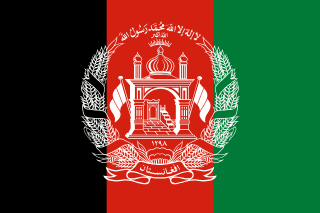
Afghanistan
Islamic Emirate of Afghanistan
Population: UN WPP 2024, revision 1, projection for 1 July 2026. Sources and methodology.
Geography and territory
Afghanistan is a landlocked country wedged into the meeting point of Central and South Asia, covering 652,230 square kilometers of some of the most rugged terrain on the continent. The Hindu Kush mountain range dominates the landscape, cutting across the country from northeast to southwest and separating the fertile plains of the north from the arid basins of the south. Its highest summit, Noshaq, rises 7,492 meters above sea level near the Pakistani border in the narrow Wakhan Corridor, a finger of Afghan territory that briefly touches China.
The country’s terrain shifts dramatically from region to region. The north is fed by the Amu Darya River, which nourishes plains suitable for farming and grazing, while the south and southwest give way to the harsh Registan and Dasht-e Margo deserts. Between these extremes lie sheltered highland valleys such as Bamiyan and Panjshir, pockets of green enclosed by steep cliffs that have long served as natural strongholds against invaders. Afghanistan shares borders with six countries: Pakistan, Iran, Turkmenistan, Uzbekistan, Tajikistan, and China.
The climate is continental and dry, swinging between bitterly cold mountain winters, when temperatures can plunge below minus 20 degrees Celsius, and scorching desert summers in the lowlands. Rainfall is sparse and falls mostly in winter and spring, making water management essential to survival. Many communities still rely on karez, an ancient network of underground channels that carries snowmelt from the mountains to farmland, a testament to centuries of ingenious adaptation to a demanding environment.
History
Afghanistan has long been called a crossroads of civilizations, owing to its position astride the historic Silk Road. Persians, the armies of Alexander the Great, Mauryan rulers, Kushan emperors, and White Hun invaders all passed through or settled in its valleys. The Kushan Empire, centered near present-day Begram, nurtured the Greco-Buddhist art of Gandhara, a tradition whose most famous legacy, the colossal Buddhas of Bamiyan, stood carved into a cliff face for over a millennium before their destruction in 2001.
The arrival of Islam in the seventh century reshaped the region profoundly. Afghan soil later gave rise to powerful dynasties, including the Ghaznavids, who under Sultan Mahmud turned the city of Ghazni into a celebrated center of learning and culture. The Durrani Empire, founded by Ahmad Shah Durrani in 1747, is widely regarded as the foundation of the modern Afghan state. During the nineteenth century, Afghanistan became the stage for the “Great Game,” the strategic rivalry between the British and Russian empires for influence over Central Asia, formal independence from British control coming on 19 August 1919.
The twentieth century brought waves of modernization efforts, coups, the Soviet invasion of 1979, a punishing civil war, and the rise of the Taliban. The US-led international intervention that began in 2001 opened two decades of foreign military presence, which ended with the 2021 withdrawal and the Taliban’s return to power as the Islamic Emirate of Afghanistan. This long, layered history reflects a nation repeatedly caught between larger outside powers, yet one that has consistently preserved its own distinct identity.
Culture and society
Afghan culture blends Persian, Turkic, and South Asian influences accumulated over millennia of exchange along trade routes. Poetry holds a place of special honor in everyday life: figures such as Rumi, born in the northern city of Balkh, and the Pashtun warrior-poet Khushal Khan Khattak are revered as national treasures. Storytelling and recitation remain central to social gatherings, where verses and proverbs are shared with passion and reverence, a living oral tradition that predates written literature in the region.
Home to a population of about 45.0 million, Afghan society is organized around several major ethnic groups, including Pashtuns, Tajiks, Hazaras, Uzbeks, and Turkmen, each with its own dialects, customs, and traditions. Despite this diversity, shared values run deep: hospitality toward guests, religious devotion, and codes of honor such as the Pashtunwali observed among Pashtun communities. The jirga, a traditional council of tribal elders, has for generations served as the primary mechanism for resolving disputes and reaching collective decisions at the local level.
Afghan craftsmanship enjoys renown well beyond its borders, particularly its hand-woven carpets, whose geometric patterns and vivid colors vary by region and by the ethnic group of the weavers who made them. Traditional music, played on instruments such as the rubab and tabla, accompanies celebrations and social gatherings, although its practice has faced restrictions during different periods of the country’s history. Islamic calligraphy and Persian miniature painting round out an artistic heritage of remarkable depth.
Economy
Afghanistan’s economy remains one of the least developed in the world, shaped by decades of armed conflict. Agriculture is the backbone of economic life, employing well over half the population. Wheat, fruit, nuts, and the country’s prized grapes are staple crops, while poppy cultivation for opium has historically formed a significant share of the informal economy in several regions.
The country sits atop vast, largely untapped mineral wealth, with estimated reserves worth well over a trillion dollars, including lithium, copper, iron ore, rare earth elements, gold, and gemstones such as the lapis lazuli of Badakhshan and the emeralds of the Panjshir valley. Poor infrastructure, persistent insecurity, and the absence of a stable regulatory framework, however, have kept most of these resources from being systematically developed.
Cross-border trade, both formal and informal, plays a crucial role in sustaining the economy. Dried fruit, carpets, gemstones, and spices rank among the country’s main exports. International aid has historically been a critical source of financing, though its flow shrank sharply following the political changes of 2021. Remittances sent home by Afghans living abroad continue to support the incomes of many families across the country, with a gross domestic product estimated around $14.58 billion and a Human Development Index that remains classified as low.
Food and cuisine
Afghan cuisine mirrors the country’s role as a cultural crossroads, weaving together Persian, Indian, and Central Asian influences into hearty, generous cooking. Rice takes center stage, most famously in kabuli pulao, the national dish: fragrant basmati rice slow-cooked with tender lamb, caramelized carrots, raisins, and almonds until the flavors meld into something far greater than the sum of its parts.
Grilled meats are equally central to the table. Kebabs cooked over charcoal are prized for their simple, smoky authenticity, while chapli kebab, a Pashtun specialty, flattens spiced minced meat with tomato and onion into patties that turn crisp outside and juicy within. Mantu, dumplings filled with seasoned lamb and onion and topped with tomato sauce and yogurt, reveal the strong culinary ties between Afghanistan and its Central Asian neighbors.
Naan bread, baked in a clay tandoor oven, accompanies nearly every meal and is treated with such respect that wasting it is considered deeply disrespectful. Bolani, flatbreads stuffed with potato, leek, or pumpkin, make a popular snack, while desserts such as firni, a creamy milk pudding scented with cardamom and topped with pistachios, and the syrup-soaked jalebi round out the meal. Green tea and cardamom-spiced black tea are poured constantly, sealing every social encounter with warmth and hospitality.
Tourism and landmarks
Afghanistan holds a wealth of historic and natural treasures, though decades of conflict have severely limited tourism. The archaeological site of the Bamiyan Buddhas, where the empty niches of the destroyed statues remain a haunting testament to a lost heritage, is part of a UNESCO World Heritage listing alongside the Minaret of Jam, a soaring twelfth-century brick tower that rises 65 meters in a remote central valley.
The ancient city of Balkh, once known as the “mother of cities,” was a major center of Zoroastrianism, Buddhism, and Islam and ranks among the oldest urban settlements on Earth. Herat, in the west, preserves the magnificent Citadel of Alexander and the Great Friday Mosque, adorned with exquisite turquoise tilework. Kabul, despite the visible scars of war, is home to the Gardens of Babur, laid out by the founder of the Mughal Empire.
Afghanistan’s natural landscapes possess a stark, wild beauty. The Panjshir valley, threaded with emerald rivers beneath snow-capped peaks, and the Band-e Amir lakes, a chain of six intensely blue lakes set among the mountains of Bamiyan and recognized as the country’s first national park, stand among its most extraordinary natural wonders, awaiting more peaceful times to draw travelers once again.
Fun facts about Afghanistan
- Rumi, one of the most widely read poets in the world and a towering figure of Sufi literature, was born in the Afghan city of Balkh in the thirteenth century.
- Kabul preserves one of the oldest known manuscripts of the Quran.
- Afghan carpets rank among the finest in the world, with some antique pieces fetching hundreds of thousands of dollars at international auctions.
- Buzkashi, a fiercely contested equestrian sport in which riders compete to drag a goat carcass toward a goal, remains a beloved Central Asian tradition in the country’s north.
- The Wakhan Corridor, a narrow strip of Afghan territory, stretches out to touch the border of China, a remarkable quirk of nineteenth-century geopolitics.
- Afghanistan was among the first countries to recognize the Bolshevik government and establish diplomatic relations with Soviet Russia after 1917.
Afghanistan in numbers
Latest World Bank and UNDP observations, each with its own year. “World median” is the middle value among the countries that report the same indicator; “#” ranks from the highest value.
Population since 1960
Afghanistan had 9.0 million people in 1960 and 43.8 million in 2025 — 4.9 times as many.
People
25.9% of people live in towns and cities (world median 63.4%). 42.6% are under 15 and 2.4% are 65 or older — a very young population. Women have 4.76 children on average, above the replacement level of about 2.1.
Economy
The economy grew by 1.9% in real terms in 2024. Consumer prices fell by 6.6% in 2024. Services make up the largest share of output (45.2% of GDP); agriculture contributes 34.3%, a large share that points to a farming-based economy.
Development and environment
UNDP rates human development in Afghanistan as low, with an index of 0.496 in 2023 (rank 181 of 193). 16.1% of people use the internet and 87.8% have access to electricity. Forest covers 1.9% of the land (world median 32.8%).
Sources: World Bank, World Development Indicators (CC BY 4.0), most recent observation from 2015 onward; UNDP Human Development Report 2025. Retrieved 2026-10-10. Sector shares need not add up to 100% because taxes and subsidies on products are excluded. Missing values are left blank rather than estimated. Sources and methodology.
Climate of Afghanistan
Averaged across Afghanistan, the warmest month is July (25.5 °C) and the coolest is January (0.5 °C), a seasonal swing of 25.0 °C. The annual mean is 13.4 °C.
About 337 mm of precipitation falls in a typical year. March is the wettest month (64 mm) and September the driest (3 mm). The three wettest consecutive months, February to April, bring 52% of the year's total — a pronounced rainy season.
Show monthly values as a table
| Month | Mean °C | Low °C | High °C | Precipitation, mm |
|---|---|---|---|---|
| January | 0.5 | −5.3 | 6.4 | 45 |
| February | 2.9 | −3.0 | 8.8 | 59 |
| March | 8.3 | 2.2 | 14.5 | 64 |
| April | 14.2 | 7.3 | 21.1 | 52 |
| May | 19.0 | 11.4 | 26.6 | 31 |
| June | 23.4 | 15.3 | 31.6 | 8 |
| July | 25.5 | 17.6 | 33.4 | 8 |
| August | 24.1 | 15.8 | 32.3 | 7 |
| September | 19.4 | 10.6 | 28.2 | 3 |
| October | 13.8 | 5.3 | 22.3 | 9 |
| November | 7.2 | 0.0 | 14.4 | 22 |
| December | 2.9 | −3.4 | 9.2 | 30 |
Figures are 1991–2020 averages across the whole land area of Afghanistan, from the World Bank Climate Change Knowledge Portal, CRU TS 4.08 (CC BY 4.0). They are not readings from one weather station: the capital, the coast and high ground can be much warmer, cooler, wetter or drier.
Travel essentials for Afghanistan
The practical details visitors ask about first. Traffic in Afghanistan drives on the right, like most of the world. Mains electricity is 220 V at 50 Hz, so devices made only for 110–120 V (common in North America) need a converter unless they are dual-voltage — most phone and laptop chargers are.
- Emergency number
- 119Ambulance 112
- Driving side
- Right
- Plug types
- Type C, Type FC: two round pins (Europlug); F: two round pins with side earth clips (Schuko)
- Voltage
- 220 V50 Hz
- Dialling code
- +93From abroad: your exit code, then 93 and the number
- Currency
- Afghani (AFN)
- Time zone
- AFT (UTC+4:30)Current local time in Afghanistan
Compiled from IEC plug and voltage standards, national emergency-service listings and the UN road-traffic conventions. Emergency numbers and local coverage can change — confirm them locally on arrival. Afghanistan's internet domain is .af.
Where Afghanistan ranks in the world
Each position counts only the countries with data in that ranking guide. First place is the highest value — for price levels, the most expensive. Select a card to see the full table.
- Population36th of 19645.0 millionUN projection, July 2026
- Land area40th of 195652,230 km²World Bank, 2023
- Population density122nd of 19464 per km²World Bank, 2023
- GDP (nominal)131st of 187$17.8BWorld Bank, 2024, current US$
- GDP per capita186th of 187$417World Bank, 2024, current US$
- Life expectancy161st of 19466.3 yearsWorld Bank, 2024
Bordering countries of Afghanistan


Compare Afghanistan with another country
Frequently asked questions about Afghanistan
What is the capital of Afghanistan?
The capital of Afghanistan is Kabul.
What is the population of Afghanistan?
The UN World Population Prospects projection for Afghanistan is 45,047,069 people (45.0 million) on 1 July 2026. National statistical offices may publish different estimates.
What language is spoken in Afghanistan?
The official language of Afghanistan is Dari, Pashto.
What currency is used in Afghanistan?
The currency of Afghanistan is the Afghani (AFN).
How big is Afghanistan?
Afghanistan covers an area of 652,230 km².
What type of government does Afghanistan have?
Afghanistan is a islamic emirate.
Which countries border Afghanistan?
Afghanistan shares land borders with Pakistan, Iran, Turkmenistan, Uzbekistan, Tajikistan, China.
What is the highest point in Afghanistan?
The highest point in Afghanistan is Noshaq (7,492 m).


