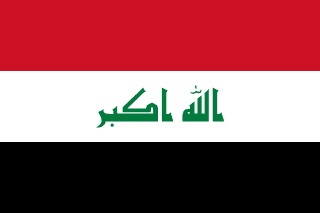
Iraq
Republic of Iraq
Population: UN WPP 2024, revision 1, projection for 1 July 2026. Sources and methodology.
Geography and territory
Iraq covers 438,317 square kilometers at the heart of the Middle East, in the region historically known as Mesopotamia, the “land between the rivers.” The Tigris and Euphrates rivers, which rise in Turkey and flow through the country from north to south before merging into the Shatt al-Arab and emptying into the Persian Gulf, have sustained life here since the dawn of civilization. The alluvial plains they form make up one of the most fertile agricultural regions in the world.
Northern Iraq is dominated by the mountains of Iraqi Kurdistan, with peaks exceeding 3,600 meters, including Cheekha Dar, the country’s highest point, and green valleys that contrast sharply with the rest of the country. The center and south consist of broad Mesopotamian plains, while the west gives way to the Syrian-Arabian desert, which covers nearly a third of the national territory. The marshes of southern Iraq, situated between the Tigris and Euphrates, form a unique wetland ecosystem that has been home to the Marsh Arabs for thousands of years. Iraq shares borders with Turkey, Iran, Kuwait, Saudi Arabia, Jordan, and Syria.
Iraq’s climate is predominantly continental and arid, with extremely hot summers in which temperatures in the south frequently exceed 50 degrees Celsius, and cold, wet winters in the northern mountains where snow blankets the peaks. Sandstorms have become an increasingly common occurrence affecting cities across the center and south, a trend worsened by desertification and reduced river flow caused by upstream dams built in Turkey and Iran. These pressures have made water management one of the country’s most pressing long-term environmental concerns.
History
Iraq is, quite literally, the cradle of civilization. On the plains of Mesopotamia, the Sumerians invented cuneiform writing around 3400 BCE, developed the earliest city-states, codified the first known laws, and produced works of literature such as the Epic of Gilgamesh, the oldest surviving epic tale in human history. After them, the Akkadians, Babylonians, and Assyrians built empires that dominated the ancient world, with Babylon under Nebuchadnezzar II becoming one of antiquity’s most magnificent cities.
Baghdad, founded in 762 by the Abbasid caliph al-Mansur, became the capital of the Islamic world and the largest, most learned city on Earth for several centuries. Its House of Wisdom stood as the medieval world’s foremost center of translation and scientific production, preserving and expanding upon Greek, Persian, and Indian knowledge. The Mongol invasion of 1258 destroyed the city and brought the Islamic Golden Age to a close.
The 20th century transformed Iraq profoundly: the fall of the Ottoman Empire gave way to the British Mandate, independence in 1932, the 1958 revolution, the rise of the Baath Party, and the rule of Saddam Hussein. The war with Iran (1980–1988), the invasion of Kuwait in 1990, the Gulf War, international sanctions, the 2003 US-led invasion, and the later fight against the Islamic State each left deep marks on a country that continues working to rebuild and restore stability.
Culture and society
Iraqi culture is rooted in thousands of years of civilizational history. Its literary tradition is immense, stretching from the Epic of Gilgamesh to modern poets such as Badr Shakir al-Sayyab and Nazik al-Malaika, considered founders of the free verse movement in Arabic poetry. Iraqi music, particularly the maqam, a system of melodic improvisation recognized by UNESCO as intangible cultural heritage, ranks among the most refined musical traditions in the Arab world.
Iraqi society is a mosaic of ethnic and religious communities: Shia and Sunni Arabs, Kurds, Turkmen, Assyrians, Yazidis, and Mandaeans, among others. This diversity has long been a source of cultural richness, even as it has also contributed to tension at times. Family and tribe remain fundamental pillars of social organization, and Iraqi hospitality is expressed through the generosity with which guests and visitors are received, always offered the very best a household has to give, whether in a Baghdad living room or a Kurdish mountain village.
Iraqi craftsmanship carries traditions that stretch back millennia, including Arabic calligraphy, artistic metalwork, pottery, and Kurdish carpet weaving. Religious architecture reflects the country’s spiritual diversity, from the golden-domed mosques of Karbala and Najaf, major centers of Shia pilgrimage, to the Assyrian and Chaldean churches of the north. Contemporary Iraqi film and literature, often shaped by the experience of war and exile, have earned growing international recognition.
Economy
Iraq’s economy depends heavily on oil, which accounts for the overwhelming majority of government revenue and nearly all of the country’s exports. Iraq holds some of the largest proven oil reserves in the world, concentrated mainly in the Basra fields in the south and the Kirkuk fields in the north. This heavy reliance on crude leaves the economy vulnerable to swings in international prices, and total output stands at roughly $254.37 billion.
Economic reconstruction after decades of conflict remains a monumental challenge. The country’s infrastructure, including power grids, water systems, hospitals, and schools, has suffered extensive damage. The agricultural sector, once the foundation of the Mesopotamian economy, has declined sharply due to soil salinization, water scarcity, and the displacement of rural populations.
The Iraqi government has pursued efforts to diversify the economy, seeking to develop sectors such as construction, telecommunications, and financial services. The autonomous Kurdistan Region has seen comparatively faster economic development, attracting foreign investment in energy, tourism, and trade. Youth unemployment, corruption, and gaps in basic services remain the country’s most pressing socioeconomic challenges, even as the government works to attract investment beyond the oil sector and rebuild public trust in state institutions.
Food and cuisine
Iraqi cuisine is among the oldest in the world, a direct descendant of Mesopotamian culinary traditions documented on cuneiform tablets some 4,000 years old. Dishes typically feature lamb, rice, legumes, and spices such as turmeric, cumin, and baharat, an aromatic spice blend distinctive to the region. Masgouf, river fish split open and slow-grilled over tamarisk-wood coals, is the national dish and an essential culinary experience in Baghdad.
Amber rice, fragrant with saffron and spices, served alongside tender lamb and topped with toasted almonds and raisins, is the centerpiece of family celebrations. Quzi, a whole lamb stuffed with spiced rice, nuts, and raisins, is prepared for major festivities and special occasions. Iraqi dolma, grape leaves and vegetables stuffed with rice, meat, and herbs, is a labor-intensive dish that reflects the care and devotion of home cooking.
Iraqi sweets are exquisite: kleicha, a cookie filled with dates or nuts, is the national confection, prepared especially during religious holidays. Iraqi-style baklava, znud el-sit (cream-filled pastry rolls), and nut-stuffed dates round out a rich tradition of desserts. Iraqi tea, served in small istikan glasses with plenty of sugar and often flavored with cardamom, is the social drink of choice accompanying every conversation.
Tourism and landmarks
Iraq holds some of the most important archaeological sites in human history. The ruins of Babylon, including the remains of the Ishtar Gate and the foundations linked to the legendary Hanging Gardens, one of the Seven Wonders of the ancient world, form a destination of incomparable historical value. The ancient Sumerian city of Ur, with its 4,000-year-old ziggurat, is traditionally associated with the patriarch Abraham and stands as a testament to humanity’s first urban civilization.
The holy cities of Karbala and Najaf serve as pilgrimage centers for millions of Shia Muslims worldwide. The Shrine of Imam Hussein in Karbala and the Shrine of Imam Ali in Najaf, with their striking golden domes, draw enormous numbers of pilgrims each year, especially during the commemoration of Ashura. Baghdad, despite the scars of war, still holds treasures such as the National Museum of Iraq, home to one of the most valuable archaeological collections in the world.
Iraqi Kurdistan has emerged as a rising tourist destination, offering dramatic mountain scenery, waterfalls, green valleys, and a level of security that contrasts with much of the rest of the country. The Citadel of Erbil, continuously inhabited for more than 6,000 years, ranks among the oldest urban settlements on Earth and is recognized as a UNESCO World Heritage site. The marshes of southern Iraq, partially restored after being drained under Saddam Hussein’s regime, offer a singular experience of gliding through reed beds aboard traditional mashuf boats, past water buffalo and reed houses built much as they have been for thousands of years.
Fun facts about Iraq
- Cuneiform writing, invented by the Sumerians in what is now Iraq, is the oldest known writing system, dating back more than 5,000 years.
- The Code of Hammurabi, created in Babylon around 1754 BCE, is one of the oldest and most complete sets of laws from the ancient world.
- The marshes of southern Iraq are identified by many scholars as a candidate for the biblical Garden of Eden.
- Baghdad was the largest city in the world for much of the Middle Ages, its population surpassing a million residents at a time when London had only a few thousand.
- Algebra was systematized by the ninth-century Iraqi mathematician al-Khwarizmi, whose name gave rise to the word “algorithm.”
Iraq in numbers
Latest World Bank and UNDP observations, each with its own year. “World median” is the middle value among the countries that report the same indicator; “#” ranks from the highest value.
Population since 1960
Iraq had 7.0 million people in 1960 and 47.0 million in 2025 — 6.7 times as many.
People
69.9% of people live in towns and cities (world median 63.4%). 36.0% are under 15 and 3.4% are 65 or older — a young population. Women have 3.22 children on average, above the replacement level of about 2.1.
Economy
The economy shrank by 2.2% in real terms in 2025. Consumer prices rose by 0.3% in 2025. Services make up the largest share of output (52.3% of GDP); agriculture contributes 3.4%.
Development and environment
UNDP rates human development in Iraq as medium, with an index of 0.695 in 2023 (rank 126 of 193). 81.5% of people use the internet and 100.0% have access to electricity. Forest covers 1.6% of the land (world median 32.8%).
Sources: World Bank, World Development Indicators (CC BY 4.0), most recent observation from 2015 onward; UNDP Human Development Report 2025. Retrieved 2026-10-10. Sector shares need not add up to 100% because taxes and subsidies on products are excluded. Missing values are left blank rather than estimated. Sources and methodology.
Climate of Iraq
Averaged across Iraq, the warmest month is July (35.2 °C) and the coolest is January (9.9 °C), a seasonal swing of 25.3 °C. The annual mean is 23.0 °C.
About 194 mm of precipitation falls in a typical year. March is the wettest month (35 mm) and August the driest (0 mm). What little rain there is falls mostly from January to March (48% of the total).
Less than 250 mm a year is typical of desert climates.
Show monthly values as a table
| Month | Mean °C | Low °C | High °C | Precipitation, mm |
|---|---|---|---|---|
| January | 9.9 | 4.5 | 15.4 | 31 |
| February | 12.4 | 6.4 | 18.4 | 28 |
| March | 16.5 | 10.0 | 23.1 | 35 |
| April | 22.3 | 15.2 | 29.4 | 29 |
| May | 28.2 | 20.5 | 35.9 | 11 |
| June | 32.7 | 24.7 | 40.7 | 1 |
| July | 35.2 | 27.0 | 43.5 | 0 |
| August | 34.6 | 26.2 | 43.0 | 0 |
| September | 31.1 | 22.5 | 39.7 | 0 |
| October | 25.1 | 17.4 | 32.8 | 8 |
| November | 16.4 | 9.9 | 22.9 | 24 |
| December | 11.2 | 5.7 | 16.8 | 29 |
Figures are 1991–2020 averages across the whole land area of Iraq, from the World Bank Climate Change Knowledge Portal, CRU TS 4.08 (CC BY 4.0). They are not readings from one weather station: the capital, the coast and high ground can be much warmer, cooler, wetter or drier.
Travel essentials for Iraq
The practical details visitors ask about first. Traffic in Iraq drives on the right, like most of the world. Mains electricity is 230 V at 50 Hz, so devices made only for 110–120 V (common in North America) need a converter unless they are dual-voltage — most phone and laptop chargers are.
- Emergency number
- 104Ambulance 122 · Fire 115
- Driving side
- Right
- Plug types
- Type C, Type D, Type GC: two round pins (Europlug); D: three large round pins in a triangle; G: three rectangular pins (British)
- Voltage
- 230 V50 Hz
- Dialling code
- +964From abroad: your exit code, then 964 and the number
- Currency
- Iraqi Dinar (IQD)
- Time zone
- AST (UTC+3)Current local time in Iraq
Compiled from IEC plug and voltage standards, national emergency-service listings and the UN road-traffic conventions. Emergency numbers and local coverage can change — confirm them locally on arrival. Iraq's internet domain is .iq.
Where Iraq ranks in the world
Each position counts only the countries with data in that ranking guide. First place is the highest value — for price levels, the most expensive. Select a card to see the full table.
- Population33rd of 19648.0 millionUN projection, July 2026
- Land area57th of 195434,130 km²World Bank, 2023
- Population density87th of 194104 per km²World Bank, 2023
- GDP (nominal)49th of 187$279.6BWorld Bank, 2024, current US$
- GDP per capita106th of 187$6,074World Bank, 2024, current US$
- Life expectancy110th of 19472.4 yearsWorld Bank, 2024
- Price level112th of 16539 (US = 100)ICP 2021, household consumption
Bordering countries of Iraq


Compare Iraq with another country
Frequently asked questions about Iraq
What is the capital of Iraq?
The capital of Iraq is Baghdad.
What is the population of Iraq?
The UN World Population Prospects projection for Iraq is 48,007,437 people (48.0 million) on 1 July 2026. National statistical offices may publish different estimates.
What language is spoken in Iraq?
The official language of Iraq is Arabic, Kurdish.
What currency is used in Iraq?
The currency of Iraq is the Iraqi Dinar (IQD).
How big is Iraq?
Iraq covers an area of 438,317 km².
What type of government does Iraq have?
Iraq is a federal parliamentary republic.
Which countries border Iraq?
Iraq shares land borders with Turkey, Iran, Kuwait, Saudi Arabia, Jordan, Syria.
What is the highest point in Iraq?
The highest point in Iraq is Cheekha Dar (3,611 m).


