Lebanon
Lebanese Republic
Population: UN WPP 2024, revision 1, projection for 1 July 2026. Sources and methodology.
Geography and territory
Lebanon is one of the smallest countries in Asia, covering just 10,452 square kilometers, yet it packs in extraordinary geographic diversity. Situated on the eastern Mediterranean coast, the country forms a narrow strip barely 50 kilometers wide between the sea and the Syrian border. Two parallel mountain ranges dominate the terrain: Mount Lebanon along the coast, culminating at Qurnat as Sawda at 3,088 meters, and the Anti-Lebanon range along the eastern border with Syria.
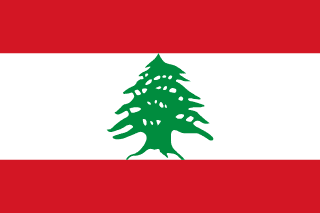
Between the two ranges lies the fertile Bekaa Valley, an agriculturally vital plain once known as the breadbasket of the Roman Empire. The narrow coastal plain, home to most of the population, holds the country’s major cities. Lebanon’s coastline, roughly 225 kilometers long, mixes sandy and rocky beaches with dramatic cliffs. The cedars of Lebanon, ancient trees mentioned in the Bible and the country’s national symbol, appearing on its flag, survive in small mountain groves above 1,800 meters.
Lebanon’s climate is Mediterranean along the coast, with hot, dry summers and mild, rainy winters, while the mountains have an alpine climate with heavy snowfall that supports ski resorts open from December to April. This gives rise to the unique possibility of skiing in the morning and swimming in the Mediterranean the same afternoon. Rainfall here is the highest in the region, making Lebanon something of a green anomaly amid a largely arid neighborhood.
History
Lebanese history reaches back to Phoenician antiquity, when cities such as Byblos, Tyre, and Sidon served as centers of Mediterranean trade and the birthplace of the phonetic alphabet that gave rise to the Greek and Latin alphabets. The Phoenicians were the greatest sailors and traders of the ancient world, founding colonies across the Mediterranean, including Carthage in North Africa. Byblos, one of the oldest continuously inhabited cities in the world, lent its name to the word “Bible” through its role as a hub of the papyrus trade.
The territory was successively ruled by Assyrians, Babylonians, Persians, Greeks, Romans, Arabs, Crusaders, Mamluks, and Ottomans. The Crusaders established the County of Tripoli and left behind imposing coastal fortresses. Under the French mandate following the First World War, Greater Lebanon was created in 1920, and the country achieved independence in 1943. Its confessional political system, which divides power among 18 officially recognized religious communities, is unique in the world.
The Lebanese Civil War (1975-1990) devastated the country and especially Beirut, which went from being the “Paris of the Middle East” to a symbol of urban destruction. Postwar reconstruction was ambitious but uneven, and the country has continued to face political instability, foreign intervention, and economic crisis. The Beirut port explosion in August 2020, one of the largest non-nuclear explosions in history, deepened an economic crisis that has plunged the country into one of the worst recessions in the world.
Culture and society
Lebanese culture is among the richest and most cosmopolitan in the Arab world, nourished by the country’s religious and ethnic diversity. Lebanon is home to 18 recognized religious communities, including Maronites, Sunnis, Shiites, Druze, Greek Orthodox, and Armenians, among others. This diversity has produced a complex but culturally vibrant society, where coexistence among distinct traditions has forged a genuinely unique identity.
Lebanese literature has produced universal figures such as Khalil Gibran, author of The Prophet, one of the best-selling books of all time, translated into more than 100 languages. Amin Maalouf, winner of the Prix Goncourt, and poet Nadia Tueni represent a bilingual literary tradition spanning Arabic and French. Lebanese music is the most influential in the Arab world, with figures like Fairuz, whose voice is considered a national treasure, and contemporary artists fusing Arabic sounds with electronic and pop influences.
Lebanese society is known for its sophistication, its love of good living, and its resilience in the face of adversity. Beirut, despite its scars, sustains an effervescent cultural scene of art galleries, theaters, nightclubs, and international festivals. Lebanese fashion has produced globally renowned designers such as Elie Saab, Zuhair Murad, and Rabih Kayrouz. The Lebanese diaspora, estimated at more than 15 million people worldwide, far exceeds the population of Lebanon itself.
Economy
The Lebanese economy has endured one of the most severe crises in modern history, with GDP falling more than 60 percent since 2019. The country was traditionally a financial and commercial hub of the Middle East, known as the “Switzerland of the Middle East” for its robust banking sector and banking secrecy. The collapse of the financial system in 2019, the pandemic, the port explosion, and political instability have devastated the economy.
Before the crisis, the leading sectors were banking, tourism, real estate, trade, and services. Remittances from the large Lebanese diaspora were a vital source of income, exceeding 20 percent of GDP. Agriculture in the Bekaa Valley, especially winemaking, and light industry complemented the services-driven economy. Lebanon was historically a regional center of excellence in education and healthcare.
Economic recovery faces enormous obstacles: the currency has lost more than 95 percent of its value, inflation has run rampant, middle-class savings have evaporated, and the exodus of young professionals threatens the country’s human capital. Even so, Lebanese entrepreneurial spirit, the quality of its workforce, its strategic geographic position, and support from the diaspora offer a foundation for eventual recovery, provided the necessary political stability can be achieved.
Food and cuisine
Lebanese cuisine is considered among the finest in the Mediterranean and has won over palates around the world. Lebanese mezze, a succession of small plates that can include dozens of distinct preparations, is a culinary and social experience without equal. Hummus, baba ghanoush, tabbouleh, fattoush, kibbeh, warak enab (stuffed grape leaves), labneh, muhammara, and falafel come together to form a spread that can easily become a full feast.
Kibbeh, considered the national dish, is a preparation of raw or cooked meat with bulgur and spices that takes many forms: raw (kibbeh nayeh), fried into oval croquettes, baked in a tray, or simmered in a yogurt broth. Lebanese shawarma, grilled kafta, garlic-marinated chicken (taouk), and fatayer (pastries filled with spinach, cheese, or meat) round out the essential classics. Thin, freshly baked Arabic bread accompanies every bite.
Lebanese wines, produced in the Bekaa Valley in a tradition dating back to the Phoenicians, have earned international acclaim, with wineries such as Chateau Musar, Chateau Ksara, and Massaya producing exceptional vintages. Arak, a clear anise-flavored spirit that turns milky when water is added, is the national drink. Lebanese sweets are celebrated: baklava, maamoul, ashta (clotted cream), and sahlab- and mastic-flavored Arabic ice creams are irresistible temptations.
Tourism and landmarks
Lebanon packs an exceptional density of attractions into its small size. Beirut, the capital, combines Phoenician, Roman, and Ottoman archaeological remains in its historic center with vibrant nightlife and cultural energy in neighborhoods like Gemmayze and Mar Mikhael. The National Museum of Beirut holds an extraordinary archaeological collection spanning prehistory through the Mamluk era.
Byblos (Jbeil), one of the oldest continuously inhabited cities in the world with 7,000 years of history, is a UNESCO World Heritage Site offering Phoenician ruins, a Crusader castle, a charming fishing harbor, and an old town full of life. Baalbek, in the Bekaa Valley, preserves the most impressive Roman temples outside Italy, with the Temple of Jupiter and its six colossal columns rising 22 meters above the plain. Tyre and Sidon round out the circuit of ancient Phoenician cities.
The Cedars of God, an ancient cedar forest and UNESCO World Heritage Site, lie near Lebanon’s ski resorts in the mountains. Jeita Grotto, with its spectacular stalactites, stalagmites, and a navigable underground lake, was a finalist for the New Seven Wonders of Nature. The Qadisha Valley, a historic refuge for Maronite Christians dotted with monasteries carved into the rock, is another breathtaking UNESCO World Heritage Site.
Fun facts about Lebanon
- The alphabet used today traces back to the Phoenician alphabet developed in what is now Lebanon more than 3,000 years ago.
- Byblos is considered one of the oldest continuously inhabited cities in the world, with at least 7,000 years of human occupation.
- The Lebanese diaspora exceeds 15 million people, more than double the population of Lebanon itself, with major communities in Brazil, the United States, Australia, Africa, and France.
- Lebanon is the only Arab country with no desert within its borders.
- The cedar of Lebanon, the national symbol featured on the flag, can live more than 3,000 years and was used by the Phoenicians to build their ships and by King Solomon to build the Temple in Jerusalem.
Lebanon in numbers
Latest World Bank and UNDP observations, each with its own year. “World median” is the middle value among the countries that report the same indicator; “#” ranks from the highest value.
Population since 1960
Lebanon had 1.8 million people in 1960 and 5.8 million in 2025 — 3.3 times as many.
The population peaked at 6.5 million in 2015 and has since declined.
People
91.0% of people live in towns and cities (world median 63.4%). 25.6% are under 15 and 10.4% are 65 or older — a middle-aged population. Women have 2.23 children on average, close to the replacement level of about 2.1.
Economy
The economy shrank by 7.1% in real terms in 2024. Consumer prices rose by 14.6% in 2025. Services make up the largest share of output (35.7% of GDP); agriculture contributes 1.0%.
Development and environment
UNDP rates human development in Lebanon as high, with an index of 0.752 in 2023 (rank 102 of 193). 80.6% of people use the internet and 100.0% have access to electricity. Forest covers 13.8% of the land (world median 32.8%).
Sources: World Bank, World Development Indicators (CC BY 4.0), most recent observation from 2015 onward; UNDP Human Development Report 2025. Retrieved 2026-10-10. Sector shares need not add up to 100% because taxes and subsidies on products are excluded. Missing values are left blank rather than estimated. Sources and methodology.
Climate of Lebanon
Averaged across Lebanon, the warmest month is August (23.8 °C) and the coolest is January (6.3 °C), a seasonal swing of 17.5 °C. The annual mean is 15.3 °C.
About 666 mm of precipitation falls in a typical year. January is the wettest month (162 mm) and July the driest (0 mm). The three wettest consecutive months, December to February, bring 62% of the year's total — a pronounced rainy season.
Show monthly values as a table
| Month | Mean °C | Low °C | High °C | Precipitation, mm |
|---|---|---|---|---|
| January | 6.3 | 2.4 | 10.3 | 162 |
| February | 7.1 | 2.7 | 11.5 | 115 |
| March | 9.8 | 5.0 | 14.7 | 75 |
| April | 13.7 | 8.4 | 19.1 | 40 |
| May | 17.7 | 11.7 | 23.6 | 17 |
| June | 21.1 | 14.8 | 27.5 | 2 |
| July | 23.4 | 17.0 | 29.8 | 0 |
| August | 23.8 | 17.5 | 30.2 | 0 |
| September | 21.7 | 15.6 | 27.8 | 3 |
| October | 18.4 | 12.8 | 24.1 | 30 |
| November | 12.4 | 7.5 | 17.4 | 82 |
| December | 7.8 | 3.8 | 11.9 | 139 |
Figures are 1991–2020 averages across the whole land area of Lebanon, from the World Bank Climate Change Knowledge Portal, CRU TS 4.08 (CC BY 4.0). They are not readings from one weather station: the capital, the coast and high ground can be much warmer, cooler, wetter or drier.
Travel essentials for Lebanon
The practical details visitors ask about first. Traffic in Lebanon drives on the right, like most of the world. Mains electricity is 230 V at 50 Hz, so devices made only for 110–120 V (common in North America) need a converter unless they are dual-voltage — most phone and laptop chargers are.
- Emergency number
- 112Ambulance 140 · Fire 175
- Driving side
- Right
- Plug types
- Type A, Type B, Type C, Type D, Type GA: two flat parallel pins; B: two flat pins plus a round earth pin; C: two round pins (Europlug); D: three large round pins in a triangle; G: three rectangular pins (British)
- Voltage
- 230 V50 Hz
- Dialling code
- +961From abroad: your exit code, then 961 and the number
- Currency
- Lebanese Pound (LBP)
- Time zone
- EET (UTC+2)Current local time in Lebanon
Compiled from IEC plug and voltage standards, national emergency-service listings and the UN road-traffic conventions. Emergency numbers and local coverage can change — confirm them locally on arrival. Lebanon's internet domain is .lb.
Where Lebanon ranks in the world
Each position counts only the countries with data in that ranking guide. First place is the highest value — for price levels, the most expensive. Select a card to see the full table.
- Population115th of 1965.9 millionUN projection, July 2026
- Land area159th of 19510,230 km²World Bank, 2023
- Population density12th of 194564 per km²World Bank, 2023
- GDP (nominal)111th of 187$26.0BWorld Bank, 2024, current US$
- GDP per capita120th of 187$4,473World Bank, 2024, current US$
- Life expectancy56th of 19477.9 yearsWorld Bank, 2024
- Price level98th of 16543 (US = 100)ICP 2021, household consumption
Bordering countries of Lebanon


Compare Lebanon with another country
Frequently asked questions about Lebanon
What is the capital of Lebanon?
The capital of Lebanon is Beirut.
What is the population of Lebanon?
The UN World Population Prospects projection for Lebanon is 5,897,467 people (5.9 million) on 1 July 2026. National statistical offices may publish different estimates.
What language is spoken in Lebanon?
The official language of Lebanon is Arabic.
What currency is used in Lebanon?
The currency of Lebanon is the Lebanese Pound (LBP).
How big is Lebanon?
Lebanon covers an area of 10,452 km².
What type of government does Lebanon have?
Lebanon is a confessional parliamentary republic.
Which countries border Lebanon?
Lebanon shares land borders with Syria, Israel.
What is the highest point in Lebanon?
The highest point in Lebanon is Qurnat as Sawda (3,088 m).


