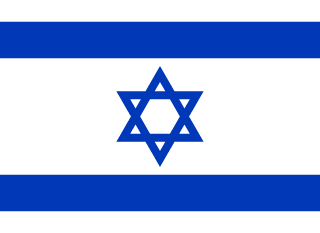
Israel
State of Israel
Population: UN WPP 2024, revision 1, projection for 1 July 2026. Sources and methodology.
Geography and territory
Israel is a small but remarkably varied country, covering just 22,072 square kilometers at the eastern edge of the Mediterranean. Its territory stretches in a narrow strip from north to south, running from the green hills of Galilee and the snows of Mount Hermon down to the Negev Desert, which occupies more than half the country’s land area in the south and reaches the Red Sea port of Eilat.
Israel’s geographic diversity is striking for a country of its size. The Mediterranean coastal plain, home to Tel Aviv, gives way inland to the hills of Judea and Samaria. The Jordan Valley forms part of the Great Rift Valley and descends to the Dead Sea, which at 430 meters below sea level is the lowest point on Earth’s surface. Its waters are roughly ten times saltier than the ocean, making it effectively impossible to sink while floating in them.
The climate ranges from Mediterranean along the coast and in the north, with hot, dry summers and mild, rainy winters, to arid desert conditions in the Negev and the Jordan Valley. Israel is a world leader in irrigation and water-management technology, with innovations such as drip irrigation transforming agriculture in arid regions. More than 90% of the country’s available water now comes from recycled or desalinated sources, an achievement with few parallels worldwide.
History
Israel’s history is deeply intertwined with that of the world’s three major monotheistic religions. The Land of Israel was the setting for the biblical narratives, home to the ancient kingdoms of Israel and Judah, and the place where Jesus of Nazareth lived and preached. Jerusalem, a city sacred to Jews, Christians, and Muslims alike, has been conquered, destroyed, and rebuilt many times across more than 3,000 years of documented history.
Following the destruction of the Second Temple by the Romans in 70 CE and the subsequent Jewish diaspora, the region passed successively under Roman, Byzantine, Arab, Crusader, Mamluk, and Ottoman rule. The Zionist movement, which emerged in the late nineteenth century in response to European antisemitism, encouraged Jewish emigration to Palestine. The Nazi Holocaust, in which six million European Jews were murdered, intensified the drive for the establishment of a Jewish state.
On May 14, 1948, David Ben-Gurion declared the independence of the State of Israel, an event followed by the first of several wars with neighboring Arab states. The conflicts of 1956, 1967, and 1973, the occupation of Palestinian territories, peace agreements with Egypt and Jordan, and the unresolved conflict with the Palestinians have all shaped Israeli politics and society in the decades since. In the years following independence, Israel absorbed enormous waves of Jewish immigrants from Europe, North Africa, and the Middle East, transforming a small population into a modern state within a single generation. Israel has emerged as a significant technological and military power, though the search for a lasting and comprehensive peace with its neighbors remains an ongoing and deeply contested challenge that continues to shape regional and international affairs.
Culture and society
Israeli society is an extraordinary cultural mosaic, built from waves of immigrants arriving from more than 100 countries. Ashkenazi Jews from Europe, Sephardic Jews from the Mediterranean and Middle East, Ethiopian Jews, Russian-speaking immigrants, and more recent arrivals from France and Latin America have together created a society that is diverse, dynamic, and often contentious in its internal debates. Hebrew, a biblical language revived in the twentieth century largely through the efforts of Eliezer Ben-Yehuda, serves as the official language and a unifying thread across these communities.
Contemporary Israeli culture is vibrant and prolific. Literature has produced internationally acclaimed figures such as Amos Oz, David Grossman, and A. B. Yehoshua, whose work explores identity, conflict, and the human condition. Israeli film and television have earned international recognition through productions such as Fauda and Shtisel. The music scene ranges from Hebrew songs blending Eastern and Western traditions to a cutting-edge electronic music scene, with Tel Aviv ranked among the world’s leading nightlife capitals.
Tel Aviv is the country’s cultural and economic heart, a secular, liberal, and creative coastal city that contrasts sharply with the religious solemnity of Jerusalem. Its “White City” district, with more than 4,000 Bauhaus-style buildings recognized as a UNESCO World Heritage Site, forms the largest concentration of modernist architecture anywhere in the world. Shabbat, the Jewish day of rest observed from Friday evening to Saturday night, reshapes the rhythm of the entire country each week, with public transport and many businesses pausing in observance.
Economy
Israel is one of the most innovative economies in the world, often called the “Start-Up Nation” for having the highest concentration of technology startups per capita on the planet. The technology sector accounts for more than 15% of GDP and draws billions of dollars in venture capital investment each year. Israeli companies have driven breakthroughs in cybersecurity, artificial intelligence, medical technology, precision agriculture, and data processing.
Israel’s economy is diversified and high-income, with GDP per capita ranking among the highest in the world. Beyond technology, its economic pillars include a major diamond-cutting and polishing industry, pharmaceuticals, defense manufacturing, and high-tech agriculture. The discovery of large natural gas reserves in the eastern Mediterranean has added a new energy dimension to the economy in recent years.
Israel’s innovation ecosystem rests on a distinctive combination of factors: mandatory military service that fosters leadership and problem-solving skills at a young age, world-class research universities such as the Technion and the Weizmann Institute, a culture that treats entrepreneurial failure as a normal part of building a business, and government programs that actively support innovation. Multinational firms including Google, Apple, Intel, and Microsoft all maintain substantial research and development centers in Israel, and the country regularly ranks among the world leaders in research and development spending as a share of GDP.
Food and cuisine
Israeli cuisine mirrors the diversity of its population, fusing culinary traditions from dozens of countries with the fresh produce of the Mediterranean. Hummus, a spread of blended chickpeas, tahini, lemon, and olive oil, has been elevated to the status of a national dish, with entire restaurants devoted to its many variations. Falafel, deep-fried chickpea balls served in pita with salad and sauces, is the quintessential street food.
Contemporary Israeli cooking has undergone a culinary revolution led by chefs such as Yotam Ottolenghi and Eyal Shani, who have placed fresh vegetables at the center of the plate. Shakshuka, eggs poached in a spiced tomato sauce, is an iconic breakfast dish. Sabich, a pita stuffed with fried eggplant, hard-boiled egg, hummus, and amba (a pickled mango condiment), sits alongside flavors from Yemeni, Moroccan, Iraqi, and Ethiopian kitchens that enrich the country’s culinary landscape.
Jerusalem’s Mahane Yehuda market and Tel Aviv’s Carmel Market are food lovers’ temples, packed with the finest fresh produce, spices, cheeses, and sweets. Israeli wines have earned growing international recognition, with wineries in the Golan Heights, Galilee, and the Judean Hills producing increasingly sophisticated vintages. The pastry scene reflects influences from across the Jewish diaspora, from Central European rugelach and Middle Eastern baklava to Persian malabi and tahini-based halva.
Tourism and landmarks
Israel offers a density of historical and spiritual significance unmatched almost anywhere on Earth. Jerusalem’s Old City, a UNESCO World Heritage Site, packs some of humanity’s most sacred sites into barely one square kilometer: the Western Wall, the Church of the Holy Sepulchre, and the Dome of the Rock. The Old City’s four quarters — Jewish, Christian, Muslim, and Armenian — condense millennia of history, faith, and conflict into a single walled space.
Tel Aviv offers a radically different experience: golden beaches, Bauhaus architecture, art galleries, fashionable restaurants, and nightlife that runs around the clock. Haifa, with its striking Bahá’í Gardens cascading down toward the sea, and Acre, with its underground Crusader-era city, round out the north’s attractions. The Sea of Galilee, where tradition holds that Jesus walked on water, is ringed by biblical sites and historic kibbutzim.
The Negev Desert offers stark, sweeping beauty, including the Ramon Crater, the largest makhtesh (erosion crater) in the world, the Nabatean fortresses of the ancient Incense Route, and the fortress of Masada, a symbol of Jewish resistance reachable by cable car or the winding Snake Path. The Dead Sea offers visitors the singular experience of floating effortlessly in its hypersaline waters, while Eilat, at the country’s southern tip, offers coral reef diving and snorkeling in the Red Sea.
Fun facts about Israel
- The Dead Sea, shared with Jordan and the Palestinian territories, is the lowest point on Earth’s land surface at 430 meters below sea level, and its extreme salinity prevents any organism from living in its waters.
- Israel is the only country that entered the twenty-first century with more trees than it had a century earlier, thanks to a massive national reforestation effort.
- Hebrew is the only dead language in history to have been successfully revived as the native tongue of millions of speakers.
- Israel has more museums per capita than any other country in the world.
- Drip irrigation, invented in Israel, has transformed farming in arid regions across the globe.
Israel in numbers
Latest World Bank and UNDP observations, each with its own year. “World median” is the middle value among the countries that report the same indicator; “#” ranks from the highest value.
Population since 1960
Israel had 2.1 million people in 1960 and 10.1 million in 2025 — 4.8 times as many.
People
91.6% of people live in towns and cities (world median 63.4%). 27.2% are under 15 and 12.7% are 65 or older — a middle-aged population. Women have 2.87 children on average, above the replacement level of about 2.1.
Economy
The economy grew by 2.9% in real terms in 2025. Consumer prices rose by 3.0% in 2025. Services make up the largest share of output (72.8% of GDP); agriculture contributes 1.3%.
Development and environment
UNDP rates human development in Israel as very high, with an index of 0.919 in 2023 (rank 27 of 193). 88.2% of people use the internet and 100.0% have access to electricity. Forest covers 6.8% of the land (world median 32.8%).
Sources: World Bank, World Development Indicators (CC BY 4.0), most recent observation from 2015 onward; UNDP Human Development Report 2025. Retrieved 2026-10-10. Sector shares need not add up to 100% because taxes and subsidies on products are excluded. Missing values are left blank rather than estimated. Sources and methodology.
Climate of Israel
Averaged across Israel, the warmest month is August (26.9 °C) and the coolest is January (12.5 °C), a seasonal swing of 14.4 °C. The annual mean is 20.0 °C.
About 266 mm of precipitation falls in a typical year. January is the wettest month (70 mm) and August the driest (0 mm). The three wettest consecutive months, December to February, bring 68% of the year's total — a pronounced rainy season.
Show monthly values as a table
| Month | Mean °C | Low °C | High °C | Precipitation, mm |
|---|---|---|---|---|
| January | 12.5 | 7.7 | 17.4 | 70 |
| February | 13.2 | 7.9 | 18.6 | 53 |
| March | 15.6 | 9.9 | 21.3 | 29 |
| April | 19.0 | 12.4 | 25.5 | 11 |
| May | 22.0 | 15.4 | 28.8 | 3 |
| June | 24.6 | 18.1 | 31.2 | 0 |
| July | 26.5 | 20.4 | 32.7 | 0 |
| August | 26.9 | 20.9 | 32.8 | 0 |
| September | 25.2 | 19.2 | 31.2 | 0 |
| October | 22.4 | 16.5 | 28.4 | 11 |
| November | 17.9 | 12.1 | 23.7 | 32 |
| December | 14.1 | 8.9 | 19.2 | 59 |
Figures are 1991–2020 averages across the whole land area of Israel, from the World Bank Climate Change Knowledge Portal, CRU TS 4.08 (CC BY 4.0). They are not readings from one weather station: the capital, the coast and high ground can be much warmer, cooler, wetter or drier.
Travel essentials for Israel
The practical details visitors ask about first. Traffic in Israel drives on the right, like most of the world. Mains electricity is 230 V at 50 Hz, so devices made only for 110–120 V (common in North America) need a converter unless they are dual-voltage — most phone and laptop chargers are.
- Emergency number
- 100Ambulance 101 · Fire 102
- Driving side
- Right
- Plug types
- Type C, Type H, Type MC: two round pins (Europlug); H: three pins in a V shape (Israeli); M: three large round pins (South African)
- Voltage
- 230 V50 Hz
- Dialling code
- +972From abroad: your exit code, then 972 and the number
- Currency
- Israeli New Shekel (ILS)
- Time zone
- IST (UTC+2)Current local time in Israel
Compiled from IEC plug and voltage standards, national emergency-service listings and the UN road-traffic conventions. Emergency numbers and local coverage can change — confirm them locally on arrival. Israel's internet domain is .il.
Where Israel ranks in the world
Each position counts only the countries with data in that ranking guide. First place is the highest value — for price levels, the most expensive. Select a card to see the full table.
- Population97th of 1969.6 millionUN projection, July 2026
- Land area148th of 19521,640 km²World Bank, 2023
- Population density19th of 194455 per km²World Bank, 2023
- GDP (nominal)28th of 187$542.3BWorld Bank, 2024, current US$
- GDP per capita19th of 187$54,217World Bank, 2024, current US$
- Life expectancy13th of 19483.2 yearsWorld Bank, 2024
- Price level2nd of 165124 (US = 100)ICP 2021, household consumption
Bordering countries of Israel


Compare Israel with another country
Frequently asked questions about Israel
What is the capital of Israel?
The capital of Israel is Jerusalem.
What is the population of Israel?
The UN World Population Prospects projection for Israel is 9,647,689 people (9.6 million) on 1 July 2026. National statistical offices may publish different estimates.
What language is spoken in Israel?
The official language of Israel is Hebrew, Arabic.
What currency is used in Israel?
The currency of Israel is the Israeli New Shekel (ILS).
How big is Israel?
Israel covers an area of 22,072 km².
What type of government does Israel have?
Israel is a parliamentary republic.
Which countries border Israel?
Israel shares land borders with Lebanon, Syria, Jordan, Egypt, Palestine.
What is the highest point in Israel?
The highest point in Israel is Mount Hermon (2,236 m).


