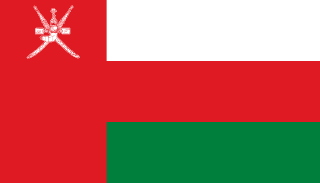
Oman
Sultanate of Oman
Population: UN WPP 2024, revision 1, projection for 1 July 2026. Sources and methodology.
Geography and territory
The Sultanate of Oman occupies the southeastern tip of the Arabian Peninsula, covering 309,500 square kilometers and boasting a coastline that runs more than 3,000 kilometers along the Arabian Sea, the Gulf of Oman, and a small stretch of the Persian Gulf. Its position at the mouth of the Strait of Hormuz, through which roughly a fifth of the world’s oil passes, gives it outsized geopolitical importance.
Oman’s landscape is remarkably varied. The Hajar Mountains rise sharply from the northern coast, culminating at 3,004 meters on Jabal Shams, the “Mountain of the Sun.” These highlands hide spectacular wadis with turquoise natural pools, stone villages perched on cliff edges, and a surprising degree of biodiversity. In the far south, the Dhofar region is transformed each summer by the khareef monsoon into a misty green landscape that stands in striking contrast to the country’s usual desert image.
The interior is dominated by the Wahiba Sands, a sea of golden and reddish dunes, and arid expanses that blend into the vast Rub al-Khali, or Empty Quarter. The southern coast, facing the Indian Ocean, offers pristine beaches, dramatic cliffs, and waters rich in marine life, including nesting grounds for several species of sea turtle. The climate is hot and humid along the coast, with summer temperatures topping 40 degrees Celsius, while the mountains stay considerably cooler and Dhofar enjoys a unique microclimate shaped by the monsoon, drawing seasonal visitors from across the Gulf who come simply to experience cool mist and green hillsides in the middle of an Arabian summer.
History
Oman holds one of the richest maritime histories in the Arab world. Since antiquity, Omanis have been skilled sailors and traders who established shipping routes linking the Arabian Peninsula with East Africa, India, and China. The legend of Sinbad the Sailor is widely believed to have been inspired by Omani seafarers who plied the Indian Ocean. In ancient times the country was renowned for frankincense production, especially in Dhofar, where wild Boswellia sacra trees still grow today.
Omanis embraced Islam during the lifetime of the Prophet Muhammad and adopted the Ibadi branch of the faith, distinct from both Sunni and Shia traditions, which remains the majority school of thought in the country. In the seventeenth century, Oman expelled the Portuguese, who had controlled its coast since the sixteenth century, and went on to build a maritime empire stretching from East Africa — including Zanzibar as its most prized possession — to the coasts of present-day Pakistan and India.
Sultan Qaboos bin Said, who ruled from 1970 until his death in 2020, transformed Oman from an isolated, underdeveloped country into a modern, prosperous nation. His policy of neutrality and quiet mediation earned Oman international respect and established it as a trusted diplomatic go-between in regional conflicts. His successor, Sultan Haitham bin Tariq, has continued that path of modernization and economic diversification.
Culture and society
Omani culture is defined by moderation, hospitality, and a careful preservation of ancestral tradition alongside modernization. Society is conservative yet tolerant, a reflection of the Ibadi emphasis on religious moderation and respect for other beliefs. Traditional dress remains nearly universal: men wear the white dishdasha topped with an embroidered kumma cap or a wrapped mussar turban, while women wear colorful dresses, with the traditional burqa still seen in some rural areas.
Omani craftsmanship is exceptional. Making the khanjar, the curved ceremonial dagger that symbolizes Omani identity and appears on the national flag and emblem, is an art passed down through generations. Silverwork, traditional textiles, pottery, and the wooden dhows still built in the town of Sur keep centuries-old trades alive. Traditional music and dance, such as the sword dance called razha and the African-influenced liwa, reflect the country’s many cultural threads.
Oman has invested heavily in preserving its heritage even as it modernizes. The Royal Opera House in Muscat, opened in 2011, is one of the most prestigious cultural institutions in the Gulf. Museums, galleries, and cultural festivals have multiplied, and the government has meticulously restored forts and castles across the country. The ancient aflaj irrigation channels, a UNESCO World Heritage system, remain in active use today.
Economy
Oman’s economy depends significantly on oil and gas, which together account for roughly 30 percent of GDP and the bulk of government revenue. Yet with more modest reserves than its Gulf neighbors, Oman has been something of a regional pioneer in economic diversification. The country’s Vision 2040 strategy aims to grow sectors such as tourism, fisheries, mining, manufacturing, and logistics.
Tourism is expanding rapidly, drawing visitors with a combination of spectacular natural scenery, authentic cultural heritage, and outdoor adventure. The fishing industry ranks among the most important in the region, with Oman exporting fish and shellfish to markets across Asia and Europe. The port of Salalah has become one of the world’s largest container transshipment hubs, capitalizing on the country’s strategic position along major shipping lanes.
The Omani rial is one of the world’s strongest currencies and is pegged to the U.S. dollar. The country has developed special economic zones such as Duqm, on the central coast, which aims to become a major regional industrial and logistics center. Investment in renewable energy, particularly solar power and green hydrogen, is positioning Oman as an emerging player in the global energy transition, with several large-scale projects under development to export clean fuel to markets in Asia and Europe in the coming decades.
Food and cuisine
Omani cuisine reflects the country’s role as a crossroads of trade routes, blending Arab flavors with Indian, Persian, and African influences. Shuwa, the most iconic dish, consists of an entire lamb marinated in spices, wrapped in banana leaves, and slow-cooked for up to 48 hours in an underground sand oven. Traditionally prepared for special occasions such as Eid, it delivers an extraordinary depth of flavor.
Omani majboos, similar to the wider Gulf’s kabsa but with its own character, combines rice with spiced meat or fish, dried lime, and saffron. Harees, a comforting porridge of wheat and meat, is especially popular during Ramadan. Along the coast, fresh fish is grilled, curried, or sun-dried, while mashakik, marinated meat skewers, make for popular street food, and reqhal, a thin whole-wheat flatbread, accompanies many meals.
Omani halwa is the country’s most famous sweet: a translucent, jelly-like confection made with sugar, rosewater, saffron, cardamom, and nuts, traditionally served alongside Arabic coffee as a gesture of hospitality and often given as a gift during festivals and family visits. That coffee, brewed with cardamom and sometimes saffron, is served in small cups with dates as a welcoming ritual, poured and refilled continuously as a mark of generosity toward guests. Tropical fruit juices, especially mango and papaya from Dhofar, and laban, a savory buttermilk drink, are popular refreshments.
Tourism and landmarks
Oman has positioned itself as a premium travel destination built on authenticity, nature, and adventure. Muscat, the capital, impresses with the Sultan Qaboos Grand Mosque, which can accommodate 20,000 worshippers and houses one of the largest Persian carpets in the world. The old quarter of Muttrah, with its seafront corniche and bustling souk, offers a genuine taste of traditional Oman, while the Royal Opera House and National Museum round out the capital’s cultural offerings.
The Hajar Mountains provide landscapes of epic scale: Wadi Shab, with its turquoise natural pools reached after a hike through narrow canyons; Jebel Akhdar, the “Green Mountain,” known for its Damask rose plantations and stone villages; and Jebel Shams, where the so-called Grand Canyon of Oman rivals its American namesake in depth. The forts of Nizwa, Bahla — a UNESCO World Heritage site — and Jabrin stand as masterpieces of Omani military architecture.
Natural experiences here are equally memorable: sea turtles nesting on the beaches of Ras al-Jinz, dolphins accompanying boats off the coast of Musandam (often called the “Fjord of Arabia” for its steep, sea-drowned mountains), the Wahiba Sands with its Bedouin camps and 4x4 desert safaris, and Dhofar during the khareef, when the mountains turn a misty green that feels transported from another continent entirely. Dhofar’s Land of Frankincense, where the ancient resin is still harvested today, is likewise recognized as a UNESCO World Heritage site, and visitors can watch the resin tapped from wild trees much as it was thousands of years ago.
Fun facts about Oman
- Oman is the only country in the world where a majority of the population practices Ibadi Islam, a school of thought that predates the Sunni-Shia split
- The Omani rial is one of the most valuable currencies in the world, worth more than 2.5 U.S. dollars per unit
- Majlis al-Jinn cave in Oman is one of the largest underground chambers on Earth, with enough volume to hold several Boeing 747 jets
- Omani sailors traded with China centuries before European voyages of exploration, and Omani influence along East Africa’s coast once stretched from Somalia to Mozambique
- Frankincense from Dhofar was once considered more valuable than gold, offered as tribute to kings and gods across the ancient world
Oman in numbers
Latest World Bank and UNDP observations, each with its own year. “World median” is the middle value among the countries that report the same indicator; “#” ranks from the highest value.
Population since 1960
Oman had 530,485 people in 1960 and 5.5 million in 2025 — 10.4 times as many.
People
79.5% of people live in towns and cities (world median 63.4%). 24.3% are under 15 and 2.7% are 65 or older — a middle-aged population. Women have 2.51 children on average, above the replacement level of about 2.1.
Economy
The economy grew by 2.4% in real terms in 2025. Consumer prices rose by 1.0% in 2025. Industry makes up the largest share of output (52.7% of GDP); agriculture contributes 2.8%.
Development and environment
UNDP rates human development in Oman as very high, with an index of 0.858 in 2023 (rank 50 of 193). 95.3% of people use the internet and 100.0% have access to electricity. Forest covers 0.0% of the land (world median 32.8%).
Sources: World Bank, World Development Indicators (CC BY 4.0), most recent observation from 2015 onward; UNDP Human Development Report 2025. Retrieved 2026-10-10. Sector shares need not add up to 100% because taxes and subsidies on products are excluded. Missing values are left blank rather than estimated. Sources and methodology.
Climate of Oman
Averaged across Oman, the warmest month is June (33.6 °C) and the coolest is January (19.8 °C), a seasonal swing of 13.8 °C. The annual mean is 27.7 °C.
About 54 mm of precipitation falls in a typical year. March is the wettest month (11 mm) and September the driest (0 mm). What little rain there is falls mostly from February to April (51% of the total).
Less than 250 mm a year is typical of desert climates.
Show monthly values as a table
| Month | Mean °C | Low °C | High °C | Precipitation, mm |
|---|---|---|---|---|
| January | 19.8 | 14.2 | 25.4 | 4 |
| February | 22.0 | 16.7 | 27.4 | 9 |
| March | 24.8 | 18.8 | 30.8 | 11 |
| April | 29.3 | 23.1 | 35.6 | 8 |
| May | 32.6 | 26.1 | 39.2 | 2 |
| June | 33.6 | 27.4 | 39.8 | 4 |
| July | 32.6 | 27.0 | 38.4 | 3 |
| August | 32.1 | 26.2 | 38.0 | 4 |
| September | 30.7 | 24.7 | 36.7 | 0 |
| October | 28.4 | 22.0 | 34.7 | 0 |
| November | 24.9 | 18.7 | 31.1 | 3 |
| December | 21.7 | 16.1 | 27.3 | 6 |
Figures are 1991–2020 averages across the whole land area of Oman, from the World Bank Climate Change Knowledge Portal, CRU TS 4.08 (CC BY 4.0). They are not readings from one weather station: the capital, the coast and high ground can be much warmer, cooler, wetter or drier.
Travel essentials for Oman
The practical details visitors ask about first. Traffic in Oman drives on the right, like most of the world. Mains electricity is 240 V at 50 Hz, so devices made only for 110–120 V (common in North America) need a converter unless they are dual-voltage — most phone and laptop chargers are.
- Emergency number
- 9999
- Driving side
- Right
- Plug types
- Type C, Type GC: two round pins (Europlug); G: three rectangular pins (British)
- Voltage
- 240 V50 Hz
- Dialling code
- +968From abroad: your exit code, then 968 and the number
- Currency
- Omani Rial (OMR)
- Time zone
- GST (UTC+4)Current local time in Oman
Compiled from IEC plug and voltage standards, national emergency-service listings and the UN road-traffic conventions. Emergency numbers and local coverage can change — confirm them locally on arrival. Oman's internet domain is .om.
Where Oman ranks in the world
Each position counts only the countries with data in that ranking guide. First place is the highest value — for price levels, the most expensive. Select a card to see the full table.
- Population119th of 1965.7 millionUN projection, July 2026
- Land area68th of 195309,500 km²World Bank, 2023
- Population density175th of 19416 per km²World Bank, 2023
- GDP (nominal)68th of 187$107.1BWorld Bank, 2024, current US$
- GDP per capita53rd of 187$20,285World Bank, 2024, current US$
- Life expectancy40th of 19480.2 yearsWorld Bank, 2024
- Price level66th of 16553 (US = 100)ICP 2021, household consumption
Bordering countries of Oman


Compare Oman with another country
Frequently asked questions about Oman
What is the capital of Oman?
The capital of Oman is Muscat.
What is the population of Oman?
The UN World Population Prospects projection for Oman is 5,671,458 people (5.7 million) on 1 July 2026. National statistical offices may publish different estimates.
What language is spoken in Oman?
The official language of Oman is Arabic.
What currency is used in Oman?
The currency of Oman is the Omani Rial (OMR).
How big is Oman?
Oman covers an area of 309,500 km².
What type of government does Oman have?
Oman is a absolute monarchy (sultanate).
Which countries border Oman?
Oman shares land borders with United Arab Emirates, Saudi Arabia, Yemen.
What is the highest point in Oman?
The highest point in Oman is Jabal Shams (3,004 m).


