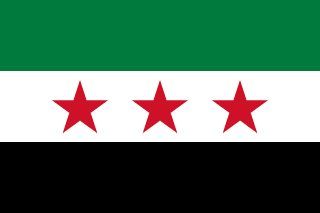
Syria
Syrian Arab Republic
Population: UN WPP 2024, revision 1, projection for 1 July 2026. Sources and methodology.
Geography and territory
Syria covers 185,180 square kilometers in the heart of the Mediterranean Levant, positioned at a historic crossroads between Asia, Europe, and Africa. Its landscape ranges from a narrow Mediterranean coastal plain backed by the Alawite Mountains in the west to vast steppes and deserts stretching eastward, where the Euphrates River and its tributaries carve a fertile band across the land before crossing into Iraq.
The terrain unfolds in a series of parallel strips running north to south: the coastal plain, the coastal mountain range with peaks exceeding 1,500 meters, the Ghab depression irrigated by the Orontes River, and the Anti-Lebanon range along the southwestern border, where Mount Hermon reaches 2,814 meters as the country’s highest point. The central plateau, dotted with ruined Byzantine towns, gives way to the Syrian Desert, which occupies the southeast and links up with the deserts of Iraq and Jordan.
The climate is Mediterranean along the coast, with moderate rainfall and mild temperatures, continental and semi-arid in the interior, and starkly desert-like in the east. The Euphrates River and Lake Assad, the country’s largest reservoir, are the principal sources of water. The Euphrates basin and the Jazira region in the northeast form the most productive agricultural areas, while drought and desertification have compounded the hardships of the crisis the country has endured in recent years.
History
Syria ranks among the cradles of human civilization. Tell Halaf and Tell Brak, in the northeast, held some of the world’s earliest cities more than 6,000 years ago. Ebla, uncovered in the 1970s along with thousands of cuneiform tablets, revealed the existence of a powerful kingdom dating to the third millennium BCE. Damascus is regarded as one of the oldest continuously inhabited cities on Earth, with evidence of settlement stretching back at least that far.
The region passed successively under the control of the Hittites, Egyptians, Assyrians, Persians, Seleucid Greeks, and Romans. Palmyra, the “bride of the desert,” flourished as a trading hub along the Silk Road under the legendary Queen Zenobia. Following the Arab conquest in the seventh century, Damascus became the capital of the Umayyad Caliphate, the first great Islamic empire, which stretched from Spain to India. The Crusaders later left behind imposing fortresses, among them the Crac des Chevaliers, one of the best-preserved castles of its kind anywhere in the world.
Modern Syria emerged from the collapse of the Ottoman Empire and a period of French mandate rule, gaining independence in 1946. Decades of political instability culminated in the rise of the Baath party and the Assad family, who took power in 1970. The civil war that began in 2011 became one of the gravest humanitarian catastrophes of the twenty-first century, causing hundreds of thousands of deaths, displacing millions, and inflicting massive destruction on the country’s cultural heritage and infrastructure. In December 2024, a rapid offensive by opposition forces brought down the government of Bashar al-Assad, who fled the country, ending more than five decades of Assad family rule. A transitional government, led by Ahmed al-Sharaa, has since taken on the task of rebuilding state institutions and charting a new political course.
Culture and society
Syrian culture is among the oldest and richest in the world, shaped by millennia of exchange between civilizations. Damascus has served as a center of Arab culture for fourteen centuries, producing poets, philosophers, musicians, and artists. The country’s literary tradition includes figures such as Nizar Qabbani, one of the most beloved poets in the Arab world, and Adonis (Ali Ahmad Said Esber), a perennial contender for the Nobel Prize in Literature. Syrian music, built around the concept of tarab, or musical ecstasy, has been among the most influential in the Arab world.
Syrian society has historically been one of the most diverse in the Middle East, with Sunni Arabs, Alawites, Christians of various denominations, Druze, Kurds, Turkmens, Circassians, and Armenians all part of an intricate ethnic and religious mosaic. The covered markets of Aleppo and Damascus, with their stone vaults and constant activity, once stood at the heart of social and commercial life, reflecting a mercantile tradition thousands of years old. The Souk of Aleppo was, at its height, the largest covered market in the Arab world.
Syrian craftsmanship has long carried a distinguished reputation. Damask silk, from which the fabric takes its name, is known worldwide, as was Damascus steel, once legendary for its quality, and Damascene inlay work, which sets mother-of-pearl and wood into fine furniture, remains a living tradition. Arabic calligraphy, pottery, and the handmade laurel soap of Aleppo, produced by artisanal methods for centuries, round out an extraordinary craft heritage.
Economy
Before the civil war, Syria’s economy was a mixed one with significant state involvement, built on agriculture, oil, industry, and trade. The conflict destroyed much of the country’s productive infrastructure, contracting GDP by an estimated more than 60 percent and pushing the majority of the population into poverty. International sanctions have further compounded the economic hardship; the current GDP stands at roughly $12.4 billion.
Historically, agriculture employed a substantial share of the population, producing wheat, cotton, olives, fruit, and vegetables in the fertile plains of the northeast and the Orontes Valley. Oil production, concentrated in the northeast, was once a major source of state revenue. Textile, food processing, and pharmaceutical industries, centered in Aleppo and Damascus, rounded out the productive base.
Rebuilding Syria presents enormous challenges: devastated infrastructure, a displaced population, international sanctions, a shortage of capital, and a complicated geopolitical landscape. Some areas have begun a slow recovery, with shops and factories reopening in stabilized regions. Remittances from the Syrian diaspora and small-scale cross-border trade sustain many families in the meantime. The country’s agricultural potential and strategic geographic position offer a foundation for eventual reconstruction.
Food and cuisine
Syrian cuisine is one of the most refined and ancient in the Middle East, with Aleppo recognized as one of the great culinary capitals of the Arab world. Aleppine cooking is famous for its layered flavors, its use of spices such as Aleppo pepper, a dried red chili with a fruity taste and moderate heat, and preparations that can take days to complete. Kibbeh, made in dozens of variants across the city, reaches its finest expression here.
Classic Syrian dishes include fattoush, a fresh salad topped with toasted flatbread; fatteh, chickpeas with yogurt and crisp bread; muhammara, a spread of red peppers and walnuts; and shawarma, meat marinated and roasted on a vertical spit. Kebab halabi, from Aleppo, and kebab karaz, made with sour cherries, are distinctive regional specialties. Stuffed vegetables, such as kousa mahshi, stuffed zucchini, and stuffed grape leaves, are prepared with meticulous care that reflects a deep culinary tradition.
Syrian sweets are legendary: halawet el-jibn, cheese rolls filled with cream and soaked in orange-blossom syrup; baklava in its many forms; the hand-churned Arabic ice cream of Bakdash in the Damascus souk; and the candied nuts of Aleppo are celebrated across the Arab world. Mate, a drink inherited from Syrian emigration to South America, has become a local tradition in its own right, while Arabic coffee flavored with cardamom remains the essential ritual of hospitality.
Tourism and landmarks
Syria is home to six UNESCO World Heritage sites, though several have suffered severe damage during the conflict. The Old City of Damascus, with the Great Umayyad Mosque, the Azem Palace, and its labyrinth of markets and alleyways, preserves layers of history spanning from the Aramean period to the Ottoman era. Damascus served as the capital of the first great Islamic empire, and its mosque is traditionally said to house the tomb of John the Baptist.
Palmyra, an oasis in the Syrian Desert with spectacular Greco-Roman ruins, once included the Temple of Bel, the Great Colonnade, and the Valley of the Tombs before suffering partial destruction at the hands of the Islamic State in 2015. The Crac des Chevaliers, the best-preserved Crusader fortress in the world, stands imposingly on a hilltop overlooking the plain of Homs. Aleppo, crowned by its medieval citadel at the heart of the city, was once one of the great metropolises of the Islamic world.
The “Dead Cities” of the northwest, abandoned Byzantine villages dating from the fifth to seventh centuries, remain exceptionally well preserved and offer a unique window into life in late antiquity. Bosra, with its remarkably intact Roman theater set inside an Arab fortress, and the town of Maaloula, where Western Aramaic, the language of Jesus Christ, is still spoken, are sites of extraordinary interest. Many hope that the country’s gradual stabilization will eventually allow for the restoration of this heritage and the revival of a tourism sector that was once a pillar of the Syrian economy.
Fun facts about Syria
- Damascus is considered one of the oldest continuously inhabited cities on Earth, with at least 5,000 years of documented history.
- Aleppo soap, made with olive oil and laurel oil, is thought to be the world’s oldest soap and is still produced by hand using the same recipe used for more than a thousand years.
- In the mountain village of Maaloula, residents still speak Western Aramaic, the language spoken by Jesus Christ.
- The word “damask” derives from Damascus and is used in English and other languages to describe a type of patterned fabric that originated there.
- The Crac des Chevaliers was famously described by T.E. Lawrence (Lawrence of Arabia) as “the most admirable castle in the world.”
Syria in numbers
Latest World Bank and UNDP observations, each with its own year. “World median” is the middle value among the countries that report the same indicator; “#” ranks from the highest value.
Population since 1960
Syria had 4.7 million people in 1960 and 25.6 million in 2025 — 5.5 times as many.
People
72.1% of people live in towns and cities (world median 63.4%). 28.4% are under 15 and 4.8% are 65 or older — a middle-aged population. Women have 2.70 children on average, above the replacement level of about 2.1.
Economy
The economy shrank by 0.2% in real terms in 2022. Consumer prices rose by 13.4% in 2019. Services make up the largest share of output (44.7% of GDP); agriculture contributes 42.9%, a large share that points to a farming-based economy.
Development and environment
UNDP rates human development in Syria as medium, with an index of 0.564 in 2023 (rank 162 of 193). 33.8% of people use the internet and 89.3% have access to electricity. Forest covers 2.9% of the land (world median 32.8%).
Sources: World Bank, World Development Indicators (CC BY 4.0), most recent observation from 2015 onward; UNDP Human Development Report 2025. Retrieved 2026-10-10. Sector shares need not add up to 100% because taxes and subsidies on products are excluded. Missing values are left blank rather than estimated. Sources and methodology.
Climate of Syria
Averaged across Syria, the warmest month is July (29.9 °C) and the coolest is January (7.0 °C), a seasonal swing of 22.9 °C. The annual mean is 18.7 °C.
About 296 mm of precipitation falls in a typical year. January is the wettest month (58 mm) and July the driest (0 mm). The three wettest consecutive months, December to February, bring 53% of the year's total — a pronounced rainy season.
Show monthly values as a table
| Month | Mean °C | Low °C | High °C | Precipitation, mm |
|---|---|---|---|---|
| January | 7.0 | 2.3 | 11.8 | 58 |
| February | 8.9 | 3.4 | 14.4 | 48 |
| March | 12.6 | 6.4 | 18.8 | 41 |
| April | 17.4 | 10.5 | 24.3 | 27 |
| May | 22.6 | 15.0 | 30.2 | 17 |
| June | 27.1 | 19.1 | 35.2 | 2 |
| July | 29.9 | 22.0 | 37.9 | 0 |
| August | 29.8 | 21.9 | 37.8 | 0 |
| September | 26.3 | 18.3 | 34.3 | 2 |
| October | 21.0 | 13.7 | 28.3 | 16 |
| November | 13.3 | 7.0 | 19.7 | 33 |
| December | 8.4 | 3.4 | 13.5 | 50 |
Figures are 1991–2020 averages across the whole land area of Syria, from the World Bank Climate Change Knowledge Portal, CRU TS 4.08 (CC BY 4.0). They are not readings from one weather station: the capital, the coast and high ground can be much warmer, cooler, wetter or drier.
Travel essentials for Syria
The practical details visitors ask about first. Traffic in Syria drives on the right, like most of the world. Mains electricity is 220 V at 50 Hz, so devices made only for 110–120 V (common in North America) need a converter unless they are dual-voltage — most phone and laptop chargers are.
- Emergency number
- 112Ambulance 110 · Fire 113
- Driving side
- Right
- Plug types
- Type C, Type E, Type LC: two round pins (Europlug); E: two round pins, earth pin in the socket; L: three round pins in a row (Italian)
- Voltage
- 220 V50 Hz
- Dialling code
- +963From abroad: your exit code, then 963 and the number
- Currency
- Syrian Pound (SYP)
- Time zone
- EET (UTC+2)Current local time in Syria
Compiled from IEC plug and voltage standards, national emergency-service listings and the UN road-traffic conventions. Emergency numbers and local coverage can change — confirm them locally on arrival. Syria's internet domain is .sy.
Where Syria ranks in the world
Each position counts only the countries with data in that ranking guide. First place is the highest value — for price levels, the most expensive. Select a card to see the full table.
Bordering countries of Syria


Compare Syria with another country
Frequently asked questions about Syria
What is the capital of Syria?
The capital of Syria is Damascus.
What is the population of Syria?
The UN World Population Prospects projection for Syria is 26,472,497 people (26.5 million) on 1 July 2026. National statistical offices may publish different estimates.
What language is spoken in Syria?
The official language of Syria is Arabic.
What currency is used in Syria?
The currency of Syria is the Syrian Pound (SYP).
How big is Syria?
Syria covers an area of 185,180 km².
What type of government does Syria have?
Syria is a republic (transitional government).
Which countries border Syria?
Syria shares land borders with Turkey, Iraq, Jordan, Israel, Lebanon.
What is the highest point in Syria?
The highest point in Syria is Mount Hermon (2,814 m).


