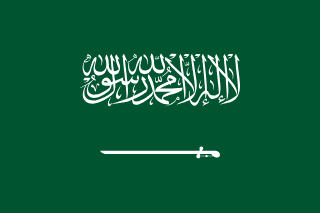
Saudi Arabia
Kingdom of Saudi Arabia
Population: UN WPP 2024, revision 1, projection for 1 July 2026. Sources and methodology.
Geography and territory
Saudi Arabia is the largest country in the Middle East and occupies roughly 80 percent of the Arabian Peninsula, covering a territory of 2,149,690 square kilometers and home to a population of about 35.2 million people. Its land stretches from the Red Sea coastline in the west to the shores of the Persian Gulf in the east, with vast desert plains dominating much of the interior. The Rub al Khali, or “Empty Quarter,” in the south is the largest continuous sand desert on Earth, its dunes rising more than 250 meters in places.
Despite its reputation as a land of endless sand, Saudi geography is more varied than it first appears. The Hejaz and Asir mountain ranges in the southwest climb past 3,000 meters, culminating at Jabal Sawda, the country’s highest point. This region catches comparatively generous rainfall, sustaining surprisingly green terraced farmland and hillside vegetation. The narrow Tihama coastal plain along the Red Sea and the Gulf coastline to the east round out a landscape far more diverse than the desert stereotype suggests.
The climate is overwhelmingly arid, with interior summer temperatures regularly topping 50 degrees Celsius and rainfall averaging well under 100 millimeters a year across most of the country. Saudi Arabia has no permanent rivers, relying instead on groundwater and desalination, and it stands as the world’s largest producer of desalinated water, a technology essential to sustaining its cities and agriculture in one of the driest regions on the planet.
History
The Arabian Peninsula has been inhabited since prehistoric times, with evidence of human settlement stretching back more than 100,000 years. Ancient civilizations, including the Nabataeans, Lihyanites, and the Dilmun culture, left their mark across the region; the rock-cut tombs of Hegra, often called Petra’s lesser-known sister site, remain the most spectacular surviving testament to Nabataean presence. It was the rise of Islam, however, that would come to define the land’s identity: in the seventh century, the Prophet Muhammad was born in Mecca and received the Quranic revelation, an event that reshaped world history.
Mecca and Medina became the two holiest cities in Islam, drawing pilgrims from across the Muslim world for over a millennium. Various dynasties and, later, Ottoman authority governed the peninsula for centuries until 1932, when Abdulaziz ibn Saud unified its disparate territories and proclaimed the Kingdom of Saudi Arabia. That founding moment marked the birth of a modern state that would be transformed almost overnight by the discovery of vast oil reserves in 1938.
Oil turned Saudi Arabia into one of the wealthiest nations on Earth and a geopolitical heavyweight. As custodian of Islam’s holiest sites and the world’s leading crude oil exporter, the kingdom has wielded outsized influence in global affairs. In the 21st century, the country has embarked on an ambitious modernization drive under Vision 2030, spearheaded by Crown Prince Mohammed bin Salman, aimed at diversifying the economy and reshaping Saudi society for a future beyond oil.
Culture and society
Saudi culture is deeply rooted in Islamic and Bedouin tradition. Sunni Islam, and specifically its Wahhabi current, remains the dominant religious framework shaping public and private life, with the five daily prayers, the fasting month of Ramadan, and the pilgrimage to Mecca, or Hajj, structuring the rhythm of society. Poetry holds a place of special honor in Arab tradition, and Saudis maintain a vibrant Nabati, or vernacular, poetic tradition that celebrates the desert, honor, and love.
Saudi society has undergone striking change in recent years. Women gained the right to drive, cinemas and concert venues have reopened after decades of closure, and many long-standing social restrictions have eased considerably. Older traditions endure alongside the new: the ardah, a ceremonial sword dance performed at celebrations and state occasions, and camel racing remain deeply rooted cultural touchstones. Traditional dress, the white thobe for men and the abaya for women, continues to be widely worn.
Hospitality is a cornerstone of Saudi culture. Welcoming a guest with Arabic coffee, or qahwa, brewed with cardamom and poured into small cups alongside dates, is a courtesy ritual that traces back to Bedouin traditions of generosity toward travelers. UNESCO has recognized Saudi Arabic coffee culture as part of humanity’s intangible cultural heritage, a nod to its enduring social and ceremonial importance.
Economy
Saudi Arabia holds the world’s second-largest proven oil reserves, accounting for roughly 18 percent of the global total, and stands as the planet’s top crude exporter. Saudi Aramco, the state oil company, ranks among the most valuable companies in the world by market capitalization. Decades of oil revenue have funded modern infrastructure, free public services, and a high standard of living for Saudi citizens.
Vision 2030, the kingdom’s flagship economic transformation plan, aims to reduce dependence on oil by building up sectors such as tourism, entertainment, technology, manufacturing, and mining. Headline megaprojects like NEOM, a futuristic development planned at a cost of hundreds of billions of dollars on the Red Sea coast, and The Line, a proposed 170-kilometer linear city, illustrate the scale of this ambition. The kingdom’s Public Investment Fund has become one of the most active sovereign wealth funds in the world.
Islamic finance is deeply embedded in the economy, with banks and capital markets operating under sharia-compliant principles. Saudi Arabia leads OPEC, and its ability to adjust oil output gives it significant sway over global energy prices. The country has also invested heavily in solar and other renewable energy, with plans targeting roughly half of its electricity generation from renewable sources by 2030, part of a broader push to build a more sustainable, knowledge-based economy for the decades ahead.
Food and cuisine
Saudi cuisine is generous and aromatic, shaped by Bedouin traditions of hospitality and by the culinary influences carried in by millions of pilgrims each year. Kabsa, the national dish, features rice fragrant with saffron, cardamom, cinnamon, and clove, cooked with lamb, chicken, or fish and topped with raisins and toasted almonds. Regional variations abound, but all share generous portions and richly layered flavor.
Lamb is the most prized protein, prepared in many forms: mandi, slow-cooked in an underground pit oven; hanith, roasted until it falls off the bone; and jareesh, a hearty stew of cracked wheat and meat especially popular during Ramadan. Grilled fish, or samak mashwi, and seafood from the Gulf and Red Sea round out the protein-rich table, while dishes like saleeg, a creamy rice porridge with chicken from the Hejaz region, showcase regional specialties.
Dates hold near-sacred status in Saudi Arabia, with more than 200 varieties grown across the country and the ajwa date of Medina considered the most prized. Arabic coffee, mild and scented with cardamom, is offered as a gesture of welcome and courtesy. Sweets include mamoul, cookies filled with dates or nuts, and basbousa, a semolina cake soaked in syrup, while laban, a fermented milk drink, is the beverage of choice through the punishing heat of summer.
Tourism and landmarks
Saudi Arabia has only recently opened its doors to international tourism, unveiling a wealth of historical and natural heritage that had long remained largely inaccessible. Hegra, known historically as Mada’in Saleh, became the country’s first UNESCO World Heritage Site and preserves dramatic Nabataean tombs carved directly into sandstone outcrops, rivaling those of Petra. The historic At-Turaif district in Diriyah, cradle of the first Saudi state, and ancient rock art in the Hail region round out the country’s recognized heritage sites.
Mecca and Medina, Islam’s two holiest cities, draw millions of pilgrims annually. The Grand Mosque in Mecca, home to the Kaaba, can accommodate more than two million worshippers at once, making it the largest place of worship on Earth. While these two cities remain reserved for Muslims, the rest of the country offers striking experiences of its own: the Red Sea coast boasts pristine coral reefs, and the Al-Ahsa oasis, the largest in the world, spreads across more than three million date palms.
Major tourism developments along the Red Sea coast and around AlUla are reshaping the country’s travel landscape. AlUla, a desert valley of dramatic rock formations, is home to Maraya, the world’s largest mirrored building, and now hosts international cultural events. The mountainous Asir region in the southwest surprises visitors with green highland scenery, traditional stone architecture, and lively tribal markets that stand in sharp contrast to the country’s familiar desert image.
Fun facts about Saudi Arabia
- Saudi Arabia is the only country in the world named after its ruling family, the House of Saud.
- The Hajj pilgrimage to Mecca is the largest recurring gathering of people on Earth, drawing more than two million worshippers annually from around the globe.
- The kingdom has no permanent rivers, making it the largest country in the world without perennial waterways.
- Saudi Arabia was the last country in the world to allow women to drive, lifting the ban in June 2018.
- The NEOM development plans include a ski resort in the Tabuk mountains, where occasional snowfall dusts the desert landscape.
- The Grand Mosque in Mecca can hold more than two million worshippers simultaneously, making it the largest religious structure anywhere in the world.
Saudi Arabia in numbers
Latest World Bank and UNDP observations, each with its own year. “World median” is the middle value among the countries that report the same indicator; “#” ranks from the highest value.
Population since 1960
Saudi Arabia had 2.4 million people in 1960 and 37.0 million in 2025 — 15.2 times as many.
People
84.6% of people live in towns and cities (world median 63.4%). 23.6% are under 15 and 3.1% are 65 or older — a middle-aged population. Women have 2.31 children on average, close to the replacement level of about 2.1.
Economy
The economy grew by 4.5% in real terms in 2025. Consumer prices rose by 2.0% in 2025. Services make up the largest share of output (48.9% of GDP); agriculture contributes 2.6%.
Development and environment
UNDP rates human development in Saudi Arabia as very high, with an index of 0.900 in 2023 (rank 37 of 193). 100.0% of people use the internet and 100.0% have access to electricity. Forest covers 1.3% of the land (world median 32.8%).
Sources: World Bank, World Development Indicators (CC BY 4.0), most recent observation from 2015 onward; UNDP Human Development Report 2025. Retrieved 2026-10-10. Sector shares need not add up to 100% because taxes and subsidies on products are excluded. Missing values are left blank rather than estimated. Sources and methodology.
Climate of Saudi Arabia
Averaged across Saudi Arabia, the warmest month is July (34.3 °C) and the coolest is January (15.3 °C), a seasonal swing of 19.0 °C. The annual mean is 25.9 °C.
About 102 mm of precipitation falls in a typical year. March is the wettest month (21 mm) and September the driest (1 mm). What little rain there is falls mostly from March to May (49% of the total).
Less than 250 mm a year is typical of desert climates.
Show monthly values as a table
| Month | Mean °C | Low °C | High °C | Precipitation, mm |
|---|---|---|---|---|
| January | 15.3 | 9.0 | 21.7 | 13 |
| February | 17.7 | 11.2 | 24.3 | 7 |
| March | 21.6 | 14.9 | 28.4 | 21 |
| April | 26.3 | 19.4 | 33.3 | 19 |
| May | 30.9 | 23.6 | 38.2 | 10 |
| June | 33.1 | 25.5 | 40.7 | 1 |
| July | 34.3 | 27.0 | 41.5 | 1 |
| August | 34.3 | 27.0 | 41.6 | 2 |
| September | 31.7 | 24.2 | 39.4 | 1 |
| October | 26.9 | 19.5 | 34.3 | 4 |
| November | 21.2 | 14.5 | 28.0 | 13 |
| December | 17.0 | 10.6 | 23.3 | 10 |
Figures are 1991–2020 averages across the whole land area of Saudi Arabia, from the World Bank Climate Change Knowledge Portal, CRU TS 4.08 (CC BY 4.0). They are not readings from one weather station: the capital, the coast and high ground can be much warmer, cooler, wetter or drier.
Travel essentials for Saudi Arabia
The practical details visitors ask about first. Traffic in Saudi Arabia drives on the right, like most of the world.
- Emergency number
- 911Police 999 · Ambulance 997 · Fire 998
- Driving side
- Right
- Plug types
- Type A, Type B, Type F, Type GA: two flat parallel pins; B: two flat pins plus a round earth pin; F: two round pins with side earth clips (Schuko); G: three rectangular pins (British)
- Dialling code
- +966From abroad: your exit code, then 966 and the number
- Currency
- Saudi Riyal (SAR)
- Time zone
- AST (UTC+3)Current local time in Saudi Arabia
Compiled from IEC plug and voltage standards, national emergency-service listings and the UN road-traffic conventions. Emergency numbers and local coverage can change — confirm them locally on arrival. Saudi Arabia's internet domain is .sa.
Where Saudi Arabia ranks in the world
Each position counts only the countries with data in that ranking guide. First place is the highest value — for price levels, the most expensive. Select a card to see the full table.
- Population47th of 19635.2 millionUN projection, July 2026
- Land area12th of 1952,149,690 km²World Bank, 2023
- Population density176th of 19416 per km²World Bank, 2023
- GDP (nominal)18th of 187$1.25TWorld Bank, 2024, current US$
- GDP per capita31st of 187$35,528World Bank, 2024, current US$
- Life expectancy45th of 19479.0 yearsWorld Bank, 2024
- Price level63rd of 16554 (US = 100)ICP 2021, household consumption
Bordering countries of Saudi Arabia


Compare Saudi Arabia with another country
Frequently asked questions about Saudi Arabia
What is the capital of Saudi Arabia?
The capital of Saudi Arabia is Riyadh.
What is the population of Saudi Arabia?
The UN World Population Prospects projection for Saudi Arabia is 35,165,787 people (35.2 million) on 1 July 2026. National statistical offices may publish different estimates.
What language is spoken in Saudi Arabia?
The official language of Saudi Arabia is Arabic.
What currency is used in Saudi Arabia?
The currency of Saudi Arabia is the Saudi Riyal (SAR).
How big is Saudi Arabia?
Saudi Arabia covers an area of 2,149,690 km².
What type of government does Saudi Arabia have?
Saudi Arabia is a absolute monarchy.
Which countries border Saudi Arabia?
Saudi Arabia shares land borders with Jordan, Iraq, Kuwait, Qatar, United Arab Emirates, Oman, Yemen.
What is the highest point in Saudi Arabia?
The highest point in Saudi Arabia is Jabal Sawda (3,015 m).


