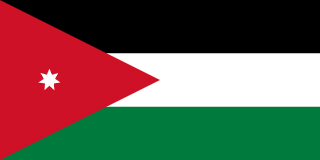
Jordan
Hashemite Kingdom of Jordan
Population: UN WPP 2024, revision 1, projection for 1 July 2026. Sources and methodology.
Geography and territory
Jordan covers 89,342 square kilometers in the heart of the Middle East, bordered by Syria to the north, Iraq to the northeast, Saudi Arabia to the east and south, and Israel and Palestine to the west. Though largely arid, the country’s terrain is remarkably varied, ranging from fertile highlands in the north to sweeping eastern and southern deserts, with the dramatic Rift Valley tracing its western edge.
The most extraordinary geographic feature is the Jordan Valley, which drops toward the Dead Sea, the lowest point on Earth’s land surface at 430 meters below sea level. Its hypersaline waters, roughly ten times saltier than the ocean, create the famous sensation of effortless floating. To the south, the desert of Wadi Rum unfolds in wind-carved red sandstone monoliths and vast sand plains that look almost extraterrestrial.
Jordan’s climate is predominantly arid, with hot, dry summers and cool, moderately wet winters in the highlands. Rainfall is concentrated in the northwest, the only region where rain-fed agriculture is viable, while more than 80 percent of the country receives under 200 millimeters a year. Water scarcity ranks among Jordan’s most pressing challenges, placing it among the ten most water-stressed nations on Earth.
History
The land that is now Jordan has hosted some of the most compelling chapters in human history. The archaeological site of Ain Ghazal, with plaster statues roughly 9,000 years old, points to one of the world’s earliest farming communities. Moabites, Edomites, and Ammonites founded Iron Age kingdoms here, while the Nabataeans, an Arab trading people, carved the spectacular rose-colored city of Petra directly into the desert rock.
The region later became the Roman province of Arabia, and cities such as Jerash (ancient Gerasa) and Philadelphia (modern Amman) flourished as urban centers whose theaters, temples, and colonnaded streets survive in exceptional condition. Under Byzantine rule, Jordan filled with churches adorned in strikingly beautiful mosaics, including the one at Madaba containing the oldest known mosaic map of the Holy Land. The seventh-century Islamic conquest and the later Crusades left behind imposing fortresses such as Kerak and Ajloun.
After centuries of Ottoman rule, Jordan was established as the Emirate of Transjordan under British mandate in 1921, with Abdullah I as its first ruler. Full independence followed in 1946, and the country has remained a constitutional monarchy under the Hashemite dynasty ever since, a family that claims direct descent from the Prophet Muhammad. Jordan has played a pivotal role as a regional mediator, signing a peace treaty with Israel in 1994 and hosting millions of Palestinian, Iraqi, and Syrian refugees over the decades.
Culture and society
Jordanian culture blends Bedouin heritage, Palestinian influence, and a cosmopolitan openness that sets the country apart in the region. Hospitality is treated as sacred: a visitor will almost always be offered tea or coffee, and declining is considered impolite. The concept behind mansaf, beyond the dish itself, embodies the generosity and communal spirit that define Jordanian culture.
Society is predominantly Sunni Muslim Arab, alongside a significant Christian minority living in longstanding harmony. Desert Bedouins, though many have since settled, still carry forward traditions of hospitality, oral poetry, and desert knowledge that remain central to national identity. Jordanian music includes the dabke, a collective folk dance performed at weddings and celebrations, along with Bedouin songs accompanied by the rababa, a traditional stringed instrument.
Amman, the capital, is a modern, dynamic city built across seven hills, where Roman ruins sit alongside hipster cafés, contemporary art galleries, and a thriving food scene. The city has undergone a cultural renaissance with new art centers, independent theaters, and creative spaces. Jordanian universities draw students from across the Arab world, and the country is known for an education system that outperforms regional averages.
Economy
Jordan’s economy is relatively small and lacks the natural resources that have enriched its Gulf neighbors. With no significant oil and limited water, the country has leaned on human capital and ingenuity as its engines of growth. Services, including finance, telecommunications, and tourism, account for more than 70 percent of GDP. Tourism, driven by iconic sites like Petra and the Dead Sea, brings in crucial revenue.
Jordanian industry includes potash and phosphate extraction from the Dead Sea, pharmaceutical manufacturing, textiles, and a growing information technology sector. The country has positioned itself as a regional hub for tech outsourcing and business services. Remittances from Jordanians working abroad, particularly in the Gulf states, provide a vital source of foreign currency.
The economic challenges are substantial: high public debt, elevated youth unemployment, dependence on international aid, and pressure on resources from hosting more than a million Syrian refugees. Even so, the country’s political stability, skilled workforce, and strategic position as a gateway to the region offer growth opportunities that the government is working to capitalize on through economic reform and free trade agreements.
Food and cuisine
Jordanian cuisine is a celebration of Arab and Bedouin flavors built around generosity and shared meals. Mansaf, the undisputed national dish, consists of lamb cooked in a fermented dried-yogurt sauce called jameed, served over a bed of rice and thin bread and topped with toasted almonds and pine nuts. Traditionally eaten with the right hand from a large communal platter, it appears at weddings, funerals, and any occasion of significance.
Jordanian mezze is a feast of small plates that opens nearly every meal: creamy hummus, smoky eggplant mutabal, fattoush with crisped bread, fresh parsley-and-bulgur tabbouleh, crunchy falafel, and kibbeh made from meat and bulgur. Zarb, the Bedouin barbecue cooked underground in the sands of Wadi Rum, produces extraordinarily tender lamb and chicken, smoked with the flavors of sand and spice.
Jordanian sweets include knafeh, a cheese-filled pastry topped with crisp shredded dough and soaked in orange-blossom syrup, a dessert whose origin is good-naturedly disputed with Palestine and Syria. Baklava, date-and-nut-filled maamoul, and qatayef, stuffed crepes typical of Ramadan, round out the dessert table. Sage tea (maramiyyeh) and cardamom-spiced Arabic coffee are the drinks that seal every warm social exchange.
Tourism and landmarks
Jordan holds some of the Middle East’s most breathtaking treasures. Petra, the ancient Nabataean capital carved into rose-colored cliffs, is one of the New Seven Wonders of the World and the country’s signature destination. The Treasury (Al-Khazneh), whose facade emerges at the end of the narrow Siq canyon, is among the most recognizable images of world heritage. The site spans hundreds of tombs, temples, and a Roman-style theater cut directly from stone.
Wadi Rum, the “Valley of the Moon,” is a desert of almost otherworldly beauty, with red sandstone monoliths, natural arches, and prehistoric petroglyphs. It served as the backdrop for the exploits of Lawrence of Arabia and films including The Martian and Rogue One. Spending the night in a Bedouin camp under a sky free of light pollution is a genuinely transformative experience. The Dead Sea offers the unusual pleasure of floating while reading a newspaper, alongside therapeutic mud treasured since antiquity.
Jerash preserves one of the best-maintained sets of Roman ruins outside Italy, with its colonnaded oval plaza, theaters, temples, and hippodrome. Madaba, the “City of Mosaics,” houses a sixth-century mosaic map of the Holy Land inside the Church of Saint George. Kerak Castle, a 12th-century Crusader fortress, and the nature reserves of Dana and Ajloun offer hiking through landscapes ranging from Mediterranean forest to desert canyon.
Fun facts about Jordan
- Petra remained hidden from the Western world for centuries until Swiss explorer Johann Ludwig Burckhardt rediscovered it in 1812.
- The Dead Sea is shrinking by roughly a meter each year and could largely vanish within decades without intervention.
- Jordan is home to more than 100,000 archaeological sites, many still unexcavated.
- Jordan’s Hashemite royal family traces its lineage back 43 generations to the Prophet Muhammad.
- Wadi Rum has stood in for the surface of Mars in numerous Hollywood films thanks to its uncanny resemblance to the Red Planet.
Jordan in numbers
Latest World Bank and UNDP observations, each with its own year. “World median” is the middle value among the countries that report the same indicator; “#” ranks from the highest value.
Population since 1960
Jordan had 853,471 people in 1960 and 11.5 million in 2025 — 13.5 times as many.
People
93.2% of people live in towns and cities (world median 63.4%). 30.2% are under 15 and 4.8% are 65 or older — a young population. Women have 2.60 children on average, above the replacement level of about 2.1.
Economy
The economy grew by 2.8% in real terms in 2025. Consumer prices rose by 1.8% in 2025. Services make up the largest share of output (56.8% of GDP); agriculture contributes 5.6%.
Development and environment
UNDP rates human development in Jordan as high, with an index of 0.754 in 2023 (rank 100 of 193). 95.6% of people use the internet and 100.0% have access to electricity. Forest covers 0.8% of the land (world median 32.8%).
Sources: World Bank, World Development Indicators (CC BY 4.0), most recent observation from 2015 onward; UNDP Human Development Report 2025. Retrieved 2026-10-10. Sector shares need not add up to 100% because taxes and subsidies on products are excluded. Missing values are left blank rather than estimated. Sources and methodology.
Climate of Jordan
Averaged across Jordan, the warmest month is August (28.4 °C) and the coolest is January (9.1 °C), a seasonal swing of 19.3 °C. The annual mean is 19.4 °C.
About 109 mm of precipitation falls in a typical year. January is the wettest month (24 mm) and August the driest (0 mm). What little rain there is falls mostly from December to February (60% of the total).
Less than 250 mm a year is typical of desert climates.
Show monthly values as a table
| Month | Mean °C | Low °C | High °C | Precipitation, mm |
|---|---|---|---|---|
| January | 9.1 | 3.5 | 14.8 | 24 |
| February | 10.8 | 4.6 | 17.0 | 23 |
| March | 14.2 | 7.6 | 20.9 | 16 |
| April | 18.8 | 11.3 | 26.3 | 7 |
| May | 23.1 | 15.3 | 31.1 | 4 |
| June | 26.2 | 17.9 | 34.5 | 0 |
| July | 28.3 | 20.2 | 36.5 | 0 |
| August | 28.4 | 20.5 | 36.4 | 0 |
| September | 26.2 | 18.2 | 34.2 | 0 |
| October | 21.8 | 14.5 | 29.2 | 5 |
| November | 15.6 | 9.0 | 22.2 | 12 |
| December | 10.9 | 5.0 | 16.9 | 18 |
Figures are 1991–2020 averages across the whole land area of Jordan, from the World Bank Climate Change Knowledge Portal, CRU TS 4.08 (CC BY 4.0). They are not readings from one weather station: the capital, the coast and high ground can be much warmer, cooler, wetter or drier.
Travel essentials for Jordan
The practical details visitors ask about first. Traffic in Jordan drives on the right, like most of the world. Mains electricity is 230 V at 50 Hz, so devices made only for 110–120 V (common in North America) need a converter unless they are dual-voltage — most phone and laptop chargers are.
- Emergency number
- 911
- Driving side
- Right
- Plug types
- Type B, Type C, Type D, Type F, Type G, Type JB: two flat pins plus a round earth pin; C: two round pins (Europlug); D: three large round pins in a triangle; F: two round pins with side earth clips (Schuko); G: three rectangular pins (British); J: three round pins (Swiss)
- Voltage
- 230 V50 Hz
- Dialling code
- +962From abroad: your exit code, then 962 and the number
- Currency
- Jordanian Dinar (JOD)
- Time zone
- EET (UTC+2)Current local time in Jordan
Compiled from IEC plug and voltage standards, national emergency-service listings and the UN road-traffic conventions. Emergency numbers and local coverage can change — confirm them locally on arrival. Jordan's internet domain is .jo.
Where Jordan ranks in the world
Each position counts only the countries with data in that ranking guide. First place is the highest value — for price levels, the most expensive. Select a card to see the full table.
- Population85th of 19611.6 millionUN projection, July 2026
- Land area110th of 19588,794 km²World Bank, 2023
- Population density69th of 194129 per km²World Bank, 2023
- GDP (nominal)86th of 187$58.6BWorld Bank, 2024, current US$
- GDP per capita115th of 187$5,074World Bank, 2024, current US$
- Life expectancy55th of 19478.0 yearsWorld Bank, 2024
- Price level76th of 16549 (US = 100)ICP 2021, household consumption
Bordering countries of Jordan


Compare Jordan with another country
Frequently asked questions about Jordan
What is the capital of Jordan?
The capital of Jordan is Amman.
What is the population of Jordan?
The UN World Population Prospects projection for Jordan is 11,589,532 people (11.6 million) on 1 July 2026. National statistical offices may publish different estimates.
What language is spoken in Jordan?
The official language of Jordan is Arabic.
What currency is used in Jordan?
The currency of Jordan is the Jordanian Dinar (JOD).
How big is Jordan?
Jordan covers an area of 89,342 km².
What type of government does Jordan have?
Jordan is a parliamentary constitutional monarchy.
Which countries border Jordan?
Jordan shares land borders with Syria, Iraq, Saudi Arabia, Israel, Palestine.
What is the highest point in Jordan?
The highest point in Jordan is Jabal Umm ad Dami (1,854 m).


