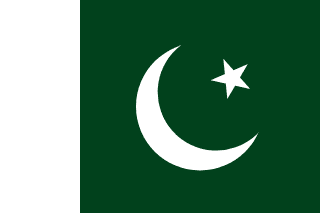
Pakistan
Islamic Republic of Pakistan
Population: UN WPP 2024, revision 1, projection for 1 July 2026. Sources and methodology.
Geography and territory
Pakistan covers 881,913 square kilometers in South Asia, occupying a strategic position where Central Asia, South Asia, and the Middle East converge. Its geography is extraordinarily diverse, ranging from the towering peaks of the Karakoram and Himalayan ranges in the north — where K2 rises to 8,611 meters as the second-highest mountain on Earth — to the alluvial plains carved by the Indus River as it runs the length of the country, down to the Thar Desert in the southeast.
The Indus River forms the country’s backbone, feeding one of the most extensive irrigation networks in the world and sustaining agriculture across the plains. The northern regions, including Gilgit-Baltistan and the Hunza Valley, offer spectacular alpine scenery of glaciers, turquoise lakes, and fertile valleys tucked among some of the highest mountains on the planet. Along the Arabian Sea, the Makran coast in Balochistan province stretches out with pristine beaches and striking rock formations found nowhere else in the country.
Pakistan’s climate shifts dramatically by region, from the searing heat of the Sindh desert, where summer temperatures can exceed 50 degrees Celsius, to the permanent snows of the northern mountains. The summer monsoon is essential to the country’s agriculture, though it also brings periodic flooding to the low-lying plains along the Indus. The country’s four provinces — Punjab, Sindh, Khyber Pakhtunkhwa, and Balochistan — plus the federal capital territory of Islamabad and several northern administrative regions, together encompass this enormous range of terrain, climate, and ways of life, making Pakistan one of the most geographically varied countries in South Asia.
History
Pakistan’s history is inseparable from one of the world’s oldest civilizations. The Indus Valley was home to the Harappan civilization, centered on cities such as Mohenjo-daro, which flourished between roughly 3300 and 1300 BCE and rivaled the sophistication of contemporary Mesopotamia and Egypt. These ancient cities featured advanced urban planning, sewage systems, and a still only partially deciphered script.
Over the following centuries, the region passed through the hands of Persians, Greeks under Alexander the Great, the Maurya and Kushan empires, Huns, and various Turkic dynasties. The arrival of Islam in the eighth century profoundly reshaped the region, and successive Muslim empires — from the Delhi Sultanate to the magnificent Mughal Empire — left an unmatched architectural and cultural legacy, including masterpieces such as the Badshahi Mosque in Lahore.
Pakistan emerged as an independent nation on August 14, 1947, carved out of British India through partition, one of the largest and most turbulent mass migrations in human history as millions of people crossed the new border in both directions. Muhammad Ali Jinnah, revered as the father of the nation, led the movement for a separate homeland for South Asia’s Muslims. Since independence, the country has moved through cycles of civilian and military government, wars with India, and internal challenges, while maintaining its identity as the world’s second most populous Muslim-majority nation and, since 1998, a declared nuclear power.
Culture and society
Pakistani culture forms a vibrant mosaic shaped by Persian, Arab, Turkic, and South Asian influences. Poetry holds a central place in national life, embodied by figures such as Allama Iqbal, the national poet whose vision helped inspire the creation of Pakistan, and Faiz Ahmed Faiz, one of the twentieth century’s most influential Urdu-language poets. Qawwali music, brought to global audiences by Nusrat Fateh Ali Khan, is a devotional Sufi tradition of extraordinary emotional intensity.
Pakistani society is remarkably diverse, with four main provinces home to distinct ethnic groups — Punjabis, Sindhis, Pashtuns, and Balochis — each with its own language, dress, and customs. The extended family sits at the heart of social life, and hospitality is a deeply held value expressed through the custom of welcoming guests with tea, sweets, and abundant food.
Pakistani art spans intricate Mughal miniature painting and Islamic calligraphy to the vivid, uniquely Pakistani tradition of truck art, which transforms cargo vehicles into rolling works of color, poetry, and symbolism. The film industry, known as Lollywood, produces movies in Urdu and Punjabi, while Pakistani pop and rock music have won recognition well beyond the country’s borders, and the country’s fashion and textile design scene has increasingly drawn international attention in recent years.
Religion shapes daily rhythms across the country, with Islam observed by the overwhelming majority of the population and religious festivals such as Eid al-Fitr and Eid al-Adha marked by communal prayer, feasting, and family gatherings. Cricket is by a wide margin the most popular sport, capable of bringing the entire nation to a standstill during major international matches, and the national team’s 1992 World Cup victory remains a cherished point of national pride.
Economy
Pakistan ranks among the twenty-five largest economies in the world by purchasing power parity. Its economic structure rests on agriculture, the textile industry, and services. The country is a major global producer of cotton, wheat, rice, and sugarcane, with agriculture employing close to 40 percent of the workforce.
The textile industry is the backbone of both manufacturing and exports, accounting for roughly 60 percent of foreign sales. Pakistan ranks as the world’s fourth-largest cotton producer, and its textile goods reach markets across Europe, the United States, and Asia. Other significant industrial sectors include cement, fertilizer production, and food processing.
The China-Pakistan Economic Corridor, part of China’s Belt and Road Initiative, represents an investment of more than 60 billion dollars in infrastructure, energy, and industrial development, with the potential to reshape the country’s economic trajectory. Remittances from the millions of Pakistanis working abroad, particularly in the Gulf states, provide a vital source of foreign currency, exceeding 30 billion dollars annually. Karachi, the country’s largest city, serves as its financial and commercial nerve center and hosts the Pakistan Stock Exchange, while Lahore and Faisalabad anchor much of the manufacturing base in Punjab province.
Food and cuisine
Pakistani cuisine ranks among the most flavorful and aromatic in the world, drawing on Mughal, Persian, and broader South Asian culinary traditions. Dishes rely generously on spices such as cumin, turmeric, coriander, cardamom, cinnamon, and chili, blended with skill to create deep, layered flavors. Naan bread, baked in a tandoor oven, accompanies nearly every meal.
Pakistani biryani, especially the versions found in Karachi and Lahore, is considered among the finest in the world: basmati rice layered with spiced meat, saffron, and fresh herbs, slow-cooked until the flavors meld completely. Nihari, a meat stew simmered overnight with spices, is a traditional Lahore breakfast and one of the country’s signature dishes. Kebabs in countless forms, from seekh kebab to the Pashtun chapli kebab, round out the country’s grilled-meat repertoire.
Pakistani sweets are equally celebrated: gulab jamun, fried milk dumplings soaked in rose syrup; jalebi, crisp spirals of fried batter soaked in sugar syrup; and kulfi, a dense ice cream flavored with pistachio and cardamom. Chai, milky tea simmered with spices, is the national drink, consumed throughout the day and central to nearly every social gathering. Regional specialties add further variety, from the fiery karahi curries of Peshawar to the seafood dishes of coastal Sindh and Balochistan, reflecting the same ethnic and geographic diversity found across the rest of the country.
Tourism and landmarks
Pakistan is home to six UNESCO World Heritage sites, among them the archaeological ruins of Mohenjo-daro, testimony to one of humanity’s oldest civilizations, and the historic complex of Taxila, once a major center of Buddhist learning. Lahore Fort and the Shalimar Gardens, masterworks of Mughal architecture, rival the splendor of the Taj Mahal.
Northern Pakistan is a haven for mountain and adventure travelers. The Karakoram Highway, sometimes called the eighth wonder of the world, links Pakistan to China through breathtaking high-altitude scenery. The valleys of Hunza, Swat, and Chitral offer spectacular views of snow-capped peaks and crystalline lakes such as Attabad Lake and Saif-ul-Malook Lake, along with a warm hospitality that leaves a lasting impression on every visitor.
The country’s historic cities offer their own unmatched cultural experiences. Lahore, Pakistan’s cultural capital, dazzles with the Badshahi Mosque, Lahore Fort, and the lively food street of its old quarter. Karachi, the largest city and economic hub, blends beaches, bustling markets, and a growing nightlife scene. The Faisal Mosque in Islamabad, one of the largest mosques in the world, impresses with a strikingly modernist design inspired by a Bedouin tent. Peshawar, gateway to the historic Khyber Pass, and the Mughal-era city of Multan, known for its shrines and blue pottery, offer further glimpses into the many layers of Pakistani history.
Fun facts about Pakistan
- K2, in the Karakoram range, is the world’s second-highest mountain and is widely considered technically harder to climb than Everest
- Pakistan operates the largest contiguous irrigation canal system in the world, built during the British colonial era
- The Hunza Valley in the north is famous for the longevity of its residents and is sometimes called “the land of the happy people”
- The northern regions are home to a fierce, traditional form of polo played on horseback, alongside the older Central Asian sport of buzkashi
- Pakistan is the world’s leading manufacturer of hand-stitched footballs, with the city of Sialkot producing most of the balls used in major international tournaments
Pakistan in numbers
Latest World Bank and UNDP observations, each with its own year. “World median” is the middle value among the countries that report the same indicator; “#” ranks from the highest value.
Population since 1960
Pakistan had 45.7 million people in 1960 and 255.2 million in 2025 — 5.6 times as many.
People
39.5% of people live in towns and cities (world median 63.4%). 36.2% are under 15 and 4.4% are 65 or older — a young population. Women have 3.55 children on average, above the replacement level of about 2.1.
Economy
The economy grew by 3.7% in real terms in 2025. Consumer prices rose by 3.5% in 2025. Services make up the largest share of output (50.9% of GDP); agriculture contributes 23.0%, a large share that points to a farming-based economy.
Development and environment
UNDP rates human development in Pakistan as low, with an index of 0.544 in 2023 (rank 168 of 193). 57.3% of people use the internet and 95.7% have access to electricity. Forest covers 4.1% of the land (world median 32.8%).
Sources: World Bank, World Development Indicators (CC BY 4.0), most recent observation from 2015 onward; UNDP Human Development Report 2025. Retrieved 2026-10-10. Sector shares need not add up to 100% because taxes and subsidies on products are excluded. Missing values are left blank rather than estimated. Sources and methodology.
Climate of Pakistan
Averaged across Pakistan, the warmest month is June (30.2 °C) and the coolest is January (9.8 °C), a seasonal swing of 20.4 °C. The annual mean is 21.4 °C.
About 288 mm of precipitation falls in a typical year. August is the wettest month (53 mm) and October the driest (6 mm). The wettest stretch is July to September, with 44% of the year's total.
Show monthly values as a table
| Month | Mean °C | Low °C | High °C | Precipitation, mm |
|---|---|---|---|---|
| January | 9.8 | 2.7 | 16.9 | 21 |
| February | 12.5 | 5.5 | 19.4 | 26 |
| March | 17.8 | 10.8 | 24.7 | 29 |
| April | 23.3 | 16.0 | 30.5 | 24 |
| May | 27.8 | 20.5 | 35.1 | 16 |
| June | 30.2 | 23.4 | 37.0 | 21 |
| July | 29.8 | 24.1 | 35.7 | 52 |
| August | 28.7 | 23.0 | 34.4 | 53 |
| September | 26.5 | 19.9 | 33.2 | 24 |
| October | 22.4 | 14.5 | 30.3 | 6 |
| November | 16.6 | 8.7 | 24.6 | 7 |
| December | 11.7 | 4.2 | 19.2 | 11 |
Figures are 1991–2020 averages across the whole land area of Pakistan, from the World Bank Climate Change Knowledge Portal, CRU TS 4.08 (CC BY 4.0). They are not readings from one weather station: the capital, the coast and high ground can be much warmer, cooler, wetter or drier.
Travel essentials for Pakistan
The practical details visitors ask about first. Traffic in Pakistan drives on the left, one of 54 of the 196 countries profiled here that do — see the full list. Mains electricity is 230 V at 50 Hz, so devices made only for 110–120 V (common in North America) need a converter unless they are dual-voltage — most phone and laptop chargers are.
- Emergency number
- 15Ambulance 1122 · Fire 16
- Driving side
- Left
- Plug types
- Type C, Type D, Type G, Type MC: two round pins (Europlug); D: three large round pins in a triangle; G: three rectangular pins (British); M: three large round pins (South African)
- Voltage
- 230 V50 Hz
- Dialling code
- +92From abroad: your exit code, then 92 and the number
- Currency
- Pakistani Rupee (PKR)
- Time zone
- PKT (UTC+5)Current local time in Pakistan
Compiled from IEC plug and voltage standards, national emergency-service listings and the UN road-traffic conventions. Emergency numbers and local coverage can change — confirm them locally on arrival. Pakistan's internet domain is .pk.
Where Pakistan ranks in the world
Each position counts only the countries with data in that ranking guide. First place is the highest value — for price levels, the most expensive. Select a card to see the full table.
- Population5th of 196259.3 millionUN projection, July 2026
- Land area35th of 195770,880 km²World Bank, 2023
- Population density27th of 194321 per km²World Bank, 2023
- GDP (nominal)42nd of 187$371.7BWorld Bank, 2024, current US$
- GDP per capita158th of 187$1,479World Bank, 2024, current US$
- Life expectancy146th of 19467.8 yearsWorld Bank, 2024
- Price level164th of 16526 (US = 100)ICP 2021, household consumption
Bordering countries of Pakistan


Compare Pakistan with another country
Frequently asked questions about Pakistan
What is the capital of Pakistan?
The capital of Pakistan is Islamabad.
What is the population of Pakistan?
The UN World Population Prospects projection for Pakistan is 259,299,791 people (259.3 million) on 1 July 2026. National statistical offices may publish different estimates.
What language is spoken in Pakistan?
The official language of Pakistan is Urdu, English.
What currency is used in Pakistan?
The currency of Pakistan is the Pakistani Rupee (PKR).
How big is Pakistan?
Pakistan covers an area of 881,913 km².
What type of government does Pakistan have?
Pakistan is a federal parliamentary republic.
Which countries border Pakistan?
Pakistan shares land borders with India, China, Afghanistan, Iran.
What is the highest point in Pakistan?
The highest point in Pakistan is K2 (8,611 m).


