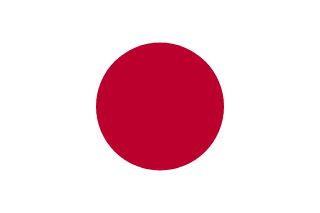
Japan
Japan
Population: UN WPP 2024, revision 1, projection for 1 July 2026. Sources and methodology.
Geography and territory
Japan is an archipelago in the Pacific Ocean off the eastern coast of Asia, made up of more than 6,800 islands strung out in a roughly 3,000-kilometer arc. The four principal islands are Honshu, the largest and most populous; Hokkaido, in the cooler north; Kyushu, in the volcanically active southwest; and Shikoku, the smallest of the four. With a total land area of 377,975 square kilometers, Japan shares no land borders with any other country.
The country’s terrain is overwhelmingly mountainous, with roughly 73 percent of its surface covered by mountains and hills. The Japanese Alps cut across central Honshu in three parallel ranges that climb to nearly 3,000 meters. Mount Fuji, at 3,776 meters, is the nation’s highest peak and a sacred national symbol visible from Tokyo on clear days. Japan sits along the Pacific Ring of Fire, which accounts for its intense seismic and volcanic activity; the country is home to more than 100 active volcanoes. Because so much of the interior is too rugged to settle, Japan’s population of about 122.4 million is concentrated overwhelmingly in coastal lowlands and metropolitan basins, producing some of the densest and most efficiently engineered urban areas on the planet, particularly around Tokyo, Osaka, and Nagoya.
Japan’s climate varies enormously from north to south, ranging from the subarctic conditions of Hokkaido, with its snowy winters and cool summers, to the subtropical warmth of Okinawa, where temperatures stay mild year-round. The four seasons are sharply defined and carry deep cultural meaning. The spring cherry blossom season, known as sakura, and the flaming autumn foliage of the maple trees, or momiji, are major social events that draw millions of domestic and international visitors each year.
History
Japan’s history stretches back millennia, beginning with the earliest human settlements of the Jomon period (roughly 14,000 to 300 BC), one of the world’s oldest pottery-producing cultures. Chinese influence arrived during the subsequent Yayoi period, introducing rice cultivation, metalworking, and writing. Buddhism, introduced in the sixth century AD, blended with native Shinto beliefs to form a dual spiritual tradition that continues to shape Japanese religious life today.
Japan’s long feudal era, dominated by samurai warriors and successive shogunates, spanned centuries. The Tokugawa shogunate, which ruled from 1603 to 1868, enforced an almost total isolation from the outside world for more than two hundred years, a period known as sakoku. That isolation ended when Commodore Perry’s ships forced Japan’s ports open in 1853, triggering the Meiji Restoration of 1868, which radically transformed the country. In just a few decades, Japan moved from a feudal society into a modern industrial and military power.
Japan’s imperial expansion culminated in the Second World War, which ended with the atomic bombings of Hiroshima and Nagasaki in August 1945. Surrender and the subsequent American occupation reshaped Japan into a parliamentary democracy governed by a pacifist constitution. The postwar economic miracle then propelled the country to become the world’s second-largest economy for decades, and its recovery is widely regarded as one of the most remarkable in modern history.
Culture and society
Japanese culture is distinguished by its singular ability to preserve centuries-old traditions while wholeheartedly embracing cutting-edge modernity. Traditional arts such as kabuki theater, noh drama, the tea ceremony (chanoyu), ikebana flower arranging, and brush calligraphy (shodo) coexist comfortably alongside contemporary pop culture: anime, manga, video games, and Harajuku fashion trends now exert unprecedented global influence.
Japanese society places deep value on group harmony (wa), respect (rei), and personal discipline. These principles show up in everyday life through elaborate codes of courtesy, extreme punctuality, and a strong sense of collective duty. The concept of omotenashi, or wholehearted hospitality offered without expectation of anything in return, permeates Japan’s service industry and consistently astonishes visitors with its warmth and precision.
The country holds 25 UNESCO World Heritage Sites and is home to more than 20,000 temples and shrines. Festivals such as Kyoto’s Gion Matsuri, Aomori’s Nebuta Matsuri, and the springtime tradition of hanami reflect a profound connection to the changing seasons and the natural world. Japanese literature, from classical writers such as Murasaki Shikibu and Matsuo Basho to contemporary figures like Haruki Murakami and Nobel laureate Kazuo Ishiguro, enjoys wide international acclaim.
Economy
Japan is the world’s fourth-largest economy by nominal GDP, with a gross domestic product of roughly $4.44 trillion, and it maintains an industrial base of extraordinary technological sophistication. The country is a global leader in the automotive sector, home to Toyota, Honda, Nissan, and Subaru, all of which command major shares of international markets. Consumer electronics, robotics, semiconductors, precision optics, and advanced machinery form other pillars of the economy, led by innovators such as Sony, Panasonic, Canon, and Fanuc.
Japan’s corporate model has long been defined by an emphasis on total quality, continuous improvement (kaizen), and a long-term approach to business strategy. Large industrial groups known as keiretsu, including Mitsubishi, Mitsui, and Sumitomo, span multiple economic sectors and maintain cross-linked financial relationships. Japan is also the world’s largest net creditor nation and holds the third-largest foreign currency reserves on the planet.
Even so, the Japanese economy faces significant structural challenges. An aging population, driven by one of the world’s lowest birth rates and a population that has been shrinking since 2008, is placing growing strain on the pension system and the labor force. Chronic deflationary pressure and a very high level of public debt, exceeding 250 percent of GDP, have pushed policymakers toward unconventional monetary measures. Despite these headwinds, Japan remains a world-class technological and scientific power, and its Human Development Index of 0.925 places it among the very highest in the world.
Food and cuisine
Japanese cuisine, inscribed by UNESCO as an Intangible Cultural Heritage of Humanity in 2013, rests on the principle of washoku: respect for seasonal ingredients, balanced flavors, and impeccably refined presentation. Sushi, from classic nigiri to sashimi cut from prized bluefin tuna, is perhaps the country’s most internationally recognized dish, yet it represents only a fraction of Japan’s culinary richness. Ramen, with its countless regional variations, from Fukuoka’s rich tonkotsu broth to Sapporo’s miso-based bowls, has become a global culinary phenomenon in its own right.
Kaiseki cuisine, which grew out of the tea ceremony tradition, represents the pinnacle of Japanese fine dining, offering multi-course tasting menus that celebrate each season’s finest ingredients through small, exquisitely composed dishes. Tempura, yakitori, okonomiyaki, udon, soba, and tonkatsu round out an enormously varied everyday repertoire. Tokyo holds the world record for Michelin-starred restaurants, with more than 200 establishments recognized by the guide.
Essential ingredients in Japanese cooking include short-grain rice, soy sauce, miso, dashi (a broth made from bonito flakes and kombu seaweed), wasabi, and nori seaweed. Sake, brewed from fermented rice, accompanies meals and religious rituals alike. The culture surrounding bento boxed lunches and konbini convenience stores, which offer surprisingly high-quality food around the clock, reflects a society where culinary excellence is present at every level, from street food to haute cuisine.
Tourism and landmarks
Tokyo, the capital, is a metropolis of fascinating contrasts, where the futuristic skyscrapers of Shinjuku stand not far from the serene, forest-ringed Meiji Shrine. The Asakusa district is home to Senso-ji, the city’s oldest temple, while Akihabara serves as the world capital of otaku pop culture. Tokyo Tower and the Tokyo Skytree both offer sweeping views over a city that seems to stretch to the horizon in every direction.
Kyoto, Japan’s imperial capital for more than a thousand years, contains seventeen UNESCO World Heritage Sites, including the Kinkaku-ji, or Golden Pavilion, and the Fushimi Inari shrine with its thousands of vermilion torii gates. Nearby Nara charms visitors with its ancient temples and its sacred deer, which roam freely through the city’s central park. Himeji Castle, nicknamed the White Heron for its brilliant white facade, is widely considered the most beautiful castle in the country.
Beyond the major cities, Hiroshima moves visitors with its Peace Memorial, and the nearby island of Miyajima is famous for its floating torii gate. The Japanese Alps offer spectacular hiking and hot spring bathing, or onsen, in mountain villages such as Takayama and Shirakawa-go, whose steep, snow-covered thatched roofs look plucked from a fairy tale. Okinawa draws visitors with tropical beaches and a distinct Ryukyuan culture, while Hokkaido attracts travelers with world-class ski resorts and pristine natural landscapes.
Fun facts about Japan
- Japan is home to more than 20,000 temples and shrines, many of which have been in continuous use for centuries.
- Japanese trains are legendary for their punctuality: the average annual delay of the shinkansen bullet train is under one minute.
- Japan celebrates Cat Day (Neko no Hi) every February 22, since the pronunciation of “2-22” in Japanese echoes the sound of a cat’s meow.
- The country has more than 3,000 natural hot spring resorts, or onsen, reflecting a bathing culture deeply woven into daily life.
- The art of bonsai, which originated in China but was perfected in Japan over centuries, can produce miniature trees that live for hundreds of years.
- Japan has one of the highest life expectancies in the world, averaging more than 84 years, and the island of Okinawa is recognized as one of the world’s so-called Blue Zones of exceptional longevity.
Japan in numbers
Latest World Bank and UNDP observations, each with its own year. “World median” is the middle value among the countries that report the same indicator; “#” ranks from the highest value.
Population since 1960
Japan had 93.2 million people in 1960 and 123.4 million in 2025 — 32% more.
The population peaked at 128.1 million in 2010 and has since declined.
People
92.3% of people live in towns and cities (world median 63.4%). 11.2% are under 15 and 30.0% are 65 or older — one of the oldest age structures in the world. Women have 1.15 children on average, below the replacement level of about 2.1 needed to keep a population stable in the long run without migration.
Economy
The economy grew by 1.2% in real terms in 2025. Consumer prices rose by 3.2% in 2025. Services make up the largest share of output (71.4% of GDP); agriculture contributes 1.0%.
Development and environment
UNDP rates human development in Japan as very high, with an index of 0.925 in 2023 (rank 23 of 193). 85.5% of people use the internet and 100.0% have access to electricity. Forest covers 68.3% of the land (world median 32.8%).
Sources: World Bank, World Development Indicators (CC BY 4.0), most recent observation from 2015 onward; UNDP Human Development Report 2025. Retrieved 2026-10-10. Sector shares need not add up to 100% because taxes and subsidies on products are excluded. Missing values are left blank rather than estimated. Sources and methodology.
Climate of Japan
Averaged across Japan, the warmest month is August (24.0 °C) and the coolest is January (0.2 °C), a seasonal swing of 23.8 °C. The annual mean is 11.8 °C.
About 1,641 mm of precipitation falls in a typical year. July is the wettest month (224 mm) and February the driest (75 mm). The wettest stretch is July to September, with 37% of the year's total.
Show monthly values as a table
| Month | Mean °C | Low °C | High °C | Precipitation, mm |
|---|---|---|---|---|
| January | 0.2 | −3.6 | 4.0 | 80 |
| February | 0.7 | −3.4 | 4.9 | 75 |
| March | 4.3 | −0.2 | 8.8 | 105 |
| April | 9.8 | 4.9 | 14.7 | 115 |
| May | 14.9 | 10.1 | 19.7 | 137 |
| June | 18.7 | 14.7 | 22.7 | 195 |
| July | 22.7 | 19.1 | 26.4 | 224 |
| August | 24.0 | 20.1 | 27.9 | 180 |
| September | 20.3 | 16.3 | 24.2 | 199 |
| October | 14.4 | 10.1 | 18.7 | 141 |
| November | 8.4 | 4.2 | 12.7 | 100 |
| December | 2.8 | −1.1 | 6.7 | 89 |
Figures are 1991–2020 averages across the whole land area of Japan, from the World Bank Climate Change Knowledge Portal, CRU TS 4.08 (CC BY 4.0). They are not readings from one weather station: the capital, the coast and high ground can be much warmer, cooler, wetter or drier.
Travel essentials for Japan
The practical details visitors ask about first. Traffic in Japan drives on the left, one of 54 of the 196 countries profiled here that do — see the full list. Mains electricity is 100 V at 50/60 Hz, so appliances built only for 220–240 V need a voltage converter.
- Emergency number
- 110Ambulance 119 · Fire 119
- Driving side
- Left
- Plug types
- Type A, Type BA: two flat parallel pins; B: two flat pins plus a round earth pin
- Voltage
- 100 V50/60 Hz
- Dialling code
- +81From abroad: your exit code, then 81 and the number
- Currency
- Japanese Yen (JPY)
- Time zone
- JST (UTC+9)Current local time in Japan
Compiled from IEC plug and voltage standards, national emergency-service listings and the UN road-traffic conventions. Emergency numbers and local coverage can change — confirm them locally on arrival. Japan's internet domain is .jp.
Where Japan ranks in the world
Each position counts only the countries with data in that ranking guide. First place is the highest value — for price levels, the most expensive. Select a card to see the full table.
- Population12th of 196122.4 millionUN projection, July 2026
- Land area61st of 195364,569 km²World Bank, 2023
- Population density25th of 194342 per km²World Bank, 2023
- GDP (nominal)4th of 187$4.19TWorld Bank, 2024, current US$
- GDP per capita34th of 187$33,797World Bank, 2024, current US$
- Life expectancy8th of 19484.0 yearsWorld Bank, 2024
- Price level14th of 165100 (US = 100)ICP 2021, household consumption
Compare Japan with another country
Frequently asked questions about Japan
What is the capital of Japan?
The capital of Japan is Tokyo.
What is the population of Japan?
The UN World Population Prospects projection for Japan is 122,427,731 people (122.4 million) on 1 July 2026. National statistical offices may publish different estimates.
What language is spoken in Japan?
The official language of Japan is Japanese.
What currency is used in Japan?
The currency of Japan is the Japanese Yen (JPY).
How big is Japan?
Japan covers an area of 377,975 km².
What type of government does Japan have?
Japan is a constitutional parliamentary monarchy.
What is the highest point in Japan?
The highest point in Japan is Mount Fuji (3,776 m).


