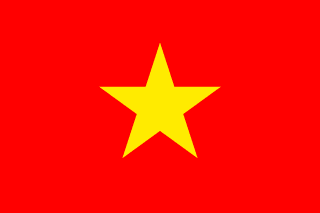
Vietnam
Socialist Republic of Vietnam
Population: UN WPP 2024, revision 1, projection for 1 July 2026. Sources and methodology.
Geography and territory
Vietnam runs along the eastern edge of the Indochinese Peninsula, stretching more than 1,650 kilometers from north to south in a slender S-curve that locals often compare to a bamboo pole balancing two baskets of rice, one at each end, representing the fertile deltas of the Red River in the north and the Mekong in the south. Covering 331,210 square kilometers, the country borders China to the north, Laos and Cambodia to the west, and the South China Sea to the east, along a coastline that runs for more than 3,400 kilometers.
The terrain is dominated by mountains across the north and center, with the Annamite Range forming a spine along the western frontier. Fansipan, rising to 3,147 meters, is the highest peak in all of Indochina and towers over the Sapa region, itself famous for dramatic terraced rice fields. Vietnam’s two great river deltas, the Red River Delta in the north and the Mekong Delta in the south, hold the bulk of the population and agricultural activity, with the Mekong Delta ranking among the most productive river systems anywhere in the world.
Climate varies sharply from north to south. The north experiences four distinct seasons, with cool winters and hot, humid summers, while the south stays tropically warm year-round with two seasons defined by the monsoon. The central region bears the brunt of typhoons and torrential rain. Vietnam’s ecological diversity is remarkable, with rainforests sheltering endemic species such as the saola, a forest-dwelling bovine not discovered by science until 1992, along with rare primates including the golden-headed langur and the white-cheeked gibbon.
History
Vietnamese history is a millennia-long saga of resilience and the pursuit of independence. The nation’s foundations took shape in the Red River Delta, where the Dong Son culture, dating to the seventh century BCE, developed a sophisticated society renowned for its ceremonial bronze drums. A thousand years of Chinese rule, from roughly 111 BCE to 938 CE, left a deep cultural imprint, yet the Vietnamese preserved their identity and language and eventually won independence under the leadership of Ngo Quyen following his victory at the Battle of Bach Dang River.
The Ly, Tran, Le, and Nguyen dynasties built an independent Vietnamese state that repelled Mongol, Chinese, and Cham invasions across the centuries. The period of greatest territorial expansion came with the southward march known as Nam Tien, which extended Vietnamese control all the way to the Mekong Delta. French colonization, consolidated in the second half of the nineteenth century, folded Vietnam into French Indochina, imposing colonial administration, a plantation economy, and an adapted Latin script known as quoc ngu that eventually replaced Chinese characters as the written language.
Ho Chi Minh declared independence on September 2, 1945, but the ensuing war against France from 1946 to 1954, followed by the war against the United States from 1955 to 1975, made Vietnam the defining battleground of the Cold War era. Reunification in 1975 was followed by years of economic hardship until the Doi Moi reforms of 1986 opened the country to market economics. Since then, Vietnam has undergone a dramatic transformation, emerging as one of the fastest-growing economies in Southeast Asia.
Culture and society
Vietnamese culture is a unique synthesis of Confucian and Buddhist influences from China, a legacy of French colonial rule, and a resilient, creative national identity all its own. Confucian values continue to shape social life, with deep respect for family, ancestors, and education. Buddhist temples and pagodas coexist with dinh, communal houses dedicated to each village’s guardian spirit, and ancestor veneration remains a near-universal practice across Vietnamese society regardless of religious affiliation.
Vietnamese literature spans from The Tale of Kieu by Nguyen Du, widely considered the masterpiece of eighteenth-century Vietnamese poetry, through to a thriving contemporary literary scene. Traditional music includes genres such as ca tru, a ceremonial chamber singing style from the north, and don ca tai tu, a chamber music tradition from the south, both recognized by UNESCO. The ao dai, an elegant fitted tunic worn over flowing trousers, remains a cherished symbol of Vietnamese grace, worn on special occasions and formal events.
The most important festival on the calendar is Tet Nguyen Dan, the Lunar New Year, when families reunite, clean and decorate their homes with peach blossoms in the north and apricot blossoms in the south, and prepare traditional foods such as banh chung, a glutinous rice cake. Contemporary Vietnamese society is notably young, with well over half the population under the age of 35, and this youthful energy is driving rapid entrepreneurial and urban transformation across the country’s cities.
Economy
Vietnam ranks among the most remarkable economic success stories of recent decades. The Doi Moi reforms launched in 1986 turned a struggling planned economy into one of the most dynamic in the world, sustaining growth rates that have frequently exceeded 6 percent annually. The country has become a favored destination for foreign investment and manufacturing relocation, attracting major facilities from companies such as Samsung, Intel, Nike, and Apple, drawn by a young, well-trained, and competitive workforce.
Export-oriented manufacturing drives the economy, with textiles, footwear, electronics, and furniture as leading sectors. Vietnam is the world’s second-largest coffee exporter after Brazil, the third-largest rice producer, a major seafood exporter, and one of the leading global suppliers of black pepper and cashews. Membership in trade agreements such as the CPTPP and an agreement with the European Union has significantly broadened Vietnam’s access to international markets.
Vietnam’s technology sector is expanding rapidly, with Ho Chi Minh City and Hanoi emerging as hubs for software development and startups. Tourism has grown into an important economic pillar as well, drawing more than 18 million international visitors annually before the pandemic disruption. With a gross domestic product of roughly 514.7 billion dollars and a Human Development Index of 0.766, placing it in the high category, Vietnam still faces challenges such as improving infrastructure, reducing corruption, and shifting toward higher-value economic activity beyond basic manufacturing.
Food and cuisine
Vietnamese cuisine is one of the great culinary traditions of Southeast Asia, celebrated for its freshness, its lightness, and its masterful balance of flavors and textures. Pho, a soup of rice noodles in an aromatic broth simmered from bones and topped with fresh herbs and beef or chicken, is the country’s signature dish and a ritual breakfast for millions of Vietnamese. Regional variations abound: the northern version tends to be more austere and concentrated, while the southern version adds more herbs, bean sprouts, and condiments.
Banh mi, a crusty baguette filled with pâté, meats, cucumber, cilantro, and chili, represents a perfect fusion of French and Vietnamese culinary traditions and has been celebrated internationally as one of the world’s best sandwiches. Fresh spring rolls, known as goi cuon, wrapped in translucent rice paper around shrimp, herbs, and noodles, deliver a burst of freshness in every bite. Bun cha, a Hanoi specialty of grilled pork served with rice noodles and a sweet-and-sour dipping broth, gained worldwide attention after President Obama sampled it at a modest local restaurant.
Vietnamese coffee culture is distinctive in its own right: ca phe sua da, coffee sweetened with condensed milk and served over ice, is brewed through an individual metal drip filter that produces a strong, sweet cup. Hanoi’s ca phe trung, coffee topped with whipped egg, is an original creation that has won devoted fans among coffee lovers worldwide. Street food is the true soul of Vietnamese dining, with small plastic stools lining the sidewalks where extraordinary dishes are served at minimal cost, turning nearly every street corner into an authentic and unforgettable culinary experience.
Tourism and landmarks
Ha Long Bay, with more than 1,600 limestone islands and islets rising from emerald waters, ranks among the natural wonders of the world and holds UNESCO World Heritage status. Overnight cruises allow visitors to explore caves, floating fishing villages, and secluded beaches in a landscape that seems almost too dramatic to be real. Nearby, Lan Ha Bay and Cat Ba Island offer equally spectacular scenery with far fewer crowds.
Hoi An, a former trading port and UNESCO World Heritage site, charms visitors with its historic quarter of wooden houses and colorful lanterns reflected in the Thu Bon River. The Cham ruins of My Son and the imperial city of Hue, with its citadel and royal tombs strung along the Perfume River, complete a remarkable heritage corridor through central Vietnam. Sapa and the surrounding northwestern mountains dazzle with terraced rice fields and villages home to ethnic minority communities such as the Hmong and the Red Dao.
Ho Chi Minh City, formerly Saigon, pulses with the energy of a metropolis in constant transformation, where the Notre-Dame Cathedral, an Eiffel-inspired central post office, and the Cu Chi tunnels sit alongside gleaming skyscrapers and bustling markets such as Ben Thanh. The Mekong Delta, with its floating markets at Cai Rang and Can Tho, offers an immersive look at life along the river in the south. Phong Nha-Ke Bang National Park, home to Son Doong, the largest cave on Earth, marks the frontier of adventure tourism and cave exploration.
Fun facts about Vietnam
- Vietnam is the world’s second-largest coffee exporter after Brazil, and its coffee culture includes distinctive preparations such as egg coffee and condensed-milk iced coffee.
- More than half of Vietnam’s population is under 35 years old, making it one of the youngest nations in Southeast Asia.
- Son Doong Cave, within Phong Nha-Ke Bang National Park, is the largest cave in the world, with passages reaching up to 200 meters high and 150 meters wide.
- The ao dai, Vietnam’s traditional dress, is still worn as a school uniform by secondary school girls across the country.
- Vietnam has eight UNESCO World Heritage sites, including Ha Long Bay and the ancient town of Hoi An.
- Motorbikes are the dominant mode of transport nationwide, with tens of millions of registered motorcycles serving a population of more than 100 million people.
Vietnam in numbers
Latest World Bank and UNDP observations, each with its own year. “World median” is the middle value among the countries that report the same indicator; “#” ranks from the highest value.
Population since 1960
Vietnam had 32.5 million people in 1960 and 101.6 million in 2025 — 3.1 times as many.
People
38.8% of people live in towns and cities (world median 63.4%). 22.9% are under 15 and 9.5% are 65 or older — a middle-aged population. Women have 1.90 children on average, below the replacement level of about 2.1 needed to keep a population stable in the long run without migration.
Economy
The economy grew by 8.0% in real terms in 2025. Consumer prices rose by 3.3% in 2025. Services make up the largest share of output (42.7% of GDP); agriculture contributes 11.6%.
Development and environment
UNDP rates human development in Vietnam as high, with an index of 0.766 in 2023 (rank 93 of 193). 84.2% of people use the internet and 100.0% have access to electricity. Forest covers 47.1% of the land (world median 32.8%).
Sources: World Bank, World Development Indicators (CC BY 4.0), most recent observation from 2015 onward; UNDP Human Development Report 2025. Retrieved 2026-10-10. Sector shares need not add up to 100% because taxes and subsidies on products are excluded. Missing values are left blank rather than estimated. Sources and methodology.
Climate of Vietnam
Averaged across Vietnam, the warmest month is June (27.6 °C) and the coolest is January (20.2 °C), a seasonal swing of 7.4 °C. The annual mean is 24.7 °C.
About 1,770 mm of precipitation falls in a typical year. August is the wettest month (262 mm) and February the driest (25 mm). The wettest stretch is July to September, with 42% of the year's total.
Show monthly values as a table
| Month | Mean °C | Low °C | High °C | Precipitation, mm |
|---|---|---|---|---|
| January | 20.2 | 16.6 | 23.9 | 39 |
| February | 21.5 | 17.7 | 25.4 | 25 |
| March | 23.6 | 19.7 | 27.5 | 45 |
| April | 26.0 | 22.1 | 30.0 | 77 |
| May | 27.3 | 23.3 | 31.4 | 160 |
| June | 27.6 | 23.8 | 31.5 | 217 |
| July | 27.4 | 23.9 | 31.0 | 247 |
| August | 27.2 | 23.5 | 30.9 | 262 |
| September | 26.5 | 22.9 | 30.2 | 239 |
| October | 25.1 | 21.4 | 28.9 | 217 |
| November | 23.4 | 19.7 | 27.1 | 159 |
| December | 21.1 | 17.3 | 24.8 | 82 |
Figures are 1991–2020 averages across the whole land area of Vietnam, from the World Bank Climate Change Knowledge Portal, CRU TS 4.08 (CC BY 4.0). They are not readings from one weather station: the capital, the coast and high ground can be much warmer, cooler, wetter or drier.
Travel essentials for Vietnam
The practical details visitors ask about first. Traffic in Vietnam drives on the right, like most of the world. Mains electricity is 220 V at 50 Hz, so devices made only for 110–120 V (common in North America) need a converter unless they are dual-voltage — most phone and laptop chargers are.
- Emergency number
- 113Ambulance 115 · Fire 114
- Driving side
- Right
- Plug types
- Type A, Type B, Type CA: two flat parallel pins; B: two flat pins plus a round earth pin; C: two round pins (Europlug)
- Voltage
- 220 V50 Hz
- Dialling code
- +84From abroad: your exit code, then 84 and the number
- Currency
- Vietnamese Dong (VND)
- Time zone
- ICT (UTC+7)Current local time in Vietnam
Compiled from IEC plug and voltage standards, national emergency-service listings and the UN road-traffic conventions. Emergency numbers and local coverage can change — confirm them locally on arrival. Vietnam's internet domain is .vn.
Where Vietnam ranks in the world
Each position counts only the countries with data in that ranking guide. First place is the highest value — for price levels, the most expensive. Select a card to see the full table.
- Population16th of 196102.2 millionUN projection, July 2026
- Land area67th of 195313,429 km²World Bank, 2023
- Population density28th of 194320 per km²World Bank, 2023
- GDP (nominal)32nd of 187$476.3BWorld Bank, 2024, current US$
- GDP per capita117th of 187$4,717World Bank, 2024, current US$
- Life expectancy87th of 19474.7 yearsWorld Bank, 2024
- Price level140th of 16532 (US = 100)ICP 2021, household consumption
Bordering countries of Vietnam


Compare Vietnam with another country
Frequently asked questions about Vietnam
What is the capital of Vietnam?
The capital of Vietnam is Hanoi.
What is the population of Vietnam?
The UN World Population Prospects projection for Vietnam is 102,177,431 people (102.2 million) on 1 July 2026. National statistical offices may publish different estimates.
What language is spoken in Vietnam?
The official language of Vietnam is Vietnamese.
What currency is used in Vietnam?
The currency of Vietnam is the Vietnamese Dong (VND).
How big is Vietnam?
Vietnam covers an area of 331,210 km².
What type of government does Vietnam have?
Vietnam is a one-party socialist republic.
Which countries border Vietnam?
Vietnam shares land borders with China, Laos, Cambodia.
What is the highest point in Vietnam?
The highest point in Vietnam is Fansipan (3,147 m).


