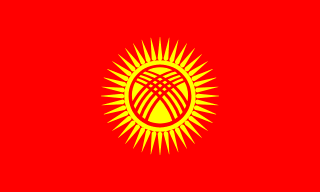
Kyrgyzstan
Kyrgyz Republic
Population: UN WPP 2024, revision 1, projection for 1 July 2026. Sources and methodology.
Geography and territory
Kyrgyzstan is a dramatically mountainous country at the heart of Central Asia, with roughly 90 percent of its territory sitting above 1,500 meters in elevation. The Tien Shan and Pamir ranges dominate the landscape, with more than 80 peaks exceeding 4,000 meters and the majestic Jengish Chokusu topping out at 7,439 meters, the country’s highest point. This extreme relief has earned it the nickname “Switzerland of Central Asia,” even though its scale and altitudes far exceed those of the Alpine nation.
Kyrgyzstan’s crown jewel is Lake Issyk-Kul, the second-largest mountain lake in the world and the tenth-deepest on the planet. Sitting at 1,607 meters above sea level and ringed by snow-capped peaks over 5,000 meters, this crystal-clear lake never freezes despite its altitude, thanks to a slight salinity and underground geothermal activity. Its beaches and hot springs make it a treasured vacation destination throughout the region.
The country has more than 2,000 high-mountain lakes and extensive glaciers that feed a dense river network. The Naryn and Kara-Darya rivers rise in the Kyrgyz mountains and merge to form the Syr Darya, one of Central Asia’s two great rivers. The climate varies sharply with elevation, temperate in the valleys, continental on the plateaus, and glacial on the peaks, producing striking biodiversity, including relict wild walnut forests found nowhere else on Earth, remnants of the Tertiary period.
History
Kyrgyzstan’s history is closely tied to the nomadic peoples of Central Asia’s steppes and mountains. The Kyrgyz, first mentioned in Chinese chronicles of the 2nd century BCE, developed a nomadic culture built around livestock, the horse, and yurt-dwelling that has endured for millennia. Their national epic, the Manas, with more than 500,000 verses, is the longest epic poem in the world and tells of the legendary hero who unified the Kyrgyz tribes against invaders.
Over the centuries the Kyrgyz lands were contested by successive empires: Turkic khaganates, Arabs, the Karakhanids, the Mongols under Genghis Khan, and Central Asian khanates all held sway over these strategic mountains at different times. Russian conquest in the latter half of the 19th century absorbed the territory into the Tsarist empire, triggering the Great Revolt of 1916, in which thousands of Kyrgyz died or fled to China. The Soviet era brought forced settlement of nomads, artificially drawn borders, and industrialization that transformed traditional society.
Kyrgyzstan declared independence on August 31, 1991, and initially distinguished itself as the most democratic republic in Central Asia. The Tulip Revolution of 2005 and the April Revolution of 2010, however, exposed the political and social tensions of the young state. The 2010 constitution established a parliamentary system unique in the region, though later reforms have strengthened presidential power. The country continues to navigate between its nomadic heritage, Russian influence, and aspirations toward democratic modernization.
Culture and society
Kyrgyz culture keeps alive one of the most authentic nomadic traditions in the world. The yurt, a portable felt dwelling built on a wooden frame, remains central to rural life and a national symbol featured on the country’s flag, where the tunduk, the circular crown of the yurt, appears in red against a red field. Techniques for making shyrdak felt rugs, with their colorful geometric patterns, have been recognized as intangible cultural heritage and represent a living craft passed from mothers to daughters.
The Manas, the national epic, is far more than a work of literature: it is the heart of Kyrgyz identity. The manaschi, reciters capable of narrating fragments of this monumental work from memory for hours or even days, are revered as guardians of collective memory. Traditional equestrian games such as kok-boru (a game resembling polo but played with a goat carcass), at-chabysh (long-distance horse racing), and eagle hunting keep the nomadic spirit alive at festivals and celebrations.
Contemporary Kyrgyz society is caught between urban modernization and attachment to rural tradition. Bishkek, the capital, is a leafy city shaped by Soviet-era planning, home to universities, bustling bazaars, and a growing cultural scene. In the mountains, semi-nomadic herders still move their flocks and yurts to the jailoo, the high summer pastures, keeping alive a way of life largely unchanged for centuries. This duality gives Kyrgyzstan a singular appeal for travelers seeking authentic cultural experiences.
Economy
Kyrgyzstan’s economy is one of the more modest in Central Asia, shaped by rugged mountain terrain and a scarcity of hydrocarbons. Mining, particularly gold extraction at the Kumtor mine, one of the largest in the world, situated above 4,000 meters, is the leading export sector. Dependence on a single deposit and associated environmental disputes, however, represent a significant vulnerability.
Agriculture and livestock employ a substantial share of the population, with sheep and horses the main assets in rural mountain areas. The fertile Fergana and Chui valleys produce cotton, tobacco, grain, and fruit. The country’s enormous hydroelectric potential, drawn from its fast-flowing mountain rivers, remains only partially developed and generates a surplus that is exported to neighboring countries, though it is also a source of regional disputes over water control.
Remittances from Kyrgyz migrant workers, mainly in Russia, represent a significant share of GDP and support the livelihoods of thousands of families. Adventure and nature tourism is emerging as a sector with strong potential, drawing on the mountain scenery, pristine lakes, and nomadic culture as distinguishing assets. Community-based yurt tourism initiatives allow rural families to earn supplementary income while sharing their way of life with travelers from around the world.
Food and cuisine
Kyrgyz cuisine is the food of mountaineers and herders, hearty and energizing, built to sustain the body through the demanding conditions of the Central Asian highlands. Beshbarmak, the national dish shared with neighboring nomadic peoples, consists of boiled horse or lamb meat served over broad sheets of pasta, doused in an aromatic broth and topped with onion. It is traditionally eaten by hand, gathering the whole family around a large shared platter that symbolizes community and generosity.
Dairy products form a fundamental pillar of the Kyrgyz diet. Kumis, fermented mare’s milk, is the national drink, consumed in large quantities during summer when mares graze the high jailoo pastures; an annual kymyz festival celebrates this ancient tradition. Kurut, dried salty yogurt balls, serves as imperishable travel food, while ayran, a refreshing liquid yogurt, accompanies hot summer meals.
Samsa, baked pastries filled with meat and onion, and lagman, hand-pulled noodles served in a spiced vegetable broth, reflect the influence of Uyghur and Chinese cooking in the region’s cuisine. Tandyr bread, baked in clay ovens, is a fixture of every Kyrgyz table. Snacks include boorsok, pieces of fried dough served with tea, the great social drink, poured into piala (handleless bowls) and offered to every visitor as a first gesture of hospitality.
Tourism and landmarks
Kyrgyzstan has positioned itself as one of the most appealing emerging destinations in Central Asia for lovers of adventure and nature tourism. Lake Issyk-Kul, ringed by the snowy peaks of the Tien Shan, offers beaches, hot springs, and a shoreline dotted with petroglyphs and archaeological sites. On its southern shore, the Jeti-Oguz canyon, with its striking red rock formations known as the “Seven Bulls,” and the valleys around Karakol invite hiking, climbing, and mountain skiing.
Ala-Archa National Park, just 40 kilometers from Bishkek, offers stunning hikes among peaks over 4,000 meters and glistening glaciers. For the more adventurous, treks to the base camp of Peak Lenin (7,134 meters) and crossings of the high mountain passes of the central Tien Shan offer world-class mountaineering experiences. The Arslanbob valley is home to the largest wild walnut forest on the planet, a green paradise tucked among the mountains where local communities welcome travelers into family-run guesthouses.
Community-based yurt tourism is Kyrgyzstan’s most distinctive offering. Travelers can stay in yurt camps beside crystalline mountain lakes such as Son-Kul, at 3,000 meters, sharing the daily life of semi-nomadic herders: milking mares, making kumis, riding across endless pastures, and gazing up at extraordinarily clear night skies. Eagle-hunting festivals and kok-boru horseback competitions add a unique cultural dimension to the travel experience.
Fun facts about Kyrgyzstan
- The Manas, Kyrgyzstan’s national epic, is the longest oral literary work in the world, with more than 500,000 verses, roughly twenty times the length of the Odyssey.
- Kyrgyzstan’s flag is the only one in the world to depict the inside of a dwelling: the tunduk, the crown of the yurt seen from below.
- Lake Issyk-Kul is so large that early European cartographers mistook it for a sea, and it never freezes despite sitting at 1,607 meters of altitude.
- The Kyrgyz practice eagle hunting, a centuries-old tradition in which birds trained from chicks can bring down foxes and wolves.
- The mountains of Kyrgyzstan contain the world’s largest wild walnut forest, with some trees reaching 1,000 years old.
Kyrgyzstan in numbers
Latest World Bank and UNDP observations, each with its own year. “World median” is the middle value among the countries that report the same indicator; “#” ranks from the highest value.
Population since 1960
Kyrgyzstan had 2.2 million people in 1960 and 7.3 million in 2025 — 3.4 times as many.
People
34.7% of people live in towns and cities (world median 63.4%). 31.9% are under 15 and 6.0% are 65 or older — a young population. Women have 2.60 children on average, above the replacement level of about 2.1.
Economy
The economy grew by 11.1% in real terms in 2025. Consumer prices rose by 8.2% in 2025. Services make up the largest share of output (51.2% of GDP); agriculture contributes 8.0%.
Development and environment
UNDP rates human development in Kyrgyzstan as high, with an index of 0.720 in 2023 (rank 117 of 193). 92.0% of people use the internet and 100.0% have access to electricity. Forest covers 6.5% of the land (world median 32.8%).
Sources: World Bank, World Development Indicators (CC BY 4.0), most recent observation from 2015 onward; UNDP Human Development Report 2025. Retrieved 2026-10-10. Sector shares need not add up to 100% because taxes and subsidies on products are excluded. Missing values are left blank rather than estimated. Sources and methodology.
Climate of Kyrgyzstan
Averaged across Kyrgyzstan, the warmest month is July (15.7 °C) and the coolest is January (−12.9 °C), a seasonal swing of 28.6 °C. The annual mean is 2.6 °C.
5 months have a national mean temperature below freezing.
About 481 mm of precipitation falls in a typical year. May is the wettest month (67 mm) and September the driest (18 mm). The wettest stretch is April to June, with 37% of the year's total.
Show monthly values as a table
| Month | Mean °C | Low °C | High °C | Precipitation, mm |
|---|---|---|---|---|
| January | −12.9 | −17.8 | −8.0 | 26 |
| February | −10.3 | −15.2 | −5.4 | 35 |
| March | −2.7 | −7.7 | 2.2 | 47 |
| April | 4.7 | −1.0 | 10.4 | 56 |
| May | 9.0 | 3.1 | 14.9 | 67 |
| June | 13.0 | 6.6 | 19.5 | 53 |
| July | 15.7 | 8.7 | 22.6 | 40 |
| August | 15.3 | 8.1 | 22.5 | 37 |
| September | 10.4 | 3.2 | 17.5 | 18 |
| October | 4.0 | −2.3 | 10.2 | 28 |
| November | −4.2 | −9.3 | 0.8 | 39 |
| December | −10.5 | −15.0 | −6.0 | 36 |
Figures are 1991–2020 averages across the whole land area of Kyrgyzstan, from the World Bank Climate Change Knowledge Portal, CRU TS 4.08 (CC BY 4.0). They are not readings from one weather station: the capital, the coast and high ground can be much warmer, cooler, wetter or drier.
Travel essentials for Kyrgyzstan
The practical details visitors ask about first. Traffic in Kyrgyzstan drives on the right, like most of the world. Mains electricity is 230 V at 50 Hz, so devices made only for 110–120 V (common in North America) need a converter unless they are dual-voltage — most phone and laptop chargers are.
- Emergency number
- 112Police 102 · Ambulance 103 · Fire 101
- Driving side
- Right
- Plug types
- Type C, Type FC: two round pins (Europlug); F: two round pins with side earth clips (Schuko)
- Voltage
- 230 V50 Hz
- Dialling code
- +996From abroad: your exit code, then 996 and the number
- Currency
- Kyrgyzstani Som (KGS)
- Time zone
- UTC+6Current local time in Kyrgyzstan
Compiled from IEC plug and voltage standards, national emergency-service listings and the UN road-traffic conventions. Emergency numbers and local coverage can change — confirm them locally on arrival. Kyrgyzstan's internet domain is .kg.
Where Kyrgyzstan ranks in the world
Each position counts only the countries with data in that ranking guide. First place is the highest value — for price levels, the most expensive. Select a card to see the full table.
- Population106th of 1967.4 millionUN projection, July 2026
- Land area86th of 195191,800 km²World Bank, 2023
- Population density145th of 19437 per km²World Bank, 2023
- GDP (nominal)130th of 187$18.2BWorld Bank, 2024, current US$
- GDP per capita144th of 187$2,515World Bank, 2024, current US$
- Life expectancy111th of 19472.4 yearsWorld Bank, 2024
- Price level155th of 16529 (US = 100)ICP 2021, household consumption
Bordering countries of Kyrgyzstan


Compare Kyrgyzstan with another country
Frequently asked questions about Kyrgyzstan
What is the capital of Kyrgyzstan?
The capital of Kyrgyzstan is Bishkek.
What is the population of Kyrgyzstan?
The UN World Population Prospects projection for Kyrgyzstan is 7,400,465 people (7.4 million) on 1 July 2026. National statistical offices may publish different estimates.
What language is spoken in Kyrgyzstan?
The official language of Kyrgyzstan is Kyrgyz, Russian.
What currency is used in Kyrgyzstan?
The currency of Kyrgyzstan is the Kyrgyzstani Som (KGS).
How big is Kyrgyzstan?
Kyrgyzstan covers an area of 199,951 km².
What type of government does Kyrgyzstan have?
Kyrgyzstan is a parliamentary republic.
Which countries border Kyrgyzstan?
Kyrgyzstan shares land borders with Kazakhstan, China, Tajikistan, Uzbekistan.
What is the highest point in Kyrgyzstan?
The highest point in Kyrgyzstan is Peak Jengish Chokusu (7,439 m).
