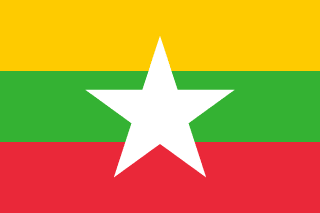
Myanmar
Republic of the Union of Myanmar
Population: UN WPP 2024, revision 1, projection for 1 July 2026. Sources and methodology.
Geography and territory
Myanmar is the largest country in mainland Southeast Asia, covering 676,578 square kilometers between South Asia and the Southeast Asian peninsula. It shares borders with five nations: India and Bangladesh to the northwest, China to the northeast, and Laos and Thailand along its eastern flank. A long coastline stretches along the Andaman Sea and the Bay of Bengal, dotted with untouched beaches, mangrove estuaries, and largely unexplored archipelagos such as the Mergui Islands.
The country’s interior is shaped by parallel mountain ranges that cradle the central Irrawaddy River basin, the lifeline that runs the length of the nation from north to south and sustains its rice-growing heartland. Hkakabo Razi, rising 5,881 meters near the Chinese and Tibetan frontier, is the highest peak in Southeast Asia and marks the southeastern extremity of the Himalayan chain. To the east, the Shan Plateau climbs above 1,000 meters, while the Arakan (Rakhine) mountains form a natural wall separating Myanmar from India and Bangladesh along the western seaboard.
Climate varies from tropical monsoon conditions along the coast and central plains to alpine cold in the northern peaks. The southwest monsoon delivers heavy rainfall between May and October, particularly along the Rakhine and Tanintharyi coasts, while the central “dry zone,” sheltered by surrounding highlands, receives far less precipitation. Nearly half the country remains forested, sustaining Asian elephants, tigers, leopards, sun bears, and the rare Irrawaddy dolphin, making Myanmar one of the least-documented biodiversity hotspots in Asia.
History
Myanmar’s recorded history reaches back more than two thousand years to the Pyu city-states that flourished along the Irrawaddy from around the second century BCE; the ruins of Sri Ksetra, one of their capitals, are now a UNESCO World Heritage Site. The Bamar people, who migrated south from the Tibetan borderlands, founded the first unified Burmese kingdom at Bagan in the eleventh century. King Anawrahta established Theravada Buddhism as the state religion and launched a temple-building campaign that would eventually produce the largest concentration of Buddhist monuments in Southeast Asia.
Successive dynasties, Bagan, Taungoo, and Konbaung, expanded Burmese territory through centuries of warfare with neighboring kingdoms, including the sacking of the Siamese capital Ayutthaya in 1767, while cultivating a rich literary and artistic tradition. Three Anglo-Burmese wars in the nineteenth century ended in British conquest, and the country was administered as a province of British India. Japanese occupation during World War II and the subsequent independence movement led by General Aung San culminated in full sovereignty on January 4, 1948.
The decades since have been turbulent. A 1962 military coup ushered in nearly fifty years of army rule and international isolation. The 1988 pro-democracy uprising and the emergence of Aung San Suu Kyi, who won the 1991 Nobel Peace Prize, kept hopes for reform alive, and a period of political opening between 2010 and 2020 briefly allowed civilian government to share power with the military. That progress was reversed in February 2021, when the armed forces seized control in a coup and detained civilian leaders, installing the military government that continues to administer the country today. Long-running ethnic conflicts in Kachin, Shan, and Rakhine states, including the Rohingya crisis, remain unresolved and continue to shape Myanmar’s fragile political landscape.
Culture and society
Theravada Buddhism permeates nearly every aspect of daily life in Myanmar, where a large majority of the population practices the faith. Pagodas and monasteries function as the true centers of community life, and it remains customary for Burmese boys to spend time as novice monks at least once before adulthood. The shinbyu ceremony, in which young boys are dressed as princes before donning the saffron robe, is one of the country’s most cherished rites of passage.
Ethnic diversity is remarkable: the government recognizes 135 distinct groups, and while the Bamar majority dominates the lowlands, the Shan, Karen, Kachin, Chin, Mon, and Rakhine peoples, among others, maintain their own languages, dress, and customs. National festivals built around the Buddhist calendar punctuate the year, most notably Thingyan, the boisterous water festival marking the Burmese New Year, and Thadingyut, the festival of lights that closes the Buddhist Lent. Traditional arts include yoke thé marionette theater and a classical dance style prized for its fluid, deliberate gestures.
Religious architecture reaches its zenith at the Shwedagon Pagoda in Yangon, a stupa sheathed in tons of gold leaf and crowned with thousands of diamonds and other gems, ranking among the most revered Buddhist sites on Earth. Everyday cultural markers are equally distinctive: the longyi, a wraparound cloth worn by men and women alike, and thanaka, a pale cosmetic paste ground from tree bark and applied to the face for sun protection and beautification, remain ubiquitous across the country, testament to a culture that has preserved its identity through decades of hardship.
Economy
With a gross domestic product of roughly $81.7 billion, Myanmar remains one of Southeast Asia’s least developed economies, a legacy of prolonged isolation, military mismanagement, and internal conflict. Agriculture employs close to 70 percent of the workforce, producing rice, pulses, sesame, and sugarcane. The country also ranks among the world’s leading sources of jade, rubies, and sapphires; the mines around Mogok are famed for gemstones of exceptional quality, though much of this trade operates outside formal channels.
Natural resources are abundant, including natural gas exported mainly to Thailand and China, prized teak timber, metallic minerals, and substantial untapped hydropower potential. The limited economic opening between 2010 and 2020 drew foreign investment into telecommunications, garment manufacturing, and tourism, producing years of solid growth. The 2021 military takeover undid much of that progress, triggering international sanctions, capital flight, and a sharp economic contraction from which the country has yet to recover.
Informal economic activity accounts for a large share of real output. Cross-border trade with China and Thailand, subsistence farming, and small-scale resource extraction define daily economic life for much of the population. Myanmar remains among the poorer nations in Asia, hampered by weak infrastructure, limited access to banking, and strained health and education systems, challenges compounded by the ongoing political instability.
Food and cuisine
Burmese cuisine is one of Southeast Asia’s best-kept secrets, drawing on Indian, Chinese, and Thai influences while retaining a flavor profile entirely its own. Mohinga, widely considered the national dish, is a fish-based rice noodle soup thickened with chickpea flour and seasoned with lemongrass, ginger, and crisp fried onions; eaten across the country as a breakfast staple, it varies by region, though the Yangon version is generally regarded as the classic rendition.
Lahpet thoke, or fermented tea leaf salad, is a genuinely unique preparation found nowhere else in the world: fermented tea leaves are tossed with cabbage, tomatoes, fried peanuts, sesame seeds, crispy garlic, and a splash of lime and oil. Deeply woven into Burmese hospitality, it is served as an appetizer, a snack, or a way to close a meal. Other signature dishes include ohn no khao swe, egg noodles in a creamy coconut chicken curry, and tofu nway, a Shan-style tofu made from chickpea flour rather than soybeans.
Daily meals revolve around htamin (rice) served alongside an assortment of curries known as hin, salads called thoke, soups called hincho, and condiments such as ngapi, a pungent fermented fish paste. Shan noodles, Mon cooking traditions, and Rakhine dishes carrying Bengali influence all showcase the country’s ethnic culinary range. Morning markets brimming with fresh produce, sweet milk tea, and crackling fried snacks offer a sensory introduction to a cuisine that travelers are only beginning to discover.
Tourism and landmarks
The plain of Bagan ranks among the most extraordinary archaeological landscapes on Earth, scattering more than two thousand surviving temples, pagodas, and monasteries across roughly 40 square kilometers beside the Irrawaddy River. Built mainly between the eleventh and thirteenth centuries, the structures cast golden and rust-colored silhouettes at sunrise and sunset that feel almost otherworldly; a hot-air balloon flight over the plain at dawn ranks among the most memorable travel experiences anywhere. UNESCO inscribed Bagan as a World Heritage Site in 2019.
In Yangon, the Shwedagon Pagoda’s central stupa rises 99 meters and is covered with dozens of tons of gold, making it the most venerated religious site in the country and a magnet for pilgrims. The former capital also retains a striking collection of British colonial-era architecture, bustling markets, and an unhurried atmosphere distinct from other major Asian cities. Mandalay, the last royal capital, offers the entirely teak-carved Shwenandaw Monastery, Mandalay Hill, and the U Bein Bridge, the longest teak footbridge in the world.
Inle Lake, in Shan State, captivates visitors with its leg-rowing fishermen, floating gardens, and stilted monasteries. The Golden Rock at Kyaiktiyo, a boulder sheathed in gold leaf that appears to balance impossibly on the edge of a cliff, is another major pilgrimage site. Meanwhile, the pristine beaches of Ngapali, hill-tribe trekking around Kalaw, and the remote Mergui Archipelago provide destinations well off the beaten path for travelers seeking Myanmar beyond its headline sights.
Fun facts about Myanmar
- Bagan preserves roughly four thousand original religious structures, about two thousand of them still in good condition, rivaling Angkor Wat in archaeological scale.
- Myanmar is one of only three countries, alongside the United States and Liberia, that has not officially adopted the metric system.
- The Shwedagon Pagoda is said to enshrine relics of four Buddhas, including strands of hair from Buddha Gautama, beneath more than sixty tons of gold leaf.
- Myanmar is the world’s leading source of high-quality jade, and its annual gem auctions generate billions of dollars in trade.
- Thanaka, the pale cosmetic bark paste seen on faces across the country, has been used for sun protection and beauty for more than two thousand years.
- Inle Lake’s fishermen developed a distinctive one-legged rowing technique, passed down through generations, that keeps both hands free to manage their nets.
Myanmar in numbers
Latest World Bank and UNDP observations, each with its own year. “World median” is the middle value among the countries that report the same indicator; “#” ranks from the highest value.
Population since 1960
Myanmar had 21.7 million people in 1960 and 54.9 million in 2025 — 2.5 times as many.
People
30.6% of people live in towns and cities (world median 63.4%). 24.1% are under 15 and 7.5% are 65 or older — a middle-aged population. Women have 2.10 children on average, close to the replacement level of about 2.1.
Economy
The economy shrank by 2.0% in real terms in 2025. Consumer prices rose by 8.8% in 2019. Services make up the largest share of output (38.5% of GDP); agriculture contributes 25.3%, a large share that points to a farming-based economy.
Development and environment
UNDP rates human development in Myanmar as medium, with an index of 0.609 in 2023 (rank 150 of 193). 45.4% of people use the internet and 80.4% have access to electricity. Forest covers 42.0% of the land (world median 32.8%).
Sources: World Bank, World Development Indicators (CC BY 4.0), most recent observation from 2015 onward; UNDP Human Development Report 2025. Retrieved 2026-10-10. Sector shares need not add up to 100% because taxes and subsidies on products are excluded. Missing values are left blank rather than estimated. Sources and methodology.
Climate of Myanmar
Averaged across Myanmar, the warmest month is May (26.7 °C) and the coolest is January (19.0 °C), a seasonal swing of 7.7 °C. The annual mean is 23.8 °C.
About 2,053 mm of precipitation falls in a typical year. August is the wettest month (435 mm) and January the driest (10 mm). The three wettest consecutive months, June to August, bring 58% of the year's total — a pronounced rainy season.
Show monthly values as a table
| Month | Mean °C | Low °C | High °C | Precipitation, mm |
|---|---|---|---|---|
| January | 19.0 | 12.1 | 26.0 | 10 |
| February | 20.7 | 13.3 | 28.2 | 11 |
| March | 23.7 | 16.4 | 31.0 | 23 |
| April | 26.3 | 19.9 | 32.7 | 64 |
| May | 26.7 | 21.8 | 31.7 | 194 |
| June | 25.9 | 22.3 | 29.6 | 342 |
| July | 25.6 | 22.3 | 29.0 | 422 |
| August | 25.6 | 22.2 | 29.0 | 435 |
| September | 25.6 | 21.7 | 29.5 | 307 |
| October | 24.8 | 20.5 | 29.2 | 183 |
| November | 22.4 | 17.0 | 27.9 | 52 |
| December | 19.9 | 13.8 | 25.9 | 10 |
Figures are 1991–2020 averages across the whole land area of Myanmar, from the World Bank Climate Change Knowledge Portal, CRU TS 4.08 (CC BY 4.0). They are not readings from one weather station: the capital, the coast and high ground can be much warmer, cooler, wetter or drier.
Travel essentials for Myanmar
The practical details visitors ask about first. Traffic in Myanmar drives on the right, like most of the world. Mains electricity is 230 V at 50 Hz, so devices made only for 110–120 V (common in North America) need a converter unless they are dual-voltage — most phone and laptop chargers are.
- Emergency number
- 199Ambulance 192 · Fire 191
- Driving side
- Right
- Plug types
- Type C, Type D, Type F, Type GC: two round pins (Europlug); D: three large round pins in a triangle; F: two round pins with side earth clips (Schuko); G: three rectangular pins (British)
- Voltage
- 230 V50 Hz
- Dialling code
- +95From abroad: your exit code, then 95 and the number
- Currency
- Myanmar Kyat (MMK)
- Time zone
- MMT (UTC+6:30)Current local time in Myanmar
Compiled from IEC plug and voltage standards, national emergency-service listings and the UN road-traffic conventions. Emergency numbers and local coverage can change — confirm them locally on arrival. Myanmar's internet domain is .mm.
Where Myanmar ranks in the world
Each position counts only the countries with data in that ranking guide. First place is the highest value — for price levels, the most expensive. Select a card to see the full table.
- Population27th of 19655.2 millionUN projection, July 2026
- Land area39th of 195652,670 km²World Bank, 2023
- Population density101st of 19483 per km²World Bank, 2023
- GDP (nominal)84th of 187$74.1BWorld Bank, 2024, current US$
- GDP per capita161st of 187$1,359World Bank, 2024, current US$
- Life expectancy154th of 19467.1 yearsWorld Bank, 2024
Bordering countries of Myanmar


Compare Myanmar with another country
Frequently asked questions about Myanmar
What is the capital of Myanmar?
The capital of Myanmar is Naypyidaw.
What is the population of Myanmar?
The UN World Population Prospects projection for Myanmar is 55,184,819 people (55.2 million) on 1 July 2026. National statistical offices may publish different estimates.
What language is spoken in Myanmar?
The official language of Myanmar is Burmese.
What currency is used in Myanmar?
The currency of Myanmar is the Myanmar Kyat (MMK).
How big is Myanmar?
Myanmar covers an area of 676,578 km².
What type of government does Myanmar have?
Myanmar is a parliamentary republic (military government since 2021).
Which countries border Myanmar?
Myanmar shares land borders with India, Bangladesh, China, Laos, Thailand.
What is the highest point in Myanmar?
The highest point in Myanmar is Hkakabo Razi (5,881 m).


