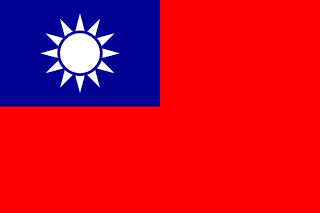
Taiwan
Republic of China (Taiwan)
Population: UN WPP 2024, revision 1, projection for 1 July 2026. Sources and methodology.
Geography and territory
Taiwan is an island shaped roughly like a sweet potato leaf, situated in the western Pacific off the southeastern coast of mainland China, from which it is separated by the 180-kilometer-wide Taiwan Strait. Covering 36,197 square kilometers, the main island is joined by the outlying archipelagos of Penghu, Kinmen, and Matsu. Despite its relatively modest footprint, Taiwan holds extraordinary geographic diversity: roughly two-thirds of the island is covered by rugged mountains, including more than 200 peaks exceeding 3,000 meters in elevation.
The Central Mountain Range runs the length of the island from north to south like a spine of rock and forest, culminating in Yushan, or Jade Mountain, at 3,952 meters, the highest peak in Northeast Asia. West of the range lies a coastal plain that holds most of the island’s population and economic activity, while the eastern coast drops abruptly into the Pacific in dramatic cliffs that create some of the most striking coastal scenery in Asia.
Taiwan’s climate is subtropical in the north and tropical in the south, with monsoon rains delivering abundant precipitation, especially during typhoon season between June and October. This combination of humidity, elevation, and latitude produces exceptional biodiversity: tropical forest in the lowlands, temperate conifer and camphor forest at mid-elevation, and alpine ecosystems on the highest summits. Wildlife includes endemic species such as the Formosan black bear, the Formosan clouded leopard, and Swinhoe’s pheasant, emblems of a nature shaped by relative island isolation.
History
Taiwan’s history is a story of cultural encounters, migration, and political transformation that has forged a distinctive and layered identity. Austronesian peoples, considered the island’s indigenous inhabitants, settled Taiwan at least 6,000 years ago and developed diverse cultures with their own languages, traditions, and social systems. Linguistic research suggests Taiwan may be the original homeland of the entire Austronesian language family, which stretches from Madagascar to Easter Island.
European colonizers arrived in the seventeenth century: the Dutch settled in the south between 1624 and 1662, and the Spanish briefly held the north from 1626 to 1642. In 1662, Ming loyalist Koxinga expelled the Dutch and established the first Chinese government on the island. The Qing dynasty ruled Taiwan from 1683 until 1895, when the island was ceded to Japan following the First Sino-Japanese War. Japanese colonial rule, lasting until 1945, modernized infrastructure, education, and agriculture, but also imposed forced cultural assimilation.
Following Japan’s defeat in 1945, Taiwan came under the administration of the Republic of China. In 1949, the Nationalist Kuomintang government under Chiang Kai-shek retreated to Taiwan after losing the civil war on the mainland to the Communists, bringing with it roughly two million people. For decades the island lived under martial law even as it experienced extraordinary economic growth known as the “Taiwan Miracle.” Gradual democratization culminated in 1996 with the first direct presidential election, transforming Taiwan into one of Asia’s most vibrant democracies. Today its government describes itself as the Republic of China (Taiwan), and its political status remains a matter of ongoing regional and international discussion.
Culture and society
Taiwanese culture is a remarkably dynamic synthesis of Chinese tradition, Japanese influence, Western currents, and indigenous Austronesian roots, all bound together by a creativity and entrepreneurial spirit that distinguishes Taiwanese society within East Asia. Taoist and Buddhist temples, with their curved roofs and ornate dragon carvings, exist alongside Christian churches and the shrines of indigenous communities. Traditions such as the Lantern Festival, Lunar New Year, and the Dragon Boat Festival are celebrated with an energy that has persisted more intensely than on the mainland.
Traditional Taiwanese arts include Taiwanese opera, or gezaixi, a theatrical form native to the island that blends music, song, and drama, along with calligraphy, ceramics, and jade carving. Taiwan has also become a hub of Asian popular culture: its music, film, and television industries wield outsized influence throughout the Chinese-speaking world. Taiwanese cinema, with directors such as Ang Lee, Hou Hsiao-hsien, and Tsai Ming-liang, has earned acclaim at the world’s most prestigious film festivals.
Taiwanese society stands out for its openness and progressive values within the Asian context. In 2019, Taiwan became the first place in Asia to legalize same-sex marriage, a milestone reflecting an active civil society and a strong culture of tolerance. Education is highly valued, with literacy rates near 99 percent and universities ranked among the best in Asia. A culture of volunteering, philanthropy, and civic engagement coexists with a lively nightlife centered on the famous night markets that define much of Taiwan’s social life.
Economy
Taiwan has one of the most dynamic and technologically advanced economies in the world, with a gross domestic product of roughly $790.0 billion and per capita income among the highest in Asia. The technology sector drives the economy: Taiwan manufactures more than 60 percent of the world’s semiconductors and more than 90 percent of the most advanced chips, largely through TSMC (Taiwan Semiconductor Manufacturing Company), making it an absolutely critical link in the global technology supply chain. This position has earned Taiwan the nickname “Silicon Shield.”
Beyond semiconductors, Taiwan leads in the production of electronic components, flat-panel displays, laptop computers, and telecommunications equipment. Companies such as Foxconn, the world’s largest contract electronics manufacturer, along with ASUS, Acer, HTC, and MediaTek, were founded and built on the island. The petrochemical, steel, machinery, and high-tech textile industries round out a diversified and competitive manufacturing base that has continuously moved up the value chain.
Taiwan’s economy rests on a foundation of excellent technical education, a strong entrepreneurial culture, and sustained investment in research and development that exceeds 3 percent of GDP. The science parks of Hsinchu, Tainan, and Taichung concentrate innovation ecosystems that rival Silicon Valley in their specialization. The services sector, including finance, design, and a growing tourism industry, complements the manufacturing base, and foreign trade remains essential to an island economy that depends heavily on exports.
Food and cuisine
Taiwanese cuisine is one of the most vibrant and celebrated in Asia, a feast of flavors that blends culinary traditions from across mainland China brought by the migrants of 1949, Japanese influence, indigenous ingredients, and a culinary creativity that has made the island an essential destination for food lovers. Night markets, found in every city and neighborhood, form the beating heart of this food culture, with hundreds of stalls offering an endless parade of dishes, snacks, and drinks at accessible prices.
Niu rou mian, a soup of noodles with braised beef, is widely considered Taiwan’s unofficial national dish, with versions ranging from light, fragrant broths to thick, spicy preparations. Xiao long bao, delicate steamed dumplings filled with pork and broth, reach their finest expression at Taiwanese restaurants such as Din Tai Fung, ranked among the best in the world. Lu rou fan, rice topped with pork braised in soy sauce and spices, is the ultimate comfort dish, humble yet irresistibly flavorful.
Bubble tea, invented in Taiwan in the 1980s, has become a global phenomenon that has carried Taiwanese food culture to every continent. Stinky tofu, fried or stewed, challenges the senses with its pungent smell but wins over visitors with its flavor, serving as something of a rite of passage at night markets. Tropical fruit, especially mango, is transformed into shaved-ice desserts called baobing that are as beautiful as they are fleeting. Pineapple cakes, high-mountain oolong tea from Alishan, and small oyster omelets with sweet sauce round out a culinary repertoire that alone justifies a trip to Taiwan.
Tourism and landmarks
Taiwan packs an extraordinary concentration of attractions into a compact space, from ultramodern cities to jungle-clad mountains, ancient temples, and dramatic coastlines. Taipei, the capital, pulses with the energy of a major Asian city: the Taipei 101 skyscraper, the world’s tallest building until 2010, dominates the skyline, while the Shilin and Raohe night markets offer some of the most celebrated street food experiences in Asia. The National Palace Museum houses the world’s largest collection of Chinese art, with more than 700,000 pieces.
Taroko Gorge, on the east coast, is a natural wonder of overwhelming beauty: a marble and granite canyon carved by the Liwu River over millions of years, with sheer walls hundreds of meters high, trails cut into the rock, temples suspended over the abyss, and waterfalls plunging into the void. Yushan National Park offers high-mountain trekking through forests of centuries-old cedar, while Sun Moon Lake, in the island’s interior, is a haven of tranquility surrounded by mountains and temples.
Natural hot springs are among Taiwan’s great pleasures, with Beitou, on the outskirts of Taipei, and Zhiben ranking among the most popular. The Kenting coast, at the island’s southern tip, offers tropical beaches and a marine national park. Jiufen, a former gold-mining town with steep lantern-lit streets, reportedly inspired scenes in Hayao Miyazaki’s animated film “Spirited Away.” Indigenous villages in the central mountains and the Penghu archipelago, with its coral temples and unspoiled beaches, round out a tourism offering as diverse as it is surprising.
Fun facts about Taiwan
- Taiwan manufactures more than 90 percent of the world’s most advanced semiconductors, making it a critical and irreplaceable link in the global technology supply chain.
- Bubble tea was invented in Taiwan in the 1980s and has since become a worldwide beverage phenomenon.
- Taiwan was the first place in Asia to legalize same-sex marriage, in May 2019.
- The island has one of the highest densities of convenience stores in the world, with roughly one for every 2,000 residents.
- Linguistic research suggests Taiwan could be the original homeland of the Austronesian language family, which spans from Madagascar to Easter Island.
Climate of Taiwan
Averaged across Taiwan, the warmest month is July (25.0 °C) and the coolest is January (14.6 °C), a seasonal swing of 10.4 °C. The annual mean is 20.2 °C.
About 2,124 mm of precipitation falls in a typical year. August is the wettest month (365 mm) and January the driest (77 mm). The wettest stretch is June to August, with 47% of the year's total.
Show monthly values as a table
| Month | Mean °C | Low °C | High °C | Precipitation, mm |
|---|---|---|---|---|
| January | 14.6 | 10.8 | 18.3 | 77 |
| February | 14.7 | 10.7 | 18.7 | 116 |
| March | 16.7 | 12.7 | 20.8 | 113 |
| April | 19.7 | 15.9 | 23.6 | 128 |
| May | 22.1 | 18.7 | 25.6 | 199 |
| June | 24.2 | 20.9 | 27.5 | 302 |
| July | 25.0 | 21.7 | 28.4 | 339 |
| August | 24.7 | 21.6 | 27.9 | 365 |
| September | 23.9 | 20.5 | 27.3 | 185 |
| October | 21.7 | 18.2 | 25.3 | 121 |
| November | 19.0 | 15.5 | 22.6 | 96 |
| December | 16.1 | 12.6 | 19.6 | 84 |
Figures are 1991–2020 averages across the whole land area of Taiwan, from the World Bank Climate Change Knowledge Portal, CRU TS 4.08 (CC BY 4.0). They are not readings from one weather station: the capital, the coast and high ground can be much warmer, cooler, wetter or drier.
Travel essentials for Taiwan
The practical details visitors ask about first. Traffic in Taiwan drives on the right, like most of the world. Mains electricity is 110 V at 60 Hz, so appliances built only for 220–240 V need a voltage converter.
- Emergency number
- 110Ambulance 119 · Fire 119
- Driving side
- Right
- Plug types
- Type A, Type BA: two flat parallel pins; B: two flat pins plus a round earth pin
- Voltage
- 110 V60 Hz
- Dialling code
- +886From abroad: your exit code, then 886 and the number
- Currency
- New Taiwan Dollar (TWD)
- Time zone
- UTC+8Current local time in Taiwan
Compiled from IEC plug and voltage standards, national emergency-service listings and the UN road-traffic conventions. Emergency numbers and local coverage can change — confirm them locally on arrival. Taiwan's internet domain is .tw.
Where Taiwan ranks in the world
Each position counts only the countries with data in that ranking guide. First place is the highest value — for price levels, the most expensive. Select a card to see the full table.
Compare Taiwan with another country
Frequently asked questions about Taiwan
What is the capital of Taiwan?
The capital of Taiwan is Taipei.
What is the population of Taiwan?
The UN World Population Prospects projection for Taiwan is 23,011,292 people (23.0 million) on 1 July 2026. National statistical offices may publish different estimates.
What language is spoken in Taiwan?
The official language of Taiwan is Mandarin Chinese.
What currency is used in Taiwan?
The currency of Taiwan is the New Taiwan Dollar (TWD).
How big is Taiwan?
Taiwan covers an area of 36,197 km².
What type of government does Taiwan have?
Taiwan is a semi-presidential republic.
What is the highest point in Taiwan?
The highest point in Taiwan is Yushan (3,952 m).


