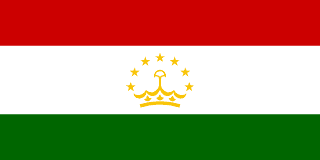
Tajikistan
Republic of Tajikistan
Population: UN WPP 2024, revision 1, projection for 1 July 2026. Sources and methodology.
Geography and territory
Tajikistan is the most mountainous country in Central Asia, with more than 93 percent of its territory covered by mountain ranges that include some of the highest peaks in the world outside the Himalayas. The Pamir range, known as the “Roof of the World,” dominates the east of the country with elevations surpassing 7,000 meters, crowned by Ismoil Somoni Peak at 7,495 meters, the highest summit of the former Soviet Union. The Pamir also holds the largest concentration of glaciers outside the polar regions, including the 77-kilometer-long Fedchenko Glacier.
The fertile valleys of the north and west stand in sharp contrast to the heights of the Pamir. The Fergana Valley, shared with Uzbekistan and Kyrgyzstan, along with the valleys of the Vakhsh and Panj rivers, hold most of the country’s population and agricultural activity. These rivers, fed by glacial meltwater, converge to form the Amu Darya, a water resource of vital importance across Central Asia.
Tajikistan’s climate varies enormously with elevation: subtropical in the southwestern valleys, continental in the intermediate zones, and arctic-like in the high Pamir, where winter temperatures can fall below minus 45 degrees Celsius. Rainfall concentrates on the western slopes of the mountains, while the eastern Pamir experiences extreme aridity despite its elevation. This geographic diversity produces strikingly varied ecosystems, from pistachio and wild almond woodlands in the lower hills to alpine meadows and high-altitude deserts in the Pamir.
History
Tajikistan traces its roots to Persian civilization, and it is the only country in Central Asia where the majority language is of Iranian rather than Turkic origin. Tajik is a variant of Persian, and the history of the Tajik people is inseparable from the Persian-speaking cultural tradition that produced poets such as Rudaki, regarded as the father of Persian literature, born in what is now Tajikistan in the ninth century. Ancient cities of the region flourished as centers of culture and commerce along the Silk Road.
For centuries the territory was contested by Persian, Arab, Mongol, and Turkic empires. The Samanid period, in the ninth and tenth centuries, centered on nearby Bukhara, represented a golden age for Persian-speaking culture, fostering the arts, sciences, and literature. The Mongol conquest of the thirteenth century and the subsequent rule of the khanates of Bukhara and Kokand shaped the centuries that followed, until Russian expansion in the nineteenth century absorbed the region into the tsarist empire.
The Soviet era profoundly reshaped Tajik society. Borders drawn under Stalin artificially divided Persian-speaking communities, leaving the historic cities of Samarkand and Bukhara in neighboring Uzbekistan. Independence in 1991 was followed by a devastating civil war, from 1992 to 1997, between regional factions that killed more than 50,000 people and plunged the country into poverty. Gradual stability achieved since then has allowed for a slow rebuilding, though Tajikistan remains the poorest country to emerge from the former Soviet Union.
Culture and society
Tajik culture stands out in Central Asia for its deep Persian heritage, which links the country to the literary and artistic traditions of Iran and Afghanistan. Poetry holds an almost sacred place in Tajik society: the verses of Rudaki, Ferdowsi, Hafez, and Omar Khayyam are recited at social gatherings, ceremonies, and celebrations, and the ability to quote poetry fittingly is regarded as a mark of education and refinement. Nowruz, the Persian new year celebrated at the spring equinox, is the most important holiday and marks the beginning of a new cycle of life and hope.
Tajik decorative arts reflect the confluence of Persian and Islamic traditions. Suzani embroidery, textile panels decorated with lavish floral motifs in multicolored silk thread, are works of textile art that brides traditionally prepare over years in anticipation of marriage. Pottery, woodcarving, and metalwork round out a craft heritage that remains alive in the workshops of Istaravshan, one of the oldest cities in Central Asia, with more than 2,500 years of history.
Tajik society is predominantly Sunni Muslim, with a significant Ismaili community in the Pamir whose religious practice differs notably from the majority. Extended family structures and respect for elders anchor social life. Tajik weddings are multi-day celebrations featuring music, dance, and generous feasting. Traditional dance, with its fluid and expressive movements, and shashmaqam classical music, shared with Uzbekistan and recognized by UNESCO as intangible cultural heritage, represent the most refined artistic expressions of Tajik tradition.
Economy
Tajikistan has the most fragile economy in Central Asia, deeply affected by its geographic isolation, mountainous terrain that hampers communications, and the lingering effects of the 1990s civil war. Its GDP stands at roughly $17.7 billion. Agriculture employs most of the working population, with cotton as the leading export crop alongside fruit, grain, and tobacco grown in the country’s scarce fertile valleys. Livestock, particularly sheep and goats, sustains rural communities in the mountainous regions.
Tajikistan’s enormous hydroelectric potential, drawn from its powerful mountain rivers, is its principal strategic economic asset. The Nurek Dam, at 300 meters, was for decades the tallest in the world, and the Rogun Dam project aims to surpass it, promising enough energy to transform the national economy and export electricity to neighboring countries. These projects, however, have generated tension with Uzbekistan, which worries about water supplies for its own agriculture.
Remittances from Tajik workers abroad, mainly in Russia, account for an extraordinary share of GDP, exceeding 25 percent, making them an indispensable but vulnerable economic pillar tied to conditions in the host country. Mining of aluminum, gold, and silver offers some potential for diversification, while high-mountain adventure tourism, though still in its early stages, is beginning to attract climbers and travelers drawn to one of the most remote and inaccessible regions on the planet.
Food and cuisine
Tajik cuisine combines Persian heritage with Central Asian tradition, producing an aromatic and generous cooking style that reflects the hospitality of the Tajik people. Plov, known locally as osh, is the undisputed centerpiece of festive meals: a lavish dish of rice cooked with lamb, carrots, chickpeas, raisins, and spices such as cumin and saffron, with preparation varying by region and occasion. At major celebrations, plov is cooked in enormous cauldrons that feed dozens or even hundreds of guests.
Qurutob is the most emblematic dish of everyday Tajik cooking: pieces of fatir flatbread soaked in a creamy sauce of qurut, dried yogurt dissolved in water, and topped with onion, fresh herbs, tomato, and cucumber. Humble yet deeply satisfying, the dish embodies the Tajik knack for turning simple ingredients into something flavorful and nourishing. Sambusa, baked pastries filled with meat, onion, and tail fat, and mantu, large steamed dumplings, round out the repertoire of Tajik specialties.
Tea culture sits at the center of Tajik social life, with chaikhana, or teahouses, serving as communal gathering places where men meet to talk, do business, and share a light meal. Green tea predominates in the south and black tea in the north, always poured generously into small bowls called piala and accompanied by sweets, dried fruit, and non, the round bread baked in a tandyr oven that appears at every Tajik table. Dried fruit from the Pamir, especially mulberries and apricots, are prized as natural delicacies of exceptional flavor.
Tourism and landmarks
Tajikistan is a frontier destination for intrepid travelers drawn to landscapes of overwhelming grandeur. The Pamir Highway, officially the M41, is one of the most spectacular and extreme road routes on the planet. It winds for more than 1,200 kilometers between Dushanbe and the Chinese border, crossing mountain passes above 4,600 meters, skirting vertiginous gorges, and passing surreally colored lakes such as Karakul and Bulunkul, all while offering views of the Pamir’s 7,000-meter giants.
Dushanbe, the capital, is a surprisingly green and pleasant city, with broad tree-lined boulevards, Rudaki Park, the colorful Mehrgon bazaar, and a National Museum that houses a spectacular 14-meter reclining Buddha statue. The Fan Mountain lakes, known as the Iskanderkul lakes, sit at 2,195 meters surrounded by snow-capped peaks and offer some of the most photographed scenery in the country, their turquoise waters linked by legend to the passage of Alexander the Great.
Beyond its extreme landscapes, the Pamir is home to Ismaili communities known for extraordinary hospitality, living in traditional houses whose roofs rest on five pillars symbolizing the sacred members of the Prophet’s family. Mountaineering tourism draws climbers from around the world to peaks such as Ismoil Somoni and Korzhenevskaya Peak, at 7,105 meters. For less adventurous travelers, the ancient city of Penjikent, with its seventh-century Sogdian murals, offers a fascinating window onto the Central Asian Silk Road.
Fun facts about Tajikistan
- Ismoil Somoni Peak, at 7,495 meters, was the tallest mountain in the entire Soviet Union, known during the communist era as Communism Peak.
- The Fedchenko Glacier in the Tajik Pamir is the longest glacier outside the polar regions, stretching 77 kilometers.
- Tajikistan is the only country in Central Asia whose official language is of Iranian, rather than Turkic, origin.
- Remittances from migrant workers account for more than 25 percent of GDP, among the highest such shares in the world.
- Lapis lazuli deposits found in the Pamir Mountains were mined more than 6,000 years ago, supplying the ancient civilizations of Mesopotamia and Egypt.
Tajikistan in numbers
Latest World Bank and UNDP observations, each with its own year. “World median” is the middle value among the countries that report the same indicator; “#” ranks from the highest value.
Population since 1960
Tajikistan had 2.1 million people in 1960 and 10.8 million in 2025 — 5.1 times as many.
People
26.2% of people live in towns and cities (world median 63.4%). 35.9% are under 15 and 4.1% are 65 or older — a young population. Women have 3.04 children on average, above the replacement level of about 2.1.
Economy
The economy grew by 8.4% in real terms in 2025. Consumer prices rose by 3.4% in 2025. Services make up the largest share of output (36.5% of GDP); agriculture contributes 23.1%, a large share that points to a farming-based economy.
Development and environment
UNDP rates human development in Tajikistan as medium, with an index of 0.691 in 2023 (rank 128 of 193). 55.8% of people use the internet and 99.9% have access to electricity. Forest covers 3.1% of the land (world median 32.8%).
Sources: World Bank, World Development Indicators (CC BY 4.0), most recent observation from 2015 onward; UNDP Human Development Report 2025. Retrieved 2026-10-10. Sector shares need not add up to 100% because taxes and subsidies on products are excluded. Missing values are left blank rather than estimated. Sources and methodology.
Climate of Tajikistan
Averaged across Tajikistan, the warmest month is July (16.2 °C) and the coolest is January (−9.5 °C), a seasonal swing of 25.7 °C. The annual mean is 4.0 °C.
5 months have a national mean temperature below freezing.
About 695 mm of precipitation falls in a typical year. March is the wettest month (97 mm) and September the driest (10 mm). The wettest stretch is March to May, with 40% of the year's total.
Show monthly values as a table
| Month | Mean °C | Low °C | High °C | Precipitation, mm |
|---|---|---|---|---|
| January | −9.5 | −14.0 | −5.0 | 66 |
| February | −7.4 | −11.9 | −2.8 | 86 |
| March | −1.5 | −6.1 | 3.1 | 97 |
| April | 4.6 | −0.7 | 10.0 | 94 |
| May | 8.7 | 2.8 | 14.6 | 90 |
| June | 13.3 | 6.6 | 20.0 | 40 |
| July | 16.2 | 9.1 | 23.4 | 20 |
| August | 15.7 | 8.4 | 23.1 | 15 |
| September | 11.0 | 3.5 | 18.6 | 10 |
| October | 5.3 | −1.3 | 11.9 | 34 |
| November | −1.7 | −6.7 | 3.3 | 68 |
| December | −6.8 | −10.9 | −2.8 | 75 |
Figures are 1991–2020 averages across the whole land area of Tajikistan, from the World Bank Climate Change Knowledge Portal, CRU TS 4.08 (CC BY 4.0). They are not readings from one weather station: the capital, the coast and high ground can be much warmer, cooler, wetter or drier.
Travel essentials for Tajikistan
The practical details visitors ask about first. Traffic in Tajikistan drives on the right, like most of the world. Mains electricity is 220 V at 50 Hz, so devices made only for 110–120 V (common in North America) need a converter unless they are dual-voltage — most phone and laptop chargers are.
- Emergency number
- 112Police 102 · Ambulance 103 · Fire 101
- Driving side
- Right
- Plug types
- Type C, Type F, Type IC: two round pins (Europlug); F: two round pins with side earth clips (Schuko); I: two angled flat pins plus earth
- Voltage
- 220 V50 Hz
- Dialling code
- +992From abroad: your exit code, then 992 and the number
- Currency
- Somoni (TJS)
- Time zone
- UTC+5Current local time in Tajikistan
Compiled from IEC plug and voltage standards, national emergency-service listings and the UN road-traffic conventions. Emergency numbers and local coverage can change — confirm them locally on arrival. Tajikistan's internet domain is .tj.
Where Tajikistan ranks in the world
Each position counts only the countries with data in that ranking guide. First place is the highest value — for price levels, the most expensive. Select a card to see the full table.
- Population88th of 19611.0 millionUN projection, July 2026
- Land area93rd of 195138,790 km²World Bank, 2023
- Population density112th of 19475 per km²World Bank, 2023
- GDP (nominal)141st of 187$14.4BWorld Bank, 2024, current US$
- GDP per capita160th of 187$1,362World Bank, 2024, current US$
- Life expectancy116th of 19471.9 yearsWorld Bank, 2024
- Price level157th of 16528 (US = 100)ICP 2021, household consumption
Bordering countries of Tajikistan


Compare Tajikistan with another country
Frequently asked questions about Tajikistan
What is the capital of Tajikistan?
The capital of Tajikistan is Dushanbe.
What is the population of Tajikistan?
The UN World Population Prospects projection for Tajikistan is 10,978,599 people (11.0 million) on 1 July 2026. National statistical offices may publish different estimates.
What language is spoken in Tajikistan?
The official language of Tajikistan is Tajik.
What currency is used in Tajikistan?
The currency of Tajikistan is the Somoni (TJS).
How big is Tajikistan?
Tajikistan covers an area of 143,100 km².
What type of government does Tajikistan have?
Tajikistan is a presidential republic.
Which countries border Tajikistan?
Tajikistan shares land borders with Kyrgyzstan, China, Afghanistan, Uzbekistan.
What is the highest point in Tajikistan?
The highest point in Tajikistan is Ismoil Somoni Peak (7,495 m).

