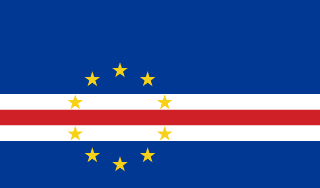
Cape Verde
Republic of Cabo Verde
Population: UN WPP 2024, revision 1, projection for 1 July 2026. Sources and methodology.
Geography and territory
Cape Verde is a volcanic archipelago in the Atlantic Ocean, lying roughly 570 kilometers off the coast of West Africa, opposite Senegal and Mauritania. The country consists of ten main islands and several islets, arranged into two groups: the Barlavento, or windward, islands to the north, which include Santo Antao, Sao Vicente, Santa Luzia, Sao Nicolau, Sal, and Boa Vista, and the Sotavento, or leeward, islands to the south, comprising Santiago, Maio, Fogo, and Brava. With a total land area of just 4,033 square kilometers, Cape Verde ranks among the smallest countries in Africa.
The islands display strikingly varied landscapes, a direct result of their volcanic origin. Fogo island holds the archipelago’s highest point, Pico do Fogo, an active volcano rising to 2,829 meters that last erupted in 2014, sending lava across part of the crater where a small community still lives. By contrast, the eastern islands of Sal and Boa Vista are flat and arid, with long stretches of white and golden sand beach ranked among the most beautiful in the Atlantic.
Cape Verde’s climate is dry and tropical, with mild temperatures year-round, generally between 20 and 30 degrees Celsius, moderated by steady trade winds. Rainfall is scarce and irregular, concentrated in a brief wet season between August and October, producing a chronic water shortage that remains one of the archipelago’s central challenges. Natural vegetation is limited by this aridity, though the mountainous islands of Santo Antao and Santiago hold surprisingly lush valleys where fruit, coffee, and sugarcane are cultivated.
History
The islands of Cape Verde were uninhabited when Portuguese navigators discovered them in 1456. Colonization began soon afterward, and Santiago quickly became a strategic hub on the trade routes linking Europe, Africa, and the Americas. The town of Ribeira Grande, known today as Cidade Velha, was founded in 1462 and became the first permanent European settlement in the tropics, as well as a major center of the Atlantic slave trade. Its historic center, now a UNESCO World Heritage Site, preserves striking traces of this foundational period in Atlantic history.
Cape Verdean society took shape through the mixing of Portuguese settlers and enslaved Africans brought from the mainland, producing a distinctive Creole culture. Over the centuries, the islands endured devastating droughts that repeatedly triggered famine, the worst of which, between 1941 and 1948, killed tens of thousands of people. These catastrophes drove successive waves of emigration that scattered Cape Verdeans across the globe.
The independence movement was led by Amilcar Cabral, regarded as one of Africa’s most brilliant anticolonial thinkers, who founded the PAIGC to fight Portuguese rule in both Cape Verde and Guinea-Bissau. Cabral was assassinated in 1973, a year before independence was achieved. Cape Verde formally became independent on 5 July 1975, following the Carnation Revolution in Portugal. In the decades since, it has built one of Africa’s most stable and prosperous democracies, marked by peaceful transfers of power and governance widely praised by international observers.
Culture and society
Cape Verdean culture is the product of a singular fusion of African and Portuguese traditions, giving rise to a vibrant and distinctive Creole identity. Morabeza, a word that captures hospitality, warmth, and an easygoing joy in life, is often described as the defining trait of the national character. Cape Verdean Creole, spoken as a mother tongue by virtually the entire population, is a language born from the blending of Portuguese with African languages, and it serves as the primary vehicle of the archipelago’s cultural expression.
Music is, without question, Cape Verde’s greatest cultural export. Morna, a melancholic genre that sings of saudade, love, and emigration, was carried to the world by the voice of Cesaria Evora, known as the barefoot diva, who brought the sounds of Cape Verde to stages across the globe. Alongside morna, other genres enrich an exceptionally rich musical heritage for such a small nation: coladeira, livelier and more danceable; funana, rooted in African rhythms and driven by accordion and the scraper instrument known as ferrinho; and batuku, a percussive dance tradition performed by the women of Santiago.
The Cape Verdean diaspora, larger in number than the population living in the islands themselves, maintains close ties to the archipelago and contributes significantly to its economy and culture. Sizable Cape Verdean communities exist in the United States, Portugal, France, the Netherlands, Italy, and Senegal. Cape Verdean literature, with writers such as Germano Almeida and Baltasar Lopes da Silva, explores themes of identity, emigration, and belonging that resonate deeply in a society shaped by the sea and by distance.
Economy
Cape Verde’s economy has developed remarkably over the past several decades, allowing the country to graduate from the United Nations’ Least Developed Country category in 2007. Tourism has become the driving force of the economy, contributing a substantial share of GDP and generating employment in hospitality, food service, transport, and related industries. The islands of Sal and Boa Vista host the majority of the country’s hotel capacity, drawing European visitors with their idyllic beaches and mild, sunny climate throughout the year.
Remittances sent home by the Cape Verdean diaspora represent another crucial source of national income, accounting for a meaningful share of GDP. Fishing, both artisanal and industrial, supplies food and export earnings, although the full potential of Cape Verde’s vast maritime territory remains largely untapped. Agriculture, constrained by limited water and arable land, centers on bananas, sugarcane, coffee, and vegetables, complemented by the production of grogue rum and other artisanal spirits.
The Cape Verdean government has pursued a strategy of positioning the country as a services and logistics platform in the mid-Atlantic, investing in port, airport, and telecommunications infrastructure. Digital services, renewable energy, and the sustainable use of marine resources, often described as the blue economy, are strategic priorities for future growth. Political stability, sound governance, and relatively strong transparency rankings give Cape Verde a notable competitive advantage in attracting foreign investment within the African context.
Food and cuisine
Cachupa is Cape Verde’s national dish and its most cherished culinary tradition. This hearty stew, simmered slowly with corn, beans, sweet potato, cassava, green plantain, and meat or fish depending on the version, is far more than a meal; it functions as a symbol of national identity. Cachupa rica, made with a variety of meats and sausages, is reserved for celebrations, while cachupa pobre, a simpler version, serves as everyday sustenance. Leftover cachupa, reheated and fried with an egg on top, becomes a beloved breakfast the following morning.
Fish and seafood take center stage in Cape Verdean cooking, fittingly for an archipelago surrounded by waters rich in marine life. Grilled tuna, fish stew made with vegetables, prepared conch, and fried moray eel are among the most popular dishes. Lobster, abundant in the waters around the islands, is typically grilled simply to let its natural flavor shine, and it remains one of the most accessible and affordable delicacies in the archipelago.
Grogue, a sugarcane spirit distilled in traditional stills known as trapiche, is Cape Verde’s signature liquor, with each island producing its own variant and the grogue of Santo Antao enjoying particular renown. Ponche, a mix of grogue with cane syrup and lime, is served at nearly every celebration. Coffee grown on the slopes of Fogo’s volcano produces an exceptional bean that is roasted and prepared with great care in homes and cafes throughout the islands.
Tourism and landmarks
Santo Antao island is a paradise for hikers, with steep mountains, deep valleys cloaked in tropical vegetation, and spectacular trails winding past terraced farmland and traditional villages. The Paul Valley, with its sugarcane plantations and fruit trees, and the coastal route between Ponta do Sol and Cruzinha, tracing dramatic cliffs above the ocean, rank among the finest trekking experiences anywhere in the world. Neighboring Sao Vicente island is home to Mindelo, the archipelago’s cultural capital, known for its stunning bay, lively music scene, and festive Carnival.
Sal and Boa Vista islands offer the beach-focused side of Cape Verdean tourism. Santa Maria beach on Sal, with its turquoise waters and fine sand, ranks among the most photographed beaches in the Atlantic. Boa Vista charms visitors with unspoiled beaches such as Praia de Chaves and Praia de Santa Monica, where loggerhead sea turtles nest between July and October. Steady trade winds also make these islands a favorite destination for windsurfing and kitesurfing enthusiasts.
Fogo island offers a uniquely volcanic experience. The climb to the summit of Pico do Fogo, achievable in about five hours, rewards hikers with sweeping views over the crater, the caldera, and the ocean beyond. Inside the crater itself, the village of Cha das Caldeiras, rebuilt after the 2014 eruption, produces a distinctive red wine grown in volcanic soil. Santiago, the largest island, is home to Cidade Velha, the birthplace of the Cape Verdean nation and a UNESCO World Heritage Site, where a stone pillory, the Royal Fortress of Sao Filipe, and the church of Nossa Senhora do Rosario recall the earliest centuries of Atlantic history.
Fun facts about Cape Verde
- The Cape Verdean diaspora is estimated to outnumber the population living in the islands, with several hundred thousand Cape Verdeans living abroad compared with about 527,000 in the archipelago.
- Singer Cesaria Evora was known as the barefoot diva because she performed without shoes in solidarity with the women and children of her country.
- Sal island takes its name from the salt pans of Pedra de Lume, located inside the crater of an extinct volcano, where visitors can float in the mineral-rich water much as they would in the Dead Sea.
- Cape Verde is one of the few African nations never to have experienced a coup d’etat or armed conflict since gaining independence.
- Cidade Velha, founded in 1462, was the first permanent European settlement built in the tropics anywhere in the world.
- Cape Verde was named for the Cap-Vert peninsula on the Senegalese mainland, even though the islands themselves lie hundreds of kilometers out in the Atlantic.
Cape Verde in numbers
Latest World Bank and UNDP observations, each with its own year. “World median” is the middle value among the countries that report the same indicator; “#” ranks from the highest value.
Population since 1960
Cape Verde had 210,024 people in 1960 and 527,326 in 2025 — 2.5 times as many.
People
77.6% of people live in towns and cities (world median 63.4%). 24.7% are under 15 and 7.2% are 65 or older — a middle-aged population. Women have 1.51 children on average, below the replacement level of about 2.1 needed to keep a population stable in the long run without migration.
Economy
The economy grew by 6.3% in real terms in 2025. Consumer prices rose by 2.3% in 2025. Services make up the largest share of output (67.9% of GDP); agriculture contributes 5.0%.
Development and environment
UNDP rates human development in Cape Verde as medium, with an index of 0.668 in 2023 (rank 135 of 193). 74.7% of people use the internet and 98.4% have access to electricity. Forest covers 12.5% of the land (world median 32.8%).
Sources: World Bank, World Development Indicators (CC BY 4.0), most recent observation from 2015 onward; UNDP Human Development Report 2025. Retrieved 2026-10-10. Sector shares need not add up to 100% because taxes and subsidies on products are excluded. Missing values are left blank rather than estimated. Sources and methodology.
Climate of Cape Verde
Averaged across Cape Verde, the warmest month is September (25.2 °C) and the coolest is February (20.1 °C), a seasonal swing of 5.1 °C. The annual mean is 22.5 °C.
About 188 mm of precipitation falls in a typical year. September is the wettest month (56 mm) and March the driest (3 mm). What little rain there is falls mostly from August to October (68% of the total).
Less than 250 mm a year is typical of desert climates.
Show monthly values as a table
| Month | Mean °C | Low °C | High °C | Precipitation, mm |
|---|---|---|---|---|
| January | 20.6 | 17.8 | 23.5 | 7 |
| February | 20.1 | 17.0 | 23.3 | 5 |
| March | 20.5 | 17.2 | 23.7 | 3 |
| April | 20.9 | 17.9 | 24.0 | 5 |
| May | 21.5 | 18.7 | 24.4 | 5 |
| June | 22.6 | 19.8 | 25.4 | 5 |
| July | 23.7 | 21.1 | 26.4 | 13 |
| August | 24.7 | 22.0 | 27.4 | 36 |
| September | 25.2 | 22.4 | 28.1 | 56 |
| October | 24.7 | 21.9 | 27.6 | 37 |
| November | 23.6 | 20.8 | 26.4 | 9 |
| December | 22.2 | 19.5 | 24.9 | 7 |
Figures are 1991–2020 averages across the whole land area of Cape Verde, from the World Bank Climate Change Knowledge Portal, CRU TS 4.08 (CC BY 4.0). They are not readings from one weather station: the capital, the coast and high ground can be much warmer, cooler, wetter or drier.
Travel essentials for Cape Verde
The practical details visitors ask about first. Traffic in Cape Verde drives on the right, like most of the world. Mains electricity is 220 V at 50 Hz, so devices made only for 110–120 V (common in North America) need a converter unless they are dual-voltage — most phone and laptop chargers are.
- Emergency number
- 132Ambulance 130 · Fire 131
- Driving side
- Right
- Plug types
- Type C, Type FC: two round pins (Europlug); F: two round pins with side earth clips (Schuko)
- Voltage
- 220 V50 Hz
- Dialling code
- +238From abroad: your exit code, then 238 and the number
- Currency
- Cape Verdean Escudo (CVE)
- Time zone
- CVT (UTC-1)Current local time in Cape Verde
Compiled from IEC plug and voltage standards, national emergency-service listings and the UN road-traffic conventions. Emergency numbers and local coverage can change — confirm them locally on arrival. Cape Verde's internet domain is .cv.
Where Cape Verde ranks in the world
Each position counts only the countries with data in that ranking guide. First place is the highest value — for price levels, the most expensive. Select a card to see the full table.
- Population169th of 196529,630UN projection, July 2026
- Land area166th of 1954,030 km²World Bank, 2023
- Population density68th of 194130 per km²World Bank, 2023
- GDP (nominal)164th of 187$2.7BWorld Bank, 2024, current US$
- GDP per capita114th of 187$5,170World Bank, 2024, current US$
- Life expectancy77th of 19476.2 yearsWorld Bank, 2024
- Price level52nd of 16558 (US = 100)ICP 2021, household consumption
Compare Cape Verde with another country
Frequently asked questions about Cape Verde
What is the capital of Cape Verde?
The capital of Cape Verde is Praia.
What is the population of Cape Verde?
The UN World Population Prospects projection for Cape Verde is 529,630 people (529,630) on 1 July 2026. National statistical offices may publish different estimates.
What language is spoken in Cape Verde?
The official language of Cape Verde is Portuguese.
What currency is used in Cape Verde?
The currency of Cape Verde is the Cape Verdean Escudo (CVE).
How big is Cape Verde?
Cape Verde covers an area of 4,033 km².
What type of government does Cape Verde have?
Cape Verde is a semi-presidential republic.
What is the highest point in Cape Verde?
The highest point in Cape Verde is Pico do Fogo (2,829 m).


