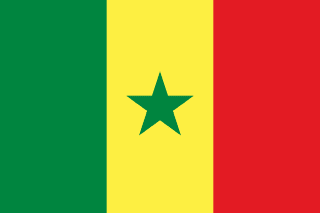
Senegal
Republic of Senegal
Population: UN WPP 2024, revision 1, projection for 1 July 2026. Sources and methodology.
Geography and territory
Senegal occupies the westernmost point of the African continent, with its capital, Dakar, sitting on the Cap-Vert peninsula, the most westerly spot on the mainland. Covering 196,722 square kilometers and home to a population of about 19.4 million, the country stretches between the Senegal River in the north, which forms the border with Mauritania, and the Casamance and Gambia rivers to the south. One of its more curious geographic features is Gambia itself, a narrow sliver of a nation that cuts deep into Senegalese territory along its namesake river, effectively splitting the southern Casamance region from the rest of the country.
The terrain is largely flat, rarely climbing above 100 meters across most of the country. The Atlantic coastline, stretching more than 500 kilometers, alternates between fine sandy beaches, laterite cliffs, mangrove-lined estuaries, and coastal lagoons. In the southeast, the foothills of the Fouta Djallon massif give rise to gently rolling hills that contain the country’s highest point, at 581 meters. The Senegal, Gambia, Casamance, and Saloum rivers serve as the country’s principal waterways, each shaping a distinct ecological zone along its course.
Senegal’s climate is tropical, with a long dry season running from November to May and a rainy season from June to October that intensifies moving from north to south. The northern reaches, bordering the Sahel, are semi-arid, marked by acacia and baobab savanna, while the Casamance in the south is noticeably greener and more forested, with tropical woodland and rice paddies. The Saloum Delta, recognized as both a World Heritage Site and a Biosphere Reserve, is one of West Africa’s most important coastal ecosystems, a maze of channels, shell islands, and mangrove forest.
History
The land that is now Senegal has been home to notable civilizations since antiquity. The Senegambian stone circles, a World Heritage Site, date from between the third century BCE and the 16th century CE and represent the largest concentration of megalithic stone circles anywhere in the world. The medieval empires of Ghana, Mali, and Jolof each left their mark on different regions, building sophisticated political structures and trade networks that linked the African interior to the Atlantic coast.
Portuguese explorers arrived in the 15th century, opening an era of European contact that later brought Dutch, English, and above all French interests to the region. Goree Island, just off Dakar, became one of the principal hubs of the transatlantic slave trade, a legacy that has made it a universal symbol of remembrance and a UNESCO World Heritage Site. Saint-Louis, founded in 1659, was the first permanent French colony in Africa and served as the capital of French West Africa until 1902.
Senegal was the African colony most tightly woven into the French colonial system, with residents of the “four communes” of Saint-Louis, Goree, Rufisque, and Dakar granted French citizenship as far back as the 19th century. Leopold Sedar Senghor, a poet, philosopher, and co-founder of the Negritude literary movement, led the country to independence on April 4, 1960, and governed for 20 years, laying the groundwork for a stable democracy. Senegal remains one of the few African nations never to have experienced a military coup, earning it a reputation as a model of democratic stability on the continent.
Culture and society
Senegalese society is defined by teranga, a Wolof concept embodying hospitality, generosity, and warmth toward strangers that Senegalese people regard as the defining trait of their national identity. This tradition shows up in everyday life: sharing meals with neighbors and visitors, offering tea to anyone who arrives at the door, and hosting relatives and friends for extended stays are all common practices that reflect a worldview placing community above the individual.
Senegalese music has achieved global reach through artists like Youssou N’Dour, widely regarded as one of Africa’s most influential musicians and a Grammy winner. Mbalax, a genre fusing traditional Wolof rhythms with Afro-Cuban, funk, and pop influences, is the country’s signature popular music. Sabar dance, performed to the beat of drums of the same name at celebrations and ceremonies, is an explosive, physical art form blending acrobatics, sensuality, and strength. Senegalese wrestling, or laamb, the national sport, combines combat technique with mystical ritual and draws huge crowds, with its champions ranking among the country’s biggest celebrities.
Sufi Islam runs deep through Senegalese society, with brotherhoods such as the Mourides and the Tijaniyya playing a central social, economic, and spiritual role. The Great Mosque of Touba, spiritual heart of the Mouride brotherhood, is the largest in West Africa and draws millions of pilgrims during the annual Grand Magal. The peaceful coexistence of the Muslim majority with Christian and animist minorities, including mixed families and shared celebrations, stands as a notable model of religious tolerance.
Economy
Senegal’s economy is among the more diversified in West Africa, with agriculture, fishing, mining, tourism, and services all contributing meaningfully to output. Agriculture employs more than 60 percent of the population and produces peanuts, historically the country’s leading export crop, along with rice, millet, sorghum, and fruits and vegetables destined for European markets. Senegal ranks among the world’s leading peanut producers, and peanut oil remains a staple ingredient in local cooking.
Artisanal and industrial fishing is a strategic sector, employing hundreds of thousands of people and serving as the population’s chief source of protein. The Atlantic waters off Senegal support rich fisheries that attract international fleets, though overfishing threatens the sector’s long-term sustainability. Phosphate mining around Thies and gold extraction in the country’s east add to the export base, while offshore oil and gas discoveries hold the promise of reshaping the national economy in the years ahead.
Dakar has established itself as a leading financial and business hub in West Africa, hosting numerous international organizations and multinational companies operating across the region. Telecommunications and digital services are growing quickly, supported by an expanding startup ecosystem. Tourism, despite setbacks from global health crises, continues to draw hundreds of thousands of visitors a year, lured by the beaches, culture, and hospitality. Remittances from the large Senegalese diaspora provide another vital stream of income for the country.
Food and cuisine
Senegalese cuisine is widely considered one of the richest and most refined in West Africa, the product of centuries of exchange among Wolof, Serer, Diola, and Fulani culinary traditions, further layered with Arab, Portuguese, and French influences. Thieboudienne, rice cooked with fish and vegetables in a spiced tomato sauce, is the national dish and a genuine culinary achievement that can take hours to prepare properly. UNESCO added it to the Intangible Cultural Heritage list in 2021, and it is traditionally served from one large communal platter around which the family gathers.
Chicken or fish yassa, marinated in lemon and caramelized onion, mafe, a meat stew in peanut sauce, thiou, fish in tomato sauce, and crisp fried fish known as firire are other staples of the Senegalese table. Roadside dibiterie stalls grill lamb and chicken to order, served with onions and Dijon mustard, a legacy of French influence. Pastels, fried fish-filled pastries inherited from Portuguese tradition, are among the most popular street snacks in Dakar.
Cafe Touba, flavored with grains of Selim pepper, is Senegal’s most widely consumed drink, sold on nearly every street corner by roaming vendors. Bissap, a chilled hibiscus flower infusion sweetened with sugar and mint, and bouye, a creamy juice made from baobab fruit, are the country’s favorite refreshments. Mint tea, or ataya, brewed ceremonially in three rounds of increasing sweetness, accompanies long afternoon conversations and remains an essential social ritual woven into daily Senegalese life.
Tourism and landmarks
Goree Island, a UNESCO World Heritage Site, is Senegal’s most iconic destination and a place of pilgrimage for the memory of slavery. Located just three kilometers off Dakar, this small island of cobblestone streets and pastel colonial houses is home to the House of Slaves, whose “Door of No Return” stands as a haunting symbol of the millions of Africans forcibly taken to the Americas. The island also offers a peaceful atmosphere, art galleries, and restaurants overlooking the ocean.
Dakar itself is a vibrant, cosmopolitan capital anchored by the African Renaissance Monument, Africa’s tallest statue at 49 meters; the bustling Sandaga market; the artsy Medina neighborhood; and Ngor Island, a haven for surfers. Lake Retba, or Lac Rose, famous for waters tinted a striking pink by a salt-loving bacteria, offers a singular visual spectacle and served for years as the finish line of the Dakar Rally. Saint-Louis, the former colonial capital and a World Heritage Site, dazzles with its Franco-colonial architecture, the Faidherbe Bridge designed with input from Gustave Eiffel’s firm, and its international jazz festival.
The Casamance region in the south reveals a different side of Senegal, with mangrove forests, rice paddies, traditional Diola villages, and the unspoiled beaches of Cap Skirring. Niokolo-Koba National Park, a World Heritage Site, protects one of the last great stretches of wooded savanna in West Africa, home to lions, hippos, chimpanzees, and elephants. The Saloum Delta, with its ancient shell islands and fishing communities, offers community-based and ecological tourism amid mangroves and the narrow tidal channels known as bolongs.
Fun facts about Senegal
- Thieboudienne became, in 2021, the first African dish inscribed on UNESCO’s Intangible Cultural Heritage list.
- Senegal is known as the “Land of Teranga,” a Wolof word for hospitality that Senegalese people consider the supreme value of their culture.
- Senegalese wrestling, or laamb, outdraws soccer as the country’s most popular sport, and its champions are among the nation’s highest-paid celebrities.
- Leopold Sedar Senghor, Senegal’s first president, was also the first African elected to the prestigious Academie Francaise.
- The Dakar Rally, one of the world’s most famous motorsport races, took its name from the Senegalese capital, which served as its finish line from 1979 to 2007.
- Wolof, the language of the country’s largest ethnic group, is spoken as a common tongue by more than 80 percent of the population, far outpacing French, the official language spoken fluently only by an educated minority.
Senegal in numbers
Latest World Bank and UNDP observations, each with its own year. “World median” is the middle value among the countries that report the same indicator; “#” ranks from the highest value.
Population since 1960
Senegal had 3.3 million people in 1960 and 18.9 million in 2025 — 5.7 times as many.
People
55.8% of people live in towns and cities (world median 63.4%). 37.7% are under 15 and 3.6% are 65 or older — a young population. Women have 3.77 children on average, above the replacement level of about 2.1.
Economy
The economy grew by 6.7% in real terms in 2025. Consumer prices rose by 1.5% in 2025. Services make up the largest share of output (46.3% of GDP); agriculture contributes 17.1%.
Development and environment
UNDP rates human development in Senegal as low, with an index of 0.530 in 2023 (rank 169 of 193). 60.1% of people use the internet and 82.9% have access to electricity. Forest covers 45.0% of the land (world median 32.8%).
Sources: World Bank, World Development Indicators (CC BY 4.0), most recent observation from 2015 onward; UNDP Human Development Report 2025. Retrieved 2026-10-10. Sector shares need not add up to 100% because taxes and subsidies on products are excluded. Missing values are left blank rather than estimated. Sources and methodology.
Climate of Senegal
Averaged across Senegal, the warmest month is May (32.1 °C) and the coolest is January (25.2 °C), a seasonal swing of 6.9 °C. The annual mean is 28.9 °C.
About 721 mm of precipitation falls in a typical year. August is the wettest month (244 mm) and March the driest (0 mm). The three wettest consecutive months, July to September, bring 80% of the year's total — a pronounced rainy season.
Show monthly values as a table
| Month | Mean °C | Low °C | High °C | Precipitation, mm |
|---|---|---|---|---|
| January | 25.2 | 16.7 | 33.9 | 0 |
| February | 27.4 | 18.3 | 36.5 | 0 |
| March | 29.7 | 20.7 | 38.7 | 0 |
| April | 31.4 | 22.8 | 40.1 | 1 |
| May | 32.1 | 24.3 | 40.0 | 10 |
| June | 31.0 | 24.7 | 37.4 | 69 |
| July | 29.2 | 24.2 | 34.2 | 143 |
| August | 28.7 | 24.4 | 33.0 | 244 |
| September | 28.6 | 23.6 | 33.6 | 193 |
| October | 29.6 | 23.1 | 36.1 | 59 |
| November | 28.2 | 19.9 | 36.5 | 2 |
| December | 25.8 | 17.0 | 34.6 | 0 |
Figures are 1991–2020 averages across the whole land area of Senegal, from the World Bank Climate Change Knowledge Portal, CRU TS 4.08 (CC BY 4.0). They are not readings from one weather station: the capital, the coast and high ground can be much warmer, cooler, wetter or drier.
Travel essentials for Senegal
The practical details visitors ask about first. Traffic in Senegal drives on the right, like most of the world. Mains electricity is 230 V at 50 Hz, so devices made only for 110–120 V (common in North America) need a converter unless they are dual-voltage — most phone and laptop chargers are.
- Emergency number
- 17Fire 18
- Driving side
- Right
- Plug types
- Type C, Type D, Type E, Type KC: two round pins (Europlug); D: three large round pins in a triangle; E: two round pins, earth pin in the socket; K: three round pins (Danish)
- Voltage
- 230 V50 Hz
- Dialling code
- +221From abroad: your exit code, then 221 and the number
- Currency
- West African CFA Franc (XOF)
- Time zone
- GMT (UTC+0)Current local time in Senegal
Compiled from IEC plug and voltage standards, national emergency-service listings and the UN road-traffic conventions. Emergency numbers and local coverage can change — confirm them locally on arrival. Senegal's internet domain is .sn.
Where Senegal ranks in the world
Each position counts only the countries with data in that ranking guide. First place is the highest value — for price levels, the most expensive. Select a card to see the full table.
- Population68th of 19619.4 millionUN projection, July 2026
- Land area85th of 195192,530 km²World Bank, 2023
- Population density94th of 19494 per km²World Bank, 2023
- GDP (nominal)106th of 187$32.2BWorld Bank, 2024, current US$
- GDP per capita155th of 187$1,739World Bank, 2024, current US$
- Life expectancy138th of 19468.9 yearsWorld Bank, 2024
- Price level103rd of 16541 (US = 100)ICP 2021, household consumption
Bordering countries of Senegal


Compare Senegal with another country
Frequently asked questions about Senegal
What is the capital of Senegal?
The capital of Senegal is Dakar.
What is the population of Senegal?
The UN World Population Prospects projection for Senegal is 19,366,548 people (19.4 million) on 1 July 2026. National statistical offices may publish different estimates.
What language is spoken in Senegal?
The official language of Senegal is French.
What currency is used in Senegal?
The currency of Senegal is the West African CFA Franc (XOF).
How big is Senegal?
Senegal covers an area of 196,722 km².
What type of government does Senegal have?
Senegal is a presidential republic.
Which countries border Senegal?
Senegal shares land borders with Mauritania, Mali, Guinea, Guinea-Bissau, Gambia.
What is the highest point in Senegal?
The highest point in Senegal is Unnamed hill near Nepen Diakha (581 m).


