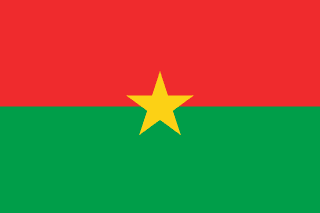
Burkina Faso
Burkina Faso
Population: UN WPP 2024, revision 1, projection for 1 July 2026. Sources and methodology.
Geography and territory
Burkina Faso is a landlocked nation at the heart of West Africa, covering an area of 272,967 square kilometers of savanna, gentle hills, and open plateau. Most of the country sits on a broad tableland that rarely rises above 400 meters, giving the landscape a horizon-wide, sun-baked character rather than dramatic relief. The highest point, Tenakourou, reaches just 749 meters in the far southwest, near the borders with Mali and Ivory Coast, and even this modest summit stands out only because the surrounding terrain is so uniformly flat.
Three rivers structure the country’s hydrology: the Mouhoun (once known as the Black Volta), the Nakambé (White Volta), and the Nazinon (Red Volta), whose combined waters eventually form the Volta system that gives neighboring Ghana its name. Along with numerous man-made reservoirs, these waterways are essential to farming and livestock raising in a country where water availability is a constant concern. The Bagré Dam in the southeast impounds the largest reservoir in Burkina Faso and anchors an important irrigation and hydroelectric scheme.
The climate is tropical, with a long dry season and a rainy season that grows shorter the farther north one travels. The Sahelian zone in the north battles desertification, with scarce and erratic rainfall that deepens food insecurity for local communities. The wetter south holds the country’s last remaining stretches of tropical woodland and its most important protected areas, including Deux Balé National Park and the Nazinga Game Ranch, a refuge for one of the region’s notable elephant populations.
History
Long before European contact, the plateau that is now Burkina Faso was home to a series of powerful precolonial kingdoms. The Mossi kingdoms, which rose to dominance on the central plateau from around the eleventh century, built sophisticated political structures headed by the Mogho Naba, the paramount ruler. These kingdoms fended off incursions from neighboring Islamic empires for centuries, preserving their own governance and religious traditions and forming one of the most durable political systems in precolonial West Africa.
French colonial rule arrived in the late nineteenth century after the defeat of the Mossi kingdoms. The territory, initially split among several neighboring colonies, was reconstituted as Upper Volta in 1919, dissolved in 1932, and restored again in 1947. Independence came on 5 August 1960, and the following decades brought a turbulent succession of civilian and military governments struggling to chart a course for the young state amid poverty and heavy dependence on outside powers.
In 1983, Captain Thomas Sankara seized power in a coup and launched a revolution that reshaped the country. He renamed Upper Volta as Burkina Faso, “the land of upright people,” and pushed ambitious campaigns for literacy, vaccination, reforestation, and women’s rights. His assassination in 1987, widely attributed to his former comrade Blaise Compaoré, cut short an experiment that is still admired across Africa. Compaoré went on to rule for 27 years until a popular uprising forced him from office in 2014, a moment of political change that has since given way to renewed instability, including a security crisis linked to armed insurgencies in the wider Sahel region.
Culture and society
Burkina Faso is a country of remarkable cultural diversity, home to more than 60 ethnic groups living side by side. The Mossi, who make up roughly half the population, keep ancestral traditions alive, including the weekly coronation-style ceremonies of the Mogho Naba held every Friday in Ouagadougou, which visitors are welcome to observe. Other major groups include the Fulani, Gurunsi, Bobo, Lobi, and Senufo, each with its own language, customs, and artistic traditions.
Mask-making is perhaps the country’s best-known cultural export. Carved wooden masks from the Bwa, Mossi, Bobo, and Nuna peoples, painted with bold geometric patterns, play a central role in initiation rites, funerals, and harvest festivals. The Dédougou Mask Festival brings together masked dancers from across the region for performances that blend acrobatics, music, and ancestral ritual into an unforgettable spectacle.
Burkina Faso has also earned international recognition through cinema. FESPACO, the Pan-African Film and Television Festival of Ouagadougou, founded in 1969, is the largest and most prestigious film festival on the continent, held every two years as a showcase for African cinematic talent. Directors such as Idrissa Ouédraogo and Gaston Kaboré have won awards at Cannes and other major festivals, turning this small Sahelian nation into an unlikely powerhouse of African filmmaking.
Economy
Agriculture underpins the Burkinabé economy, employing more than 80 percent of the working population. Cotton is the leading cash crop and the main source of agricultural export earnings, and Burkina Faso ranks among Africa’s top cotton producers. Subsistence crops, chiefly sorghum, millet, corn, and rice, form the backbone of the domestic food supply, though harvests are frequently threatened by drought and declining soil fertility.
Gold mining has boomed over the past two decades, turning Burkina Faso into one of Africa’s leading gold producers. Large industrial mines, mostly run by foreign companies, operate alongside widespread artisanal mining that employs hundreds of thousands of people, often in precarious conditions. Gold has overtaken cotton as the country’s top export and now generates a significant share of government revenue.
With a gross domestic product of roughly $27.63 billion and a low ranking on the Human Development Index (0.459), Burkina Faso remains one of the poorer countries in the world, facing serious challenges in education, healthcare, infrastructure, and food security. International aid makes up a substantial portion of the national budget. Regional trade, facilitated by membership in the West African Economic and Monetary Union, together with remittances sent home by Burkinabé workers in Ivory Coast and other neighboring countries, provides an important supplementary income for many households.
Food and cuisine
Burkinabé cuisine builds bold flavor from simple ingredients and time-honored techniques. Tô, a thick paste made from millet, sorghum, or corn flour, is the country’s staple food, served with a variety of sauces that give the dish its character and variety. Baobab-leaf sauce, shea-leaf sauce, okra sauce, and the beloved peanut sauce are all classic accompaniments that turn this humble staple into a satisfying meal.
Riz gras, rice cooked in a single pot with meat, tomato, vegetables, and spices, is probably the most popular dish in Burkina Faso’s towns and cities. Grilled chicken with onion and tomato, known locally as poulet bicyclette because live birds are traditionally carried to market strapped to a bicycle, is another national favorite served at restaurants and street stalls nationwide. Skewers of beef, lamb, or goat, grilled over open coals and seasoned with a spicy blend of local spices, are the country’s quintessential snack food.
Traditional beverages hold a central place in Burkinabé social life. Dolo, a home-brewed beer made from fermented millet or sorghum, is produced in dolotières, establishments usually run by women that double as gathering places for entire neighborhoods and villages. Zoom koom, a refreshing drink made from millet, ginger, lemon, and sugar, is especially popular during the heat of the dry season. Bissap, a chilled infusion of hibiscus flowers, offers a tart flavor and vivid red color that have made it the country’s most widely consumed bottled drink.
Tourism and landmarks
The Ruins of Loropéni, in southwestern Burkina Faso, are the country’s only UNESCO World Heritage Site. These stone fortifications, spread across more than 11,000 square meters and dating back at least to the eleventh century, are the best-preserved remains of the fortified settlements once linked to the trans-Saharan gold trade. Their exact origins remain a subject of ongoing research, lending an air of mystery to this exceptional site.
Deux Balé National Park, in the south-central part of the country, offers one of the best wildlife-viewing opportunities in West Africa, with gallery forests and savanna home to hippopotamuses, crocodiles, antelope, monkeys, and abundant birdlife. Farther south, the Nazinga Game Ranch is renowned for its elephant population, which visitors can approach on guided safaris. The Sindou Peaks, a striking series of rock formations sculpted by erosion into fantastical shapes, offer dramatic scenery and excellent hiking.
Ouagadougou, the capital, is a lively and welcoming city that rewards unhurried exploration; its National Museum houses an important collection of masks, sculptures, and ethnographic objects, while the bustling central market offers a window into everyday city life. Bobo-Dioulasso, the country’s second city, charms visitors with its great Sudano-Sahelian mud mosque, its historic old quarter, and the lively atmosphere of its market. The village of Tiébélé, near the border with Ghana, is famous for houses decorated with geometric murals painted by women of the Gurunsi ethnic group.
Fun facts about Burkina Faso
- The country’s name blends two languages: burkina means “upright” or “honest” in Mòoré, the Mossi language, and faso means “homeland” in Dioula, together meaning “land of upright people.”
- Thomas Sankara, president from 1983 to 1987, is often called “Africa’s Che Guevara” for his revolutionary policies and austere lifestyle; he famously sold the government’s fleet of Mercedes cars and replaced them with the cheapest model available.
- FESPACO, held in Ouagadougou since 1969, is the largest film festival in Africa and one of the continent’s most important cultural events.
- Masks from Burkina Faso, especially those of the Bwa and Mossi peoples, are highly sought after in the international market for African art and are displayed in major museums worldwide.
- Burkina Faso has one of the youngest populations on Earth, with a median age of around 17.
Burkina Faso in numbers
Latest World Bank and UNDP observations, each with its own year. “World median” is the middle value among the countries that report the same indicator; “#” ranks from the highest value.
Population since 1960
Burkina Faso had 4.8 million people in 1960 and 24.1 million in 2025 — 5.0 times as many.
People
28.9% of people live in towns and cities (world median 63.4%). 41.2% are under 15 and 2.7% are 65 or older — a very young population. Women have 4.11 children on average, above the replacement level of about 2.1.
Economy
The economy grew by 5.3% in real terms in 2025. Consumer prices fell by 0.6% in 2025. Services make up the largest share of output (41.5% of GDP); agriculture contributes 19.9%.
Development and environment
UNDP rates human development in Burkina Faso as low, with an index of 0.459 in 2023 (rank 186 of 193). 28.3% of people use the internet and 34.0% have access to electricity. Forest covers 12.3% of the land (world median 32.8%).
Sources: World Bank, World Development Indicators (CC BY 4.0), most recent observation from 2015 onward; UNDP Human Development Report 2025. Retrieved 2026-10-10. Sector shares need not add up to 100% because taxes and subsidies on products are excluded. Missing values are left blank rather than estimated. Sources and methodology.
Climate of Burkina Faso
Averaged across Burkina Faso, the warmest month is April (33.6 °C) and the coolest is January (25.8 °C), a seasonal swing of 7.8 °C. The annual mean is 29.3 °C.
About 833 mm of precipitation falls in a typical year. August is the wettest month (240 mm) and December the driest (0 mm). The three wettest consecutive months, July to September, bring 68% of the year's total — a pronounced rainy season.
Show monthly values as a table
| Month | Mean °C | Low °C | High °C | Precipitation, mm |
|---|---|---|---|---|
| January | 25.8 | 18.3 | 33.3 | 0 |
| February | 28.8 | 21.3 | 36.3 | 2 |
| March | 32.2 | 25.2 | 39.3 | 7 |
| April | 33.6 | 27.2 | 40.1 | 29 |
| May | 32.7 | 27.1 | 38.4 | 65 |
| June | 30.2 | 25.2 | 35.3 | 109 |
| July | 28.2 | 23.7 | 32.6 | 178 |
| August | 27.2 | 23.1 | 31.5 | 240 |
| September | 28.0 | 23.2 | 32.8 | 150 |
| October | 29.7 | 23.6 | 35.8 | 49 |
| November | 28.9 | 21.2 | 36.7 | 4 |
| December | 26.3 | 18.7 | 34.0 | 0 |
Figures are 1991–2020 averages across the whole land area of Burkina Faso, from the World Bank Climate Change Knowledge Portal, CRU TS 4.08 (CC BY 4.0). They are not readings from one weather station: the capital, the coast and high ground can be much warmer, cooler, wetter or drier.
Travel essentials for Burkina Faso
The practical details visitors ask about first. Traffic in Burkina Faso drives on the right, like most of the world. Mains electricity is 220 V at 50 Hz, so devices made only for 110–120 V (common in North America) need a converter unless they are dual-voltage — most phone and laptop chargers are.
- Emergency number
- 17Fire 18
- Driving side
- Right
- Plug types
- Type C, Type EC: two round pins (Europlug); E: two round pins, earth pin in the socket
- Voltage
- 220 V50 Hz
- Dialling code
- +226From abroad: your exit code, then 226 and the number
- Currency
- CFA Franc (XOF)
- Time zone
- GMT (UTC+0)Current local time in Burkina Faso
Compiled from IEC plug and voltage standards, national emergency-service listings and the UN road-traffic conventions. Emergency numbers and local coverage can change — confirm them locally on arrival. Burkina Faso's internet domain is .bf.
Where Burkina Faso ranks in the world
Each position counts only the countries with data in that ranking guide. First place is the highest value — for price levels, the most expensive. Select a card to see the full table.
- Population59th of 19624.6 millionUN projection, July 2026
- Land area73rd of 195273,600 km²World Bank, 2023
- Population density100th of 19484 per km²World Bank, 2023
- GDP (nominal)120th of 187$23.1BWorld Bank, 2024, current US$
- GDP per capita174th of 187$982World Bank, 2024, current US$
- Life expectancy185th of 19461.3 yearsWorld Bank, 2024
- Price level129th of 16535 (US = 100)ICP 2021, household consumption
Bordering countries of Burkina Faso


Compare Burkina Faso with another country
Frequently asked questions about Burkina Faso
What is the capital of Burkina Faso?
The capital of Burkina Faso is Ouagadougou.
What is the population of Burkina Faso?
The UN World Population Prospects projection for Burkina Faso is 24,601,700 people (24.6 million) on 1 July 2026. National statistical offices may publish different estimates.
What language is spoken in Burkina Faso?
The official language of Burkina Faso is French.
What currency is used in Burkina Faso?
The currency of Burkina Faso is the CFA Franc (XOF).
How big is Burkina Faso?
Burkina Faso covers an area of 272,967 km².
What type of government does Burkina Faso have?
Burkina Faso is a semi-presidential republic.
Which countries border Burkina Faso?
Burkina Faso shares land borders with Mali, Niger, Benin, Togo, Ghana, Ivory Coast.
What is the highest point in Burkina Faso?
The highest point in Burkina Faso is Tenakourou (749 m).


