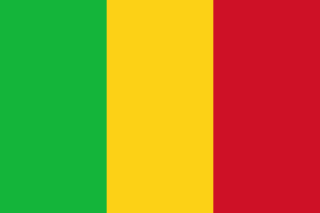
Mali
Republic of Mali
Population: UN WPP 2024, revision 1, projection for 1 July 2026. Sources and methodology.
Geography and territory
Mali is a vast, landlocked country in the heart of West Africa, covering 1,240,192 km² of territory that makes it one of the largest nations on the African continent. Its landscape shifts dramatically from the arid reaches of the Sahara Desert in the north to the greener, more fertile savannas of the south, where the Niger River carves a life-sustaining arc that supports millions of people. Home to a population of about 25.9 million, the country shares borders with Algeria, Niger, Burkina Faso, Ivory Coast, Guinea, Senegal, and Mauritania, giving it one of the longest and most varied land frontiers in West Africa. This geographic range shapes nearly every aspect of how Malians live and earn their living.
The Niger River, one of Africa’s longest waterways, flows through roughly 1,700 kilometers of Malian territory and functions as the country’s lifeline, supplying water for farming, fishing, and river transport. Within its interior course, the river spreads into the Inner Niger Delta, a vast floodplain that swells seasonally and supports an extraordinary concentration of wildlife and birdlife. To the north, the Sahara dominates with rolling dunes, rocky plateaus, and the remote, little-visited Adrar des Ifoghas massif.
Mali’s climate divides into three distinct zones: an extremely arid Saharan north where temperatures can exceed 45 degrees Celsius, a semi-arid Sahelian belt across the center with a short rainy season, and a wetter Sudanian zone in the south more suited to agriculture. The country’s highest point, Hombori Tondo, rises to 1,155 meters in the Mopti region, standing out as a dramatic sandstone landmark amid otherwise flat terrain. Rainfall generally increases from north to south, a gradient that determines where crops can be grown, where herds can graze, and where permanent settlement is even possible.
History
Mali’s history is bound up with some of the most formidable empires Africa has ever produced. The Ghana Empire, flourishing between the fourth and eleventh centuries, controlled the trans-Saharan trade routes that moved gold and salt across the desert. It was later succeeded by the Mali Empire, founded by Sundiata Keita in the thirteenth century, which grew into one of the wealthiest and most expansive civilizations of the medieval world. Its ruler Mansa Musa, often described as the richest individual in recorded history, undertook a pilgrimage to Mecca in 1324 so lavish with gold that it stunned observers across the region.
The Songhai Empire eventually succeeded Mali and reached its height in the sixteenth century under Askia Mohamed, turning Timbuktu and Gao into internationally renowned centers of trade, scholarship, and Islamic learning. The Sankoré University in Timbuktu ranked among the great intellectual institutions of the Islamic world, its libraries holding hundreds of thousands of manuscripts on astronomy, mathematics, medicine, and law.
French colonization, established in the late nineteenth century, absorbed the territory into French West Africa under the name French Sudan. Mali gained independence on September 22, 1960, initially as part of a short-lived federation with Senegal that dissolved almost immediately. In the decades since, the country has cycled through military and democratic rule, and it has faced serious challenges including Tuareg rebellions in the north and a security crisis that intensified after 2012, when armed groups seized parts of the country’s northern territory.
Culture and society
Mali holds one of Africa’s richest and most celebrated cultural traditions, known internationally for its music, craftsmanship, and oral heritage. Malian society is made up of numerous ethnic groups, including the Bambara, Fulani, Songhai, Tuareg, Dogon, and Mandinka, each with distinct languages, customs, and artistic expressions. The coexistence of these communities has produced a cultural mosaic of remarkable depth.
Malian music has traveled far beyond the country’s borders and is regarded as among the most influential on the continent. Traditional instruments such as the kora, the balafon, and the ngoni have given rise to musical styles that fuse tradition with modern sensibilities. Musicians including Ali Farka Touré, Salif Keita, Amadou and Mariam, and Toumani Diabaté carried Malian sound to international stages. The Festival au Désert, once held near Timbuktu, became a globally recognized music event before security concerns forced its suspension.
Oral tradition occupies a central place in Malian culture, embodied by the griot, the historian, genealogist, and musician who passes down collective memory from one generation to the next. The Dogon people, settled along the Bandiagara Escarpment, maintain a fascinating cosmology and ritual practices that have long drawn the attention of anthropologists worldwide. Malian craftsmanship, particularly the textile art of bogolanfini, or mud cloth, and Tuareg silverwork, enjoys strong international recognition.
Economy
Agriculture forms the backbone of the Malian economy, employing more than 70 percent of the working population and contributing substantially to national output. Key crops include millet, sorghum, rice, corn, and cotton, with cotton ranking among the country’s leading exports. The Inner Niger Delta enables flood-recession farming that is essential to rice production, while livestock herding remains a vital activity for the nomadic and semi-nomadic communities of the north.
Gold mining is the most important pillar of Mali’s export sector. The country ranks as Africa’s third-largest gold producer, trailing only South Africa and Ghana, and the metal accounts for roughly 70 percent of export earnings. The main mining operations are concentrated in the Kayes and Sikasso regions, drawing significant foreign investment. Beyond gold, Mali holds deposits of phosphates, bauxite, iron ore, and salt.
Despite this natural wealth, Mali remains one of the poorest countries in the world, constrained by structural challenges such as dependence on rainfall for agriculture, inadequate infrastructure, insecurity across large parts of the territory, and rapid population growth. As a landlocked nation, Mali also depends on neighboring countries’ ports and road networks to move goods to and from world markets, adding cost and complexity to trade. The government, working alongside international organizations, continues to pursue economic diversification, improved education, and infrastructure development to build a more sustainable path forward.
Food and cuisine
Malian cuisine mirrors the country’s ethnic and geographic diversity, built around hearty dishes of grains, legumes, and meat. Tô, a thick porridge made from millet or sorghum flour, is the essential staple, typically served with sauces made from baobab leaves, peanuts, tomato, or okra. Rice with peanut sauce is another cornerstone of the Malian diet, prepared with regional variations that add depth and character.
Maafé, a rich meat stew in peanut sauce, and tigadeguena are festive dishes served at family and community gatherings. Lamb and chicken are commonly grilled or slow-cooked with local spices, while communities along the Niger River rely heavily on fresh and smoked fish as part of everyday meals. Djouka, a soup made from fermented millet, is especially popular during the Ramadan fast.
Malian hospitality centers on shared meals and, above all, tea. The tea ceremony, inherited from Tuareg culture, is an essential social ritual performed in three successive rounds: the first bitter like death, the second mild like life, and the third sweet like love. Sharing a meal or a pot of tea is a deeply rooted gesture of friendship and respect throughout Mali.
Tourism and landmarks
Timbuktu, the legendary desert city, remains Mali’s most iconic destination and a global symbol of remoteness and mystery. A UNESCO World Heritage Site, the historic city is home to the mud-brick mosques of Djinguereber, Sankoré, and Sidi Yahia, masterworks of Sudano-Sahelian architecture. Its libraries safeguard thousands of ancient manuscripts that bear witness to the city’s intellectual golden age between the thirteenth and sixteenth centuries.
The Great Mosque of Djenné, the largest mud-brick structure in the world, stands as an architectural marvel that draws visitors from across the globe. Each year, the community of Djenné gathers for a collective re-plastering of the mosque’s walls, a unique cultural event known as the crépissage. The Bandiagara Escarpment, home to the Dogon people, offers dramatic scenery dotted with cliffside villages, distinctively shaped granaries, and sites of deep ceremonial significance.
The Inner Niger Delta provides outstanding birdwatching, with hundreds of species passing through its wetlands during seasonal migrations. The Sahara in the north offers camel caravan trekking, nights camping under the stars, and immersion in Tuareg culture. Bamako, the lively capital, charms visitors with its bustling markets, thriving live-music scene, and the National Museum of Mali, home to first-rate art and ethnographic collections.
Fun facts about Mali
- Timbuktu was home to one of the world’s oldest universities, Sankoré, founded in the fourteenth century, which at its peak enrolled around 25,000 students.
- Mansa Musa, ruler of the Mali Empire in the fourteenth century, is widely regarded as the wealthiest person in human history, with a fortune sometimes estimated at hundreds of billions of dollars in today’s terms.
- The Great Mosque of Djenné is the largest mud-brick building on Earth and requires a communal annual repair that has evolved into a beloved cultural festival.
- Mali is Africa’s third-largest gold producer, and the metal has anchored parts of its economy for over a thousand years.
- The country is home to more than 40 distinct ethnic groups, and Bambara serves as a widely spoken lingua franca alongside official French.
- Mali’s traditional tea ceremony always involves three rounds, and declining any of them is considered a breach of hospitality toward the host.
Mali in numbers
Latest World Bank and UNDP observations, each with its own year. “World median” is the middle value among the countries that report the same indicator; “#” ranks from the highest value.
Population since 1960
Mali had 5.4 million people in 1960 and 25.2 million in 2025 — 4.7 times as many.
People
32.2% of people live in towns and cities (world median 63.4%). 45.8% are under 15 and 2.4% are 65 or older — a very young population. Women have 5.51 children on average, above the replacement level of about 2.1.
Economy
The economy grew by 5.6% in real terms in 2025. Consumer prices rose by 3.3% in 2025. Services make up the largest share of output (36.6% of GDP); agriculture contributes 33.0%, a large share that points to a farming-based economy.
Development and environment
UNDP rates human development in Mali as low, with an index of 0.419 in 2023 (rank 188 of 193). 36.8% of people use the internet and 49.5% have access to electricity. Forest covers 8.7% of the land (world median 32.8%).
Sources: World Bank, World Development Indicators (CC BY 4.0), most recent observation from 2015 onward; UNDP Human Development Report 2025. Retrieved 2026-10-10. Sector shares need not add up to 100% because taxes and subsidies on products are excluded. Missing values are left blank rather than estimated. Sources and methodology.
Climate of Mali
Averaged across Mali, the warmest month is June (34.1 °C) and the coolest is January (22.0 °C), a seasonal swing of 12.1 °C. The annual mean is 29.2 °C.
About 328 mm of precipitation falls in a typical year. August is the wettest month (110 mm) and February the driest (0 mm). The three wettest consecutive months, July to September, bring 76% of the year's total — a pronounced rainy season.
Show monthly values as a table
| Month | Mean °C | Low °C | High °C | Precipitation, mm |
|---|---|---|---|---|
| January | 22.0 | 14.4 | 29.6 | 0 |
| February | 24.9 | 17.0 | 32.9 | 0 |
| March | 28.7 | 20.8 | 36.7 | 1 |
| April | 31.8 | 24.2 | 39.5 | 5 |
| May | 34.0 | 26.9 | 41.1 | 15 |
| June | 34.1 | 27.5 | 40.8 | 38 |
| July | 32.5 | 26.5 | 38.6 | 80 |
| August | 31.1 | 25.4 | 36.9 | 110 |
| September | 31.3 | 25.2 | 37.5 | 61 |
| October | 30.4 | 23.6 | 37.3 | 18 |
| November | 26.7 | 19.2 | 34.3 | 1 |
| December | 22.8 | 15.3 | 30.4 | 0 |
Figures are 1991–2020 averages across the whole land area of Mali, from the World Bank Climate Change Knowledge Portal, CRU TS 4.08 (CC BY 4.0). They are not readings from one weather station: the capital, the coast and high ground can be much warmer, cooler, wetter or drier.
Travel essentials for Mali
The practical details visitors ask about first. Traffic in Mali drives on the right, like most of the world. Mains electricity is 220 V at 50 Hz, so devices made only for 110–120 V (common in North America) need a converter unless they are dual-voltage — most phone and laptop chargers are.
- Emergency number
- 17Fire 18
- Driving side
- Right
- Plug types
- Type C, Type EC: two round pins (Europlug); E: two round pins, earth pin in the socket
- Voltage
- 220 V50 Hz
- Dialling code
- +223From abroad: your exit code, then 223 and the number
- Currency
- West African CFA Franc (XOF)
- Time zone
- GMT (UTC+0)Current local time in Mali
Compiled from IEC plug and voltage standards, national emergency-service listings and the UN road-traffic conventions. Emergency numbers and local coverage can change — confirm them locally on arrival. Mali's internet domain is .ml.
Where Mali ranks in the world
Each position counts only the countries with data in that ranking guide. First place is the highest value — for price levels, the most expensive. Select a card to see the full table.
- Population58th of 19625.9 millionUN projection, July 2026
- Land area23rd of 1951,220,190 km²World Bank, 2023
- Population density166th of 19419 per km²World Bank, 2023
- GDP (nominal)110th of 187$26.8BWorld Bank, 2024, current US$
- GDP per capita167th of 187$1,093World Bank, 2024, current US$
- Life expectancy188th of 19460.7 yearsWorld Bank, 2024
- Price level128th of 16535 (US = 100)ICP 2021, household consumption
Bordering countries of Mali


Compare Mali with another country
Frequently asked questions about Mali
What is the capital of Mali?
The capital of Mali is Bamako.
What is the population of Mali?
The UN World Population Prospects projection for Mali is 25,932,275 people (25.9 million) on 1 July 2026. National statistical offices may publish different estimates.
What language is spoken in Mali?
The official language of Mali is French.
What currency is used in Mali?
The currency of Mali is the West African CFA Franc (XOF).
How big is Mali?
Mali covers an area of 1,240,192 km².
What type of government does Mali have?
Mali is a semi-presidential republic.
Which countries border Mali?
Mali shares land borders with Algeria, Niger, Burkina Faso, Ivory Coast, Guinea, Senegal, Mauritania.
What is the highest point in Mali?
The highest point in Mali is Hombori Tondo (1,155 m).


