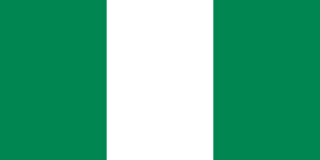
Nigeria
Federal Republic of Nigeria
Population: UN WPP 2024, revision 1, projection for 1 July 2026. Sources and methodology.
Geography and territory
Nigeria is the giant of West Africa, both demographically and geographically, covering 923,769 km² along the Gulf of Guinea. Its landscapes shift dramatically from south to north: the humid coastal belt and the vast mangrove wetlands of the Niger Delta give way to rolling plateaus, then to the dry savanna of the Sahel near the country’s northern borders. This ecological range, rare for a single nation, supports everything from rainforest wildlife to drought-resistant grasslands and underpins a remarkably varied agricultural base.
At the heart of the country, the Niger River, Africa’s third longest, meets its principal tributary, the Benue, forming a broad Y-shape that has long shaped patterns of trade, settlement, and culture. South of their confluence lies one of the largest mangrove systems on Earth, while further inland the terrain rises into the Jos Plateau, where elevations exceed 1,700 meters. The country’s highest point, Chappal Waddi, reaches 2,419 meters along the mountainous frontier with Cameroon. Nigeria shares land borders with Benin to the west, Niger to the north, Chad to the northeast near Lake Chad, and Cameroon to the east.
Climate follows the same north-south gradient as the terrain. The coast experiences an equatorial climate with heavy year-round rainfall and steady warmth, ideal for cocoa and oil palm cultivation. Central Nigeria has a tropical climate with distinct wet and dry seasons, while the north edges into Sahelian conditions, with sparse rain and searing daytime heat that favor hardy cereals like millet and sorghum. This diversity of climate and soil has made Nigeria one of the continent’s most agriculturally productive nations, even as oil dominates the national economy.
History
Nigeria’s past stretches back more than two thousand years, long before the borders drawn by colonial mapmakers. The Nok culture, flourishing between roughly the fifth century BCE and the second century CE in central Nigeria, produced some of sub-Saharan Africa’s earliest known terracotta sculptures, evidence of a sophisticated artistic tradition well ahead of its time. Later, the Yoruba kingdoms of Ife and Oyo refined bronze- and terracotta-casting into an art form, while the Kingdom of Benin, centered in what is now Edo State, produced the celebrated Benin Bronzes, masterworks now held in museums worldwide and the subject of ongoing repatriation debates.
In the north, Hausa city-states such as Kano, Zaria, and Sokoto grew into thriving hubs of trans-Saharan trade and Islamic scholarship. The Sokoto Caliphate, established after Usman dan Fodio’s jihad in 1804, became one of nineteenth-century Africa’s largest and most influential states. In the southeast, the Igbo built a decentralized but highly effective political system based on village councils rather than centralized kingship. Across these societies, the transatlantic slave trade left a devastating mark, with millions taken from Gulf of Guinea ports over several centuries.
British colonization fused these distinct regions into a single administrative unit, formally creating Nigeria in 1914 and setting the stage for later tensions. Independence came on October 1, 1960, but the ethnic and regional fault lines inherited from colonial rule erupted into the Biafran War (1967-1970), a secessionist conflict that claimed well over a million lives. In the decades since, Nigeria has cycled through military rule and civilian government, with a democratic transition beginning in 1999 that has held, making it today the most populous democracy on the African continent.
Culture and society
Few nations rival Nigeria’s cultural complexity. It is home to more than 250 ethnic groups speaking upward of 500 languages, a linguistic density matched by few other countries on Earth. The three largest groups, the Hausa-Fulani of the north, the Yoruba of the southwest, and the Igbo of the southeast, have historically dominated national politics, but hundreds of smaller groups, including the Tiv, Ijaw, Kanuri, and Efik, contribute their own languages, art forms, and traditions to a genuinely pluralistic society. English serves as the official language, bridging this diversity in government, education, and media.
Nollywood, Nigeria’s film industry, is the world’s second-largest by output, trailing only India’s, and among the top three by revenue behind Hollywood and Bollywood. Producing thousands of films annually on famously lean budgets, it has transformed African entertainment and exported Nigerian storytelling across the continent and its global diaspora. Nigerian music has achieved similar global reach: from Fela Kuti’s pioneering Afrobeat in the 1970s to the contemporary Afrobeats sound of stars like Burna Boy, Wizkid, and Davido, Nigerian artists now regularly top international charts and fill arenas from London to Los Angeles.
Nigerian literature holds an equally prominent place on the world stage. Wole Soyinka became the first African to win the Nobel Prize in Literature, in 1986, while Chinua Achebe’s novel “Things Fall Apart” remains a cornerstone of modern African fiction, widely taught around the world. Writers such as Chimamanda Ngozi Adichie, Ben Okri, and Teju Cole carry that tradition forward today. Nigerian fashion, too, has found international acclaim, with designers reinterpreting traditional textiles like Yoruba aso oke and adire tie-dye cloth for global runways.
Economy
Nigeria has Africa’s largest economy, with a GDP of roughly $290.8 billion, powered historically by petroleum. As Africa’s top oil producer and a member of OPEC, Nigeria draws crude primarily from the Niger Delta and offshore fields in the Gulf of Guinea, and oil exports have long accounted for the bulk of the country’s foreign earnings. This dependence has also proven a double-edged sword: falling global oil prices repeatedly trigger fiscal crises, a pattern often described as the “resource curse,” and has pushed successive governments to pursue economic diversification.
That diversification is most visible in technology. Lagos has emerged as Africa’s leading tech hub, sometimes nicknamed “Yaba Valley,” where startups such as Flutterwave and Paystack have reached billion-dollar valuations and drawn significant international venture capital. Agriculture remains a major employer, occupying well over a third of the workforce and producing cocoa, palm oil, rubber, and cotton for export, even though Nigeria still imports a substantial share of its food, a paradox rooted in underinvestment in rural infrastructure.
Services, spanning banking, telecommunications, entertainment, and retail, now generate the largest share of national output and have driven much of Nigeria’s growth in recent decades. Lagos itself, a megacity of more than 20 million people, functions as the commercial engine not just of Nigeria but of West Africa broadly. Yet the country’s economic scale coexists with serious structural challenges, including widespread poverty, corruption, regional insecurity, and chronic power shortages that continue to constrain industrial growth.
Food and cuisine
Nigerian cuisine mirrors the country’s ethnic diversity, with each region and community contributing distinct ingredients and techniques to a richly varied culinary landscape. Jollof rice, tomato-based rice simmered with peppers and spices, most notably the fiery scotch bonnet, stands as the country’s signature dish and the subject of a good-natured, long-running rivalry with Ghana over whose version reigns supreme. It appears at nearly every celebration, wedding, and family gathering, with cooks fiercely proud of their own recipe.
Egusi soup, a thick stew made from ground melon seeds, leafy greens, and meat or fish, typically served alongside pounded yam, fufu, or amala, is another staple found across much of the country. Suya, spiced and grilled meat skewers seasoned with a peanut-based spice blend, is Nigeria’s most beloved street food, sold from roadside grills in nearly every city. Pepper soup, a fiery broth of fish or goat meat infused with local spices, doubles as both a delicacy and a folk remedy for colds.
Regional variation runs deep: southern Nigeria favors cassava, plantain, and rice dishes built around rich sauces, while the north relies on tuwo, a millet or sorghum porridge, served with vegetable and meat stews. Puff-puff, sweet fried dough balls, and chin-chin, crunchy fried pastry bites, are the country’s favorite snacks, and palm wine, tapped directly from palm trees and drunk fresh or fermented, remains a traditional beverage of deep cultural significance.
Tourism and landmarks
Lagos, Nigeria’s sprawling coastal megacity, offers an intense and endlessly energetic urban experience. Lagos Island and Victoria Island host fine-dining restaurants, contemporary art galleries, and nightlife, while Balogun Market and the Nike Art Gallery provide a more grassroots immersion in local culture. The Lekki Conservation Centre, with its canopy walkway suspended over mangrove forest, and Tarkwa Bay Beach offer natural escapes within reach of the city.
Benin City, capital of the historic Kingdom of Benin, preserves remnants of its former grandeur, including earthworks from the ancient city walls once described as among the largest man-made structures in the world. Ile-Ife, regarded as the spiritual birthplace of the Yoruba people, houses a museum famed for its bronze and terracotta heads. In the northeast, the Sukur Cultural Landscape, a UNESCO World Heritage Site, showcases centuries-old agricultural terraces and the ruins of a traditional chief’s palace.
The Jos Plateau offers a cooler climate and striking rock formations, along with the Jos Museum’s notable collection of Nok terracottas. Olumo Rock in Abeokuta, the sacred Osun-Osogbo Sacred Grove, also a World Heritage Site, and Gurara Falls near Abuja round out the country’s cultural and natural attractions. Further southeast, Cross River National Park protects one of Nigeria’s last stretches of untouched rainforest, home to wild gorillas and chimpanzees.
Fun facts about Nigeria
- Nigeria is Africa’s most populous country, with about 242.4 million people, and demographers project it will overtake the United States in population before mid-century.
- Nollywood churns out thousands of films a year, outpacing Hollywood in sheer volume and ranking as the world’s second-largest film industry after India’s.
- Wole Soyinka, born in Abeokuta in 1934, became the first African to win the Nobel Prize in Literature, in 1986.
- The ancient city of Kano has served as a trading hub for over a thousand years and was once ringed by medieval walls stretching more than 20 kilometers.
- The town of Igbo-Ora is famous for having one of the highest twin birth rates on Earth, earning it the nickname “twin capital of the world.”
- Afrobeat, the genre Fela Kuti fused from jazz, funk, and Yoruba rhythms in the 1970s, remains one of Nigeria’s most influential cultural exports.
Nigeria in numbers
Latest World Bank and UNDP observations, each with its own year. “World median” is the middle value among the countries that report the same indicator; “#” ranks from the highest value.
Population since 1960
Nigeria had 45.1 million people in 1960 and 237.5 million in 2025 — 5.3 times as many.
People
63.8% of people live in towns and cities (world median 63.4%). 40.5% are under 15 and 3.1% are 65 or older — a very young population. Women have 4.38 children on average, above the replacement level of about 2.1.
Economy
The economy grew by 4.0% in real terms in 2025. Consumer prices rose by 23.0% in 2025 — very high inflation. Services make up the largest share of output (58.2% of GDP); agriculture contributes 23.0%, a large share that points to a farming-based economy.
Development and environment
UNDP rates human development in Nigeria as medium, with an index of 0.560 in 2023 (rank 164 of 193). 41.2% of people use the internet and 62.5% have access to electricity. Forest covers 18.9% of the land (world median 32.8%).
Sources: World Bank, World Development Indicators (CC BY 4.0), most recent observation from 2015 onward; UNDP Human Development Report 2025. Retrieved 2026-10-10. Sector shares need not add up to 100% because taxes and subsidies on products are excluded. Missing values are left blank rather than estimated. Sources and methodology.
Climate of Nigeria
Averaged across Nigeria, the warmest month is April (30.6 °C) and the coolest is January (25.0 °C), a seasonal swing of 5.6 °C. The annual mean is 27.3 °C.
About 1,186 mm of precipitation falls in a typical year. August is the wettest month (234 mm) and January the driest (4 mm). The three wettest consecutive months, July to September, bring 56% of the year's total — a pronounced rainy season.
Show monthly values as a table
| Month | Mean °C | Low °C | High °C | Precipitation, mm |
|---|---|---|---|---|
| January | 25.0 | 17.4 | 32.6 | 4 |
| February | 27.5 | 20.1 | 35.0 | 8 |
| March | 29.9 | 23.1 | 36.8 | 30 |
| April | 30.6 | 24.5 | 36.8 | 66 |
| May | 29.4 | 24.1 | 34.8 | 125 |
| June | 27.9 | 23.1 | 32.7 | 165 |
| July | 26.4 | 22.3 | 30.5 | 209 |
| August | 25.7 | 21.8 | 29.6 | 234 |
| September | 26.4 | 21.8 | 31.1 | 216 |
| October | 27.3 | 21.6 | 32.9 | 110 |
| November | 26.6 | 19.4 | 33.9 | 16 |
| December | 25.1 | 17.5 | 32.8 | 4 |
Figures are 1991–2020 averages across the whole land area of Nigeria, from the World Bank Climate Change Knowledge Portal, CRU TS 4.08 (CC BY 4.0). They are not readings from one weather station: the capital, the coast and high ground can be much warmer, cooler, wetter or drier.
Travel essentials for Nigeria
The practical details visitors ask about first. Traffic in Nigeria drives on the right, like most of the world. Mains electricity is 230 V at 50 Hz, so devices made only for 110–120 V (common in North America) need a converter unless they are dual-voltage — most phone and laptop chargers are.
- Emergency number
- 112
- Driving side
- Right
- Plug types
- Type D, Type GD: three large round pins in a triangle; G: three rectangular pins (British)
- Voltage
- 230 V50 Hz
- Dialling code
- +234From abroad: your exit code, then 234 and the number
- Currency
- Naira (NGN)
- Time zone
- WAT (UTC+1)Current local time in Nigeria
Compiled from IEC plug and voltage standards, national emergency-service listings and the UN road-traffic conventions. Emergency numbers and local coverage can change — confirm them locally on arrival. Nigeria's internet domain is .ng.
Where Nigeria ranks in the world
Each position counts only the countries with data in that ranking guide. First place is the highest value — for price levels, the most expensive. Select a card to see the full table.
- Population6th of 196242.4 millionUN projection, July 2026
- Land area30th of 195910,770 km²World Bank, 2023
- Population density39th of 194250 per km²World Bank, 2023
- GDP (nominal)53rd of 187$252.3BWorld Bank, 2024, current US$
- GDP per capita168th of 187$1,084World Bank, 2024, current US$
- Life expectancy194th of 19454.6 yearsWorld Bank, 2024
- Price level114th of 16539 (US = 100)ICP 2021, household consumption
Bordering countries of Nigeria


Compare Nigeria with another country
Frequently asked questions about Nigeria
What is the capital of Nigeria?
The capital of Nigeria is Abuja.
What is the population of Nigeria?
The UN World Population Prospects projection for Nigeria is 242,431,832 people (242.4 million) on 1 July 2026. National statistical offices may publish different estimates.
What language is spoken in Nigeria?
The official language of Nigeria is English.
What currency is used in Nigeria?
The currency of Nigeria is the Naira (NGN).
How big is Nigeria?
Nigeria covers an area of 923,769 km².
What type of government does Nigeria have?
Nigeria is a federal presidential republic.
Which countries border Nigeria?
Nigeria shares land borders with Benin, Niger, Chad, Cameroon.
What is the highest point in Nigeria?
The highest point in Nigeria is Chappal Waddi (2,419 m).


