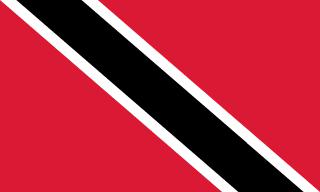
Trinidad and Tobago
Republic of Trinidad and Tobago
Population: UN WPP 2024, revision 1, projection for 1 July 2026. Sources and methodology.
Geography and territory
Trinidad and Tobago is a twin-island nation at the southern tip of the Caribbean archipelago, lying just 11 kilometers off the coast of Venezuela. Covering a total area of 5,128 square kilometers, Trinidad is by far the larger island, at roughly 4,828 square kilometers, and holds most of the country’s population and economic activity, while Tobago, at around 300 square kilometers, offers a quieter, more natural setting. Its closeness to the South American mainland gives the country geological and biological traits unlike anywhere else in the Caribbean.
Trinidad’s terrain is defined by three mountain ranges running east to west across the island. The Northern Range, an extension of Venezuela’s coastal cordillera, reaches its highest point at El Cerro del Aripo, 940 meters above sea level. The island’s center is an agricultural plain, while the south holds the oil and gas reserves that have shaped the national economy for over a century. Tobago, volcanic in origin, is dominated by a forested central ridge, with white-sand beaches and coral reefs ringing its coast.
Trinidad and Tobago’s biodiversity is remarkable for its size, a legacy of Trinidad’s ancient land connection to South America. The island hosts more than 400 recorded bird species, the greatest diversity in the Caribbean, including the scarlet ibis, the national bird, found in large numbers at the Caroni Bird Sanctuary. The rainforests of both islands shelter mammals, reptiles, and amphibians typical of the South American mainland, while Tobago’s reefs support an equally rich marine environment. The country has no land borders, and its position outside the main Atlantic hurricane belt has historically spared it much of the storm damage that affects islands farther north in the Caribbean chain.
History
Indigenous Arawak and Carib peoples inhabited the islands for centuries before European contact. Christopher Columbus sighted Trinidad in 1498 on his third voyage, naming it for the three hills he saw from the sea, which he took as a symbol of the Holy Trinity. Spain claimed the island, but colonization proceeded slowly until a royal decree in the late eighteenth century invited French Catholic settlers from other Caribbean colonies, who brought enslaved Africans with them and built an economy around cocoa and sugar plantations.
Britain seized Trinidad from Spain in 1797, while Tobago, which had changed hands among European powers more than 30 times, was ceded permanently to Britain in 1814. The abolition of slavery in 1838 created a labor shortage that colonial authorities addressed by importing indentured workers from India, China, and elsewhere, laying the foundation for the multiethnic society the country is known for today. Trinidad and Tobago were merged into a single colony in 1889, and the plantation economies of both islands gradually gave way to new patterns of land ownership and settlement in the decades that followed.
Independence came on August 31, 1962, with Eric Williams as the country’s first prime minister. The discovery of oil in the early twentieth century, and its subsequent development, transformed the economy and made Trinidad and Tobago one of the most prosperous nations in the Caribbean. The country became a republic in 1976. More recent history includes an attempted coup in 1990 by the Islamist group Jamaat al Muslimeen, along with economic cycles closely tied to oil and natural gas prices.
Culture and society
Trinidad and Tobago stands among the most multicultural societies in the Caribbean, home to communities of African, Indian, Chinese, Syrian-Lebanese, European, and Amerindian descent living side by side. This diversity produces a rare religious coexistence, with Christianity, Hinduism, and Islam all widely practiced, and holidays such as Christmas, Diwali, and Eid al-Fitr celebrated nationwide as public holidays.
Trinidad’s Carnival is the most spectacular cultural event in the Caribbean, staged each year in the run-up to Lent with parades of costumed mas bands, soca and calypso music, steelpan competitions, and an infectious energy that draws thousands of visitors from abroad. The steelpan, invented in Trinidad during the 1930s from repurposed oil drums, is the only acoustic musical instrument invented in the twentieth century and has been designated the country’s national instrument.
Calypso, a musical genre born in Trinidad with roots in African oral tradition, delivers social commentary through witty, ironic lyrics. Soca, its modern descendant, now dominates Caribbean parties and carnivals, and both genres remain a source of national pride showcased in annual competitions leading up to Carnival. Trinidadian literature has produced writers of global stature, including V.S. Naipaul, awarded the Nobel Prize in Literature in 2001, and C.L.R. James, the historian and cultural critic whose book The Black Jacobins, on the Haitian Revolution, remains a landmark work of Caribbean historiography.
Economy
Trinidad and Tobago has the most industrialized economy in the Caribbean, built on the extraction and processing of oil and natural gas. The country is one of the world’s leading producers and exporters of liquefied natural gas and hosts a well-developed petrochemical industry producing methanol, ammonia, urea, and other chemical products. Hydrocarbon revenues have funded infrastructure well ahead of most of its Caribbean neighbors, and gross domestic product stands at roughly $25.9 billion.
The government has pushed to diversify the economy and reduce its dependence on hydrocarbons, encouraging growth in manufacturing, financial services, tourism, and information technology. Port of Spain’s financial district serves as a regional hub for companies operating across the Caribbean. Agriculture, though a small slice of GDP, still produces high-quality cocoa, coffee, citrus, and sugarcane.
Tourism, particularly in Tobago, has grown as an alternative sector, drawing visitors with its beaches, diving, and Trinidad’s Carnival. Per capita income in Trinidad and Tobago ranks among the highest in Latin America and the Caribbean, and the country has sustained relatively strong levels of human development, education, and health care, reflected in a human development index rated very high. Even so, volatile oil and gas prices remain a persistent risk to economic stability, underscoring the urgency of the government’s diversification agenda.
Food and cuisine
The cuisine of Trinidad and Tobago is a multicultural feast that mirrors the country’s extraordinary ethnic diversity. Doubles, the most iconic street snack, consists of two pieces of bara, a fried turmeric flatbread, sandwiching curried channa, or chickpeas, and topped with spicy sauces and chutneys. This dish of Indian origin is eaten at all hours, from breakfast through the small hours of the night, and draws long lines at the most popular vendors in Port of Spain.
Roti, a direct legacy of Indian immigration, has become one of the country’s defining dishes. Several varieties exist, including dhalpuri roti, filled with ground split peas; buss-up-shut, a torn roti resembling a crumpled shirt; and roti wrapped around curried chicken, goat, shrimp, or vegetables. Callaloo, a thick soup of dasheen (taro) leaves with okra, coconut milk, and crab, is the classic Sunday dish and embodies the fusion of African and Caribbean culinary traditions.
Pelau, rice with chicken caramelized in browned sugar, pigeon peas, and Caribbean spices, along with macaroni pie, a baked macaroni and cheese casserole, are staples of the Trinidadian table, frequently served together at family gatherings and Sunday lunches. Tropical fruits such as mango, guava, papaya, and sapodilla are eaten fresh or made into juices, sauces, and preserves. Rum punch, sorrel, a hibiscus drink spiced with ginger, and mauby, a bittersweet drink made from tree bark, round out a drinks culture as varied as the population itself.
Tourism and landmarks
Trinidad’s Carnival, held in February or March, is the country’s single biggest tourist draw and one of the most spectacular festivals on Earth. Days of parades with elaborate costumes, calypso and soca competitions, the Panorama steelpan band finals, and the raw energy of J’ouvert, the pre-dawn celebration that kicks off Carnival Monday at 4 a.m., combine into an immersive cultural experience unlike any other.
Tobago provides the natural counterpoint to Trinidad’s bustle, with idyllic beaches such as Pigeon Point, Store Bay, and Englishman’s Bay. Buccoo Reef, among the finest in the Caribbean, and the calm waters of the Nylon Pool offer exceptional snorkeling and diving. The Tobago Forest Reserve, the oldest protected rainforest in the Western Hemisphere, safeguarded since 1776, covers much of the island’s interior and shelters exotic birdlife and the elusive manicou opossum.
On Trinidad, the Caroni Bird Sanctuary offers evening boat tours to witness thousands of scarlet ibis returning to roost in the mangroves, a striking display of red against green. The Pitch Lake, the largest natural deposit of asphalt in the world, is a singular geological curiosity. Downtown Port of Spain, with Independence Square, the Magnificent Seven row of colonial mansions, and Fort San Andres, offers history and culture in a lively urban setting.
Fun facts about Trinidad and Tobago
- The steelpan, invented in Trinidad in the 1930s from discarded oil drums, is the only acoustic musical instrument created in the twentieth century.
- Trinidad and Tobago has the greatest bird diversity in the Caribbean, with more than 400 recorded species.
- The Pitch Lake in Trinidad, covering about 40 hectares and estimated to reach 75 meters deep, is the largest natural asphalt deposit on Earth.
- V.S. Naipaul, a Trinidadian writer of Indian descent, won the Nobel Prize in Literature in 2001.
- Trinidad and Tobago is one of the few countries where Hinduism, Islam, and Christianity coexist as major faiths, with holidays from all three observed as national public holidays.
- The limbo, the popular Caribbean dance in which participants pass beneath a progressively lower bar, originated in Trinidad.
Trinidad and Tobago in numbers
Latest World Bank and UNDP observations, each with its own year. “World median” is the middle value among the countries that report the same indicator; “#” ranks from the highest value.
Population since 1960
Trinidad and Tobago had 844,943 people in 1960 and 1.4 million in 2025 — 62% more.
People
54.0% of people live in towns and cities (world median 63.4%). 17.5% are under 15 and 12.9% are 65 or older — a middle-aged population. Women have 1.54 children on average, below the replacement level of about 2.1 needed to keep a population stable in the long run without migration.
Economy
The economy shrank by 0.8% in real terms in 2025. Consumer prices rose by 1.0% in 2025. Services make up the largest share of output (59.2% of GDP); agriculture contributes 0.8%.
Development and environment
UNDP rates human development in Trinidad and Tobago as very high, with an index of 0.807 in 2023 (rank 72 of 193). 82.2% of people use the internet and 100.0% have access to electricity. Forest covers 44.2% of the land (world median 32.8%).
Sources: World Bank, World Development Indicators (CC BY 4.0), most recent observation from 2015 onward; UNDP Human Development Report 2025. Retrieved 2026-10-10. Sector shares need not add up to 100% because taxes and subsidies on products are excluded. Missing values are left blank rather than estimated. Sources and methodology.
Climate of Trinidad and Tobago
Averaged across Trinidad and Tobago, the mean temperature stays between 25.7 °C (January) and 27.5 °C (May) — a swing of only 1.8 °C, so seasons are marked by rainfall rather than by heat.
About 1,983 mm of precipitation falls in a typical year. August is the wettest month (251 mm) and March the driest (59 mm). The wettest stretch is June to August, with 36% of the year's total.
Show monthly values as a table
| Month | Mean °C | Low °C | High °C | Precipitation, mm |
|---|---|---|---|---|
| January | 25.7 | 21.2 | 30.2 | 99 |
| February | 25.8 | 21.1 | 30.5 | 66 |
| March | 26.3 | 21.6 | 31.0 | 59 |
| April | 27.1 | 22.5 | 31.8 | 84 |
| May | 27.5 | 23.2 | 31.8 | 125 |
| June | 27.2 | 23.4 | 31.0 | 242 |
| July | 27.0 | 23.1 | 31.0 | 226 |
| August | 27.3 | 23.2 | 31.5 | 251 |
| September | 27.4 | 23.1 | 31.7 | 191 |
| October | 27.3 | 23.1 | 31.6 | 213 |
| November | 26.8 | 22.7 | 31.0 | 250 |
| December | 26.2 | 22.0 | 30.4 | 178 |
Figures are 1991–2020 averages across the whole land area of Trinidad and Tobago, from the World Bank Climate Change Knowledge Portal, CRU TS 4.08 (CC BY 4.0). They are not readings from one weather station: the capital, the coast and high ground can be much warmer, cooler, wetter or drier.
Travel essentials for Trinidad and Tobago
The practical details visitors ask about first. Traffic in Trinidad and Tobago drives on the left, one of 54 of the 196 countries profiled here that do — see the full list. Mains electricity is 115 V at 60 Hz, so appliances built only for 220–240 V need a voltage converter.
- Emergency number
- 999Ambulance 811 · Fire 990
- Driving side
- Left
- Plug types
- Type A, Type BA: two flat parallel pins; B: two flat pins plus a round earth pin
- Voltage
- 115 V60 Hz
- Dialling code
- +1-868From abroad: your exit code, then 1-868 and the number
- Currency
- Trinidad and Tobago Dollar (TTD)
- Time zone
- AST (UTC-4)Current local time in Trinidad and Tobago
Compiled from IEC plug and voltage standards, national emergency-service listings and the UN road-traffic conventions. Emergency numbers and local coverage can change — confirm them locally on arrival. Trinidad and Tobago's internet domain is .tt.
Where Trinidad and Tobago ranks in the world
Each position counts only the countries with data in that ranking guide. First place is the highest value — for price levels, the most expensive. Select a card to see the full table.
- Population152nd of 1961.5 millionUN projection, July 2026
- Land area165th of 1955,130 km²World Bank, 2023
- Population density34th of 194267 per km²World Bank, 2023
- GDP (nominal)113th of 187$25.6BWorld Bank, 2024, current US$
- GDP per capita57th of 187$18,733World Bank, 2024, current US$
- Life expectancy100th of 19473.6 yearsWorld Bank, 2024
- Price level49th of 16560 (US = 100)ICP 2021, household consumption
Compare Trinidad and Tobago with another country
Frequently asked questions about Trinidad and Tobago
What is the capital of Trinidad and Tobago?
The capital of Trinidad and Tobago is Port of Spain.
What is the population of Trinidad and Tobago?
The UN World Population Prospects projection for Trinidad and Tobago is 1,513,268 people (1.5 million) on 1 July 2026. National statistical offices may publish different estimates.
What language is spoken in Trinidad and Tobago?
The official language of Trinidad and Tobago is English.
What currency is used in Trinidad and Tobago?
The currency of Trinidad and Tobago is the Trinidad and Tobago Dollar (TTD).
How big is Trinidad and Tobago?
Trinidad and Tobago covers an area of 5,128 km².
What type of government does Trinidad and Tobago have?
Trinidad and Tobago is a parliamentary republic.
What is the highest point in Trinidad and Tobago?
The highest point in Trinidad and Tobago is El Cerro del Aripo (940 m).


