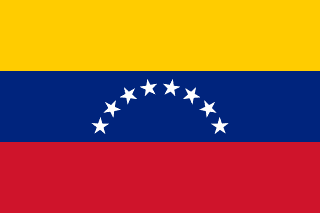
Venezuela
Bolivarian Republic of Venezuela
Population: UN WPP 2024, revision 1, projection for 1 July 2026. Sources and methodology.
Geography and territory
Venezuela occupies the northern coast of South America, covering 916,445 square kilometers of remarkably varied terrain. The country stretches along more than 2,800 kilometers of Caribbean coastline, rises into the Andes mountains in the west, flattens into broad plains at its center, gives way to Amazon rainforest in the south, and culminates in the otherworldly Guiana Highlands in the southeast. Few countries on the continent pack such a wide range of ecosystems into a single national territory.
The Venezuelan Andes run through the states of Táchira, Mérida, and Trujillo, reaching their high point at Bolívar Peak, which tops out at 4,978 meters. The Llanos, an immense lowland plain that floods extensively during the rainy season, cover roughly a third of the country and support abundant wildlife, including capybaras, caimans, herons, and anacondas. Lake Maracaibo, the largest lake in South America, doubles as one of the world’s most significant petroleum basins.
In Bolívar state, the Gran Sabana region is dominated by tepuis, flat-topped tabletop mountains that rise abruptly from the surrounding jungle and whose rock formations date back more than two billion years. Angel Falls, plunging from the summit of Auyán-tepui with an uninterrupted drop of 807 meters (979 meters in total), is the tallest waterfall on Earth and one of the most striking natural spectacles anywhere. Further north, the Orinoco Delta, where the great river fans out into a labyrinth of channels before reaching the Atlantic, forms a mangrove ecosystem of extraordinary biological richness.
History
Long before European contact, the territory that is now Venezuela was home to diverse Indigenous peoples, among them the Caribs, the Arawaks, and the Timoto-Cuica groups of the Andes. Christopher Columbus reached Venezuela’s eastern shores in 1498 during his third voyage, making it the first stretch of mainland he set foot on in the Americas. The country’s name, meaning “little Venice,” was coined by Spanish explorers who saw Indigenous stilt houses built over the waters of Lake Maracaibo and were reminded of the Italian city.
Venezuela was the birthplace of Simón Bolívar, the Liberator and central figure of South American independence. Born in Caracas in 1783, Bolívar led the military campaigns that freed Venezuela, Colombia, Ecuador, Peru, and Bolivia from Spanish rule. Venezuela declared its independence on July 5, 1811, the first Spanish colony in the Americas to do so, although the war for independence dragged on until the decisive Battle of Carabobo in 1821.
The twentieth century transformed Venezuela through the discovery and large-scale extraction of oil, which reshaped both its economy and its society. The country moved rapidly from an agrarian nation to one of the wealthiest in Latin America. Decades of petroleum-fueled prosperity financed accelerated modernization, though they also entrenched an economic dependence on crude oil that would later prove costly whenever global prices fell.
Culture and society
Venezuelan culture is a vibrant blend of Indigenous, African, and Spanish influences, expressed through music, dance, festivals, and everyday tradition. Joropo, performed with harp, cuatro, and maracas, stands as the national music and dance, especially rooted in the Llanos plains. The gaita zuliana is closely tied to Christmas celebrations, while the Afro-Venezuelan drumming traditions of Barlovento and the Dancing Devils of Yare, recognized by UNESCO as Intangible Cultural Heritage, showcase the country’s deep African roots.
Venezuela has produced cultural figures of international stature. Rómulo Gallegos, author of the novel Doña Bárbara, remains the country’s most emblematic literary voice, alongside writers such as Teresa de la Parra, Arturo Uslar Pietri, and, more recently, Alberto Barrera Tyszka. The National System of Youth and Children’s Orchestras, founded by José Antonio Abreu, has earned worldwide acclaim as a model of music education and social transformation, producing world-class talents such as conductor Gustavo Dudamel.
Venezuelan society is known for its warmth, its sense of humor, and its enduring appreciation for beauty and pageantry; the country has produced more Miss Universe winners than any other nation, a cultural phenomenon that reflects the value placed on aesthetics and presentation. Baseball reigns as the most popular sport, with a domestic professional league that has produced hundreds of players who go on to compete in the United States major leagues. The large Venezuelan diaspora of recent decades has carried the country’s culture across Latin America and beyond.
Economy
Venezuela holds the largest proven oil reserves in the world, estimated at more than 300 billion barrels, surpassing even Saudi Arabia. The petroleum sector has historically dominated the national economy, at times accounting for the overwhelming majority of export earnings. PDVSA, the state oil company, was for decades one of the largest corporations in the Western Hemisphere.
Beyond oil, Venezuela is rich in natural resources including natural gas, iron ore, bauxite, gold, diamonds, and coltan. Hydroelectric dams along the Caroní River, led by the Guri Dam, generate a substantial share of the country’s electricity. Agriculture, though a smaller contributor to output than in decades past, still produces coffee, prized cacao, corn, rice, and livestock.
Venezuela’s economy has endured a severe crisis in recent years, marked by hyperinflation, sharp economic contraction, and significant emigration. International sanctions and declining oil production have deepened these difficulties. According to available estimates, Venezuela’s gross domestic product stands around 99.7 billion dollars, with a Human Development Index of 0.709, placing it in the high category. The country’s long-term economic potential nonetheless remains substantial, resting on its vast natural resources, its strategic geographic position, and the talent of its people as foundations for eventual recovery.
Food and cuisine
The arepa is the cornerstone of Venezuelan cuisine, a cornmeal cake cooked on a griddle or fried and split open to hold an endless variety of fillings: reina pepiada (chicken with avocado and mayonnaise), pabellón-style shredded beef with black beans and plantain, dominó (black beans and white cheese), or simply butter and cheese. Venezuelans eat arepas at breakfast, lunch, and dinner, making the dish as much a symbol of national identity as a staple food.
Pabellón criollo is widely regarded as the national dish: a balanced plate of shredded beef, black beans, white rice, and slices of fried ripe plantain that, according to popular tradition, mirrors the blending of the peoples who make up the nation. Hallacas, cornmeal tamales wrapped in plantain leaves and filled with a stew of meat, olives, capers, and pickled vegetables, are the essential Christmas dish, and nearly every family guards its own closely held recipe.
Cachapa, a sweet griddle cake made from fresh corn and served with soft white cheese, along with tequeños (fried cheese sticks wrapped in dough), cornmeal empanadas, asado negro simmered in a dark sugar-based sauce, and Zulia-style mandocas round out a deeply satisfying culinary repertoire. Popular drinks include chicha made from rice, papelón con limón (a sweetened lime beverage), and tropical fruit juices such as soursop, passion fruit, and guava. Venezuelan rum, particularly its aged varieties, ranks among the finest in the world.
Tourism and landmarks
Angel Falls, set within Canaima National Park, is Venezuela’s most spectacular natural attraction and one of the most breathtaking sights on the planet. Reachable by small aircraft or an exciting river journey, the world’s tallest waterfall tumbles from the summit of Auyán-tepui amid pristine jungle. Canaima National Park itself, with its tepuis, tea-colored lagoons, and cascading waterfalls, is a UNESCO World Heritage site and a landscape of primeval beauty.
Venezuela’s Caribbean coast offers a string of idyllic destinations. The Los Roques archipelago, a marine national park of turquoise waters and white sand cays, ranks among the finest diving and beach destinations in the Caribbean. Margarita Island, with its beaches, duty-free shopping, and nightlife, has long been the country’s most popular vacation destination, while Morrocoy National Park, with its cays and mangroves, and the beaches of Choroní and Puerto Colombia round out the coastal offerings.
The Venezuelan Andes provide an entirely different experience, centered on colonial towns such as Mérida, home to the highest and longest cable car system in the world, along with Jajó and Apartaderos. During the dry season, the Llanos offer photographic safaris with wildlife concentrations that rival Africa’s savannas. The Orinoco Delta invites visitors to explore Indigenous Warao communities by navigating a maze of mangrove-lined channels, while the historic center of Ciudad Bolívar, on the banks of the Orinoco, is recognized as a World Heritage site.
Fun facts about Venezuela
- Angel Falls has a total height of 979 meters, including an uninterrupted free fall of 807 meters, making it the tallest waterfall in the world by a wide margin.
- Venezuela was once the world’s leading oil exporter, and its name, meaning “little Venice,” was given by early European explorers.
- The National System of Youth Orchestras, founded in 1975 by José Antonio Abreu, has trained more than a million young musicians and stands as a global model for using music as a tool of social inclusion.
- The tepuis of the Guiana Highlands, formations over two billion years old, are believed to have inspired Arthur Conan Doyle’s novel The Lost World and Pixar’s film Up.
- Venezuela has produced more Miss Universe winners than any other country, a reflection of a culture that places tremendous value on beauty and elegance.
- Lake Maracaibo, South America’s largest lake, sits above one of the most productive oil basins on the continent and gave the country its name.
Venezuela in numbers
Latest World Bank and UNDP observations, each with its own year. “World median” is the middle value among the countries that report the same indicator; “#” ranks from the highest value.
Population since 1960
Venezuela had 8.2 million people in 1960 and 28.5 million in 2025 — 3.5 times as many.
The population peaked at 30.8 million in 2016 and has since declined.
People
89.3% of people live in towns and cities (world median 63.4%). 24.9% are under 15 and 10.0% are 65 or older — a middle-aged population. Women have 2.08 children on average, close to the replacement level of about 2.1.
Economy
The economy grew by 1.6% in real terms in 2025. Consumer prices rose by 254.9% in 2016 — very high inflation.
Development and environment
UNDP rates human development in Venezuela as high, with an index of 0.709 in 2023 (rank 121 of 193). 76.7% of people use the internet and 100.0% have access to electricity. Forest covers 53.4% of the land (world median 32.8%).
Sources: World Bank, World Development Indicators (CC BY 4.0), most recent observation from 2015 onward; UNDP Human Development Report 2025. Retrieved 2026-10-10. Sector shares need not add up to 100% because taxes and subsidies on products are excluded. Missing values are left blank rather than estimated. Sources and methodology.
Climate of Venezuela
Averaged across Venezuela, the mean temperature stays between 25.2 °C (July) and 26.4 °C (April) — a swing of only 1.2 °C, so seasons are marked by rainfall rather than by heat.
About 1,963 mm of precipitation falls in a typical year. July is the wettest month (296 mm) and February the driest (46 mm). The wettest stretch is June to August, with 44% of the year's total.
Show monthly values as a table
| Month | Mean °C | Low °C | High °C | Precipitation, mm |
|---|---|---|---|---|
| January | 25.3 | 19.9 | 30.9 | 48 |
| February | 25.7 | 20.1 | 31.4 | 46 |
| March | 26.3 | 20.7 | 31.9 | 61 |
| April | 26.4 | 21.4 | 31.6 | 131 |
| May | 26.0 | 21.4 | 30.7 | 229 |
| June | 25.4 | 21.1 | 29.8 | 295 |
| July | 25.2 | 20.8 | 29.7 | 296 |
| August | 25.6 | 21.0 | 30.2 | 267 |
| September | 25.8 | 21.0 | 30.7 | 200 |
| October | 26.0 | 21.1 | 30.9 | 165 |
| November | 25.9 | 21.1 | 30.7 | 140 |
| December | 25.5 | 20.5 | 30.5 | 85 |
Figures are 1991–2020 averages across the whole land area of Venezuela, from the World Bank Climate Change Knowledge Portal, CRU TS 4.08 (CC BY 4.0). They are not readings from one weather station: the capital, the coast and high ground can be much warmer, cooler, wetter or drier.
Travel essentials for Venezuela
The practical details visitors ask about first. Traffic in Venezuela drives on the right, like most of the world. Mains electricity is 120 V at 60 Hz, so appliances built only for 220–240 V need a voltage converter.
- Emergency number
- 911
- Driving side
- Right
- Plug types
- Type A, Type BA: two flat parallel pins; B: two flat pins plus a round earth pin
- Voltage
- 120 V60 Hz
- Dialling code
- +58From abroad: your exit code, then 58 and the number
- Currency
- Bolívar (VES)
- Time zone
- UTC-4Current local time in Venezuela
Compiled from IEC plug and voltage standards, national emergency-service listings and the UN road-traffic conventions. Emergency numbers and local coverage can change — confirm them locally on arrival. Venezuela's internet domain is .ve.
Where Venezuela ranks in the world
Each position counts only the countries with data in that ranking guide. First place is the highest value — for price levels, the most expensive. Select a card to see the full table.
- Population54th of 19628.6 millionUN projection, July 2026
- Land area32nd of 195882,050 km²World Bank, 2023
- Population density148th of 19432 per km²World Bank, 2023
- GDP (nominal)64th of 187$120.6BWorld Bank, 2024, current US$
- GDP per capita123rd of 187$4,244World Bank, 2024, current US$
- Life expectancy107th of 19472.7 yearsWorld Bank, 2024
Bordering countries of Venezuela


Compare Venezuela with another country
Frequently asked questions about Venezuela
What is the capital of Venezuela?
The capital of Venezuela is Caracas.
What is the population of Venezuela?
The UN World Population Prospects projection for Venezuela is 28,633,711 people (28.6 million) on 1 July 2026. National statistical offices may publish different estimates.
What language is spoken in Venezuela?
The official language of Venezuela is Spanish.
What currency is used in Venezuela?
The currency of Venezuela is the Bolívar (VES).
How big is Venezuela?
Venezuela covers an area of 916,445 km².
What type of government does Venezuela have?
Venezuela is a federal presidential republic.
Which countries border Venezuela?
Venezuela shares land borders with Colombia, Brazil, Guyana.
What is the highest point in Venezuela?
The highest point in Venezuela is Bolívar Peak (4,978 m).


