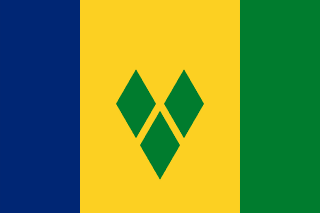
Saint Vincent and the Grenadines
Saint Vincent and the Grenadines
Population: UN WPP 2024, revision 1, projection for 1 July 2026. Sources and methodology.
Geography and territory
Saint Vincent and the Grenadines is a multi-island nation in the eastern Caribbean, part of the Windward Islands chain, lying between Saint Lucia to the north and Grenada to the south. Covering a total area of 389 square kilometers and home to a population of 99,924 people, the country is built around the main island of Saint Vincent, which accounts for roughly 344 square kilometers, and a scattering of 32 smaller islands and islets collectively known as the Grenadines, only nine of which are inhabited. The result is a nation defined as much by open water as by land, with turquoise Caribbean seas threading between the islands.
Saint Vincent itself is a volcanic island dominated by La Soufrière, an active volcano rising to 1,234 meters. Its most recent eruption, in April 2021, forced the evacuation of thousands of residents and blanketed the island in ash, a stark reminder of the geological forces that shaped the landscape. The mountainous interior is cloaked in dense rainforest, cut by deep ravines, rivers, and waterfalls that tumble toward the coast. The windward eastern shore is rugged and battered by the Atlantic, while the leeward western coast shelters calmer bays and beaches of dark volcanic sand.
The Grenadines, by contrast, are classic tropical islets of white sand, coral reefs, and glassy turquoise water. Bequia, the largest and most populous, carries a strong maritime heritage rooted in its whaling past. Mustique has become an exclusive hideaway for celebrities and royalty. The Tobago Cays, a cluster of five uninhabited islets protected as a marine park, offer some of the clearest, most vividly colored seascapes in the Caribbean, home to sea turtles, stingrays, and pristine coral gardens.
History
Saint Vincent was among the last Caribbean islands to fall under European control, thanks to the fierce resistance of its indigenous population. The Kalinago people, who called the island Hairouna, meaning “land of the blessed,” held off colonization for generations. Over the course of the seventeenth century, shipwrecked and escaped African slaves intermingled with the Kalinago, giving rise to a distinct people known as the Black Caribs, or Garifuna, whose culture fused African and indigenous traditions.
The Carib Wars, fought between 1769 and 1797, pitted the Black Caribs, led by the national hero Joseph Chatoyer, against British forces seeking control of the island. Chatoyer was killed in battle in 1795, and following the Caribs’ eventual defeat, more than 5,000 Black Caribs were forcibly deported to the island of Roatán, off Honduras, from where their descendants spread along the Central American coast, founding the Garifuna communities that still thrive today in Honduras, Guatemala, and Belize. With resistance broken, Britain took full control of Saint Vincent and developed sugar and cane plantations worked by enslaved labor.
Saint Vincent and the Grenadines gained independence from the United Kingdom on October 27, 1979. That same year, La Soufrière erupted, and it erupted again in 2021, both events serving as defining reminders of the islands’ ongoing relationship with volcanic power. Since independence, the country has maintained a stable parliamentary democracy and has steadily built an economy centered on tourism, agriculture, and maritime services.
Culture and society
The culture of Saint Vincent and the Grenadines blends African, Kalinago, British, and French influences into a proud and distinctly Caribbean identity. Vincy Mas, the national carnival held in June and July, stands as the country’s most important cultural event, with weeks of calypso and soca competitions, elaborately costumed mas band parades, steel pan performances, and the raucous street celebrations of Mardi Gras and J’ouvert.
Soca and calypso dominate the musical landscape, with local artists competing intensely each carnival season. Oral storytelling traditions, Anansi folk tales, and dialect poetry keep African heritage alive in everyday life. Chatoyer, the last Kalinago chief to fight British colonization, is revered as the country’s national hero, and March 14 is observed as National Heroes’ Day in his honor. In the Grenadines, and especially on Bequia, communities preserve generations-old traditions of wooden boat building and artisanal fishing.
Vincentian society is deeply religious, close-knit, and resilient, qualities forged by centuries of natural and social hardship. Cricket is the most beloved sport on the mainland, while sailing and regatta culture take center stage throughout the Grenadines. Hospitality here runs genuine and warm, with a welcoming spirit that extends readily to travelers willing to venture beyond the well-worn tourist paths to discover a more authentic side of the Caribbean.
Economy
Tourism, agriculture, and services anchor the economy of Saint Vincent and the Grenadines. Yachting and sailing tourism serve as the primary economic engine, with the Grenadines established as one of the most exclusive sailing destinations in the entire Caribbean. Mustique, managed by the privately held Mustique Company, draws a global elite to its private villas and rarefied atmosphere, while Bequia offers a more accessible but equally charming alternative.
Agriculture, historically centered on banana cultivation, has long been the backbone of Saint Vincent’s economy, though the loss of preferential access to European markets and repeated damage from storms and volcanic eruptions have diminished its former dominance. Arrowroot production has helped diversify the sector: Saint Vincent remains the world’s leading producer of this fine starch, alongside root crops, spices, and a partially legalized marijuana cultivation industry.
Offshore financial services, ship registration under the Vincentian flag, and a citizenship-by-investment program each contribute meaningfully to national income, while remittances from Vincentians living abroad remain a vital lifeline for many households. The country continues to face development challenges, including recovery from the 2021 volcanic eruption, the need for stronger infrastructure, and job creation for a young population, all set against a backdrop of growing climate vulnerability.
Food and cuisine
Vincentian cuisine is authentic Caribbean cooking built on fresh local ingredients and techniques passed down from African and European culinary traditions. Roasted breadfruit paired with fried fish or stewed saltfish is something of a national dish, commonly eaten for breakfast or lunch. Jackfish is the most popular catch, prepared fried, stewed, or in soup, while conch, lobster, and shrimp round out a diet shaped heavily by the sea.
Callaloo soup, a thick puree of dasheen leaves cooked with okra, coconut, and seasonings, is traditionally served with dumplings and remains a Sunday staple across the islands. Pelau, a one-pot dish of rice, chicken, and pigeon peas cooked in caramelized sugar, and stewed chicken in a rich creole sauce are common home-cooked favorites. Ground provisions, boiled root vegetables such as dasheen, yam, sweet potato, and cassava, accompany nearly every meal. On Bequia, seafood takes even greater precedence, with fish often cooked the same day it is caught.
Tropical fruit is abundant and enjoyed fresh, juiced, or turned into ice cream and sweets, including mango, guava, soursop, golden apple, and tamarind. Local drinks range from mauby, a bittersweet infusion made from tree bark, to sea moss, a creamy blend of seaweed, condensed milk, and spices, alongside homemade ginger beer and rum punch made with local rum. Sorrel, a favorite around Christmas, and spiced cocoa tea round out a distinctive repertoire of traditional island beverages.
Tourism and landmarks
The Tobago Cays, a marine park made up of five uninhabited islets, are the crown jewel of Vincentian tourism. Waters here reach visibility beyond 30 meters, revealing seagrass meadows grazed by green sea turtles, pristine coral reefs alive with tropical fish, and white sand beaches sheltered by a natural horseshoe reef. Accessible by boat from the Grenadines, the Cays have even served as a filming location for the Pirates of the Caribbean movie series.
Bequia, the first stop in the Grenadines chain, offers an authentically Caribbean atmosphere centered on Admiralty Bay, where yachts from around the world anchor alongside traditional fishing boats. Highlights include Princess Margaret Beach, the scenic Belmont Walkway, and the island’s turtle sanctuary. On Saint Vincent itself, adventurous travelers can tackle the demanding four- to five-hour hike up La Soufrière or visit the twin cascades of Dark View Falls, set deep within the rainforest.
The Botanic Gardens in Kingstown, founded in 1765, are the oldest in the Western Hemisphere and hold a collection of tropical plants that includes a descendant of the breadfruit tree brought by Captain Bligh aboard HMS Bounty in 1793. Mustique offers quiet, understated glamour, its private beaches and famous Basil’s Bar drawing an international jet set. The Grenadines’ regattas, particularly the Bequia Easter Regatta, attract sailors from around the globe and celebrate the islands’ deep maritime culture.
Fun facts about Saint Vincent and the Grenadines
- The Tobago Cays and Wallilabou Bay served as filming locations for several Pirates of the Caribbean movies.
- The eruption of La Soufrière in April 2021 forced the evacuation of more than 16,000 people and covered the island in volcanic ash.
- Saint Vincent is the world’s largest producer of arrowroot, a fine starch used in both cooking and pharmaceuticals.
- Joseph Chatoyer, the country’s national hero, is the only person from the Caribbean formally honored as a national hero for resisting European colonization until his death in battle in 1795.
- The Botanic Gardens in Kingstown, established in 1765, are the oldest botanical gardens in the Western Hemisphere.
- The private island of Mustique has long attracted royalty and celebrities, with Britain’s Princess Margaret among its most famous former residents.
Saint Vincent and the Grenadines in numbers
Latest World Bank and UNDP observations, each with its own year. “World median” is the middle value among the countries that report the same indicator; “#” ranks from the highest value.
Population since 1960
Saint Vincent and the Grenadines had 84,388 people in 1960 and 99,924 in 2025 — 18% more.
The population peaked at 113,545 in 2000 and has since declined.
People
48.0% of people live in towns and cities (world median 63.4%). 20.9% are under 15 and 12.3% are 65 or older — a middle-aged population. Women have 1.76 children on average, below the replacement level of about 2.1 needed to keep a population stable in the long run without migration.
Economy
The economy grew by 3.4% in real terms in 2025. Consumer prices rose by 0.8% in 2025. Services make up the largest share of output (66.4% of GDP); agriculture contributes 3.4%.
Development and environment
UNDP rates human development in Saint Vincent and the Grenadines as high, with an index of 0.798 in 2023 (rank 76 of 193). 76.2% of people use the internet and 100.0% have access to electricity. Forest covers 73.4% of the land (world median 32.8%).
Sources: World Bank, World Development Indicators (CC BY 4.0), most recent observation from 2015 onward; UNDP Human Development Report 2025. Retrieved 2026-10-10. Sector shares need not add up to 100% because taxes and subsidies on products are excluded. Missing values are left blank rather than estimated. Sources and methodology.
Climate of Saint Vincent and the Grenadines
Averaged across Saint Vincent and the Grenadines, the mean temperature stays between 24.8 °C (February) and 27.1 °C (May) — a swing of only 2.3 °C, so seasons are marked by rainfall rather than by heat.
About 2,452 mm of precipitation falls in a typical year. October is the wettest month (316 mm) and February the driest (87 mm). The wettest stretch is September to November, with 36% of the year's total.
Show monthly values as a table
| Month | Mean °C | Low °C | High °C | Precipitation, mm |
|---|---|---|---|---|
| January | 24.9 | 21.6 | 28.4 | 133 |
| February | 24.8 | 21.6 | 28.0 | 87 |
| March | 25.5 | 22.1 | 28.9 | 113 |
| April | 26.1 | 22.8 | 29.4 | 132 |
| May | 27.1 | 23.9 | 30.4 | 157 |
| June | 27.1 | 24.1 | 30.2 | 219 |
| July | 26.9 | 24.0 | 30.0 | 263 |
| August | 27.1 | 23.9 | 30.3 | 274 |
| September | 27.0 | 23.8 | 30.3 | 264 |
| October | 26.8 | 23.5 | 30.0 | 316 |
| November | 26.2 | 23.1 | 29.4 | 307 |
| December | 25.6 | 22.4 | 28.7 | 187 |
Figures are 1991–2020 averages across the whole land area of Saint Vincent and the Grenadines, from the World Bank Climate Change Knowledge Portal, CRU TS 4.08 (CC BY 4.0). They are not readings from one weather station: the capital, the coast and high ground can be much warmer, cooler, wetter or drier.
Travel essentials for Saint Vincent and the Grenadines
The practical details visitors ask about first. Traffic in Saint Vincent and the Grenadines drives on the left, one of 54 of the 196 countries profiled here that do — see the full list. Mains electricity is 230 V at 50 Hz, so devices made only for 110–120 V (common in North America) need a converter unless they are dual-voltage — most phone and laptop chargers are.
- Emergency number
- 911
- Driving side
- Left
- Plug types
- Type A, Type B, Type C, Type E, Type G, Type I, Type KA: two flat parallel pins; B: two flat pins plus a round earth pin; C: two round pins (Europlug); E: two round pins, earth pin in the socket; G: three rectangular pins (British); I: two angled flat pins plus earth; K: three round pins (Danish)
- Voltage
- 230 V50 Hz
- Dialling code
- +1-784From abroad: your exit code, then 1-784 and the number
- Currency
- Eastern Caribbean Dollar (XCD)
- Time zone
- AST (UTC-4)Current local time in Saint Vincent and the Grenadines
Compiled from IEC plug and voltage standards, national emergency-service listings and the UN road-traffic conventions. Emergency numbers and local coverage can change — confirm them locally on arrival. Saint Vincent and the Grenadines's internet domain is .vc.
Where Saint Vincent and the Grenadines ranks in the world
Each position counts only the countries with data in that ranking guide. First place is the highest value — for price levels, the most expensive. Select a card to see the full table.
- Population184th of 19699,245UN projection, July 2026
- Land area184th of 195390 km²World Bank, 2023
- Population density37th of 194260 per km²World Bank, 2023
- GDP (nominal)177th of 187$1.2BWorld Bank, 2024, current US$
- GDP per capita76th of 187$11,501World Bank, 2024, current US$
- Life expectancy121st of 19471.4 yearsWorld Bank, 2024
- Price level41st of 16564 (US = 100)ICP 2021, household consumption
Compare Saint Vincent and the Grenadines with another country
Frequently asked questions about Saint Vincent and the Grenadines
What is the capital of Saint Vincent and the Grenadines?
The capital of Saint Vincent and the Grenadines is Kingstown.
What is the population of Saint Vincent and the Grenadines?
The UN World Population Prospects projection for Saint Vincent and the Grenadines is 99,245 people (99,245) on 1 July 2026. National statistical offices may publish different estimates.
What language is spoken in Saint Vincent and the Grenadines?
The official language of Saint Vincent and the Grenadines is English.
What currency is used in Saint Vincent and the Grenadines?
The currency of Saint Vincent and the Grenadines is the Eastern Caribbean Dollar (XCD).
How big is Saint Vincent and the Grenadines?
Saint Vincent and the Grenadines covers an area of 389 km².
What type of government does Saint Vincent and the Grenadines have?
Saint Vincent and the Grenadines is a constitutional parliamentary monarchy.
What is the highest point in Saint Vincent and the Grenadines?
The highest point in Saint Vincent and the Grenadines is La Soufrière (1,234 m).


