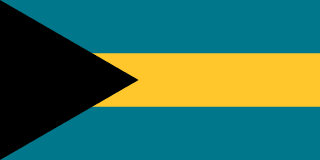
Bahamas
Commonwealth of the Bahamas
Population: UN WPP 2024, revision 1, projection for 1 July 2026. Sources and methodology.
Geography and territory
The Commonwealth of the Bahamas is an archipelagic nation of more than 700 islands and roughly 2,400 cays scattered across the western Atlantic Ocean, southeast of Florida and north of Cuba. Its total land area of 13,880 square kilometers is spread across a much larger maritime territory of over 250,000 square kilometers, and the island chain stretches nearly 1,200 kilometers from the edge of Florida almost to the coast of Haiti. Despite this vast footprint, only about 30 of the islands are permanently inhabited. The great majority of the population lives on New Providence, home to the capital, Nassau, and on Grand Bahama, the country’s second most populous island.
Geologically, the Bahamas is one of the flattest countries on Earth. Its highest point, Mount Alvernia on Cat Island, reaches a modest 63 meters above sea level, and the archipelago rests on ancient banks of limestone and coral built up over millions of years. This foundation produces the shallow, turquoise-hued waters, brilliant white sandbars, and dramatic blue holes that define the Bahamian landscape. Because so much of the terrain sits barely above the waterline, the nation is exceptionally exposed to rising seas and storm surge, a vulnerability that shapes both its environmental policy and its long-term development planning.
The surrounding waters host extraordinary marine biodiversity, including the third-largest barrier reef system in the world. The Bahamas’ blue holes — flooded vertical caves found both on land and offshore — plunge to depths exceeding 200 meters in some cases and serve as natural laboratories for marine scientists and cave divers alike. Between the islands of Andros and New Providence lies the Tongue of the Ocean, a submarine canyon more than 1,800 meters deep, one of the most striking underwater geological features in the entire Atlantic basin.
History
Long before European contact, the islands were home to the Lucayans, a Taino people who lived by fishing and small-scale agriculture across the archipelago. History turned decisively on October 12, 1492, when Christopher Columbus made his first landfall in the Americas on the island of San Salvador (also known as Guanahani), making the Bahamas the symbolic meeting point of the Old World and the New. The encounter proved catastrophic for the Lucayans: Spanish colonizers enslaved much of the population and deported them to work the mines of Hispaniola, and within a few decades the indigenous islanders had been wiped out.
The islands then lay largely empty until English settlers, accompanied by enslaved Africans, began establishing colonies in the mid-1600s. Through the seventeenth and eighteenth centuries, the Bahamas earned a reputation as a haven for piracy, sheltering legendary figures such as Blackbeard, Anne Bonny, and Calico Jack, with Nassau functioning almost as a self-governing “pirates’ republic.” That era came to an end in 1718 when the newly appointed royal governor, Woodes Rogers, cracked down on the buccaneers and reasserted British control. Later, the American Revolution brought a wave of British loyalists and their enslaved laborers to the islands, reshaping the colony’s economy and demographics.
The nineteenth and twentieth centuries brought further transformation: the abolition of slavery in 1834, a boom during American Prohibition in the 1920s when the islands became a key transshipment point for smuggled liquor, and the rise of a modern tourism industry from the 1950s onward. The Bahamas achieved independence from the United Kingdom on 10 July 1973, choosing to remain within the Commonwealth and to retain the British monarch as ceremonial head of state under a constitutional parliamentary system. In the decades since, the country has built one of the most prosperous and stable economies in the Caribbean.
Culture and society
Bahamian culture is a vivid blend of African, British, and wider Caribbean influences, forged over centuries of island life into something distinctly its own. Nothing captures this fusion better than Junkanoo, the nation’s signature cultural celebration, held in the streets of Nassau and other towns on Boxing Day (December 26) and New Year’s Day. From midnight until dawn, elaborately costumed groups parade through the streets in dazzling outfits made of crepe paper and cardboard, accompanied by the driving rhythms of goombay drums, cowbells, whistles, and horns in a display of color, sound, and community pride.
Goombay music, built on African-derived drumming and improvised percussion, is the archipelago’s most distinctive homegrown sound, while rake-and-scrape — played on a handsaw, accordion, and goatskin drum — offers an equally authentic strand of the islands’ musical heritage. Traditional craftsmanship also thrives, particularly in straw work, shell art, and woodcarving; Nassau’s straw market remains the best-known showcase for these skills, drawing both visitors and locals in search of handmade goods.
Bahamian society, especially in the Family Islands beyond New Providence and Grand Bahama, retains a relaxed pace of life and a strong sense of community, where neighborly ties run deep and church congregations often serve as social anchors. Christianity is the dominant faith and plays a significant role in public and family life. Sport is another unifying thread: cricket and track and field enjoy wide popularity, while sailing regattas, especially in the Family Islands, are a cherished tradition that blends competition with island-wide festivity.
Economy
The Bahamian economy is among the most robust in the Caribbean, resting on two principal pillars: tourism and financial services. Tourism alone accounts for more than half of gross domestic product and employs the bulk of the workforce, with several million visitors arriving each year, including large numbers of cruise passengers who dock in Nassau and other ports. The country markets itself as a premier luxury destination, anchored by world-class resorts such as Atlantis on Paradise Island.
Financial services form the second major pillar. A tax regime with no personal income tax, capital gains tax, or inheritance tax has made the Bahamas one of the world’s most established offshore banking centers, home to more than 200 banks and trust companies that manage international capital and provide skilled employment. Commercial fishing, particularly of spiny lobster and conch, contributes meaningfully to the economy as well, while agriculture remains limited by the islands’ thin, rocky soils. With a gross domestic product of roughly 14 billion dollars and a very high Human Development Index of 0.820, the Bahamas ranks among the wealthiest nations in the Caribbean on a per-capita basis.
This prosperity is not evenly distributed, and the country faces real structural challenges: a persistent gap in development between Nassau and the more remote Family Islands, and acute vulnerability to hurricanes and the broader effects of climate change given the nation’s extremely low elevation. Hurricane Dorian in 2019 devastated Abaco and Grand Bahama, laying bare just how fragile a low-lying archipelago can be in the face of extreme weather. Economic diversification, investment in more resilient infrastructure, and a push toward sustainable tourism are now widely regarded as priorities for the country’s future.
Food and cuisine
Bahamian cooking is built around the bounty of the sea, and no ingredient looms larger than conch, the large marine mollusk that anchors the national cuisine. Conch salad — raw conch marinated in lime and sour orange juice with onion, tomato, chili pepper, and bell pepper — is the dish most closely associated with the islands and is traditionally sold fresh from stalls at Nassau’s fish market. Conch fritters and cracked conch, a breaded and fried preparation, round out the trio of conch dishes found on menus across the country.
Fried fish served with grits is the classic Bahamian breakfast, while guava duff — a steamed flour dough studded with guava and finished with a rich buttery sauce — stands as the country’s signature dessert. Crab and rice soup, baked stuffed crab, and grilled spiny lobster are festive dishes reserved for family gatherings and special celebrations, reflecting the central place seafood holds in Bahamian hospitality.
African and wider Caribbean influences run throughout the everyday table as well, seen in dishes such as peas ‘n’ rice, baked macaroni and cheese, fried johnnycake, and souse, a light broth of pork or chicken simmered with lime, onion, celery, and pepper. On the drinks side, islanders favor switcha, a Bahamian-style limeade, and sky juice, a blend of gin, coconut water, and condensed milk, alongside locally produced rum, with the John Watling’s label — distilled at a historic Nassau estate — among the best known.
Tourism and landmarks
Nassau, the lively capital, pairs colonial-era history with duty-free shopping and round-the-clock entertainment. The Atlantis resort on Paradise Island is a destination unto itself, built around a sprawling marine aquarium, water park, and private beaches. Nassau’s historic core, anchored by Fort Charlotte, the Queen’s Staircase — carved from limestone by enslaved laborers in the eighteenth century — and the colorful colonial houses lining Bay Street, offers visitors a compact walk through Bahamian history, while Cable Beach remains the capital’s most popular stretch of urban sand.
The Exumas, a chain of 365 cays, rank among the most exclusive and photogenic destinations in the Bahamas. Waters shift through improbable shades of turquoise and blue over blindingly white sandbars, and the archipelago’s best-known attraction, the swimming pigs of Big Major Cay, draws visitors eager to watch feral pigs paddle out to greet arriving boats. The Exuma Cays Land and Sea Park protects a stretch of pristine marine ecosystem that ranks among the finest snorkeling and diving grounds in the Caribbean.
Harbour Island, famous for its three-kilometer Pink Sands Beach — colored by tiny marine organisms mixed into the white sand — is one of the most photographed beaches on Earth. Andros, the largest but least developed of the major islands, is a diving mecca, fringed by the world’s third-largest barrier reef and pocked with mysterious blue holes. Eleuthera, meanwhile, offers isolated beaches, dramatic limestone cliffs, and the Glass Window Bridge, a slender rock causeway where the deep blue Atlantic and the turquoise Caribbean meet in striking contrast on either side.
Fun facts about Bahamas
- The Bahamas was the first landfall Christopher Columbus made in the Americas, arriving at San Salvador on October 12, 1492.
- The swimming pigs of Big Major Cay in the Exumas have become one of the most viral tourist attractions in the Caribbean.
- With no personal income, capital gains, or inheritance tax, the Bahamas has developed into a major offshore financial center.
- Harbour Island’s Pink Sands Beach owes its rosy hue to microscopic organisms called foraminifera, whose red shells mix into the white sand.
- Dean’s Blue Hole, on Long Island, is the second-deepest known blue hole on Earth, plunging roughly 202 meters.
- Eighteenth-century Nassau was effectively the pirate capital of the Caribbean, home to more than a thousand pirates before Governor Woodes Rogers restored British order in 1718.
The Bahamas in numbers
Latest World Bank and UNDP observations, each with its own year. “World median” is the middle value among the countries that report the same indicator; “#” ranks from the highest value.
Population since 1960
The Bahamas had 116,317 people in 1960 and 403,033 in 2025 — 3.5 times as many.
People
81.3% of people live in towns and cities (world median 63.4%). 17.5% are under 15 and 12.1% are 65 or older — a middle-aged population. Women have 1.37 children on average, below the replacement level of about 2.1 needed to keep a population stable in the long run without migration.
Economy
The economy grew by 3.4% in real terms in 2024. Consumer prices rose by 1.1% in 2025. Services make up the largest share of output (77.2% of GDP); agriculture contributes 0.5%.
Development and environment
UNDP rates human development in the Bahamas as very high, with an index of 0.820 in 2023 (rank 66 of 193). 92.5% of people use the internet and 100.0% have access to electricity. Forest covers 50.9% of the land (world median 32.8%).
Sources: World Bank, World Development Indicators (CC BY 4.0), most recent observation from 2015 onward; UNDP Human Development Report 2025. Retrieved 2026-10-10. Sector shares need not add up to 100% because taxes and subsidies on products are excluded. Missing values are left blank rather than estimated. Sources and methodology.
Climate of the Bahamas
Averaged across the Bahamas, the warmest month is August (28.6 °C) and the coolest is January (22.1 °C), a seasonal swing of 6.5 °C. The annual mean is 25.6 °C.
About 1,192 mm of precipitation falls in a typical year. September is the wettest month (184 mm) and March the driest (44 mm). The wettest stretch is August to October, with 41% of the year's total.
Show monthly values as a table
| Month | Mean °C | Low °C | High °C | Precipitation, mm |
|---|---|---|---|---|
| January | 22.1 | 18.6 | 25.7 | 45 |
| February | 22.7 | 19.2 | 26.3 | 45 |
| March | 23.2 | 19.5 | 26.9 | 44 |
| April | 24.7 | 21.2 | 28.2 | 68 |
| May | 26.2 | 22.8 | 29.6 | 114 |
| June | 27.7 | 24.3 | 31.1 | 155 |
| July | 28.4 | 25.0 | 31.9 | 105 |
| August | 28.6 | 25.1 | 32.1 | 130 |
| September | 28.1 | 24.8 | 31.6 | 184 |
| October | 27.0 | 23.8 | 30.3 | 172 |
| November | 24.9 | 21.6 | 28.1 | 80 |
| December | 23.2 | 19.8 | 26.6 | 51 |
Figures are 1991–2020 averages across the whole land area of the Bahamas, from the World Bank Climate Change Knowledge Portal, CRU TS 4.08 (CC BY 4.0). They are not readings from one weather station: the capital, the coast and high ground can be much warmer, cooler, wetter or drier.
Travel essentials for the Bahamas
The practical details visitors ask about first. Traffic in the Bahamas drives on the left, one of 54 of the 196 countries profiled here that do — see the full list. Mains electricity is 120 V at 60 Hz, so appliances built only for 220–240 V need a voltage converter.
- Emergency number
- 911
- Driving side
- Left
- Plug types
- Type A, Type BA: two flat parallel pins; B: two flat pins plus a round earth pin
- Voltage
- 120 V60 Hz
- Dialling code
- +1-242From abroad: your exit code, then 1-242 and the number
- Currency
- Bahamian Dollar (BSD)
- Time zone
- EST (UTC-5)Current local time in the Bahamas
Compiled from IEC plug and voltage standards, national emergency-service listings and the UN road-traffic conventions. Emergency numbers and local coverage can change — confirm them locally on arrival. The Bahamas's internet domain is .bs.
Where the Bahamas ranks in the world
Each position counts only the countries with data in that ranking guide. First place is the highest value — for price levels, the most expensive. Select a card to see the full table.
- Population172nd of 196404,628UN projection, July 2026
- Land area161st of 19510,010 km²World Bank, 2023
- Population density143rd of 19440 per km²World Bank, 2023
- GDP (nominal)136th of 187$15.8BWorld Bank, 2024, current US$
- GDP per capita28th of 187$39,455World Bank, 2024, current US$
- Life expectancy88th of 19474.7 yearsWorld Bank, 2024
Compare the Bahamas with another country
Frequently asked questions about the Bahamas
What is the capital of the Bahamas?
The capital of the Bahamas is Nassau.
What is the population of the Bahamas?
The UN World Population Prospects projection for the Bahamas is 404,628 people (404,628) on 1 July 2026. National statistical offices may publish different estimates.
What language is spoken in the Bahamas?
The official language of the Bahamas is English.
What currency is used in the Bahamas?
The currency of the Bahamas is the Bahamian Dollar (BSD).
How big is the Bahamas?
The Bahamas covers an area of 13,880 km².
What type of government does the Bahamas have?
The Bahamas is a constitutional parliamentary monarchy.
What is the highest point in the Bahamas?
The highest point in the Bahamas is Mount Alvernia (63 m).


