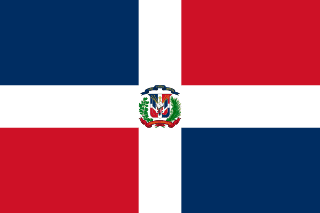
Dominican Republic
Dominican Republic
Population: UN WPP 2024, revision 1, projection for 1 July 2026. Sources and methodology.
Geography and territory
The Dominican Republic occupies the eastern two-thirds of the island of Hispaniola, the second-largest island in the Greater Antilles, sharing its only land border with Haiti to the west. Covering 48,671 km², it ranks among the largest nations in the insular Caribbean, and its landscape is remarkably varied for its size, encompassing the region’s highest mountains, fertile valleys, arid lowlands, mangrove wetlands, and more than 1,000 miles of coastline.
Duarte Peak rises 3,098 meters above sea level, making it the tallest summit in the entire Caribbean. It anchors the Cordillera Central, a mountain range that runs from the northwest to the southeast of the country, alongside other ranges such as the Sierra de Bahoruco and the Cordillera Septentrional. Between the central ranges lies the Cibao Valley, the nation’s agricultural heartland and one of the most productive farming regions in the Caribbean. At the opposite extreme sits Lake Enriquillo, a saline lake some 40 meters below sea level, the lowest point in the Caribbean and the only place on the island where American crocodiles and rhinoceros iguanas coexist in the wild.
The country’s coastlines display an extraordinary range of scenery: the powder-white, palm-fringed beaches of Punta Cana and Bávaro in the east, the rugged shores of the Samaná Peninsula in the northeast, the golden sands around Puerto Plata in the north, and the turquoise waters off Saona Island in the southeast. Samaná Bay is one of the North Atlantic’s premier humpback whale sanctuaries, drawing thousands of the animals every winter to breed and calve in its sheltered waters.
History
Hispaniola was the first site of sustained contact between Europe and the Americas. Christopher Columbus reached its shores on December 5, 1492, and Santo Domingo, founded in 1496, became the first permanent European city in the New World — home to the Americas’ first cathedral, first university, first hospital, and first courthouse. Santo Domingo’s Colonial Zone, now a UNESCO World Heritage Site, still preserves this founding chapter of the European presence in the Americas.
Dominican history has been shaped by recurring struggles for sovereignty. After centuries under Spanish and French control, and a period of union with Haiti from 1822 to 1844, the Dominican Republic declared independence on February 27, 1844, led by the “Fathers of the Nation” — Juan Pablo Duarte, Francisco del Rosario Sánchez, and Ramón Matías Mella. The young republic later endured a brief re-annexation by Spain (1861–1865) and two separate periods of United States military occupation, in 1916–1924 and again in 1965.
The twentieth century was dominated by the long dictatorship of Rafael Leónidas Trujillo, who ruled from 1930 until his assassination in 1961 and left behind one of Latin America’s most repressive legacies. In the decades that followed, the country navigated a difficult transition toward stable democratic governance, and since the 1990s it has built one of the most dynamic economies in the Caribbean and Central America.
Culture and society
Dominican culture bursts with rhythm, color, and an unmistakable joie de vivre, forged from the fusion of Taíno, Spanish, and African heritage. Merengue, a fast-paced partner dance with an irresistible beat, is the country’s musical soul and was inscribed by UNESCO as Intangible Cultural Heritage of Humanity in 2016. Bachata, born in the working-class neighborhoods of Dominican cities, has since conquered global audiences with its romantic lyrics and distinctive guitar sound, earning its own UNESCO recognition in 2019.
Carnival, celebrated every February, ranks among the most vibrant cultural expressions in the Caribbean. The Carnival of La Vega is especially famous for its “diablos cojuelos,” masked figures in elaborate costumes who chase spectators with inflated bladders in a centuries-old tradition. Dominican letters have produced figures such as poet Julia de Burgos, national poet Pedro Mir, and contemporary Pulitzer Prize winner Junot Díaz. This creative energy also flows into painting, craftsmanship in amber and larimar — a sky-blue semi-precious stone found nowhere else on Earth — and a rich oral tradition of stories, proverbs, and improvised verse.
Baseball is far more than a sport in the Dominican Republic; it is a national passion and a genuine pathway to social mobility. The country has produced more Major League Baseball players per capita than any other nation on the planet, with legends such as Pedro Martínez, David Ortiz, Sammy Sosa, Juan Marichal, and Robinson Canó tracing their roots to Dominican sandlots. Baseball academies run by MLB franchises across the country train hundreds of young hopefuls each year who dream of reaching the sport’s highest level.
Economy
The Dominican Republic runs the largest economy in the Caribbean and Central America, with a gross domestic product of roughly $127.4 billion and one of the fastest sustained growth rates in Latin America over the past three decades. The services sector dominates, driven by tourism, telecommunications, trade, and financial services, and the country has attracted substantial foreign investment in manufacturing free zones and real estate.
Tourism is the leading source of foreign currency, with several million international visitors arriving each year, making the country the most visited destination in the Caribbean. Punta Cana, Puerto Plata, Samaná, and La Romana host most of the all-inclusive resort capacity, while Santo Domingo draws cultural and business travelers. Industrial free-trade zones, focused chiefly on textiles, tobacco, medical devices, and electronics, employ hundreds of thousands of workers and account for a substantial share of exports.
Agriculture remains an important pillar of the economy, and the Dominican Republic stands among the world’s leading producers of tobacco, organic cacao, coffee, sugar, and tropical fruit. Remittances sent home by the Dominican diaspora in the United States and Europe form another vital income stream. Mining, particularly gold and ferronickel extraction, has grown in significance, while renewable energy — wind and solar in particular — is an expanding frontier for investment.
Food and cuisine
Dominican cooking is generous, flavorful, and deeply woven into national identity. La bandera, the everyday lunch that shares its name with the national flag, consists of white rice, stewed red beans, meat (chicken, beef, or pork), a simple salad, and fried sweet plantains. Eaten daily in homes, roadside comedores, and restaurants nationwide, it distills the essence of Dominican home cooking.
Mangú, a mash of boiled green plantains blended with sautéed onion in vinegar and oil, is the quintessential national breakfast, traditionally served with “los tres golpes” — fried salami, fried white cheese, and scrambled eggs. Dominican sancocho, a hearty stew built from seven kinds of meat, root vegetables, plantain, and spices, is reserved for major family gatherings and national holidays. Pork chicharrón, crisp outside and tender within, appears everywhere as a snack or side dish.
Dominican sweets form a tradition of their own: dulce de leche cortada, habichuela con dulce (a sweet red bean dessert with milk and spices served during Holy Week), majarete (a corn-based custard), and guava-filled empanadas showcase the creativity of Creole baking. Dominican rum, especially the Brugal, Barceló, and Bermúdez labels, enjoys international acclaim for its smoothness, while mamajuana — a homemade liqueur of rum infused with herbs, honey, and red wine — remains the country’s most emblematic craft drink.
Tourism and landmarks
Punta Cana and Bávaro, on the eastern coast, form the heart of Dominican tourism, offering miles of white-sand beach lined with coconut palms and world-class all-inclusive resorts. Santo Domingo’s Colonial Zone, a UNESCO World Heritage Site, transports visitors five centuries into the past with the Alcázar de Colón, the Cathedral of Santa María la Menor, the Ozama Fortress, and cobblestone streets that trace the earliest history of the New World. The capital’s seaside Malecón and lively nightlife round out its cultural appeal.
The Samaná Peninsula is a natural paradise where humpback whales put on an annual show between January and March. El Limón Waterfall, a 40-meter cascade reached on horseback through tropical forest, and Los Haitises National Park, with its limestone karst formations, caves bearing Taíno petroglyphs, and mangrove channels, offer wilder adventures. Puerto Plata, home to a cable car up Mount Isabel de Torres and the historic San Felipe Fortress, serves as the gateway to the golden-sand beaches of the north coast.
Saona Island, inside the East National Park, is an essential day trip, celebrated for its shallow turquoise natural pools, deserted beaches, and starfish. Jarabacoa and Constanza, tucked into the central mountains, offer a cooler climate, waterfalls, whitewater rafting, and the main trailhead for the ascent of Duarte Peak. Santiago de los Caballeros, the country’s second city, and La Vega, home to its most famous Carnival, complete a diverse and rewarding travel map.
Fun facts about Dominican Republic
- Santo Domingo was the first city founded by Europeans in the Americas and is home to the continent’s first cathedral, first university, and first hospital.
- The Dominican Republic is the only country in the world whose national flag features an open Bible.
- Larimar, a pale blue semi-precious stone, is found nowhere else on Earth outside the Dominican Republic.
- The country has produced more Major League Baseball players per capita than any other nation.
- Samaná Bay is one of the North Atlantic’s most important humpback whale breeding grounds, hosting thousands of whales each season.
- Dominican amber, prized for its prehistoric insect inclusions, helped inspire elements of the movie “Jurassic Park.”
The Dominican Republic in numbers
Latest World Bank and UNDP observations, each with its own year. “World median” is the middle value among the countries that report the same indicator; “#” ranks from the highest value.
Population since 1960
The Dominican Republic had 3.3 million people in 1960 and 11.5 million in 2025 — 3.5 times as many.
People
72.5% of people live in towns and cities (world median 63.4%). 26.2% are under 15 and 8.2% are 65 or older — a middle-aged population. Women have 2.22 children on average, close to the replacement level of about 2.1.
Economy
The economy grew by 2.1% in real terms in 2025. Consumer prices rose by 3.9% in 2025. Services make up the largest share of output (60.1% of GDP); agriculture contributes 4.6%.
Development and environment
UNDP rates human development in the Dominican Republic as high, with an index of 0.776 in 2023 (rank 89 of 193). 91.0% of people use the internet and 99.5% have access to electricity. Forest covers 46.7% of the land (world median 32.8%).
Sources: World Bank, World Development Indicators (CC BY 4.0), most recent observation from 2015 onward; UNDP Human Development Report 2025. Retrieved 2026-10-10. Sector shares need not add up to 100% because taxes and subsidies on products are excluded. Missing values are left blank rather than estimated. Sources and methodology.
Climate of the Dominican Republic
Averaged across the Dominican Republic, the mean temperature stays between 22.6 °C (January) and 26.2 °C (August) — a swing of only 3.6 °C, so seasons are marked by rainfall rather than by heat.
About 1,502 mm of precipitation falls in a typical year. May is the wettest month (207 mm) and January the driest (64 mm).
Show monthly values as a table
| Month | Mean °C | Low °C | High °C | Precipitation, mm |
|---|---|---|---|---|
| January | 22.6 | 16.8 | 28.4 | 64 |
| February | 23.0 | 17.1 | 28.9 | 65 |
| March | 23.6 | 17.6 | 29.7 | 65 |
| April | 24.3 | 18.5 | 30.3 | 112 |
| May | 25.1 | 19.6 | 30.7 | 207 |
| June | 25.9 | 20.4 | 31.5 | 120 |
| July | 26.0 | 20.3 | 31.7 | 133 |
| August | 26.2 | 20.5 | 32.0 | 148 |
| September | 26.0 | 20.2 | 31.8 | 173 |
| October | 25.4 | 19.8 | 31.0 | 180 |
| November | 24.2 | 18.9 | 29.6 | 143 |
| December | 23.1 | 17.7 | 28.6 | 93 |
Figures are 1991–2020 averages across the whole land area of the Dominican Republic, from the World Bank Climate Change Knowledge Portal, CRU TS 4.08 (CC BY 4.0). They are not readings from one weather station: the capital, the coast and high ground can be much warmer, cooler, wetter or drier.
Travel essentials for the Dominican Republic
The practical details visitors ask about first. Traffic in the Dominican Republic drives on the right, like most of the world. Mains electricity is 120 V at 60 Hz, so appliances built only for 220–240 V need a voltage converter.
- Emergency number
- 911
- Driving side
- Right
- Plug types
- Type A, Type BA: two flat parallel pins; B: two flat pins plus a round earth pin
- Voltage
- 120 V60 Hz
- Dialling code
- +1-809From abroad: your exit code, then 1-809 and the number
- Currency
- Dominican Peso (DOP)
- Time zone
- AST (UTC-4)Current local time in the Dominican Republic
Compiled from IEC plug and voltage standards, national emergency-service listings and the UN road-traffic conventions. Emergency numbers and local coverage can change — confirm them locally on arrival. The Dominican Republic's internet domain is .do.
Where the Dominican Republic ranks in the world
Each position counts only the countries with data in that ranking guide. First place is the highest value — for price levels, the most expensive. Select a card to see the full table.
- Population84th of 19611.6 millionUN projection, July 2026
- Land area127th of 19548,198 km²World Bank, 2023
- Population density44th of 194235 per km²World Bank, 2023
- GDP (nominal)61st of 187$124.3BWorld Bank, 2024, current US$
- GDP per capita78th of 187$10,876World Bank, 2024, current US$
- Life expectancy95th of 19473.9 yearsWorld Bank, 2024
- Price level104th of 16540 (US = 100)ICP 2021, household consumption
Bordering countries of the Dominican Republic

Compare the Dominican Republic with another country
Frequently asked questions about the Dominican Republic
What is the capital of the Dominican Republic?
The capital of the Dominican Republic is Santo Domingo.
What is the population of the Dominican Republic?
The UN World Population Prospects projection for the Dominican Republic is 11,609,500 people (11.6 million) on 1 July 2026. National statistical offices may publish different estimates.
What language is spoken in the Dominican Republic?
The official language of the Dominican Republic is Spanish.
What currency is used in the Dominican Republic?
The currency of the Dominican Republic is the Dominican Peso (DOP).
How big is the Dominican Republic?
The Dominican Republic covers an area of 48,671 km².
What type of government does the Dominican Republic have?
The Dominican Republic is a presidential republic.
Which countries border the Dominican Republic?
The Dominican Republic shares land borders with Haiti.
What is the highest point in the Dominican Republic?
The highest point in the Dominican Republic is Duarte Peak (3,098 m).


