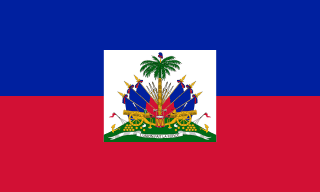
Haiti
Republic of Haiti
Population: UN WPP 2024, revision 1, projection for 1 July 2026. Sources and methodology.
Geography and territory
Haiti occupies the western third of the island of Hispaniola, which it shares with the Dominican Republic, at the heart of the Greater Antilles in the Caribbean Sea. Covering 27,750 square kilometers and home to a population of about 12.0 million, it is one of the most densely settled nations in the insular Caribbean. Beyond the mainland, Haitian territory includes a handful of smaller islands, among them Ile de la Gonave, the pirate-storied Ile de la Tortue (Tortuga), and the tiny Cayemites archipelago.
The country’s terrain is overwhelmingly mountainous, with ranges covering roughly three-quarters of the land and giving rise to the original Taino name Ayiti, meaning “land of mountains.” Pic la Selle, at 2,680 meters, is the highest point in the country. Fertile lowlands such as the Artibonite Valley, the Cul-de-Sac plain, and the Plaine du Nord hold most of the agricultural activity and the largest cities. The Artibonite River, the longest on the island, waters the nation’s principal rice-growing region.
Haiti’s tropical climate brings warm temperatures year-round, with a wet season that raises the risk of hurricanes and tropical storms. The country also sits in a zone of high seismic activity, a vulnerability tragically illustrated by the devastating 2010 earthquake that struck near the capital, Port-au-Prince. Despite these environmental pressures, Haiti retains pockets of striking natural beauty, from Caribbean beaches to cascading waterfalls and dramatic mountain scenery.
History
Haiti’s history is among the most extraordinary in the Western Hemisphere. It was the first territory in the Americas sighted by Christopher Columbus in 1492, and Europeans soon established their earliest settlements there. French colonization, beginning in the seventeenth century, transformed the colony of Saint-Domingue into the richest in the world, built on sugar, coffee, and indigo plantations worked by hundreds of thousands of enslaved Africans.
The Haitian Revolution (1791–1804) stands as one of the most consequential events in world history. Led by figures such as Toussaint Louverture, Jean-Jacques Dessalines, and Henri Christophe, it remains the only successful uprising of enslaved people to result in the founding of an independent nation. Haiti declared its independence on January 1, 1804, becoming the first country in Latin America to break free of colonial rule, the first Black republic in the world, and the first nation to permanently abolish slavery.
Independence, however, came at a staggering cost. France demanded an indemnity of 150 million francs (later reduced to 90 million) as compensation for its lost colony, a debt that took Haiti more than a century to repay and that crippled its economic development for generations. The twentieth century brought further upheaval: a United States occupation from 1915 to 1934, the Duvalier family dictatorships from 1957 to 1986, chronic political instability, and repeated natural disasters, all of which have left deep marks on Haitian society.
Culture and society
Haitian culture ranks among the richest and most original in the Caribbean, forged from a fusion of African, French, Taino, and broader Caribbean influences. Haitian Vodou, far removed from its cinematic caricatures, is a complex and profound syncretic religion blending African spiritual traditions with elements of Catholicism. Officially recognized as a religion in Haiti since 2003, Vodou shapes the country’s music, art, traditional medicine, and community life.
Haitian painting, particularly its celebrated naive or primitivist school, has earned international acclaim for its explosive color, scenes of everyday life, spiritual themes, and creative energy. Artists such as Hector Hyppolite, Philome Obin, and Prefete Duffaut have had their work exhibited in museums around the world. Haitian music has likewise produced homegrown genres, including kompa, created by Nemours Jean-Baptiste in the 1950s and still the country’s national rhythm, along with rara, a processional carnival music rooted in Vodou ritual.
Haitian literature, written in both French and Haitian Creole, boasts renowned figures including Jacques Roumain, author of “Masters of the Dew,” acclaimed contemporary novelist Edwidge Danticat, and poet Rene Depestre. Haitian Creole, the mother tongue of virtually the entire population, is a fully developed language with its own grammar, descended from colonial French and West African languages. Resilience, creativity, and communal solidarity remain defining traits of Haitian society.
Economy
Haiti’s economy is the least developed in the Western Hemisphere, weighed down by structural challenges rooted in its history, recurring natural disasters, and political instability. Agriculture employs more than half of the working population, with coffee, mangoes, cocoa, sugarcane, and rice among the main crops, though most production remains at subsistence scale. Soil erosion and widespread deforestation have sharply reduced agricultural productivity over time.
Remittances from the Haitian diaspora, sent mainly from the United States, Canada, and France, form one of the country’s most important income sources, accounting for more than 30 percent of GDP. The textile industry, concentrated in free-trade zones near Port-au-Prince, is the leading manufacturing and export sector, producing garments for international brands. Informal trade and small-scale commerce sustain daily life for millions of Haitians.
Despite these hardships, Haiti holds real economic potential in tourism, organic agriculture, renewable energy, and the creative industries. The country has begun developing its northern coastline as a tourist destination, and its cultural wealth, from handicrafts to music and cuisine, represents a unique asset that could help drive future growth given institutional stability and investment in infrastructure. International aid and development programs continue to play an outsized role in the national budget, underscoring how deeply Haiti’s economic prospects remain tied to political stability, disaster preparedness, and the strength of its institutions.
Food and cuisine
Haitian cuisine is among the most flavorful and least internationally known in the Caribbean, blending African, French, and indigenous culinary techniques into dishes of bold, aromatic character. Griot, fried pork marinated in sour orange juice, garlic, and spices, is the country’s signature dish, typically served with banane pesee (fried green plantains), pikliz (a spicy pickled cabbage and habanero relish), and diri ak djon djon, rice cooked with black mushrooms found almost exclusively in Haiti.
Diri ak pwa, rice and beans, forms the backbone of everyday Haitian meals, prepared in regional variations with red beans, black beans, or pigeon peas and always seasoned generously with spices and oil. Soup joumou, a rich pumpkin soup, carries deep historical meaning: it is prepared every January 1 to mark independence, since under slavery this dish was reserved exclusively for French colonists, and its consumption by free Haitians became a lasting symbol of emancipation.
Other notable dishes include akra (malanga fritters), lambi (stewed or salad-style conch), tassot de cabrit (spiced fried goat), and poisson gros sel (fish cooked with coarse salt). Traditional drinks include cremasse, a creamy liqueur of rum, coconut milk, cinnamon, and vanilla, and clairin, an artisanal cane liquor. Haitian mangoes, especially the Francisque variety, are considered among the finest in the world, and street vendors across the country sell them alongside fried snacks and fresh sugarcane juice.
Tourism and landmarks
The Citadelle Laferriere, a UNESCO World Heritage Site, is the largest fortress in the Western Hemisphere and a powerful symbol of Haitian independence. Built between 1805 and 1820 by King Henri Christophe atop a mountain nearly 900 meters high, this imposing structure was never attacked and stands today as testimony to the Haitian people’s determination to defend their freedom. Nearby, the ruined Sans-Souci Palace, once a lavish royal residence, evokes the grandeur of post-independence Haiti.
Jacmel, on the southeastern coast, serves as Haiti’s cultural and artistic capital, celebrated for its colonial gingerbread architecture, art galleries, papier-mache workshops, and vibrant carnival, considered one of the most authentic in the Caribbean. Jacmel’s surrounding beaches, along with Bassin Bleu and its cascading waterfalls and turquoise natural pools, offer natural beauty far removed from conventional tourist circuits.
Ile-a-Vache, a small island off the southern coast, offers untouched white-sand beaches and an unspoiled Caribbean calm. La Visite National Park, in the southeastern mountains, protects pine forests and offers hiking trails with sweeping panoramic views. Port-au-Prince, despite its urban challenges, is home to the National Pantheon Museum, the wrought-iron Iron Market (Marche en Fer), and an artistic and musical scene that pulses with the enduring energy of the Haitian people. Cap-Haitien, the gateway to the Citadelle and Sans-Souci, has its own colonial charm and serves as the natural base for exploring Haiti’s celebrated north.
Fun facts about Haiti
- Haiti was the first country in Latin America to gain independence and the first Black republic in the world, declaring freedom on January 1, 1804.
- The Haitian Revolution remains history’s only successful uprising by enslaved people that led to the founding of an independent nation.
- Soup joumou is prepared every January 1 as a symbol of freedom, since enslaved Haitians were once forbidden from eating it.
- The Citadelle Laferriere is the largest fortress in the Americas, built with the labor of an estimated 20,000 people over 15 years.
- Haiti and the Dominican Republic are the only two sovereign nations in the world that share a single island.
- Haitian Creole is spoken by more than 12 million people worldwide, including large communities in the United States, Canada, and France.
Haiti in numbers
Latest World Bank and UNDP observations, each with its own year. “World median” is the middle value among the countries that report the same indicator; “#” ranks from the highest value.
Population since 1960
Haiti had 3.9 million people in 1960 and 11.9 million in 2025 — 3.1 times as many.
People
55.6% of people live in towns and cities (world median 63.4%). 30.8% are under 15 and 4.8% are 65 or older — a young population. Women have 2.63 children on average, above the replacement level of about 2.1.
Economy
The economy shrank by 2.7% in real terms in 2025. Consumer prices rose by 28.6% in 2025 — very high inflation. Services make up the largest share of output (54.2% of GDP); agriculture contributes 15.8%.
Development and environment
UNDP rates human development in Haiti as medium, with an index of 0.554 in 2023 (rank 166 of 193). 47.9% of people use the internet and 53.9% have access to electricity. Forest covers 13.5% of the land (world median 32.8%).
Sources: World Bank, World Development Indicators (CC BY 4.0), most recent observation from 2015 onward; UNDP Human Development Report 2025. Retrieved 2026-10-10. Sector shares need not add up to 100% because taxes and subsidies on products are excluded. Missing values are left blank rather than estimated. Sources and methodology.
Climate of Haiti
Averaged across Haiti, the mean temperature stays between 22.8 °C (January) and 26.6 °C (August) — a swing of only 3.8 °C, so seasons are marked by rainfall rather than by heat.
About 1,513 mm of precipitation falls in a typical year. May is the wettest month (223 mm) and January the driest (43 mm). The wettest stretch is August to October, with 37% of the year's total.
Show monthly values as a table
| Month | Mean °C | Low °C | High °C | Precipitation, mm |
|---|---|---|---|---|
| January | 22.8 | 17.5 | 28.2 | 43 |
| February | 23.3 | 17.9 | 28.6 | 54 |
| March | 23.9 | 18.4 | 29.3 | 77 |
| April | 24.6 | 19.5 | 29.8 | 125 |
| May | 25.3 | 20.5 | 30.2 | 223 |
| June | 26.3 | 21.3 | 31.4 | 123 |
| July | 26.3 | 21.1 | 31.6 | 126 |
| August | 26.6 | 21.3 | 31.9 | 158 |
| September | 26.3 | 21.2 | 31.3 | 188 |
| October | 25.7 | 20.8 | 30.6 | 212 |
| November | 24.6 | 19.9 | 29.4 | 125 |
| December | 23.5 | 18.5 | 28.6 | 59 |
Figures are 1991–2020 averages across the whole land area of Haiti, from the World Bank Climate Change Knowledge Portal, CRU TS 4.08 (CC BY 4.0). They are not readings from one weather station: the capital, the coast and high ground can be much warmer, cooler, wetter or drier.
Travel essentials for Haiti
The practical details visitors ask about first. Traffic in Haiti drives on the right, like most of the world. Mains electricity is 110 V at 60 Hz, so appliances built only for 220–240 V need a voltage converter.
- Emergency number
- 114
- Driving side
- Right
- Plug types
- Type A, Type BA: two flat parallel pins; B: two flat pins plus a round earth pin
- Voltage
- 110 V60 Hz
- Dialling code
- +509From abroad: your exit code, then 509 and the number
- Currency
- Haitian Gourde (HTG)
- Time zone
- EST (UTC-5)Current local time in Haiti
Compiled from IEC plug and voltage standards, national emergency-service listings and the UN road-traffic conventions. Emergency numbers and local coverage can change — confirm them locally on arrival. Haiti's internet domain is .ht.
Where Haiti ranks in the world
Each position counts only the countries with data in that ranking guide. First place is the highest value — for price levels, the most expensive. Select a card to see the full table.
- Population82nd of 19612.0 millionUN projection, July 2026
- Land area141st of 19527,560 km²World Bank, 2023
- Population density20th of 194422 per km²World Bank, 2023
- GDP (nominal)118th of 187$24.3BWorld Bank, 2024, current US$
- GDP per capita151st of 187$2,060World Bank, 2024, current US$
- Life expectancy167th of 19465.1 yearsWorld Bank, 2024
Bordering countries of Haiti

Compare Haiti with another country
Frequently asked questions about Haiti
What is the capital of Haiti?
The capital of Haiti is Port-au-Prince.
What is the population of Haiti?
The UN World Population Prospects projection for Haiti is 12,037,506 people (12.0 million) on 1 July 2026. National statistical offices may publish different estimates.
What language is spoken in Haiti?
The official language of Haiti is Haitian Creole and French.
What currency is used in Haiti?
The currency of Haiti is the Haitian Gourde (HTG).
How big is Haiti?
Haiti covers an area of 27,750 km².
What type of government does Haiti have?
Haiti is a semi-presidential republic.
Which countries border Haiti?
Haiti shares land borders with Dominican Republic.
What is the highest point in Haiti?
The highest point in Haiti is Pic la Selle (2,680 m).


