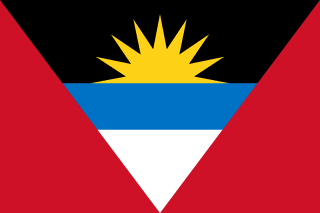
Antigua and Barbuda
Antigua and Barbuda
Population: UN WPP 2024, revision 1, projection for 1 July 2026. Sources and methodology.
Geography and territory
Antigua and Barbuda is an island nation in the eastern Caribbean, made up of two principal islands and several smaller islets near the center of the Lesser Antilles. The country covers a total area of just 442 square kilometers and has a population of 94,209, making it one of the smallest sovereign nations in the Americas by both measures. Antigua, the larger of the two main islands, is home to the capital, Saint John’s, while Barbuda lies about 48 kilometers to the north and is known for its long, sparsely populated beaches. The uninhabited islet of Redonda completes the national territory.
Antigua has a gently rolling landscape whose highest point, Mount Obama, reaches 402 meters. The island’s coastline is remarkably indented, folding into countless bays, coves, and peninsulas that give rise to its renowned collection of beaches. Unlike many of its volcanic neighbors, Antigua sits on a foundation of limestone and coral, which produces the fine white sand and clear turquoise water for which it is famous. The southwestern corner of the island is its most mountainous, covered in tropical vegetation.
Barbuda, by contrast, is low-lying and flat, a coral island fringed by pink-sand beaches along its western shore and interior lagoons that shelter one of the Caribbean’s largest colonies of magnificent frigatebirds. The Codrington Lagoon protects this colony of several thousand birds and ranks among the region’s most important wildlife sanctuaries. Coral reefs encircling both islands support a rich marine environment, home to sea turtles, stingrays, and a wide variety of tropical fish, making the surrounding waters as much a national treasure as the land itself.
History
Indigenous Siboney and Arawak peoples inhabited the islands for thousands of years before European contact, leaving behind archaeological traces such as the petroglyphs at Indian Town Point on Antigua. Christopher Columbus sighted Antigua in 1493 during his second voyage and named it after a church in Seville, Santa María la Antigua. Early Spanish and French attempts at colonization faltered, however, in the face of indigenous resistance and a scarcity of fresh water on the island.
The British established a permanent colony on Antigua in 1632, introducing sugar cultivation and the system of slavery that would define the islands’ economy and society for the next two centuries. Antigua became a strategically vital naval base for the British Empire in the Caribbean, with English Harbour and Nelson’s Dockyard serving as the headquarters of the British fleet in the Antilles. The abolition of slavery in 1834 transformed island society, though deep economic inequalities persisted for generations afterward.
A labor movement led by Vere Cornwall Bird in the 1940s and 1950s drove the push toward self-government and democratization. Antigua and Barbuda gained independence from the United Kingdom on 1 November 1981, with Bird serving as the country’s first prime minister. In 2017, Hurricane Irma devastated Barbuda, forcing the evacuation of the island’s entire population for the first time in its history. The rebuilding that followed demonstrated the resilience of the nation and the solidarity between its two islands.
Culture and society
The culture of Antigua and Barbuda is deeply rooted in African traditions carried by enslaved peoples, blended with British colonial influences and contemporary Caribbean expression. Antigua Carnival, held from late July into early August to commemorate the abolition of slavery, is the country’s most important celebration, featuring ten days of masquerade parades, calypso and soca competitions, steel bands, and the electrifying pre-dawn festivities of J’ouvert.
Calypso and soca are the dominant musical genres, with calypso historically serving as a vehicle for social commentary and political critique. Antigua Sailing Week, one of the most prestigious regattas in the Caribbean, draws sailing crews from around the world and has become a major social and sporting event on the national calendar. Cricket, a British colonial legacy, is the national sport and a source of enormous pride, with Sir Vivian Richards celebrated as the country’s greatest sporting hero and one of the finest batsmen in the history of the game.
Antiguan and Barbudan society places great value on community, faith, and family tradition. Churches, predominantly Anglican and Methodist, function as important centers of social life. Local craftwork includes shellwork, basketry, and pottery, while the national cuisine reflects the islands’ multicultural history. Education and healthcare have improved markedly since independence, and the country maintains a level of political stability that distinguishes it within the wider Caribbean region.
Economy
The economy of Antigua and Barbuda depends heavily on tourism, which accounts for more than 60 percent of GDP and employs the majority of the workforce. The country welcomes hundreds of thousands of visitors each year, both overnight guests and cruise passengers, drawn by its beaches, quality hotel infrastructure, and quintessentially Caribbean atmosphere. The port of Saint John’s is a popular stop for cruise ships touring the eastern Caribbean.
Financial services and construction round out the economic base, while agriculture, though limited by soil quality and climate, produces tropical fruit, vegetables, and cotton mainly for the domestic market. The government has run a citizenship-by-investment program that has generated significant revenue by attracting foreign capital in exchange for Antiguan and Barbudan nationality. Luxury real estate has also expanded, with exclusive developments aimed squarely at the international market.
The country’s principal economic challenges include vulnerability to hurricanes, as Irma made devastatingly clear in 2017, along with heavy reliance on tourism, public debt, and the ongoing need for diversification. The government has sought to build up sectors such as information technology, renewable energy, and international education, and several offshore medical schools now operate on the islands. Environmental sustainability and the protection of marine resources are increasingly treated as priorities essential to safeguarding the country’s tourism-dependent future.
Food and cuisine
The cuisine of Antigua and Barbuda blends African, British, and wider Caribbean influences into food that is simple but deeply flavorful. Fungee and pepperpot is the national dish: fungee is a cornmeal paste similar to polenta, cooked with okra, and served alongside pepperpot, a thick stew of spinach, okra, squash, eggplant, and salted meat. Rooted in African culinary tradition, the dish captures the essence of everyday Antiguan cooking.
Fresh seafood is central to daily meals, with grilled lobster, fried fish served alongside johnnycake, and ducana, a sweet dumpling of grated sweet potato and coconut wrapped in banana leaf, among the standout dishes. Seafood soups and conch chowder are staples of coastal restaurants. On Saturdays, many families prepare souse, a tangy pork broth with lime and vegetables that is traditionally shared among neighbors.
Tropical fruits such as mango, guava, papaya, tamarind, and breadfruit are abundant and enjoyed fresh, in juices, in sauces, and preserved. The Antigua black pineapple, sweeter and more fragrant than common varieties, is a prized local specialty. Popular drinks include mauby, a bittersweet infusion made from tree bark, seamoss, a spiced seaweed and milk beverage, and rum punch, found in nearly every bar and restaurant. English Harbour Rum, distilled locally, is the islands’ premium spirit.
Tourism and landmarks
Nelson’s Dockyard, in English Harbour, is the only Georgian-era naval dockyard still in operation anywhere in the world and forms the centerpiece of Nelson’s Dockyard National Park, a UNESCO World Heritage Site. This historic complex, where Admiral Horatio Nelson was stationed in the 1780s, contains restored buildings that now house hotels, restaurants, museums, and marinas, surrounded by hilltop fortifications that offer sweeping views over the harbor.
Antigua’s beaches, often said to number 365, one for every day of the year, are the country’s principal draw. Dickenson Bay, on the northwest coast, is the most popular and developed, lined with resorts and water sports operators. Half Moon Bay, on the east coast, offers white sand and moderate surf in a more natural setting. Pigeon Point Beach, Jolly Beach, and the secluded Rendezvous Bay, reachable only by boat or hiking trail, showcase the range of coastal experiences the island offers.
Barbuda provides an even more pristine Caribbean experience, with a 17-kilometer stretch of pink sand along its western coast where visitors can walk for hours without encountering another soul. A visit to the frigatebird colony at Codrington Lagoon, where thousands of birds with striking wingspans nest among the mangroves, is a singular experience. Stingray City, where visitors can swim with rays in shallow water, and snorkeling excursions to the reefs surrounding both islands round out an offering that combines nature, history, and the essence of the Caribbean.
Fun facts about Antigua and Barbuda
- Antigua is famously said to have 365 beaches, one for every day of the year, though the exact count varies depending on how bays and coves are tallied.
- Nelson’s Dockyard is the only Georgian-era naval dockyard still functioning anywhere in the world and holds UNESCO World Heritage status.
- Barbuda hosts the largest colony of magnificent frigatebirds in the western Caribbean, with several thousand birds nesting at Codrington Lagoon.
- Mount Obama was renamed in 2009 in honor of U.S. President Barack Obama; it was previously known as Boggy Peak.
- Sir Vivian Richards, born in Antigua, is widely regarded as one of the greatest batsmen in the history of cricket.
- Hurricane Irma destroyed roughly 95 percent of the structures on Barbuda in 2017, forcing the evacuation of the island’s entire population for the first time ever.
Antigua and Barbuda in numbers
Latest World Bank and UNDP observations, each with its own year. “World median” is the middle value among the countries that report the same indicator; “#” ranks from the highest value.
Population since 1960
Antigua and Barbuda had 55,603 people in 1960 and 94,209 in 2025 — 69% more.
People
24.3% of people live in towns and cities (world median 63.4%). 17.5% are under 15 and 12.3% are 65 or older — a middle-aged population. Women have 1.58 children on average, below the replacement level of about 2.1 needed to keep a population stable in the long run without migration.
Economy
The economy grew by 5.0% in real terms in 2025. Consumer prices rose by 1.4% in 2025. Services make up the largest share of output (68.7% of GDP); agriculture contributes 1.5%.
Development and environment
UNDP rates human development in Antigua and Barbuda as very high, with an index of 0.851 in 2023 (rank 53 of 193). 72.7% of people use the internet and 100.0% have access to electricity. Forest covers 17.9% of the land (world median 32.8%).
Sources: World Bank, World Development Indicators (CC BY 4.0), most recent observation from 2015 onward; UNDP Human Development Report 2025. Retrieved 2026-10-10. Sector shares need not add up to 100% because taxes and subsidies on products are excluded. Missing values are left blank rather than estimated. Sources and methodology.
Climate of Antigua and Barbuda
Averaged across Antigua and Barbuda, the mean temperature stays between 25.9 °C (January) and 28.8 °C (August) — a swing of only 2.9 °C, so seasons are marked by rainfall rather than by heat.
About 1,066 mm of precipitation falls in a typical year. October is the wettest month (149 mm) and February the driest (39 mm). The wettest stretch is September to November, with 37% of the year's total.
Show monthly values as a table
| Month | Mean °C | Low °C | High °C | Precipitation, mm |
|---|---|---|---|---|
| January | 25.9 | 22.9 | 29.0 | 70 |
| February | 25.9 | 22.8 | 29.0 | 39 |
| March | 26.2 | 23.0 | 29.4 | 44 |
| April | 26.9 | 23.8 | 30.0 | 57 |
| May | 27.6 | 24.7 | 30.6 | 91 |
| June | 28.5 | 25.8 | 31.2 | 59 |
| July | 28.7 | 25.8 | 31.7 | 86 |
| August | 28.8 | 25.9 | 31.8 | 119 |
| September | 28.4 | 25.4 | 31.5 | 123 |
| October | 28.1 | 25.0 | 31.2 | 149 |
| November | 27.3 | 24.3 | 30.4 | 124 |
| December | 26.5 | 23.7 | 29.5 | 107 |
Figures are 1991–2020 averages across the whole land area of Antigua and Barbuda, from the World Bank Climate Change Knowledge Portal, CRU TS 4.08 (CC BY 4.0). They are not readings from one weather station: the capital, the coast and high ground can be much warmer, cooler, wetter or drier.
Travel essentials for Antigua and Barbuda
The practical details visitors ask about first. Traffic in Antigua and Barbuda drives on the left, one of 54 of the 196 countries profiled here that do — see the full list. Mains electricity is 230 V at 60 Hz, so devices made only for 110–120 V (common in North America) need a converter unless they are dual-voltage — most phone and laptop chargers are.
- Emergency number
- 911
- Driving side
- Left
- Plug types
- Type A, Type BA: two flat parallel pins; B: two flat pins plus a round earth pin
- Voltage
- 230 V60 Hz
- Dialling code
- +1-268From abroad: your exit code, then 1-268 and the number
- Currency
- Eastern Caribbean Dollar (XCD)
- Time zone
- AST (UTC-4)Current local time in Antigua and Barbuda
Compiled from IEC plug and voltage standards, national emergency-service listings and the UN road-traffic conventions. Emergency numbers and local coverage can change — confirm them locally on arrival. Antigua and Barbuda's internet domain is .ag.
Where Antigua and Barbuda ranks in the world
Each position counts only the countries with data in that ranking guide. First place is the highest value — for price levels, the most expensive. Select a card to see the full table.
- Population185th of 19694,626UN projection, July 2026
- Land area182nd of 195440 km²World Bank, 2023
- Population density50th of 194212 per km²World Bank, 2023
- GDP (nominal)170th of 187$2.2BWorld Bank, 2024, current US$
- GDP per capita52nd of 187$23,060World Bank, 2024, current US$
- Life expectancy61st of 19477.8 yearsWorld Bank, 2024
- Price level25th of 16579 (US = 100)ICP 2021, household consumption
Compare Antigua and Barbuda with another country
Frequently asked questions about Antigua and Barbuda
What is the capital of Antigua and Barbuda?
The capital of Antigua and Barbuda is Saint John's.
What is the population of Antigua and Barbuda?
The UN World Population Prospects projection for Antigua and Barbuda is 94,626 people (94,626) on 1 July 2026. National statistical offices may publish different estimates.
What language is spoken in Antigua and Barbuda?
The official language of Antigua and Barbuda is English.
What currency is used in Antigua and Barbuda?
The currency of Antigua and Barbuda is the Eastern Caribbean Dollar (XCD).
How big is Antigua and Barbuda?
Antigua and Barbuda covers an area of 442 km².
What type of government does Antigua and Barbuda have?
Antigua and Barbuda is a constitutional parliamentary monarchy.
What is the highest point in Antigua and Barbuda?
The highest point in Antigua and Barbuda is Mount Obama (402 m).


