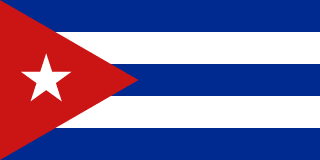
Cuba
Republic of Cuba
Population: UN WPP 2024, revision 1, projection for 1 July 2026. Sources and methodology.
Geography and territory
Cuba is the largest island in the Caribbean and among the largest island nations in the world, with a total area of 109,884 square kilometers that includes the main island, the Isla de la Juventud, and more than 4,000 smaller cays and islets. Positioned at the mouth of the Gulf of Mexico, the country occupies a strategic location between North, Central, and South America, separated from the United States by the roughly 150-kilometer-wide Straits of Florida, from Mexico by the Yucatán Channel, and from Jamaica and the Cayman Islands to its south.
Cuba’s terrain is predominantly flat, with broad plains covering most of the country and historically given over to sugarcane and tobacco cultivation. The main highlands rise in the Sierra Maestra in the southeast, home to Pico Turquino, the country’s highest point at 1,974 meters; the Sierra del Escambray in the center; and the Sierra de los Órganos in the west, celebrated for the mogotes, striking limestone karst formations, of the Viñales valley.
Cuba’s coastline stretches for thousands of kilometers, lined with white-sand beaches and turquoise water that rank among the finest in the Caribbean. Varadero, with its 20-kilometer beach, and northern cays such as Cayo Coco, Cayo Guillermo, and Cayo Santa María sit alongside remarkably rich marine ecosystems. Cuba’s coral reefs are among the best preserved in the Caribbean, and its waters and forests support unusual wildlife, including the bee hummingbird, the smallest bird species on Earth.
History
Cuba’s history is among the most consequential in the Americas. Originally home to Taíno and Ciboney peoples, the island was the first American territory sighted by Christopher Columbus in 1492. Spanish colonization turned Cuba into a strategic linchpin of the empire, with Havana developing into a key port for the fleets that carried American wealth back to Europe. The introduction of sugarcane, worked through African slave labor, shaped the island’s colonial economy and society for centuries.
Cuba’s wars of independence began with the Grito de Yara in 1868 under Carlos Manuel de Céspedes and dragged on for three decades. José Martí, poet, writer, and national hero, organized the decisive war of 1895 and died in combat that same year. United States intervention in 1898 ended Spanish rule but ushered in a long period of American influence, formalized by the Platt Amendment, which constrained Cuban sovereignty until 1934. Cuba formally gained independence on 20 May 1902.
The Cuban Revolution of 1959, led by Fidel Castro, Ernesto “Che” Guevara, and Camilo Cienfuegos, toppled the Fulgencio Batista dictatorship and established a socialist state that transformed nearly every aspect of Cuban society. The 1962 Cuban Missile Crisis, the ongoing United States trade embargo, and the alliance with the Soviet Union placed Cuba at the center of Cold War geopolitics. Decades after the Soviet collapse, Cuba remains a one-party socialist republic, still navigating gradual economic and social change.
Culture and society
Cuba is a cultural powerhouse whose global influence far exceeds its geographic size. Cuban music helped shape popular music worldwide through genres such as son, rumba, mambo, cha-cha-chá, bolero, and salsa, all born or refined on the island. Musicians like Compay Segundo, Ibrahim Ferrer, and the Buena Vista Social Club brought traditional Cuban sound to international audiences, while Celia Cruz, the “Queen of Salsa,” became a cultural icon recognized around the world.
Cuban literature has produced writers of global stature, including José Martí, whose poetry and essays remain foundational to Latin American identity; Alejo Carpentier, a master of magical realism and author of Explosion in a Cathedral; national poet Nicolás Guillén; and José Lezama Lima, whose novel Paradiso ranks among the great works of Spanish-language fiction. Cuban cinema, driven by the state film institute ICAIC, has produced landmark films such as Memories of Underdevelopment and Strawberry and Chocolate.
Cuban society places heavy emphasis on education and maintains a universal healthcare system with an international reputation; the country has one of the highest literacy rates in the world and trains more physicians per capita than almost any other nation. Sport is a major source of national pride, with Cuban athletes excelling at the Olympics in boxing, athletics, and volleyball. Baseball, however, is the true national passion, with a tradition on the island stretching back to the nineteenth century.
Economy
Cuba’s economy, with an estimated GDP of around $107 billion, has undergone repeated transformation since the 1959 revolution. A centrally planned socialist model has coexisted, at different points, with periods of partial market reform. The collapse of the Soviet Union in 1991 triggered the so-called Special Period, a severe economic crisis that forced the country to diversify, opening the door to tourism and limited foreign investment.
Tourism has since become Cuba’s leading source of foreign currency, drawing millions of visitors to its cultural riches, its beaches, and the singular atmosphere of cities like Havana, Trinidad, and Santiago de Cuba. Cuba’s pharmaceutical and biotechnology sector has earned international recognition, developing vaccines and medical treatments exported to dozens of countries. Nickel production, cigar tobacco, and rum round out the country’s principal export earners.
The economy continues to face serious headwinds, including the long-standing U.S. trade embargo in place since 1962, structural limits inherent to central planning, and an urgent need to modernize aging infrastructure. Reforms introduced over the past decade have expanded self-employment, non-agricultural cooperatives, and a modest private sector, signaling an economy in transition that is trying to balance efficiency with the social gains the revolution has long emphasized.
Food and cuisine
Cuban cuisine blends Spanish, African, Caribbean, and Creole traditions into food that is hearty and full of flavor. Rice with black beans, known as moros y cristianos, appears at nearly every Cuban table. Ropa vieja, shredded beef simmered in a tomato sauce with peppers and spices, is perhaps the country’s best-known dish abroad, while congrí, made with red beans, is the preferred version in the Santiago de Cuba region in the east.
Roast pork is the centerpiece of Cuban celebrations, especially on Christmas Eve and other family gatherings. Slow-roasted on a spit for hours and basted with mojo criollo made from garlic, sour orange, cumin, and oregano, lechón asado is as much a communal ritual as it is a meal, often bringing extended families together for the entire cooking process. Tostones and maduros, fried green and ripe plantains, yuca with mojo, and tamales wrapped in corn husks round out the classic accompaniments.
Cuban coffee, strong and sweet, served in small cups, punctuates the rhythm of the day as a genuine social ritual. Mojitos and daiquirís, cocktails invented in Havana and immortalized by Ernest Hemingway, have become globally recognized symbols of Cuban culture. Guava paste with cheese, coconut flan, rice pudding, and tropical fruit preserves complete a dessert tradition that adds sweetness to daily island life.
Tourism and landmarks
Old Havana, a UNESCO World Heritage site, is a living museum of colonial, baroque, neoclassical, and art deco architecture, where vintage American cars from the 1950s still weave through streets lined with centuries-old buildings, creating an atmosphere found nowhere else in the world. The Malecón, an eight-kilometer seaside promenade, functions as the city’s communal living room, drawing residents and visitors alike at sunset. The Plaza de la Catedral, the Plaza Vieja, and the historic Bodeguita del Medio bar are essential stops.
Trinidad, founded in 1514, is one of the best-preserved colonial cities in the Americas, with cobblestone streets, red-tiled roofs, and a central plaza framed by historic buildings. Santiago de Cuba, the country’s second city, is the birthplace of son music and of Cuban carnival, with a musical energy that is hard to match anywhere else on the island. The Castillo del Morro fortress guarding the harbor entrance and the Padre Pico stairway are enduring symbols of this historic city.
The Viñales valley, also a UNESCO World Heritage site, offers a striking landscape of limestone mogotes, tobacco fields, and caves carved by underground rivers. Varadero, with its 20-kilometer white-sand beach, remains the Caribbean’s most famous sun-and-sand destination, while the northern cays, including Cayo Coco and Cayo Santa María, provide pristine turquoise waters and mangrove forests. The Zapata Swamp, the largest wetland in the insular Caribbean, is a haven for birdwatchers and nature lovers.
Fun facts about Cuba
- The bee hummingbird, found only in Cuba, is the smallest bird species in the world, measuring roughly five centimeters and weighing less than two grams.
- Cuba’s healthcare system is internationally recognized for training more physicians per capita than most developed countries.
- Cuban cigars, particularly Cohiba, Montecristo, and Romeo y Julieta, are widely regarded as among the finest in the world and are rolled entirely by hand.
- Havana’s Malecón, at eight kilometers long, is sometimes called the world’s longest sofa because of its role as the city’s favorite gathering spot.
- Cuba was the first Latin American country to build a railroad, opened in 1837, even before Spain itself had one.
- Cuban music has given rise to or shaped genres as varied as salsa, mambo, cha-cha-chá, Latin jazz, and timba.
Cuba in numbers
Latest World Bank and UNDP observations, each with its own year. “World median” is the middle value among the countries that report the same indicator; “#” ranks from the highest value.
Population since 1960
Cuba had 7.2 million people in 1960 and 10.9 million in 2025 — 51% more.
The population peaked at 11.3 million in 2012 and has since declined.
People
77.2% of people live in towns and cities (world median 63.4%). 15.0% are under 15 and 17.0% are 65 or older — an ageing population. Women have 1.45 children on average, below the replacement level of about 2.1 needed to keep a population stable in the long run without migration.
Economy
The economy shrank by 1.1% in real terms in 2024. Services make up the largest share of output (73.4% of GDP); agriculture contributes 1.2%.
Development and environment
UNDP rates human development in Cuba as high, with an index of 0.762 in 2023 (rank 97 of 193). 70.5% of people use the internet and 100.0% have access to electricity. Forest covers 34.9% of the land (world median 32.8%).
Sources: World Bank, World Development Indicators (CC BY 4.0), most recent observation from 2015 onward; UNDP Human Development Report 2025. Retrieved 2026-10-10. Sector shares need not add up to 100% because taxes and subsidies on products are excluded. Missing values are left blank rather than estimated. Sources and methodology.
Climate of Cuba
Averaged across Cuba, the warmest month is July (27.9 °C) and the coolest is January (22.9 °C), a seasonal swing of 5.0 °C. The annual mean is 25.8 °C.
About 1,373 mm of precipitation falls in a typical year. September is the wettest month (201 mm) and February the driest (34 mm). The wettest stretch is August to October, with 39% of the year's total.
Show monthly values as a table
| Month | Mean °C | Low °C | High °C | Precipitation, mm |
|---|---|---|---|---|
| January | 22.9 | 18.0 | 27.7 | 40 |
| February | 23.5 | 18.5 | 28.5 | 34 |
| March | 24.2 | 19.2 | 29.3 | 54 |
| April | 25.4 | 20.4 | 30.4 | 83 |
| May | 26.6 | 22.1 | 31.0 | 187 |
| June | 27.5 | 23.3 | 31.7 | 184 |
| July | 27.9 | 23.4 | 32.5 | 143 |
| August | 27.9 | 23.3 | 32.5 | 163 |
| September | 27.5 | 23.1 | 31.9 | 201 |
| October | 26.7 | 22.5 | 30.9 | 165 |
| November | 25.1 | 20.8 | 29.3 | 79 |
| December | 23.9 | 19.3 | 28.5 | 40 |
Figures are 1991–2020 averages across the whole land area of Cuba, from the World Bank Climate Change Knowledge Portal, CRU TS 4.08 (CC BY 4.0). They are not readings from one weather station: the capital, the coast and high ground can be much warmer, cooler, wetter or drier.
Travel essentials for Cuba
The practical details visitors ask about first. Traffic in Cuba drives on the right, like most of the world.
- Emergency number
- 106Ambulance 104 · Fire 105
- Driving side
- Right
- Plug types
- Type A, Type B, Type C, Type LA: two flat parallel pins; B: two flat pins plus a round earth pin; C: two round pins (Europlug); L: three round pins in a row (Italian)
- Dialling code
- +53From abroad: your exit code, then 53 and the number
- Currency
- Cuban Peso (CUP)
- Time zone
- CST (UTC-5)Current local time in Cuba
Compiled from IEC plug and voltage standards, national emergency-service listings and the UN road-traffic conventions. Emergency numbers and local coverage can change — confirm them locally on arrival. Cuba's internet domain is .cu.
Where Cuba ranks in the world
Each position counts only the countries with data in that ranking guide. First place is the highest value — for price levels, the most expensive. Select a card to see the full table.
Compare Cuba with another country
Frequently asked questions about Cuba
What is the capital of Cuba?
The capital of Cuba is Havana.
What is the population of Cuba?
The UN World Population Prospects projection for Cuba is 10,892,659 people (10.9 million) on 1 July 2026. National statistical offices may publish different estimates.
What language is spoken in Cuba?
The official language of Cuba is Spanish.
What currency is used in Cuba?
The currency of Cuba is the Cuban Peso (CUP).
How big is Cuba?
Cuba covers an area of 109,884 km².
What type of government does Cuba have?
Cuba is a one-party socialist republic.
What is the highest point in Cuba?
The highest point in Cuba is Pico Turquino (1,974 m).


