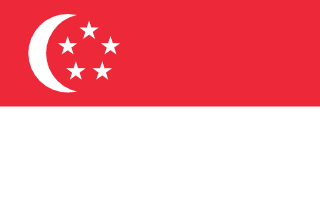
Singapore
Republic of Singapore
Population: UN WPP 2024, revision 1, projection for 1 July 2026. Sources and methodology.
Geography and territory
Singapore is an island city-state at the southern tip of the Malay Peninsula, separated from Malaysia by the Johor Strait and from Indonesia by the Singapore Strait. At just 728 square kilometers, it is one of the smallest countries in the world, and also one of the most densely populated. Its territory comprises one main island and 63 smaller islets, though the total land area has been steadily expanding through ambitious land reclamation projects that have increased the country’s size by roughly 25 percent since independence.
Singapore’s terrain is largely flat, with Bukit Timah Hill, at just 163 meters, its highest point. Despite its small footprint, the country has managed to preserve a striking amount of greenery: more than half its land is covered in vegetation, including the Bukit Timah Nature Reserve, home to one of the few remaining patches of primary rainforest in an urban setting, and the UNESCO World Heritage-listed Botanic Gardens.
Singapore’s equatorial climate brings steady temperatures between 25 and 31 degrees Celsius, high humidity, and abundant rainfall year-round, with peaks during the northeast monsoon season from November to January. The country’s strategic position on the Strait of Malacca, one of the busiest shipping lanes in the world, has underpinned its commercial prosperity for centuries. Singapore’s port is the second busiest on the planet by tonnage, handling a fifth of the world’s container shipping traffic.
History
Singapore’s modern history began in 1819, when Sir Stamford Raffles of the British East India Company established a trading post on an island then sparsely inhabited by Malay fishermen and Chinese traders. The area, however, had a much older past: fourteenth-century inscriptions mention a city called Singapura, “Lion City” in Sanskrit, linked to the Srivijaya kingdom and regional trade. Under British administration, Singapore grew rapidly as a free port and drew immigrants from China, India, and the wider Malay archipelago.
The fall of Singapore to Japanese forces in February 1942, which Winston Churchill called the worst disaster in British military history, was a traumatic turning point. Japanese occupation from 1942 to 1945 hardened conditions and stoked nationalist sentiment. After the war, Singapore gained progressive self-government and briefly joined the Federation of Malaysia in 1963, but political and ethnic tensions led to its expulsion and an unwanted independence on August 9, 1965.
Under Lee Kuan Yew, prime minister for three decades, Singapore transformed from a resource-poor, third-world port into one of the wealthiest nations on Earth. Lee’s vision combined economic pragmatism, strict meritocracy, zero tolerance for corruption, and a firmly managed political system that prioritized stability and development. Often called authoritarian capitalism, this model has been studied and admired by governments worldwide, even as it drew criticism for its restrictions on political freedoms.
Culture and society
Singapore is a microcosm of Asian cultures, where Chinese, Malay, Indian, and Peranakan traditions coexist within a small but vibrant space. This multiculturalism shows in four official languages, English, Mandarin, Malay, and Tamil, in distinct ethnic quarters such as Chinatown, Little India, and Kampong Glam, and in a festival calendar that treats Chinese New Year, Hari Raya Puasa, Deepavali, and Christmas as equally important national holidays.
Singaporean society prizes efficiency, education, and public order. Its education system is among the most rigorous and successful in the world, consistently ranking at the top of international PISA assessments. Civic rules are strict: chewing gum has been banned since 1992, littering fines are steep, and vandalism can carry corporal punishment. This tight regulation has produced an exceptionally safe and clean city, though critics point to a degree of control that limits individual expression.
The arts have flourished in recent decades with the opening of the Esplanade, the National Museum, and the National Gallery. English-language Singaporean literature, with authors such as Kevin Kwan of Crazy Rich Asians fame and Alfian Sa’at, has gained international visibility. Singlish, a colloquial form of English peppered with Mandarin, Malay, and Hokkien words, is a cherished marker of local identity, even as the government promotes standard English in official contexts.
Economy
Singapore is one of the most competitive and prosperous economies in the world, with GDP per capita among the highest on the planet. Its transformation from colonial port to global financial and technology hub in barely sixty years is one of the most remarkable economic stories in modern history. The financial sector is a core pillar: Singapore ranks as the world’s third-largest financial center after New York and London, home to more than 200 banks and a stock exchange that draws investment from across Asia.
Singapore’s economic strategy has centered on attracting foreign investment through competitive taxes, an efficient bureaucracy, strong rule of law, and a highly skilled workforce. Key industries include oil refining, where Singapore is one of the world’s largest refining hubs despite producing no crude oil of its own, along with semiconductor manufacturing, biotechnology, pharmaceuticals, and aerospace. Companies such as Singapore Airlines, DBS Bank, and Grab have become regional and global leaders.
Foreign trade is disproportionately large relative to the country’s size: exports and imports together run more than three times GDP. Singapore’s port handles 20 percent of the world’s container traffic, and Changi Airport, repeatedly voted the world’s best, serves as the primary aviation hub of Southeast Asia. Economic challenges include reliance on foreign labor, a rising cost of living, land scarcity, and the constant need to reinvent the economy to stay competitive in a shifting global landscape.
Food and cuisine
Singaporean cuisine celebrates the country’s cultural diversity and ranks among its greatest attractions. Hawker centres, recognized by UNESCO as Intangible Cultural Heritage in 2020, sit at the heart of local food culture. In these communal spaces, dozens of stalls serve dishes from every cultural tradition at affordable prices, functioning as the nation’s informal dining rooms where all walks of life come together.
Hainanese chicken rice is considered the unofficial national dish: poached chicken served over rice fragrant with broth and sesame oil, accompanied by chili and ginger sauces. Chilli crab, cooked in a sweet and spicy sauce, is another signature specialty that has earned international recognition. Laksa, a noodle soup in a creamy coconut and spice broth, and char kway teow, wide noodles stir-fried with seafood and egg, represent the Peranakan and Chinese culinary heritages respectively.
Indian influence shows in roti prata, the local take on roti canai, along with biryani and curries served on banana leaves. Malay cooking contributes nasi lemak, mee rebus, and satay. Desserts such as ice kacang, shaved ice topped with syrups and colorful toppings, kueh, vividly colored glutinous rice cakes, and kaya toast, toast spread with coconut jam and egg, paired with kopi coffee, are treasured morning rituals. Some of the world’s most affordable Michelin-starred meals can be found at Singapore’s hawker centres, proof that culinary excellence needs no white tablecloth.
Tourism and landmarks
Marina Bay Sands, the iconic three-tower hotel crowned by a boat-shaped infinity pool, has become the symbol of modern Singapore. At its foot, Gardens by the Bay dazzles with the Supertrees, metal tree-like structures up to 50 meters tall wrapped in vertical greenery, alongside the climate-controlled Cloud Forest and Flower Dome conservatories that recreate ecosystems from around the world. The nightly Garden Rhapsody light and sound show turns the waterfront into a magical spectacle.
Chinatown offers temples such as the Buddha Tooth Relic Temple, street markets, and restored shophouses that tell the story of Chinese immigration. Little India bursts with color, the scent of spices, and saris around the Sri Veeramakaliamman Temple. Kampong Glam, the Malay-Arab quarter, houses the Sultan Mosque and Haji Lane, lined with independent boutiques and street art. The UNESCO-listed Singapore Botanic Gardens hold the world’s largest orchid collection at the National Orchid Garden.
Sentosa Island is the country’s entertainment hub, home to Universal Studios, the S.E.A. Aquarium, one of the largest in the world, beaches, and golf courses. The Tiong Bahru neighborhood, with its art deco architecture, specialty cafes, and independent bookstores, represents Singapore’s more bohemian side. The Singapore Zoo, with its open-concept design free of visible cages, and the Night Safari, the world’s first nocturnal wildlife park, offer unique encounters with tropical wildlife in settings that mimic natural habitats.
Fun facts about Singapore
- The name Singapore comes from the Sanskrit Singapura, meaning Lion City, though lions never actually lived on the island; the Merlion, half lion and half fish, is the national symbol
- Chewing gum has been banned in Singapore since 1992, with exceptions only for therapeutic gum prescribed by doctors or dentists
- More than 80 percent of Singaporeans live in government-built public housing, one of the most successful public housing programs in the world
- Singapore has one of the lowest crime rates on the planet; it is common to leave belongings unattended at cafeteria tables to reserve a seat
- Despite its tiny size, Changi Airport has been voted the world’s best more than ten times running and features an indoor waterfall 40 meters tall
- The country imports nearly all of its water from Malaysia and has developed cutting-edge technology to desalinate seawater and recycle wastewater through its NEWater program
Singapore in numbers
Latest World Bank and UNDP observations, each with its own year. “World median” is the middle value among the countries that report the same indicator; “#” ranks from the highest value.
Population since 1960
Singapore had 1.6 million people in 1960 and 6.1 million in 2025 — 3.7 times as many.
People
100.0% of people live in towns and cities (world median 63.4%). 11.7% are under 15 and 14.2% are 65 or older — an ageing population. Women have 0.97 children on average, below the replacement level of about 2.1 needed to keep a population stable in the long run without migration.
Economy
The economy grew by 5.0% in real terms in 2025. Consumer prices rose by 0.9% in 2025. Services make up the largest share of output (71.6% of GDP); agriculture contributes 0.0%.
Development and environment
UNDP rates human development in Singapore as very high, with an index of 0.946 in 2023 (rank 13 of 193). 94.4% of people use the internet and 100.0% have access to electricity. Forest covers 21.8% of the land (world median 32.8%).
Sources: World Bank, World Development Indicators (CC BY 4.0), most recent observation from 2015 onward; UNDP Human Development Report 2025. Retrieved 2026-10-10. Sector shares need not add up to 100% because taxes and subsidies on products are excluded. Missing values are left blank rather than estimated. Sources and methodology.
Climate of Singapore
Averaged across Singapore, the mean temperature stays between 26.8 °C (December) and 28.4 °C (May) — a swing of only 1.6 °C, so seasons are marked by rainfall rather than by heat.
About 2,442 mm of precipitation falls in a typical year. December is the wettest month (334 mm) and February the driest (152 mm).
Show monthly values as a table
| Month | Mean °C | Low °C | High °C | Precipitation, mm |
|---|---|---|---|---|
| January | 27.0 | 23.6 | 30.5 | 249 |
| February | 27.4 | 23.8 | 31.2 | 152 |
| March | 28.0 | 24.3 | 31.8 | 211 |
| April | 28.1 | 24.3 | 32.0 | 204 |
| May | 28.4 | 24.8 | 32.1 | 181 |
| June | 28.3 | 24.9 | 31.9 | 160 |
| July | 28.1 | 24.6 | 31.6 | 169 |
| August | 27.9 | 24.5 | 31.5 | 185 |
| September | 27.8 | 24.2 | 31.5 | 158 |
| October | 27.8 | 23.9 | 31.6 | 203 |
| November | 27.3 | 23.5 | 31.1 | 238 |
| December | 26.8 | 23.5 | 30.2 | 334 |
Figures are 1991–2020 averages across the whole land area of Singapore, from the World Bank Climate Change Knowledge Portal, CRU TS 4.08 (CC BY 4.0). They are not readings from one weather station: the capital, the coast and high ground can be much warmer, cooler, wetter or drier.
Travel essentials for Singapore
The practical details visitors ask about first. Traffic in Singapore drives on the left, one of 54 of the 196 countries profiled here that do — see the full list. Mains electricity is 230 V at 50 Hz, so devices made only for 110–120 V (common in North America) need a converter unless they are dual-voltage — most phone and laptop chargers are.
- Emergency number
- 999Ambulance 995 · Fire 995
- Driving side
- Left
- Plug types
- Type GG: three rectangular pins (British)
- Voltage
- 230 V50 Hz
- Dialling code
- +65From abroad: your exit code, then 65 and the number
- Currency
- Singapore Dollar (SGD)
- Time zone
- SGT (UTC+8)Current local time in Singapore
Compiled from IEC plug and voltage standards, national emergency-service listings and the UN road-traffic conventions. Emergency numbers and local coverage can change — confirm them locally on arrival. Singapore's internet domain is .sg.
Where Singapore ranks in the world
Each position counts only the countries with data in that ranking guide. First place is the highest value — for price levels, the most expensive. Select a card to see the full table.
- Population114th of 1965.9 millionUN projection, July 2026
- Land area176th of 195718 km²World Bank, 2023
- Population density2nd of 1948,242 per km²World Bank, 2023
- GDP (nominal)26th of 187$572.9BWorld Bank, 2024, current US$
- GDP per capita6th of 187$94,897World Bank, 2024, current US$
- Life expectancy12th of 19483.3 yearsWorld Bank, 2024
- Price level26th of 16579 (US = 100)ICP 2021, household consumption
Compare Singapore with another country
Frequently asked questions about Singapore
What is the capital of Singapore?
The capital of Singapore is Singapore.
What is the population of Singapore?
The UN World Population Prospects projection for Singapore is 5,905,748 people (5.9 million) on 1 July 2026. National statistical offices may publish different estimates.
What language is spoken in Singapore?
The official language of Singapore is English, Malay, Mandarin, and Tamil.
What currency is used in Singapore?
The currency of Singapore is the Singapore Dollar (SGD).
How big is Singapore?
Singapore covers an area of 728 km².
What type of government does Singapore have?
Singapore is a parliamentary republic.
What is the highest point in Singapore?
The highest point in Singapore is Bukit Timah (163 m).


