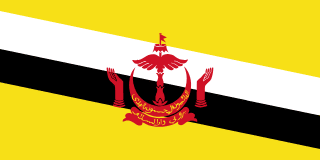
Brunei
State of Brunei Darussalam
Population: UN WPP 2024, revision 1, projection for 1 July 2026. Sources and methodology.
Geography and territory
Brunei is a tiny sultanate on the northern coast of the island of Borneo, in the heart of Southeast Asia. With an area of just 5,765 square kilometers, it is one of the smallest countries in Asia, facing the South China Sea to the north and almost entirely surrounded by the Malaysian state of Sarawak, which also splits Brunei into two non-contiguous parts: a larger western district that includes the capital, Bandar Seri Begawan, and the small eastern district of Temburong, separated from the rest of the country by a strip of Malaysian territory.
Brunei’s landscape is dominated by pristine tropical rainforest, which covers roughly 70 percent of the country, making Brunei one of the most heavily forested nations on Earth relative to its size. A low, often swampy coastal plain gives way to rolling hills in the interior that rise to 1,850 meters at Bukit Pagon, on the border with Sarawak. The Brunei, Belait, and Tutong rivers run south to north across the country, forming estuaries and mangrove forests rich in biodiversity where they meet the sea.
Brunei’s climate is equatorial, with consistently warm temperatures between roughly 24 and 32 degrees Celsius year-round and abundant rainfall exceeding 2,500 millimeters annually. Relative humidity rarely drops below 80 percent, sustaining the lush growth of Borneo’s rainforest. This forest supports extraordinary biodiversity, including orangutans, proboscis monkeys, hornbills, and, in its richest patches, some of the highest concentrations of tree species found anywhere in the tropics, rivaling even the Amazon in plant diversity. Brunei’s only land neighbor is Malaysia, which encircles the sultanate on every side.
History
Brunei’s history is the chronicle of a sultanate that was once a formidable maritime empire and has survived for more than six centuries into the present day. At its height in the fifteenth and sixteenth centuries, the Sultanate of Brunei controlled the entirety of Borneo, the Sulu Archipelago, and parts of the Philippines, dominating trade routes linking China, India, and the Spice Islands. Sultan Bolkiah, the fifth sultan, expanded the realm to its greatest extent and is remembered as a national hero whose legacy evokes an era of power and maritime splendor.
Decline set in with the arrival of European colonial powers. The Spanish contested influence in the Philippines, and from the nineteenth century onward the British adventurer James Brooke and his descendants, the so-called White Rajahs of Sarawak, steadily carved away territory from the sultanate until it was reduced to a fraction of its former domain. In 1888, Brunei accepted British protection to avoid complete absorption, retaining the sultan as nominal ruler while a British resident controlled foreign affairs.
The discovery of oil at Seria in 1929 transformed Brunei’s fortunes, turning the small sultanate into one of the wealthiest territories in Southeast Asia. Independence, achieved on 1 January 1984, ushered in Brunei’s era as a sovereign state under Sultan Hassanal Bolkiah, the twenty-ninth ruler of his dynasty, who governs as an absolute monarch combining the roles of head of state, prime minister, defense minister, and finance minister. The guiding philosophy of Melayu Islam Beraja, or Malay Islamic Monarchy, defines the country’s official national identity to this day.
Culture and society
Brunei’s culture rests on the convergence of three pillars: Malay identity, Islamic faith, and the institution of the monarchy, a trinity that the official philosophy of Melayu Islam Beraja elevates to the status of national ideology. Sunni Islam shapes nearly every aspect of daily life: the call to prayer punctuates the day, Ramadan governs the social calendar, and the application of sharia law within the legal system since 2014 has reinforced the country’s Islamic character. Religious architecture reaches its most sublime expression in the Sultan Omar Ali Saifuddien Mosque, regarded as one of the most beautiful mosques in the Asia-Pacific region.
Brunei’s royal family commands a reverence that extends well beyond politics into the realm of culture itself. The sultan’s birthday is a national celebration marked by parades, fireworks, and festivities that last for days. The Istana Nurul Iman, the royal palace, with more than 1,700 rooms, 257 bathrooms, and a throne hall that can hold 5,000 guests, is the largest residential palace in the world and opens to the public during Eid al-Fitr celebrations, when the sultan personally receives thousands of citizens.
Bruneian society enjoys an exceptionally high standard of living funded by oil and gas revenue. Education and health care are free, there is no personal income tax, and government subsidies extend from housing to fuel. Malay, Chinese, and Indigenous communities coexist peacefully, with Malay serving as the lingua franca and English widely used in business and education. Kampong Ayer, the water village built on stilts along the Brunei River in the capital, is one of the oldest and largest settlements of its kind in the world, home to more than 30,000 residents living in houses connected by wooden walkways.
Economy
Brunei’s economy is overwhelmingly dominated by hydrocarbons, which generate roughly 60 percent of GDP, about 90 percent of export earnings, and most government revenue. Oil, discovered in 1929, and liquefied natural gas, of which Brunei is one of the world’s larger exporters, have turned this small sultanate into one of the highest per-capita income countries in Asia. The fields, located both onshore around Seria and on offshore platforms, are worked primarily by Brunei Shell Petroleum, a joint venture between the government and Shell.
Heavy dependence on hydrocarbons is Brunei’s principal economic vulnerability, compounded by gradually declining reserves and volatile international prices. The government’s Wawasan 2035 development plan aims to diversify the economy toward petrochemicals, the halal food industry, tourism, Islamic finance, and information technology. The Hengyi refining and petrochemical complex, a massive facility developed with Chinese investment, represents one of the largest industrial diversification projects undertaken so far.
Brunei’s economic model produces a generous welfare state but also poses challenges. The absence of income tax and the breadth of government subsidies create little pressure toward productive diversification or private-sector innovation. Youth unemployment, despite the country’s wealth, is a growing concern that reflects a mismatch between graduates’ career aspirations and the limited opportunities available outside the public sector. Tourism, though modest in absolute numbers, is expanding as the country promotes its Bornean rainforest, Islamic culture, and cuisine as visitor attractions.
Food and cuisine
Brunei’s cuisine reflects a confluence of Malay, Chinese, Indian, and Indigenous culinary traditions, further enriched by influences from the wider Islamic world. Ambuyat, considered the national dish, is a distinctive preparation made from sago flour cooked into a sticky, translucent paste that is wound onto a special two-pronged fork called a chandas and dipped into sauces of fermented durian, tamarind, or spicy shrimp. This humble but deeply identity-defining dish reflects the culinary heritage of Borneo’s peoples.
Nasi lemak, rice cooked in coconut milk and served with spicy sambal, fried anchovies, peanuts, boiled egg, and cucumber, is the country’s most popular breakfast and, like much of Southeast Asia, a dish Brunei shares proudly with neighboring Malaysia. Satay, skewers of marinated meat grilled over charcoal and served with peanut sauce, and rendang, meat slow-cooked in coconut milk with a richly spiced paste until nearly dry, are festive dishes that showcase the depth of flavor in Bruneian cooking.
Brunei’s night markets, especially the Pasar Malam Gadong in the capital, offer the best window into everyday street food: nasi katok (rice with fried chicken and sambal, the country’s cheapest and most beloved dish), kuih (bite-sized cakes of glutinous rice, coconut, and palm sugar in countless colors and shapes), and fresh tropical fruit juices. Indian-style restaurants serve roti canai and curries that round out a food scene modest in scale but rich in flavor. Alcohol is banned in Brunei, so teh tarik, a frothy pulled milk tea, and fruit juices serve as the social drinks of choice.
Tourism and landmarks
Brunei offers an intimate, uncrowded travel experience centered on its Islamic heritage, its rainforest wilderness, and its distinctive identity as an oil-rich sultanate. The Sultan Omar Ali Saifuddien Mosque, its golden dome reflected in an artificial lagoon surrounded by gardens, is Brunei’s most iconic image and one of the most photographed religious buildings in Southeast Asia. The Jame’Asr Hassanil Bolkiah Mosque, more modern and monumental, its 29 golden domes symbolizing the twenty-ninth sultan, rounds out the capital’s religious landmarks.
Kampong Ayer, the water village stretching along the Brunei River, is a fascinating urban phenomenon: more than 30,000 people live in stilt houses linked by wooden walkways, complete with schools, mosques, clinics, and even floating fire stations. A boat ride through its channels offers a unique glimpse into everyday Bruneian life. Ulu Temburong National Park, reachable only by boat and a spectacular canopy walkway suspended 50 meters above the forest floor, is the best place in the country to experience Borneo’s primary rainforest and its extraordinary biodiversity.
The Royal Regalia Museum displays an impressive collection of royal regalia, including a gilded coronation chariot, ceremonial weapons, jewelry, and diplomatic gifts that illustrate the opulence of the sultanate. The Malay Technology Museum and the Brunei Museum add further cultural depth. Nature lovers can spot the elusive proboscis monkey, an animal endemic to Borneo, in the mangrove forests along the Brunei River, where troops cross the water at dusk in one of the region’s most memorable wildlife spectacles.
Fun facts about Brunei
- The Istana Nurul Iman royal palace is the largest residential palace in the world, with roughly 1,700 rooms and 257 bathrooms.
- Brunei levies no personal income tax on its citizens and funds free education and health care entirely from oil and gas revenue.
- The Sultanate of Brunei is one of the oldest continuous monarchies in the world, with a ruling dynasty tracing back more than 600 years.
- Brunei was the site of the first oil discovery in Southeast Asia, struck at Seria in 1929.
- The sale and public consumption of alcohol are banned in Brunei, though non-Muslims may import a limited quantity for private use.
- Despite its small size, Brunei’s rainforests are estimated to hold some of the highest tree-species diversity per hectare found anywhere in the tropics.
Brunei in numbers
Latest World Bank and UNDP observations, each with its own year. “World median” is the middle value among the countries that report the same indicator; “#” ranks from the highest value.
Population since 1960
Brunei had 88,347 people in 1960 and 466,330 in 2025 — 5.3 times as many.
People
75.0% of people live in towns and cities (world median 63.4%). 20.6% are under 15 and 7.2% are 65 or older — a middle-aged population. Women have 1.73 children on average, below the replacement level of about 2.1 needed to keep a population stable in the long run without migration.
Economy
The economy grew by 0.7% in real terms in 2025. Consumer prices fell by 0.3% in 2025. Industry makes up the largest share of output (60.0% of GDP); agriculture contributes 1.2%.
Development and environment
UNDP rates human development in Brunei as very high, with an index of 0.837 in 2023 (rank 60 of 193). 96.3% of people use the internet and 100.0% have access to electricity. Forest covers 72.1% of the land (world median 32.8%).
Sources: World Bank, World Development Indicators (CC BY 4.0), most recent observation from 2015 onward; UNDP Human Development Report 2025. Retrieved 2026-10-10. Sector shares need not add up to 100% because taxes and subsidies on products are excluded. Missing values are left blank rather than estimated. Sources and methodology.
Climate of Brunei
Averaged across Brunei, the mean temperature stays between 26.4 °C (January) and 27.4 °C (April) — a swing of only 1.0 °C, so seasons are marked by rainfall rather than by heat.
About 3,262 mm of precipitation falls in a typical year. December is the wettest month (370 mm) and February the driest (215 mm).
Show monthly values as a table
| Month | Mean °C | Low °C | High °C | Precipitation, mm |
|---|---|---|---|---|
| January | 26.4 | 22.7 | 30.1 | 347 |
| February | 26.4 | 22.6 | 30.3 | 215 |
| March | 27.0 | 22.8 | 31.3 | 223 |
| April | 27.4 | 23.2 | 31.7 | 251 |
| May | 27.4 | 23.1 | 31.8 | 275 |
| June | 27.2 | 22.8 | 31.7 | 220 |
| July | 27.1 | 22.6 | 31.6 | 227 |
| August | 27.2 | 22.6 | 31.9 | 234 |
| September | 27.0 | 22.6 | 31.5 | 250 |
| October | 26.7 | 22.6 | 30.9 | 313 |
| November | 26.7 | 22.6 | 30.8 | 338 |
| December | 26.6 | 22.7 | 30.6 | 370 |
Figures are 1991–2020 averages across the whole land area of Brunei, from the World Bank Climate Change Knowledge Portal, CRU TS 4.08 (CC BY 4.0). They are not readings from one weather station: the capital, the coast and high ground can be much warmer, cooler, wetter or drier.
Travel essentials for Brunei
The practical details visitors ask about first. Traffic in Brunei drives on the left, one of 54 of the 196 countries profiled here that do — see the full list. Mains electricity is 240 V at 50 Hz, so devices made only for 110–120 V (common in North America) need a converter unless they are dual-voltage — most phone and laptop chargers are.
- Emergency number
- 993Ambulance 991 · Fire 995
- Driving side
- Left
- Plug types
- Type GG: three rectangular pins (British)
- Voltage
- 240 V50 Hz
- Dialling code
- +673From abroad: your exit code, then 673 and the number
- Currency
- Brunei Dollar (BND)
- Time zone
- UTC+8Current local time in Brunei
Compiled from IEC plug and voltage standards, national emergency-service listings and the UN road-traffic conventions. Emergency numbers and local coverage can change — confirm them locally on arrival. Brunei's internet domain is .bn.
Where Brunei ranks in the world
Each position counts only the countries with data in that ranking guide. First place is the highest value — for price levels, the most expensive. Select a card to see the full table.
- Population170th of 196469,775UN projection, July 2026
- Land area164th of 1955,270 km²World Bank, 2023
- Population density98th of 19487 per km²World Bank, 2023
- GDP (nominal)138th of 187$15.3BWorld Bank, 2024, current US$
- GDP per capita35th of 187$33,153World Bank, 2024, current US$
- Life expectancy81st of 19475.5 yearsWorld Bank, 2024
- Price level90th of 16545 (US = 100)ICP 2021, household consumption
Bordering countries of Brunei

Compare Brunei with another country
Frequently asked questions about Brunei
What is the capital of Brunei?
The capital of Brunei is Bandar Seri Begawan.
What is the population of Brunei?
The UN World Population Prospects projection for Brunei is 469,775 people (469,775) on 1 July 2026. National statistical offices may publish different estimates.
What language is spoken in Brunei?
The official language of Brunei is Malay.
What currency is used in Brunei?
The currency of Brunei is the Brunei Dollar (BND).
How big is Brunei?
Brunei covers an area of 5,765 km².
What type of government does Brunei have?
Brunei is a absolute monarchy (sultanate).
Which countries border Brunei?
Brunei shares land borders with Malaysia.
What is the highest point in Brunei?
The highest point in Brunei is Bukit Pagon (1,850 m).


