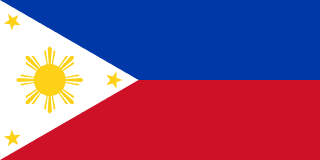
Philippines
Republic of the Philippines
Population: UN WPP 2024, revision 1, projection for 1 July 2026. Sources and methodology.
Geography and territory
The Philippines is a sprawling archipelago of more than 7,000 islands in the western Pacific, sandwiched between the South China Sea and the Philippine Sea. With a land area of 300,000 square kilometers, the country stretches roughly 1,850 kilometers from north to south and shares no land border with any other nation. Its islands cluster into three major groups: Luzon in the north, home to the capital, Manila; the Visayas in the center, an archipelago within the archipelago; and Mindanao in the south, the country’s second-largest island.
Much of the terrain is mountainous and volcanic, part of the Pacific Ring of Fire, with more than 20 active volcanoes scattered across the islands. Mount Apo, in Mindanao, is the national high point at 2,954 meters. Mayon Volcano, in Albay province, is famous for its near-perfect symmetrical cone, often cited as one of the most beautiful volcanic peaks in the world. Coastal plains and river valleys hold the country’s main farmland, while the Banaue Rice Terraces, carved into the mountains of the Cordillera Central more than 2,000 years ago, form a UNESCO World Heritage Site often described as a stairway to the sky.
The Philippine climate is tropical year-round, with a pronounced wet season driven by the southwest monsoon from roughly June through November. The country is among the most typhoon-exposed places on Earth, weathering an average of twenty tropical storms each year. Despite this vulnerability, its biodiversity is exceptional: the Philippines is one of only eighteen recognized megadiverse countries, home to more than 50,000 catalogued species, many found nowhere else, including the Philippine tarsier, one of the world’s smallest primates, and the Philippine eagle, the largest eagle species on the planet.
History
Philippine history bears the deep imprint of more than three centuries of Spanish colonization, which shaped the nation’s culture, religion, and even its name, chosen in honor of King Philip II of Spain. Before European contact, the islands were home to Austronesian peoples organized into independent barangay communities that traded with China, India, and the Arab world. Ferdinand Magellan’s expedition reached the archipelago in 1521, but the Portuguese navigator was killed at the Battle of Mactan by the local chieftain Lapu-Lapu, remembered today as the nation’s first hero.
Formal Spanish rule began with Miguel López de Legazpi’s expedition in 1565 and lasted until 1898. Over those three centuries, Catholicism took firm root and remains the majority faith of more than 80 percent of Filipinos today; ornate Baroque churches from the era are now UNESCO World Heritage Sites, and the colonial economy revolved around the Manila galleon trade linking the islands to Acapulco. A nationalist movement, inspired by the writer and reformist José Rizal, culminated in the Philippine Revolution of 1896.
Following Spain’s defeat in the 1898 Spanish-American War, the Philippines passed to American control despite having already declared independence. Japanese occupation during World War II brought immense hardship, and full independence was finally restored on July 4, 1946. Modern history includes the authoritarian rule of Ferdinand Marcos (1965–1986), ended by the peaceful People Power Revolution, a landmark uprising that restored democracy and became a model for nonviolent political change across Asia.
Culture and society
Filipino culture blends Austronesian, Spanish, American, and broader Asian influences into an identity unlike any other in Southeast Asia. Catholicism, embedded over three centuries of Spanish rule, shapes daily and civic life through town patron-saint festivals, dramatic Holy Week processions, and what is often called the world’s longest Christmas season, with decorations and carols appearing as early as September and lasting into January.
Filipino hospitality, embodied in the concept of bayanihan, or communal spirit, is renowned across Asia, and extended family ties form the backbone of social life. English, an official language alongside Filipino, is widely spoken, a legacy that has made the Philippines a global hub for customer service and call-center work, as well as a growing destination for English-language study. Music runs deep in national life: Filipinos are famed for their vocal talent, and karaoke functions almost as a social institution.
The country’s artistic traditions mirror its regional diversity. Festivals such as Cebu’s Sinulog, Aklan’s Ati-Atihan, and Bacolod’s MassKara fill the streets with elaborate costumes, dance, and music. Filipino cinema has earned international acclaim through directors like Lav Diaz and Brillante Mendoza. Textile crafts such as piña cloth, woven from pineapple leaf fiber and used to make the formal barong tagalog shirt, represent some of the country’s most refined handiwork.
Economy
With a GDP of approximately $487.09 billion, the Philippines has one of Southeast Asia’s more dynamic economies, driven largely by strong domestic consumption from a young and growing population. The services sector accounts for more than 60 percent of GDP, with business process outsourcing as a central pillar: the Philippines is the world’s top destination for English-language call centers and customer support, employing more than a million workers in the industry.
Remittances from overseas Filipino workers are a vital economic lifeline, equivalent to roughly 10 percent of GDP. More than ten million Filipinos work abroad as seafarers, nurses, engineers, and domestic workers, sending money home that sustains families and fuels consumer spending nationwide. Agriculture remains significant as well, with rice, coconut (the Philippines is the world’s leading producer of coconut oil), pineapple, banana, and sugarcane among the leading crops.
The country holds enormous, still partly untapped tourism potential, with pristine beaches, coral reefs, and cultural heritage drawing a growing stream of visitors. Electronics manufacturing, particularly semiconductors and components, is another major export earner. Persistent challenges include high inequality, infrastructure gaps, exposure to natural disasters, and the need to generate enough jobs for a population that grows by more than a million people each year.
Food and cuisine
Filipino cuisine is a genuinely mixed cuisine, blending Austronesian, Spanish, Chinese, and American influences into hearty, comforting dishes. Adobo, pork or chicken braised in vinegar, soy sauce, garlic, and pepper, is widely considered the national dish, and nearly every family guards its own version. Lechon, a whole roast pig with famously crackling skin, is the centerpiece of major celebrations and has been praised by international chefs as among the finest roast pork preparations anywhere.
Spanish influence lives on in dishes like caldereta, a rich meat stew; menudo, a pork-and-liver stew unrelated to the Mexican dish of the same name; and leche flan, a dense egg custard. Sinigang, a tangy tamarind-based soup with meat or seafood and vegetables, offers a refreshing counterpoint. Kare-kare, an oxtail stew in peanut sauce, and pancit, stir-fried noodles served in countless regional variations, round out an everyday repertoire that is both robust and deeply satisfying.
Filipino desserts form a world of their own. Halo-halo, a shaved-ice parfait layered with sweet beans, colorful gelatin, evaporated milk, purple yam (ube), and ice cream, is the quintessential cooling treat. Bibingka (rice cake), puto (steamed rice cakes), and ensaimada, a direct descendant of Mallorcan pastry, showcase Filipino culinary fusion at its best. The tradition of the merienda, a light meal inherited from Spanish custom, means many Filipinos enjoy five or six small meals throughout the day rather than three large ones.
Tourism and landmarks
The Philippines offers some of the most striking island scenery on Earth. Palawan, repeatedly voted the world’s best island by international travel publications, features the Puerto Princesa Underground River, a UNESCO World Heritage Site, the crystalline lagoons of El Nido, and the wreck-diving sites of Coron, where sunken World War II-era Japanese ships now teem with marine life. Boracay, with its powder-white beach and turquoise waters, remains one of Asia’s most celebrated beach destinations.
The Chocolate Hills of Bohol, more than 1,200 cone-shaped mounds that turn brown in the dry season, form a surreal, singular geological landscape. Whale shark encounters in Oslob, swimming with stingless jellyfish in the lakes of Sohoton, and the ancient Banaue and Ifugao rice terraces, carved into Luzon’s mountains some 2,000 years ago, all rank among the country’s unforgettable experiences. Siargao, a mecca for Pacific surfing, and the Tubbataha Reefs, a UNESCO World Heritage marine park, draw adventurers from across the globe.
Manila, the bustling capital, pairs the walled historic quarter of Intramuros, with its cathedral and Fort Santiago, with the modern skylines of Makati’s financial district and the nightlife of Bonifacio Global City. Cebu, the country’s second city, offers the Basilica del Santo Niño and the Kawasan waterfalls. Vigan, in Ilocos Sur, preserves a Spanish colonial townscape recognized as a World Heritage Site, complete with cobblestone streets, wooden balconies, and horse-drawn calesas that carry visitors back to the 18th century.
Fun facts about Philippines
- The Philippines is the only majority-Catholic nation in Asia, with more than 80 percent of the population professing the faith, a direct legacy of over three centuries of Spanish rule.
- The country takes its name from King Philip II of Spain, bestowed by the explorer Ruy López de Villalobos in 1543.
- Filipinos celebrate the world’s longest Christmas season, with holiday decorations and carols appearing in malls and homes as early as September.
- The Philippine tarsier, one of the smallest primates on Earth, has eyeballs larger than its brain and is found only on the islands of Bohol and Leyte.
- The Philippines is the world’s leading producer of coconuts and coconut products, including oil, water, and copra fiber.
- The archipelago is home to more than 175 living languages, with Filipino, Cebuano, and English spoken most widely.
The Philippines in numbers
Latest World Bank and UNDP observations, each with its own year. “World median” is the middle value among the countries that report the same indicator; “#” ranks from the highest value.
Population since 1960
The Philippines had 27.9 million people in 1960 and 116.8 million in 2025 — 4.2 times as many.
People
55.8% of people live in towns and cities (world median 63.4%). 27.1% are under 15 and 5.7% are 65 or older — a middle-aged population. Women have 1.89 children on average, below the replacement level of about 2.1 needed to keep a population stable in the long run without migration.
Economy
The economy grew by 4.4% in real terms in 2025. Consumer prices rose by 1.7% in 2025. Services make up the largest share of output (64.4% of GDP); agriculture contributes 8.6%.
Development and environment
UNDP rates human development in the Philippines as high, with an index of 0.720 in 2023 (rank 117 of 193). 67.3% of people use the internet and 94.8% have access to electricity. Forest covers 24.8% of the land (world median 32.8%).
Sources: World Bank, World Development Indicators (CC BY 4.0), most recent observation from 2015 onward; UNDP Human Development Report 2025. Retrieved 2026-10-10. Sector shares need not add up to 100% because taxes and subsidies on products are excluded. Missing values are left blank rather than estimated. Sources and methodology.
Climate of the Philippines
Averaged across the Philippines, the mean temperature stays between 25.1 °C (January) and 27.5 °C (May) — a swing of only 2.4 °C, so seasons are marked by rainfall rather than by heat.
About 2,626 mm of precipitation falls in a typical year. August is the wettest month (307 mm) and March the driest (115 mm).
Show monthly values as a table
| Month | Mean °C | Low °C | High °C | Precipitation, mm |
|---|---|---|---|---|
| January | 25.1 | 21.1 | 29.2 | 162 |
| February | 25.3 | 21.0 | 29.6 | 119 |
| March | 26.2 | 21.6 | 30.9 | 115 |
| April | 27.2 | 22.5 | 31.9 | 117 |
| May | 27.5 | 23.0 | 32.1 | 202 |
| June | 27.0 | 22.8 | 31.2 | 249 |
| July | 26.4 | 22.4 | 30.5 | 290 |
| August | 26.4 | 22.5 | 30.4 | 307 |
| September | 26.4 | 22.3 | 30.5 | 274 |
| October | 26.3 | 22.2 | 30.5 | 280 |
| November | 26.1 | 22.0 | 30.2 | 254 |
| December | 25.6 | 21.7 | 29.5 | 257 |
Figures are 1991–2020 averages across the whole land area of the Philippines, from the World Bank Climate Change Knowledge Portal, CRU TS 4.08 (CC BY 4.0). They are not readings from one weather station: the capital, the coast and high ground can be much warmer, cooler, wetter or drier.
Travel essentials for the Philippines
The practical details visitors ask about first. Traffic in the Philippines drives on the right, like most of the world. Mains electricity is 220 V at 60 Hz, so devices made only for 110–120 V (common in North America) need a converter unless they are dual-voltage — most phone and laptop chargers are.
- Emergency number
- 911
- Driving side
- Right
- Plug types
- Type A, Type B, Type CA: two flat parallel pins; B: two flat pins plus a round earth pin; C: two round pins (Europlug)
- Voltage
- 220 V60 Hz
- Dialling code
- +63From abroad: your exit code, then 63 and the number
- Currency
- Philippine Peso (PHP)
- Time zone
- PHT (UTC+8)Current local time in the Philippines
Compiled from IEC plug and voltage standards, national emergency-service listings and the UN road-traffic conventions. Emergency numbers and local coverage can change — confirm them locally on arrival. The Philippines's internet domain is .ph.
Where the Philippines ranks in the world
Each position counts only the countries with data in that ranking guide. First place is the highest value — for price levels, the most expensive. Select a card to see the full table.
- Population14th of 196117.7 millionUN projection, July 2026
- Land area71st of 195298,170 km²World Bank, 2023
- Population density22nd of 194385 per km²World Bank, 2023
- GDP (nominal)34th of 187$461.7BWorld Bank, 2024, current US$
- GDP per capita127th of 187$3,985World Bank, 2024, current US$
- Life expectancy131st of 19469.9 yearsWorld Bank, 2024
- Price level100th of 16542 (US = 100)ICP 2021, household consumption
Compare the Philippines with another country
Frequently asked questions about the Philippines
What is the capital of the Philippines?
The capital of the Philippines is Manila.
What is the population of the Philippines?
The UN World Population Prospects projection for the Philippines is 117,724,471 people (117.7 million) on 1 July 2026. National statistical offices may publish different estimates.
What language is spoken in the Philippines?
The official language of the Philippines is Filipino (Tagalog) and English.
What currency is used in the Philippines?
The currency of the Philippines is the Philippine Peso (PHP).
How big is the Philippines?
The Philippines covers an area of 300,000 km².
What type of government does the Philippines have?
The Philippines is a presidential republic.
What is the highest point in the Philippines?
The highest point in the Philippines is Mount Apo (2,954 m).


