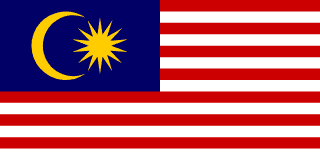
Malaysia
Federation of Malaysia
Population: UN WPP 2024, revision 1, projection for 1 July 2026. Sources and methodology.
Geography and territory
Malaysia is a distinctive country split into two regions separated by more than 600 kilometers of the South China Sea. Peninsular Malaysia occupies the southern tip of the Malay Peninsula, bordering Thailand to the north and connected to Singapore by a causeway in the south. East Malaysia sits on the northern part of the island of Borneo, sharing a border with Indonesia to the south and wrapping around the small sultanate of Brunei. With a total area of 330,803 square kilometers, the country combines tropical coastlines, ancient rainforest, and high mountain ranges.
The terrain of Peninsular Malaysia is dominated by the Titiwangsa mountain range, which runs down the center from north to south and divides the peninsula into a more forested eastern side and a more urbanized western one. In Borneo, Mount Kinabalu reaches 4,095 meters, making it the tallest peak in Southeast Asia and a mountaineering destination of global renown. Malaysia’s tropical rainforests, estimated at some 130 million years old, rank among the oldest forests on the planet, older even than the Amazon.
Malaysia’s equatorial climate brings warm, steady temperatures of between 25 and 35 degrees Celsius, high humidity, and abundant rainfall year-round, intensifying during the monsoon seasons. This climate underpins extraordinary biodiversity: Malaysia is home to an estimated 20 percent of the world’s animal species, including orangutans, Asian pygmy elephants, Sumatran rhinoceroses, and the world’s largest flower, the Rafflesia, which can reach a full meter across. The coral reefs off Sipadan Island rank among the finest diving sites anywhere in the world.
History
Malaysia’s history is bound up with the maritime trade routes that once linked China, India, and the Arab world. The Sultanate of Malacca, founded in the early fifteenth century, grew into Southeast Asia’s most important trading hub and a center for spreading Islam across the region. Its wealth in spices and its strategic command of the Strait of Malacca attracted the Portuguese, who seized the city in 1511, followed by the Dutch in 1641.
The British established themselves in the late eighteenth century, beginning with Penang in 1786 and later adding Singapore and Malacca to form the Straits Settlements. Colonial administration drove large-scale exploitation of tin and rubber, drawing in massive numbers of Chinese and Indian laborers whose descendants shaped the multiethnic makeup of the country today. That diversity became one of Malaysia’s defining traits, though it also became a recurring source of intercommunal tension.
Independence came on August 31, 1957, under the leadership of the country’s first prime minister, Tunku Abdul Rahman. The Federation of Malaysia took its present shape in 1963 with the addition of the Borneo territories, though Singapore split off in 1965. The long tenure of Prime Minister Mahathir Mohamad, from 1981 to 2003 and again briefly from 2018 to 2020, turned Malaysia from an agricultural economy into an industrialized nation, symbolized by the Petronas Towers and the planned technology city of Cyberjaya. The New Economic Policy sought to reduce disparities between ethnic communities, shaping a development model unlike any other in the region.
Culture and society
Malaysia is a remarkably multicultural society built around three major communities: the Malay Muslim majority, ethnic Chinese descended largely from nineteenth- and twentieth-century immigrants, and ethnic Indians, predominantly of Tamil origin. This diversity produces a uniquely layered culture in which mosques, Buddhist temples, and Hindu temples often share the same street, and where Hari Raya, marking the end of Ramadan, Chinese New Year, and Deepavali, the Hindu festival of lights, are all celebrated as national holidays.
Malay cultural identity is rooted in Islam, the Malay language, and the traditions of the old sultanates. Batik textiles, the kris, a ceremonial wavy-bladed dagger, and traditional dances such as joget and mak yong represent centuries of artistic heritage. The Peranakan, or Baba-Nyonya, descendants of Chinese settlers who arrived in Malacca generations ago, developed a fascinating hybrid culture with its own distinctive cuisine, dress, and customs blending Chinese and Malay elements.
Malaysian architecture reflects this same diversity, ranging from traditional stilted Malay houses known as rumah kampung to the Chinese shophouses of Penang, the ornate colonial facades of Malacca, and the glass towers of Kuala Lumpur. The country counts four UNESCO World Heritage Sites, including the historic centers of Malacca and George Town in Penang. Modern Malaysian society continues to balance rapid modernization with the preservation of tradition, and interethnic relations remain a central thread of national debate.
Economy
Malaysia runs one of Southeast Asia’s most open and diversified economies, holding upper-middle-income status with clear ambitions of reaching fully developed status. Hydrocarbons remain an important pillar: Petronas, the state oil company, ranks among the largest corporations in the world and funds a substantial share of public spending. Electronics is the leading export sector, with Malaysia among the world’s largest manufacturers of semiconductors, hard drives, and solar panels.
Plantation agriculture remains fundamental to the economy: Malaysia is the world’s second-largest producer of palm oil, after Indonesia, and a major exporter of natural rubber, tropical timber, and cacao. The domestic automotive industry, led by Proton and Perodua, supplies both local and regional markets. Tourism generates significant revenue, drawing more than 26 million international visitors annually to its beaches, food scene, shopping malls, and cultural diversity.
The Iskandar economic corridor near Singapore and the Northern Corridor Economic Region aim to spread development more evenly across the country. Malaysia has also invested heavily in high technology, biotechnology, and Islamic finance, emerging as a global leader in sharia-compliant banking and insurance. With a GDP of $472.19 billion and a Human Development Index of 0.819, classified as very high, the country’s remaining challenges include reducing its dependence on oil, addressing brain drain, raising productivity, and managing the tension between economic development and interethnic affirmative-action policies.
Food and cuisine
Malaysian food mirrors the country’s cultural diversity, producing one of the most varied and flavorful cuisines in Southeast Asia. Nasi lemak, rice cooked in coconut milk and served with sambal chili paste, fried anchovies, peanuts, boiled egg, and cucumber, is considered the national dish and is eaten at any hour, from breakfast through dinner. Satay, skewers of grilled meat served with peanut sauce, is another culinary icon enjoyed at street stalls nationwide.
Traditional Malay cooking is known for dishes such as rendang, nasi goreng kampung, and laksa, a noodle soup served in a coconut or tamarind-based broth with shrimp and fresh herbs. Chinese-Malaysian cooking has produced distinctive fusions like char kway teow, wide rice noodles stir-fried with seafood, along with hokkien mee and bak kut teh, a pork rib soup simmered with herbs. Indian-Malaysian cuisine contributes roti canai, a flaky flatbread served with dal, as well as nasi kandar and banana leaf rice, a spread of curries served over rice on a banana leaf.
Peranakan cuisine has produced dishes of remarkable refinement, including Penang’s asam laksa, otak-otak, a spiced fish paste wrapped and grilled in banana leaf, and vividly colored desserts. Hawker centers and kopitiams, traditional coffee shops, form the heart of Malaysian food culture, where dishes from every tradition are served side by side at affordable prices. Teh tarik, milk tea “pulled” between two cups to build a frothy head, is the country’s signature drink, and preparing it well is considered something of a performance art.
Tourism and landmarks
Kuala Lumpur dazzles with the Petronas Towers, the world’s tallest twin skyscrapers at 452 meters, whose sky bridge offers striking views over the capital. Merdeka Square, where independence was proclaimed, the Batu Caves with their towering golden statue of Murugan, and the old colonial quarter sit alongside world-class shopping districts such as Bukit Bintang. Petaling Street’s Chinatown and the Indian district of Brickfields offer immersive tastes of the cultures that make up the Malaysian mosaic.
Penang Island, a UNESCO World Heritage Site, captivates visitors with the street art that has revitalized historic George Town, Chinese temples such as Kek Lok Si, the largest in Southeast Asia, and street food widely regarded as the best in the country. Malacca preserves layers of Portuguese, Dutch, and British heritage across its reddish historic center. The Cameron Highlands, with tea plantations set at 1,500 meters, offer a cool escape from tropical heat along with gardens of strawberries and roses.
Malaysian Borneo is a paradise for nature lovers. Mount Kinabalu and its national park, a World Heritage Site, showcase astonishing biodiversity. The Sepilok Orangutan Rehabilitation Centre lets visitors observe these primates as they are gradually reintroduced into the wild. Sipadan Island ranks among the world’s top five diving destinations, with sheer coral walls and schools of turtles. The Perhentian Islands and Langkawi round out the country’s offering of white-sand beaches and clear waters that rival the best anywhere on the planet.
Fun facts about Malaysia
- Malaysia has a unique system of government: an elective constitutional monarchy in which the king, the Yang di-Pertuan Agong, rotates every five years among the nine hereditary Malay state rulers.
- The Petronas Towers were the tallest buildings in the world from 1998 to 2004 and remain the tallest twin towers on Earth.
- The Rafflesia, the world’s largest flower at up to a meter across, is native to the rainforests of Borneo and the Malay Peninsula and can take up to nine months to bloom before wilting within a week.
- Malaysia has more than 60 national parks protecting rainforests estimated at 130 million years old, older than those of the Amazon.
- Teh tarik is made by pouring milky tea between two vessels held more than a meter apart, creating its signature frothy top and a genuine visual spectacle.
- Malaysia is a global leader in Islamic finance, holding close to 40 percent of the world’s sharia-compliant banking assets.
Malaysia in numbers
Latest World Bank and UNDP observations, each with its own year. “World median” is the middle value among the countries that report the same indicator; “#” ranks from the highest value.
Population since 1960
Malaysia had 8.0 million people in 1960 and 36.0 million in 2025 — 4.5 times as many.
People
77.4% of people live in towns and cities (world median 63.4%). 21.3% are under 15 and 8.0% are 65 or older — a middle-aged population. Women have 1.54 children on average, below the replacement level of about 2.1 needed to keep a population stable in the long run without migration.
Economy
The economy grew by 5.2% in real terms in 2025. Consumer prices rose by 1.4% in 2025. Services make up the largest share of output (54.8% of GDP); agriculture contributes 8.2%.
Development and environment
UNDP rates human development in Malaysia as very high, with an index of 0.819 in 2023 (rank 67 of 193). 98.0% of people use the internet and 100.0% have access to electricity. Forest covers 57.7% of the land (world median 32.8%).
Sources: World Bank, World Development Indicators (CC BY 4.0), most recent observation from 2015 onward; UNDP Human Development Report 2025. Retrieved 2026-10-10. Sector shares need not add up to 100% because taxes and subsidies on products are excluded. Missing values are left blank rather than estimated. Sources and methodology.
Climate of Malaysia
Averaged across Malaysia, the mean temperature stays between 25.8 °C (January) and 27.0 °C (May) — a swing of only 1.2 °C, so seasons are marked by rainfall rather than by heat.
About 2,997 mm of precipitation falls in a typical year. December is the wettest month (373 mm) and July the driest (185 mm).
Show monthly values as a table
| Month | Mean °C | Low °C | High °C | Precipitation, mm |
|---|---|---|---|---|
| January | 25.8 | 22.0 | 29.7 | 307 |
| February | 26.0 | 22.0 | 30.1 | 221 |
| March | 26.5 | 22.3 | 30.8 | 232 |
| April | 26.9 | 22.6 | 31.2 | 234 |
| May | 27.0 | 22.7 | 31.4 | 235 |
| June | 26.8 | 22.5 | 31.1 | 195 |
| July | 26.5 | 22.2 | 30.9 | 185 |
| August | 26.6 | 22.1 | 31.0 | 218 |
| September | 26.4 | 22.0 | 30.8 | 216 |
| October | 26.2 | 22.0 | 30.5 | 277 |
| November | 26.1 | 22.0 | 30.2 | 305 |
| December | 25.9 | 22.1 | 29.7 | 373 |
Figures are 1991–2020 averages across the whole land area of Malaysia, from the World Bank Climate Change Knowledge Portal, CRU TS 4.08 (CC BY 4.0). They are not readings from one weather station: the capital, the coast and high ground can be much warmer, cooler, wetter or drier.
Travel essentials for Malaysia
The practical details visitors ask about first. Traffic in Malaysia drives on the left, one of 54 of the 196 countries profiled here that do — see the full list. Mains electricity is 240 V at 50 Hz, so devices made only for 110–120 V (common in North America) need a converter unless they are dual-voltage — most phone and laptop chargers are.
- Emergency number
- 999Fire 994
- Driving side
- Left
- Plug types
- Type GG: three rectangular pins (British)
- Voltage
- 240 V50 Hz
- Dialling code
- +60From abroad: your exit code, then 60 and the number
- Currency
- Malaysian Ringgit (MYR)
- Time zone
- MYT (UTC+8)Current local time in Malaysia
Compiled from IEC plug and voltage standards, national emergency-service listings and the UN road-traffic conventions. Emergency numbers and local coverage can change — confirm them locally on arrival. Malaysia's internet domain is .my.
Where Malaysia ranks in the world
Each position counts only the countries with data in that ranking guide. First place is the highest value — for price levels, the most expensive. Select a card to see the full table.
- Population45th of 19636.4 millionUN projection, July 2026
- Land area65th of 195328,550 km²World Bank, 2023
- Population density82nd of 194107 per km²World Bank, 2023
- GDP (nominal)37th of 187$422.2BWorld Bank, 2024, current US$
- GDP per capita74th of 187$11,874World Bank, 2024, current US$
- Life expectancy67th of 19476.8 yearsWorld Bank, 2024
- Price level118th of 16538 (US = 100)ICP 2021, household consumption
Bordering countries of Malaysia


Compare Malaysia with another country
Frequently asked questions about Malaysia
What is the capital of Malaysia?
The capital of Malaysia is Kuala Lumpur.
What is the population of Malaysia?
The UN World Population Prospects projection for Malaysia is 36,385,115 people (36.4 million) on 1 July 2026. National statistical offices may publish different estimates.
What language is spoken in Malaysia?
The official language of Malaysia is Malay (Bahasa Melayu).
What currency is used in Malaysia?
The currency of Malaysia is the Malaysian Ringgit (MYR).
How big is Malaysia?
Malaysia covers an area of 330,803 km².
What type of government does Malaysia have?
Malaysia is a federal parliamentary constitutional monarchy.
Which countries border Malaysia?
Malaysia shares land borders with Thailand, Indonesia, Brunei.
What is the highest point in Malaysia?
The highest point in Malaysia is Mount Kinabalu (4,095 m).


