Liberia
Republic of Liberia
Population: UN WPP 2024, revision 1, projection for 1 July 2026. Sources and methodology.
Geography and territory
Liberia sits on the Atlantic coast of West Africa, covering 111,369 square kilometers, bordered by Sierra Leone to the northwest, Guinea to the north, Ivory Coast to the east, and the Atlantic Ocean to the south. Its coastline, stretching 579 kilometers, is made up of sandy beaches, coastal lagoons, and dense mangroves that give way to a low coastal plain covered in tropical vegetation, rising gradually toward the interior.
Liberia’s terrain transitions gradually from low coastal lands to plateaus and mountains in the interior. The mountain range running along the northern border reaches its highest point at Mount Wuteve, at 1,440 meters. The country is crossed by numerous rivers flowing from the highlands to the Atlantic, the most important being the Saint Paul, Saint John, Cestos, and Cavalla, which serve as natural transport routes in a country where roads remain scarce.
Roughly 45 percent of Liberia’s territory is covered by tropical forest, holding one of the last great stretches of primary rainforest in West Africa. This forest cover is of critical importance to global biodiversity, home to endemic species and significant populations of chimpanzees, forest elephants, pygmy hippopotamuses, and the red river hog. Sapo National Park, the largest in Liberia, protects one of the most valuable forest ecosystems in the region. The climate is tropical and humid, with rainfall exceeding 4,000 millimeters a year along the coast.
History
Liberia occupies a unique place in African history, as its founding is directly tied to the American abolitionist movement. In 1822, the American Colonization Society established a settlement on the coast to resettle freed slaves and free African Americans who wished to return to Africa. The name Liberia, from the Latin word “liber” (free), and its capital Monrovia, named for US President James Monroe, reflect this singular origin.
On July 26, 1847, Liberia declared itself an independent republic, becoming the first sovereign republic in Africa and adopting a constitution and symbols directly inspired by those of the United States. The relationship between Americo-Liberians, descendants of the settlers, and the local indigenous population, however, was marked by deep inequality. The Americo-Liberian minority dominated politics, the economy, and society for more than a century, relegating indigenous peoples to a subordinate position.
This imbalance erupted in 1980 in a military coup led by Samuel Doe, of Krahn ethnicity, which overthrew the Americo-Liberian government. The ensuing power struggle led to two devastating civil wars (1989-1997 and 1999-2003) that killed more than 250,000 people, displaced millions, and destroyed the country’s infrastructure. Peace was restored through international intervention, and in 2005 Ellen Johnson Sirleaf was elected president, becoming Africa’s first democratically elected female head of state, a historic milestone that earned her the Nobel Peace Prize in 2011.
Culture and society
Liberian culture is a fascinating crossroads of indigenous African tradition and the African American heritage of the founding settlers. This duality shows up throughout social life, from the Southern American-style architecture still standing in Monrovia to the ceremonies of the Poro and Sande secret societies, which govern the spiritual and social life of interior indigenous communities.
Liberia’s 16 ethnic groups, including the Kpelle, Bassa, Gio, Mano, and Krahn, maintain rich and distinct cultural traditions. Ritual masks, especially those of the Poro society, are masterworks of African art representing ancestral spirits and serving social, legal, and spiritual functions within communities. Music and dance are ever-present cultural expressions, with drum rhythms accompanying everything from religious ceremonies to everyday celebrations.
Liberian English, with its distinctive expressions and idioms, coexists with more than thirty indigenous languages and forms a distinctive marker of identity. Liberian literature has produced notable voices such as Wilton Sankawulo and Bai T. Moore, whose works explore the tension between modernity and tradition. Weaving and cloth-dyeing techniques, including country cloth, a hand-spun cotton fabric with geometric patterns, represent an ancestral craft still alive in rural communities.
Economy
Liberia’s economy remains in a process of reconstruction following the devastating civil wars that destroyed much of the country’s productive infrastructure. Agriculture employs most of the population and centers on rice, cassava, plantain, and palm oil for domestic consumption, while rubber is one of the leading export products. The Firestone rubber plantations, established in the 1920s, were for a long time the largest in the world.
Mining holds the greatest growth potential, with significant deposits of iron ore, gold, and diamonds. Before the civil wars, iron ore was the country’s leading export, and reviving the mines has been a priority for the postwar government. The timber industry, which harvests Liberia’s valuable tropical hardwoods, generates substantial revenue while raising ongoing concerns about sustainability.
Liberia maintains the world’s second-largest ship registry by tonnage, as its flag of convenience is used by thousands of international vessels, generating registration fees that form an important source of government revenue. Even so, the country remains among the poorest in the world, with high unemployment, gaps in basic infrastructure such as roads, electricity, and clean water, and a healthcare system weakened by the 2014-2015 Ebola epidemic.
Food and cuisine
Liberian cuisine blends West African culinary traditions with African American influences from the American South, producing a distinctive, flavorful cooking style. Rice is the essential staple, present at every meal of the day, and Liberians consider it so central that a meal without rice isn’t considered a complete meal. Liberian jollof rice, prepared with tomato, onion, palm oil, and spices and served with chicken, fish, or meat, is a beloved festive dish.
Pepper soup is perhaps the most representative Liberian dish, an intense, spicy broth made with meat or fish, okra, palm leaves, eggplant, and habanero pepper that gives it a deep, fiery flavor. Fufu, pounded cassava dough eaten with soups and stews, and dumboy, a softer-textured variation, are classic accompaniments. Palm butter, a thick stew made from palm nut pulp, meat, and dried fish, is another favorite on the Liberian table.
Meals are traditionally cooked in large pots over wood fires, and generous portions reflect the hospitality and communal values of Liberian society. Ginger beer, a non-alcoholic drink made from fresh ginger, lemon, and sugar, is hugely popular, as is palm wine, a sweet, lightly effervescent wine consumed fresh. Tropical fruits such as papaya, pineapple, banana, and breadfruit are abundant and eaten fresh or prepared in various ways.
Tourism and landmarks
Tourism in Liberia remains in an early stage of development following the civil wars, but the country offers natural and cultural attractions of real value for adventurous travelers. Sapo National Park, covering 1,804 square kilometers of primary rainforest, is Liberia’s crown jewel and one of the last refuges for West Africa’s forest elephants and pygmy hippos. Trails through the jungle offer excellent opportunities to observe primates, tropical birds, and extraordinarily diverse plant life.
Liberia’s coastal beaches, long overlooked by international tourism, offer stretches of untouched sand along the Atlantic, with destinations like Robertsport becoming a reference point for surfing in West Africa thanks to consistent waves and a relaxed atmosphere. The Marshall Wetlands Nature Reserve, at the mouth of the Mesurado River, offers birdwatching and canoe trips through mangroves.
Monrovia, the capital, preserves traces of its singular history in buildings such as the Masonic Temple, the University of Liberia, and 19th-century American-style churches. The National Museum of Liberia houses collections of traditional art and historical artifacts. The Waterside market, on the banks of the Mesurado River, buzzes with commercial activity and offers an immersion into everyday Liberian life. For those interested in history, the Firestone rubber plantation and sites tied to the republic’s founding provide context for Liberia’s unique origins.
Fun facts about Liberia
- Liberia was Africa’s first independent republic, founded in 1847 by freed slaves from the United States.
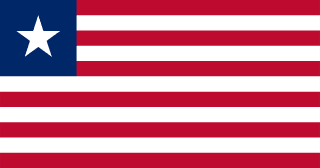
- Its flag, with red and white stripes and a white star on a blue field, is directly inspired by the flag of the United States.
- Ellen Johnson Sirleaf became Africa’s first democratically elected female head of state and received the Nobel Peace Prize in 2011.
- Liberia has the world’s second-largest ship registry by tonnage, with thousands of international vessels sailing under its flag.
- Along with Ethiopia, Liberia is one of only two African countries never colonized by a European power.
- The pygmy hippopotamus, an endangered species, exists in the wild only in the forests of Liberia and neighboring countries.
Liberia in numbers
Latest World Bank and UNDP observations, each with its own year. “World median” is the middle value among the countries that report the same indicator; “#” ranks from the highest value.
Population since 1960
Liberia had 1.1 million people in 1960 and 5.7 million in 2025 — 5.0 times as many.
People
56.1% of people live in towns and cities (world median 63.4%). 39.1% are under 15 and 3.3% are 65 or older — a young population. Women have 3.86 children on average, above the replacement level of about 2.1.
Economy
The economy grew by 5.0% in real terms in 2025. Consumer prices rose by 8.3% in 2025. Services make up the largest share of output (40.0% of GDP); agriculture contributes 32.7%, a large share that points to a farming-based economy.
Development and environment
UNDP rates human development in Liberia as low, with an index of 0.510 in 2023 (rank 177 of 193). 32.2% of people use the internet and 34.9% have access to electricity. Forest covers 66.1% of the land (world median 32.8%).
Sources: World Bank, World Development Indicators (CC BY 4.0), most recent observation from 2015 onward; UNDP Human Development Report 2025. Retrieved 2026-10-10. Sector shares need not add up to 100% because taxes and subsidies on products are excluded. Missing values are left blank rather than estimated. Sources and methodology.
Climate of Liberia
Averaged across Liberia, the mean temperature stays between 24.3 °C (August) and 26.8 °C (March) — a swing of only 2.5 °C, so seasons are marked by rainfall rather than by heat.
About 2,448 mm of precipitation falls in a typical year. September is the wettest month (411 mm) and January the driest (34 mm). The wettest stretch is July to September, with 44% of the year's total.
Show monthly values as a table
| Month | Mean °C | Low °C | High °C | Precipitation, mm |
|---|---|---|---|---|
| January | 24.8 | 18.8 | 30.9 | 34 |
| February | 26.0 | 20.0 | 32.0 | 54 |
| March | 26.8 | 21.2 | 32.4 | 107 |
| April | 26.7 | 21.7 | 31.9 | 140 |
| May | 26.3 | 21.8 | 30.8 | 237 |
| June | 25.5 | 21.6 | 29.4 | 335 |
| July | 24.5 | 21.1 | 28.1 | 315 |
| August | 24.3 | 21.0 | 27.7 | 340 |
| September | 24.8 | 21.1 | 28.6 | 411 |
| October | 25.3 | 21.2 | 29.4 | 291 |
| November | 25.6 | 21.2 | 30.0 | 131 |
| December | 24.9 | 19.9 | 29.9 | 52 |
Figures are 1991–2020 averages across the whole land area of Liberia, from the World Bank Climate Change Knowledge Portal, CRU TS 4.08 (CC BY 4.0). They are not readings from one weather station: the capital, the coast and high ground can be much warmer, cooler, wetter or drier.
Travel essentials for Liberia
The practical details visitors ask about first. Traffic in Liberia drives on the right, like most of the world. Mains electricity is 120 V at 60 Hz, so appliances built only for 220–240 V need a voltage converter.
- Emergency number
- 911
- Driving side
- Right
- Plug types
- Type A, Type B, Type C, Type E, Type FA: two flat parallel pins; B: two flat pins plus a round earth pin; C: two round pins (Europlug); E: two round pins, earth pin in the socket; F: two round pins with side earth clips (Schuko)
- Voltage
- 120 V60 Hz
- Dialling code
- +231From abroad: your exit code, then 231 and the number
- Currency
- Liberian Dollar (LRD)
- Time zone
- GMT (UTC+0)Current local time in Liberia
Compiled from IEC plug and voltage standards, national emergency-service listings and the UN road-traffic conventions. Emergency numbers and local coverage can change — confirm them locally on arrival. Liberia's internet domain is .lr.
Where Liberia ranks in the world
Each position counts only the countries with data in that ranking guide. First place is the highest value — for price levels, the most expensive. Select a card to see the full table.
- Population116th of 1965.9 millionUN projection, July 2026
- Land area106th of 19596,320 km²World Bank, 2023
- Population density128th of 19457 per km²World Bank, 2023
- GDP (nominal)156th of 187$4.8BWorld Bank, 2024, current US$
- GDP per capita177th of 187$851World Bank, 2024, current US$
- Life expectancy179th of 19462.3 yearsWorld Bank, 2024
- Price level85th of 16546 (US = 100)ICP 2021, household consumption
Bordering countries of Liberia


Compare Liberia with another country
Frequently asked questions about Liberia
What is the capital of Liberia?
The capital of Liberia is Monrovia.
What is the population of Liberia?
The UN World Population Prospects projection for Liberia is 5,853,949 people (5.9 million) on 1 July 2026. National statistical offices may publish different estimates.
What language is spoken in Liberia?
The official language of Liberia is English.
What currency is used in Liberia?
The currency of Liberia is the Liberian Dollar (LRD).
How big is Liberia?
Liberia covers an area of 111,369 km².
What type of government does Liberia have?
Liberia is a presidential republic.
Which countries border Liberia?
Liberia shares land borders with Sierra Leone, Guinea, Ivory Coast.
What is the highest point in Liberia?
The highest point in Liberia is Mount Wuteve (1,440 m).


