Cambodia
Kingdom of Cambodia
Population: UN WPP 2024, revision 1, projection for 1 July 2026. Sources and methodology.
Geography and territory
Cambodia sits at the heart of mainland Southeast Asia, covering an area of 181,035 square kilometers. It shares borders with Thailand to the west and northwest, Laos to the north, and Vietnam to the east and southeast, while its southwestern edge opens onto the Gulf of Thailand along roughly 440 kilometers of coastline. The country’s geography is dominated by a broad central plain surrounding the Tonle Sap lake, flanked by the Cardamom and Elephant Mountains to the southwest and the Dangrek range along the Thai frontier to the north. Phnom Aural, at 1,810 meters, is the nation’s highest peak.
The Mekong River flows through Cambodia for about 500 kilometers, serving as a vital artery for transport, fishing, and agriculture. The Tonle Sap lake is one of the world’s great hydrological wonders: during the rainy season, the swollen Mekong reverses the flow of the Tonle Sap River, causing the lake to swell to roughly five times its dry-season size and reach as much as 16,000 square kilometers, making it the largest freshwater lake in Southeast Asia. This seasonal pulse produces one of the densest concentrations of freshwater fish anywhere on Earth and sustains the livelihoods of millions who live along its shores.
Cambodia’s climate is tropical monsoonal, with a wet season running from May through October and a dry season from November to April, and temperatures that stay warm year-round, typically between 25 and 35 degrees Celsius. Despite decades of accelerating deforestation, the country still holds substantial stretches of rainforest in the Cardamom Mountains, considered one of the last strongholds of wildlife in mainland Southeast Asia, home to tigers, elephants, sun bears, and critically endangered Siamese crocodiles.
History
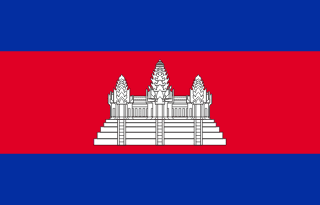
Cambodian history reaches its most glorious chapter with the Khmer Empire, one of the most remarkable civilizations Asia has produced, which dominated much of mainland Southeast Asia between the ninth and fifteenth centuries. Ruling from their capital at Angkor, Khmer kings built a sophisticated state supported by an ingenious system of reservoirs and canals and expressed through monumental architecture with few equals anywhere in the world. Angkor Wat, originally a Hindu temple dedicated to Vishnu and later converted to Buddhist worship, is the largest religious monument ever constructed and stands today as the supreme symbol of Khmer identity, so central to the national imagination that it appears on Cambodia’s flag.
The empire’s decline after the fifteenth century, combined with repeated incursions from Thai and Vietnamese neighbors and the imposition of a French protectorate in 1863, left Cambodia vulnerable for centuries. Independence finally arrived on 9 November 1953 under King Norodom Sihanouk. The darkest chapter, however, came with the Khmer Rouge regime led by Pol Pot from 1975 to 1979, a genocidal government that emptied the cities, abolished private property and organized religion, and killed an estimated one and a half to two million people, roughly a quarter of the population, in one of the twentieth century’s gravest crimes against humanity.
Vietnamese occupation from 1979 to 1989, a protracted civil war, and the 1991 Paris Peace Accords eventually opened the path to reconstruction. The monarchy was restored, and elections were held under United Nations supervision. The Khmer Rouge Tribunal, established in 2006, sought justice for the genocide’s victims. Since the early 2000s Cambodia has experienced sustained economic growth, though its political governance continues to draw international concern over restrictions on opposition parties and press freedom.
Culture and society
Cambodian culture is deeply rooted in the legacy of the Khmer Empire and in Theravada Buddhism, which is practiced by the overwhelming majority of the population. Buddhist monasteries, known as wats, function as centers of community life, education, and ceremony, and temporary ordination as a monk remains a rite of passage for young men. The festival calendar revolves around Buddhist observances such as Pchum Ben, an ancestor festival during which families offer food to monks in memory of the deceased, and Bon Om Touk, the Water Festival that celebrates the reversal of the Tonle Sap’s flow.
Classical Khmer dance, often called Apsara dance after the celestial nymphs depicted in Angkor’s temple carvings, ranks among the most refined artistic traditions in Southeast Asia. With codified hand gestures, gilded headdresses, and shimmering costumes, dancers reenact episodes from the Reamker, the Khmer version of the Ramayana epic. Nearly extinguished when the Khmer Rouge murdered most of the country’s artists, the tradition has been patiently rebuilt and was later recognized by UNESCO as an Intangible Cultural Heritage of Humanity.
Cambodian society remains predominantly rural, with the majority of the population living outside the major cities. The extended family forms the basic social unit, and respect for elders and for monks is a core value. The trauma of the genocide remains present in collective memory, and memorial sites such as the Tuol Sleng Genocide Museum, housed in the former S-21 prison, and the Choeung Ek Killing Fields stand as sobering testimonies that the country preserves so the atrocities are never forgotten.
Economy
Cambodia’s economy has grown remarkably since the early 2000s, at times posting annual growth rates above 7 percent that placed it among the fastest-growing economies in Southeast Asia. Its economic pillars include the garment and footwear industry, which accounts for the large majority of exports, alongside tourism, construction, and agriculture. The garment sector alone employs hundreds of thousands of workers, most of them women, producing for major international fashion brands.
Tourism, centered on the temples of Angkor but increasingly diversifying toward the beaches of Sihanoukville and ecotourism in the Cardamom Mountains, contributes a significant share of national output. Agriculture, especially rice cultivation, for which Cambodia has built a reputation for high-quality exports, along with Tonle Sap fishing and rubber and cashew plantations, continues to employ most of the workforce. Chinese investment has expanded enormously over the past decade, particularly in infrastructure, casinos, and special economic zones.
Cambodia still faces substantial development challenges. Poverty, though sharply reduced, persists in rural areas, and the education and health care systems require significant improvement. Deforestation continues to threaten fragile ecosystems, and a large informal economy coexists with a de facto dollarized financial system, in which the US dollar circulates widely alongside the riel, reflecting the underlying fragility of local financial institutions. Even so, a young population, deepening integration into global supply chains, and untapped tourism potential all point toward continued growth.
Food and cuisine
Cambodian cuisine, less internationally known than that of its Thai and Vietnamese neighbors, has a distinct character defined by subtler, less fiery flavors. Amok, widely regarded as the national dish, consists of fish, traditionally freshwater fish from the Tonle Sap, cooked in a mousse of coconut milk, Khmer curry paste, kaffir lime leaves, and egg, then steamed in a banana-leaf bowl. Its creamy texture and delicate aromatics make it one of the region’s most distinctive culinary experiences.
Prahok, a fermented fish paste, is the essential seasoning of Khmer cooking, comparable to Vietnamese fish sauce but with an even bolder presence and complexity of flavor. It appears in soups, curries, salads, and dipping sauces, and its pungent aroma is unmistakable in local markets. Lok lak, stir-fried beef served over rice with a Kampot pepper and lime dipping sauce, and bai sach chrouk, grilled pork marinated in coconut milk and served with rice, are beloved everyday dishes enjoyed throughout the country.
Kampot pepper, considered among the finest in the world and protected by a geographic designation of origin, is Cambodian cuisine’s signature seasoning and a growing export product. The markets of Phnom Penh, including the art deco Central Market and the sprawling Russian Market, offer an immersive introduction to local flavors: rice noodles topped with curry, grilled skewers, tropical fruits such as durian and mangosteen, and freshly squeezed juices. Num, sweet or savory rice cakes wrapped in banana leaves, represent the country’s traditional confectionery, especially prominent during festivals.
Tourism and landmarks
Angkor, inscribed as a UNESCO World Heritage Site, is Cambodia’s premier destination and one of the most extraordinary archaeological complexes on the planet. Angkor Wat, the largest religious building in the world, pairs architecture of near-perfect proportion with bas-reliefs that narrate an epic sweep of battles, Hindu mythology, and scenes of everyday Khmer life. Angkor Thom, entered through an enigmatic southern gate flanked by carved gods and demons, and the Bayon temple, with its 216 serene stone faces gazing outward from its towers, together create an experience of profound spiritual and aesthetic depth.
Ta Prohm, the temple overtaken by massive silk-cotton tree roots that embrace its ancient stones, offers a striking image of nature reclaiming human achievement. Beyond these headline sites, the wider Angkor complex encompasses hundreds of structures scattered through forest, revealing further treasures to visitors willing to wander less-trodden paths. Banteay Srei, carved from pink sandstone with a precision that rivals fine jewelry work, is often called the crown jewel of Khmer art.
Phnom Penh, the capital, offers the Royal Palace with its Silver Pagoda, a lively riverside promenade along the Tonle Sap, and a food and arts scene undergoing a genuine renaissance. The beaches of Kep and Kampot, with their fading French colonial architecture, the pristine islands of Koh Rong and Koh Rong Samloem, and the ecotourism trails of the Cardamom Mountains round out the country’s appeal beyond Angkor. Battambang, Cambodia’s second city, draws visitors with its improvised bamboo train, its socially minded Phare Circus, and a pace of life that feels like the country’s most authentic side.
Fun facts about Cambodia
- Angkor Wat has a perimeter of more than five kilometers and appears on Cambodia’s national flag, making Cambodia the only country in the world with a building depicted on its flag.
- The Tonle Sap is one of the very few rivers on Earth that reverses its direction of flow, a phenomenon celebrated each year during the Bon Om Touk Water Festival.
- Kampot pepper was prized by French colonial-era chefs as among the finest in the world, and it has since regained international recognition through a protected designation of origin.
- The US dollar circulates so widely in Cambodia that it functions as a de facto second currency alongside the riel, and most commercial transactions are conducted in dollars.
- Cambodia has one of the youngest populations in the world, a demographic legacy shaped in part by the enormous loss of life during the Khmer Rouge genocide.
- The Khmer alphabet, with 74 letters, is recognized by Guinness World Records as the longest alphabet in use anywhere.
Cambodia in numbers
Latest World Bank and UNDP observations, each with its own year. “World median” is the middle value among the countries that report the same indicator; “#” ranks from the highest value.
Population since 1960
Cambodia had 5.4 million people in 1960 and 17.8 million in 2025 — 3.3 times as many.
People
41.1% of people live in towns and cities (world median 63.4%). 29.5% are under 15 and 6.4% are 65 or older — a middle-aged population. Women have 2.55 children on average, above the replacement level of about 2.1.
Economy
The economy grew by 5.3% in real terms in 2025. Consumer prices rose by 2.4% in 2025. Industry makes up the largest share of output (43.1% of GDP); agriculture contributes 16.1%.
Development and environment
UNDP rates human development in Cambodia as medium, with an index of 0.606 in 2023 (rank 151 of 193). 68.5% of people use the internet and 99.2% have access to electricity. Forest covers 37.6% of the land (world median 32.8%).
Sources: World Bank, World Development Indicators (CC BY 4.0), most recent observation from 2015 onward; UNDP Human Development Report 2025. Retrieved 2026-10-10. Sector shares need not add up to 100% because taxes and subsidies on products are excluded. Missing values are left blank rather than estimated. Sources and methodology.
Climate of Cambodia
Averaged across Cambodia, the mean temperature stays between 25.5 °C (December) and 29.3 °C (April) — a swing of only 3.8 °C, so seasons are marked by rainfall rather than by heat.
About 1,850 mm of precipitation falls in a typical year. August is the wettest month (315 mm) and January the driest (11 mm). The wettest stretch is July to September, with 49% of the year's total.
Show monthly values as a table
| Month | Mean °C | Low °C | High °C | Precipitation, mm |
|---|---|---|---|---|
| January | 25.7 | 20.4 | 31.0 | 11 |
| February | 26.9 | 21.5 | 32.3 | 16 |
| March | 28.5 | 23.4 | 33.8 | 50 |
| April | 29.3 | 24.2 | 34.4 | 90 |
| May | 28.8 | 24.2 | 33.5 | 167 |
| June | 28.1 | 23.9 | 32.4 | 256 |
| July | 27.5 | 23.8 | 31.3 | 280 |
| August | 27.4 | 23.7 | 31.3 | 315 |
| September | 27.2 | 23.6 | 30.9 | 309 |
| October | 26.9 | 23.2 | 30.6 | 236 |
| November | 26.6 | 22.4 | 30.7 | 94 |
| December | 25.5 | 20.9 | 30.2 | 26 |
Figures are 1991–2020 averages across the whole land area of Cambodia, from the World Bank Climate Change Knowledge Portal, CRU TS 4.08 (CC BY 4.0). They are not readings from one weather station: the capital, the coast and high ground can be much warmer, cooler, wetter or drier.
Travel essentials for Cambodia
The practical details visitors ask about first. Traffic in Cambodia drives on the right, like most of the world. Mains electricity is 230 V at 50 Hz, so devices made only for 110–120 V (common in North America) need a converter unless they are dual-voltage — most phone and laptop chargers are.
- Emergency number
- 117Ambulance 119 · Fire 118
- Driving side
- Right
- Plug types
- Type A, Type C, Type GA: two flat parallel pins; C: two round pins (Europlug); G: three rectangular pins (British)
- Voltage
- 230 V50 Hz
- Dialling code
- +855From abroad: your exit code, then 855 and the number
- Currency
- Cambodian Riel (KHR)
- Time zone
- ICT (UTC+7)Current local time in Cambodia
Compiled from IEC plug and voltage standards, national emergency-service listings and the UN road-traffic conventions. Emergency numbers and local coverage can change — confirm them locally on arrival. Cambodia's internet domain is .kh.
Where Cambodia ranks in the world
Each position counts only the countries with data in that ranking guide. First place is the highest value — for price levels, the most expensive. Select a card to see the full table.
- Population73rd of 19618.1 millionUN projection, July 2026
- Land area88th of 195176,520 km²World Bank, 2023
- Population density89th of 19499 per km²World Bank, 2023
- GDP (nominal)94th of 187$46.4BWorld Bank, 2024, current US$
- GDP per capita140th of 187$2,628World Bank, 2024, current US$
- Life expectancy126th of 19470.8 yearsWorld Bank, 2024
- Price level116th of 16538 (US = 100)ICP 2021, household consumption
Bordering countries of Cambodia


Compare Cambodia with another country
Frequently asked questions about Cambodia
What is the capital of Cambodia?
The capital of Cambodia is Phnom Penh.
What is the population of Cambodia?
The UN World Population Prospects projection for Cambodia is 18,051,219 people (18.1 million) on 1 July 2026. National statistical offices may publish different estimates.
What language is spoken in Cambodia?
The official language of Cambodia is Khmer (Cambodian).
What currency is used in Cambodia?
The currency of Cambodia is the Cambodian Riel (KHR).
How big is Cambodia?
Cambodia covers an area of 181,035 km².
What type of government does Cambodia have?
Cambodia is a parliamentary constitutional monarchy.
Which countries border Cambodia?
Cambodia shares land borders with Thailand, Laos, Vietnam.
What is the highest point in Cambodia?
The highest point in Cambodia is Phnom Aural (1,810 m).


