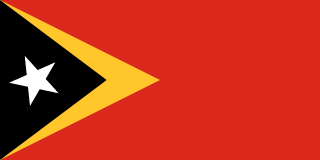
Timor-Leste
Democratic Republic of Timor-Leste
Population: UN WPP 2024, revision 1, projection for 1 July 2026. Sources and methodology.
Geography and territory
Timor-Leste occupies the eastern half of the island of Timor, the largest of the Lesser Sunda Islands, at the far southeastern edge of the Indonesian archipelago. Covering 14,874 square kilometers, the country also includes the Oecusse enclave on the northern coast of Indonesian West Timor, the island of Atauro just off Dili, and the small islet of Jaco at the country’s easternmost tip. The Banda Sea lies to the north and the Timor Sea to the south, separating the country from Australia, roughly 640 kilometers away.
The terrain is overwhelmingly mountainous, dominated by a central range that runs east to west and peaks at Mount Ramelau, also known as Tatamailau, at 2,963 meters, the nation’s highest point and a site of pilgrimage for many Timorese. The mountains drop sharply toward narrow coastal plains, producing a rugged and often spectacular shoreline of cliffs, hidden coves, and white-sand beaches lapped by clear water.
The climate is tropical monsoon, with a wet season from November to May and a dry season from June to October. Coastal temperatures typically range between 25 and 33 degrees Celsius, while the mountains stay cooler at night. The surrounding marine ecosystems are exceptionally rich: the coral reefs around Atauro Island and the northern coast support underwater biodiversity that scientists rank among the densest on Earth by area, with more than 650 reef fish species recorded at a single dive site.
History
Timor-Leste’s history is one of the most dramatic and moving of the 20th century, shaped by centuries of colonization and decades of military occupation that forged a national identity of remarkable resilience. Austronesian and Papuan peoples settled the island over many millennia, building a culture rich in oral tradition, animist ritual, and social structures organized around sacred ancestral houses known as uma lulik, which still anchor community life in many villages today.
Portuguese traders arrived in Timor in the 16th century, drawn by sandalwood, the fragrant timber that dominated the island’s early economy. Portuguese colonial rule, which lasted more than four centuries from 1515 to 1975, left a deep but uneven mark: the Portuguese language took root among the elite and the Catholic Church became the majority faith, but the colony was left with little infrastructure and lagged well behind neighboring territories in development.
Portugal’s Carnation Revolution in 1974 set decolonization in motion, but before Timor-Leste could consolidate its independence, Indonesia invaded on December 7, 1975, launching a brutal 24-year occupation that killed an estimated 100,000 to 180,000 Timorese, roughly a third of the population. Resistance leaders, including Xanana Gusmão and José Ramos-Horta, who shared the 1996 Nobel Peace Prize, kept the independence movement alive until a UN-supervised referendum in 1999 delivered an overwhelming vote for separation. Formal independence was declared on May 20, 2002, making Timor-Leste the first newly sovereign state of the 21st century.
Culture and society
Timorese culture blends Austronesian tradition, Portuguese influence, and Catholic faith into an identity found nowhere else in Southeast Asia. Catholicism, embraced widely as a symbol of resistance during the Indonesian occupation, is practiced by more than 97 percent of the population, making Timor-Leste the most Catholic country in Asia. Pre-colonial animist beliefs persist alongside it without contradiction: ancestral spirits, sacred houses, and land rituals coexist comfortably with Catholic practice in everyday life.
Tais, a handwoven cotton textile dyed with geometric and symbolic patterns, stands as Timor-Leste’s most emblematic art form. Each region produces tais with its own distinctive motifs, often encoding stories, lineage, and spiritual meaning. Women weave the cloth on hand looms using techniques passed down across generations, and finished tais are used in ceremonies, weddings, funerals, and as gifts of honor. Traditional dance and music, including tebe-dai and likurai, accompany community celebrations with movements evoking harvest, warfare, and fertility.
Timorese society maintains strong communal bonds centered on the uma lulik, sacred houses that serve as the spiritual and social hub of each clan, safeguarding ritual objects, ancestral relics, and genealogical memory. Tetum, an Austronesian language that functions as a lingua franca among the country’s more than 30 language groups, and Portuguese, the official language inherited from colonial rule, coexist with local languages and Indonesian. Young people, who make up a large share of the population, navigate between this deep cultural heritage and the aspirations of one of the world’s youngest nations.
Economy
Timor-Leste’s economy has long depended heavily on oil and gas revenue extracted from the Timor Sea, which has funded a sovereign wealth fund worth well over $15 billion, an extraordinary sum for a country of its size. Yet the gradual depletion of existing fields and slow progress on new extraction agreements raise real questions about the long-term sustainability of this model.
Subsistence agriculture employs the majority of the population, with maize, rice, cassava, and sweet potato as the main crops. Coffee, grown in the central highlands, is the country’s leading non-oil export and has earned international recognition for its quality. Organic Timorese arabica, grown in the shade of native trees and processed using traditional methods, attracts specialty buyers willing to pay premium prices for a crop tied so closely to the nation’s story of resilience.
Timor-Leste faces substantial economic challenges: poverty affects a significant share of the population, infrastructure remains limited, child malnutrition is high, and job creation outside the public sector is insufficient. Tourism holds real promise, given the country’s pristine coral reefs, striking mountains, and distinctive culture, but it remains in its early stages due to a shortage of hotels and transportation links. The government has pursued diversification efforts spanning tourism development, commercial fishing, and agribusiness.
Food and cuisine
Timorese cuisine reflects a simple, rural cooking tradition enriched by the island’s tropical ingredients and by Portuguese and Indonesian influence. Rice and maize form the dietary base, rounded out with local vegetables, legumes, and fresh fish along the coast. Batar da’an, a thick stew of maize with squash, beans, and leafy greens, is one of the most representative everyday dishes, hearty and filling, and especially common during the dry season when rice stocks run low.
Fish and shellfish play a central role in the coastal diet. Ikan saboko, grilled fish marinated in local spices and served with rice and sambal, and tukir, dried fish prepared in various ways, reflect the close relationship between the Timorese and the sea. Portuguese influence surfaces in dishes such as a locally adapted caldo verde and in roasting and stewing techniques that distinguish Timorese cooking from that of its Indonesian neighbors.
Tropical fruit grows in abundance: papaya, mango, banana, coconut, and jackfruit flourish in the island’s warm climate. Timorese coffee, intense and aromatic, is a source of local pride and is commonly served in warung, small family-run eateries, alongside simple rice cakes and ai-manas, a spicy green papaya salad with lime and chili. Tua mutin, palm wine tapped from the lontar palm, is the traditional alcoholic drink of choice at community celebrations and sacred house rituals.
Tourism and landmarks
Timor-Leste remains one of the most untouched and least explored destinations in Southeast Asia, a country where authenticity is simply everyday reality rather than a marketing claim. Atauro Island, just 25 kilometers from Dili, is a haven of marine biodiversity that scientists have ranked among the richest concentrations of reef fish species anywhere on Earth. Its clear waters, ideal for diving and snorkeling, shelter manta rays, dolphins, reef sharks, and pristine coral largely untouched by mass tourism.
Areia Branca beach, a short distance from Dili, offers white sand and turquoise water set against the arid hills nearby. Dili, the capital, mixes Portuguese colonial remnants, grand churches such as the Cathedral of the Immaculate Conception, and bustling markets with the energy of a young nation still under construction. The Cristo Rei statue, erected during the Indonesian occupation on a headland overlooking Dili’s bay, is visible from across the city and reached by a stairway lined with Stations of the Cross.
Mount Ramelau, climbed each year by thousands of Timorese pilgrims, rewards the ascent with views that stretch across the entire island and, on clear days, to the coast of Australia. The Oecusse enclave, the site of the first Portuguese landing in 1515, retains a remote and traditional character, with deserted beaches and villages where uma lulik remain the center of communal life. Jaco Island, uninhabited and considered sacred by local communities, is a natural sanctuary of untouched beaches ringed by an intact coral reef.
Fun facts about Timor-Leste
- Timor-Leste became the first newly sovereign nation of the 21st century when it declared independence on May 20, 2002.
- It is the only majority-Catholic country in Southeast Asia, with more than 97 percent of its population professing the faith.
- Resistance leader José Ramos-Horta received the 1996 Nobel Peace Prize alongside Bishop Carlos Ximenes Belo.
- The waters around Atauro Island hold one of the highest concentrations of reef fish species per unit area recorded anywhere in the world.
- Tetum, spoken alongside Portuguese as an official language, has absorbed numerous Portuguese loanwords, creating a linguistic blend unique in Asia.
- The country’s economy is anchored by a sovereign wealth fund worth more than $15 billion, built from Timor Sea oil and gas revenue.
Timor-Leste in numbers
Latest World Bank and UNDP observations, each with its own year. “World median” is the middle value among the countries that report the same indicator; “#” ranks from the highest value.
Population since 1960
Timor-Leste had 468,118 people in 1960 and 1.4 million in 2025 — 3.0 times as many.
People
28.8% of people live in towns and cities (world median 63.4%). 33.1% are under 15 and 5.2% are 65 or older — a young population. Women have 2.63 children on average, above the replacement level of about 2.1.
Economy
The economy grew by 7.0% in real terms in 2025. Consumer prices rose by 0.4% in 2025. Services make up the largest share of output (71.6% of GDP); agriculture contributes 20.2%, a large share that points to a farming-based economy.
Development and environment
UNDP rates human development in Timor-Leste as medium, with an index of 0.634 in 2023 (rank 142 of 193). 35.0% of people use the internet and 94.3% have access to electricity. Forest covers 71.0% of the land (world median 32.8%).
Sources: World Bank, World Development Indicators (CC BY 4.0), most recent observation from 2015 onward; UNDP Human Development Report 2025. Retrieved 2026-10-10. Sector shares need not add up to 100% because taxes and subsidies on products are excluded. Missing values are left blank rather than estimated. Sources and methodology.
Climate of Timor-Leste
Averaged across Timor-Leste, the mean temperature stays between 23.3 °C (August) and 25.3 °C (November) — a swing of only 2.0 °C, so seasons are marked by rainfall rather than by heat.
About 1,316 mm of precipitation falls in a typical year. January is the wettest month (226 mm) and August the driest (19 mm). The wettest stretch is December to February, with 48% of the year's total.
Show monthly values as a table
| Month | Mean °C | Low °C | High °C | Precipitation, mm |
|---|---|---|---|---|
| January | 25.2 | 21.1 | 29.4 | 226 |
| February | 25.2 | 21.1 | 29.4 | 201 |
| March | 25.2 | 20.9 | 29.6 | 191 |
| April | 24.9 | 20.2 | 29.7 | 98 |
| May | 24.4 | 19.5 | 29.4 | 96 |
| June | 23.8 | 18.8 | 28.8 | 72 |
| July | 23.5 | 18.4 | 28.7 | 45 |
| August | 23.3 | 17.9 | 28.7 | 19 |
| September | 24.0 | 18.7 | 29.4 | 26 |
| October | 24.8 | 19.7 | 29.9 | 43 |
| November | 25.3 | 20.6 | 30.1 | 96 |
| December | 25.2 | 21.0 | 29.4 | 203 |
Figures are 1991–2020 averages across the whole land area of Timor-Leste, from the World Bank Climate Change Knowledge Portal, CRU TS 4.08 (CC BY 4.0). They are not readings from one weather station: the capital, the coast and high ground can be much warmer, cooler, wetter or drier.
Travel essentials for Timor-Leste
The practical details visitors ask about first. Traffic in Timor-Leste drives on the left, one of 54 of the 196 countries profiled here that do — see the full list. Mains electricity is 220 V at 50 Hz, so devices made only for 110–120 V (common in North America) need a converter unless they are dual-voltage — most phone and laptop chargers are.
- Emergency number
- 112
- Driving side
- Left
- Plug types
- Type C, Type E, Type F, Type IC: two round pins (Europlug); E: two round pins, earth pin in the socket; F: two round pins with side earth clips (Schuko); I: two angled flat pins plus earth
- Voltage
- 220 V50 Hz
- Dialling code
- +670From abroad: your exit code, then 670 and the number
- Currency
- US Dollar (USD)
- Time zone
- UTC+9Current local time in Timor-Leste
Compiled from IEC plug and voltage standards, national emergency-service listings and the UN road-traffic conventions. Emergency numbers and local coverage can change — confirm them locally on arrival. Timor-Leste's internet domain is .tl.
Where Timor-Leste ranks in the world
Each position counts only the countries with data in that ranking guide. First place is the highest value — for price levels, the most expensive. Select a card to see the full table.
- Population153rd of 1961.4 millionUN projection, July 2026
- Land area154th of 19514,870 km²World Bank, 2023
- Population density95th of 19493 per km²World Bank, 2023
- GDP (nominal)171st of 187$1.9BWorld Bank, 2024, current US$
- GDP per capita162nd of 187$1,332World Bank, 2024, current US$
- Life expectancy145th of 19467.9 yearsWorld Bank, 2024
Bordering countries of Timor-Leste

Compare Timor-Leste with another country
Frequently asked questions about Timor-Leste
What is the capital of Timor-Leste?
The capital of Timor-Leste is Dili.
What is the population of Timor-Leste?
The UN World Population Prospects projection for Timor-Leste is 1,436,923 people (1.4 million) on 1 July 2026. National statistical offices may publish different estimates.
What language is spoken in Timor-Leste?
The official language of Timor-Leste is Tetum, Portuguese.
What currency is used in Timor-Leste?
The currency of Timor-Leste is the US Dollar (USD).
How big is Timor-Leste?
Timor-Leste covers an area of 14,874 km².
What type of government does Timor-Leste have?
Timor-Leste is a semi-presidential republic.
Which countries border Timor-Leste?
Timor-Leste shares land borders with Indonesia.
What is the highest point in Timor-Leste?
The highest point in Timor-Leste is Mount Ramelau (2,963 m).


