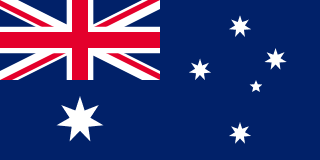
Australia
Commonwealth of Australia
Population: UN WPP 2024, revision 1, projection for 1 July 2026. Sources and methodology.
Geography and territory
Australia is both a country and a continent, the only nation on Earth to occupy an entire landmass by itself. Covering 7,692,024 square kilometers, it ranks as the sixth-largest country in the world, yet its population is concentrated overwhelmingly along the coasts, leaving the interior sparsely settled. The Commonwealth comprises six states and two mainland territories, along with a scattering of external territories such as Christmas Island and the Cocos (Keeling) Islands. Having no land borders with any other nation, Australia is bounded entirely by ocean, with a coastline stretching for tens of thousands of kilometers between the Indian, Southern, and Pacific waters.
The continent is famously flat and old, with an average elevation of only a few hundred meters, making it the lowest and one of the most geologically stable landmasses on the planet. The Great Dividing Range runs along the eastern seaboard from Queensland through New South Wales into Victoria, and within it stands Mount Kosciuszko, Australia’s highest peak at 2,228 meters. Far to the west and north lies the Outback, a vast semi-arid and desert expanse dominated by red earth, spinifex grasslands, and dramatic formations such as Uluru, the immense sandstone monolith sacred to Aboriginal peoples.
Off the northeastern coast of Queensland lies the Great Barrier Reef, the largest living structure on Earth, stretching more than 2,300 kilometers and supporting an extraordinary wealth of marine life. Millions of years of isolation from other continents gave Australia a singular flora and fauna found nowhere else, including kangaroos, koalas, the egg-laying platypus, and the Tasmanian devil. Tropical rainforests in Queensland, alpine snowfields in the southeast, and Mediterranean climates around Perth and Adelaide add further variety to a continent often stereotyped as uniformly arid.
History
Human history in Australia stretches back at least 65,000 years, when the ancestors of today’s Aboriginal and Torres Strait Islander peoples arrived, making their culture among the oldest continuous civilizations on Earth. These communities developed intricate systems of law, art, and spirituality grounded in a deep connection to the land, encapsulated in the concept of the Dreaming, which explains the creation of the world and continues to shape Indigenous life today. Hundreds of distinct language groups and nations existed across the continent prior to European contact.
European engagement began in earnest in 1770, when Captain James Cook charted the eastern coastline and claimed it for Britain. In 1788 the First Fleet established a penal colony at Sydney Cove, beginning nearly eight decades of British settlement built substantially on convict transportation. Over the nineteenth century six separate colonies took shape, each developing its own institutions, and waves of free migrants arrived, particularly during the gold rushes of the 1850s in Victoria and New South Wales, which transformed the colonial economy and population almost overnight.
On 1 January 1901, the six colonies united to form the Commonwealth of Australia, adopting a federal parliamentary system under the British Crown. The twentieth century brought participation in both world wars, including the Gallipoli campaign that gave rise to the Anzac legend and a distinct national identity separate from Britain. In recent decades, Australia has grappled more openly with its colonial past, extending greater recognition to Aboriginal land rights and culture, though full reconciliation between Indigenous and non-Indigenous Australians remains an ongoing national project.
Culture and society
Australian culture is a layered blend of ancient Aboriginal traditions, British colonial heritage, and the customs brought by generations of immigrants from across the globe. Aboriginal art, distinguished by its dot-painting techniques and ancestral symbolism, is celebrated internationally as one of the world’s oldest continuous artistic traditions, and institutions such as the National Gallery of Australia in Canberra and the Museum of Contemporary Art in Sydney showcase both Indigenous and contemporary work at the highest level.
Sport occupies an almost sacred place in Australian life. Cricket, rugby, Australian Rules football, and swimming inspire fierce loyalty and national pride, and the country has hosted the Summer Olympics twice, in Melbourne in 1956 and Sydney in 2000. Australian athletes consistently rank among the world’s best in swimming and other water sports, a reflection of a national lifestyle oriented toward beaches and the outdoors.
Few societies are as multicultural as Australia’s, where roughly one in four residents was born overseas, a legacy of sustained immigration from Europe, Asia, and beyond since the mid-twentieth century. This diversity infuses the food, festivals, and daily rhythms of cities like Sydney, Melbourne, and Brisbane. Underpinning it all is the notion of “mateship,” an ethos of camaraderie, loyalty, and egalitarianism that Australians regard as central to their national character, paired with a famously relaxed and informal social style.
Economy
Australia possesses one of the world’s most resilient and prosperous economies, with a gross domestic product of roughly $1.80 trillion and a record of nearly three uninterrupted decades of growth before the disruption of the 2020 pandemic. Services dominate the economy, accounting for the large majority of output, while mining and agriculture remain vital export engines. Australia ranks among the leading global exporters of iron ore, coal, liquefied natural gas, gold, and aluminum, resources drawn largely from Western Australia and Queensland.
Agriculture, though a smaller share of GDP, is highly efficient and export-oriented. Australia is one of the world’s foremost exporters of wool, beef, wheat, and wine. Its wine industry, centered in regions such as the Barossa Valley, Hunter Valley, and Margaret River, has earned global acclaim, particularly for Shiraz. Vast pastoral stations in the interior support cattle and sheep grazing on a scale unmatched by most other countries.
Tourism and education form additional pillars of the economy. Sydney, Melbourne, and the Great Barrier Reef draw millions of international visitors each year, while Australian universities, including those in Melbourne, Sydney, and the Australian National University in Canberra, attract large numbers of international students, making higher education one of the country’s most valuable service exports. Australia has also emerged as a hub for technology and innovation, with a high standard of living reflected in a Human Development Index rating in the very high category.
Food and cuisine
Australian cuisine has undergone a remarkable transformation, moving well beyond its British colonial roots into a genuinely global fusion style often described as “Modern Australian” or “Mod Oz.” This approach draws on the country’s exceptional local produce and blends culinary techniques from Asia, the Mediterranean, and the Middle East, reflecting the multicultural makeup of contemporary Australia.
Native ingredients, collectively known as bush tucker, are increasingly celebrated in fine dining. Kangaroo, crocodile, emu, macadamia nuts, Davidson plum, wattleseed, and Tasmanian pepper are among the native foods that chefs now weave into contemporary menus. Barramundi, a prized fish from tropical northern waters, and Sydney rock oysters are seafood staples enjoyed across the country’s long coastline.
Australia’s coffee culture is regarded as among the finest anywhere, with Melbourne in particular rivaling the great coffee capitals of the world. The flat white, an espresso drink with silky steamed milk, is an Australian creation that has since spread internationally. Vibrant food markets, such as Melbourne’s Queen Victoria Market and Sydney Fish Market, offer visitors a lively introduction to the country’s diverse culinary landscape, from fresh seafood to multicultural street food.
Tourism and landmarks
Australia offers a remarkable range of travel experiences. The Sydney Opera House, its sail-shaped roofline designed by Jorn Utzon, is the country’s most recognizable symbol and a UNESCO World Heritage Site, standing alongside the Sydney Harbour Bridge to define one of the world’s most photographed skylines. The famous beaches of Bondi and Manly draw surfers and sunbathers from around the globe.
In the red heart of the Northern Territory rises Uluru, formerly known as Ayers Rock, whose colors shift dramatically with the changing light of day, offering one of the continent’s most awe-inspiring natural spectacles. The Great Barrier Reef provides world-class diving and snorkeling among more than a thousand fish species and hundreds of types of coral, while the Great Ocean Road in Victoria, home to the dramatic Twelve Apostles rock formations, ranks among the most scenic coastal drives on Earth.
Melbourne charms visitors with its thriving arts scene, laneways covered in street art, and multicultural food culture, while Tasmania offers pristine wilderness in national parks such as Cradle Mountain. Kakadu National Park in the Northern Territory combines Aboriginal rock art up to 20,000 years old with wetlands teeming with wildlife. For those seeking adventure, the Outback and the Great Barrier Reef together offer some of the most distinctive and memorable travel experiences anywhere in the world.
Fun facts about Australia
- Australia is the second-driest continent on Earth after Antarctica, with roughly a third of its landmass classified as desert.
- The country is home to more venomous species than any other place on the planet, including the box jellyfish, the inland taipan, and the Sydney funnel-web spider.
- The Dingo Fence, stretching more than 5,000 kilometers, is one of the longest structures ever built, designed to protect livestock in the southeast from wild dingoes.
- Australia has driven on the left side of the road since colonial times, a British tradition it has never abandoned.
- The word “selfie” was coined on an Australian internet forum in the early 2000s before spreading into global usage.
- Canberra, rather than Sydney or Melbourne, was purpose-built as the nation’s capital in the early twentieth century as a compromise between the two larger rival cities.
Australia in numbers
Latest World Bank and UNDP observations, each with its own year. “World median” is the middle value among the countries that report the same indicator; “#” ranks from the highest value.
Population since 1960
Australia had 10.3 million people in 1960 and 27.6 million in 2025 — 2.7 times as many.
People
87.7% of people live in towns and cities (world median 63.4%). 17.7% are under 15 and 18.1% are 65 or older — an ageing population. Women have 1.48 children on average, below the replacement level of about 2.1 needed to keep a population stable in the long run without migration.
Economy
The economy grew by 1.4% in real terms in 2025. Consumer prices rose by 2.9% in 2025. Services make up the largest share of output (67.5% of GDP); agriculture contributes 2.3%.
Development and environment
UNDP rates human development in Australia as very high, with an index of 0.958 in 2023 (rank 7 of 193). 96.1% of people use the internet and 100.0% have access to electricity. Forest covers 17.4% of the land (world median 32.8%).
Sources: World Bank, World Development Indicators (CC BY 4.0), most recent observation from 2015 onward; UNDP Human Development Report 2025. Retrieved 2026-10-10. Sector shares need not add up to 100% because taxes and subsidies on products are excluded. Missing values are left blank rather than estimated. Sources and methodology.
Climate of Australia
Averaged across Australia, the warmest month is January (28.4 °C) and the coolest is July (14.7 °C), a seasonal swing of 13.7 °C. The annual mean is 22.1 °C.
About 483 mm of precipitation falls in a typical year. February is the wettest month (91 mm) and September the driest (17 mm). The wettest stretch is December to February, with 49% of the year's total.
Show monthly values as a table
| Month | Mean °C | Low °C | High °C | Precipitation, mm |
|---|---|---|---|---|
| January | 28.4 | 21.6 | 35.2 | 87 |
| February | 27.6 | 21.1 | 34.1 | 91 |
| March | 25.8 | 19.1 | 32.4 | 58 |
| April | 22.5 | 15.6 | 29.4 | 28 |
| May | 18.3 | 11.6 | 25.1 | 24 |
| June | 15.3 | 8.7 | 21.9 | 24 |
| July | 14.7 | 7.6 | 21.8 | 20 |
| August | 16.3 | 8.8 | 23.9 | 17 |
| September | 19.9 | 12.2 | 27.7 | 17 |
| October | 23.3 | 15.6 | 30.9 | 24 |
| November | 25.7 | 18.4 | 33.1 | 36 |
| December | 27.3 | 20.3 | 34.5 | 58 |
Figures are 1991–2020 averages across the whole land area of Australia, from the World Bank Climate Change Knowledge Portal, CRU TS 4.08 (CC BY 4.0). They are not readings from one weather station: the capital, the coast and high ground can be much warmer, cooler, wetter or drier.
Travel essentials for Australia
The practical details visitors ask about first. Traffic in Australia drives on the left, one of 54 of the 196 countries profiled here that do — see the full list. Mains electricity is 230 V at 50 Hz, so devices made only for 110–120 V (common in North America) need a converter unless they are dual-voltage — most phone and laptop chargers are.
- Emergency number
- 000
- Driving side
- Left
- Plug types
- Type II: two angled flat pins plus earth
- Voltage
- 230 V50 Hz
- Dialling code
- +61From abroad: your exit code, then 61 and the number
- Currency
- Australian Dollar (AUD)
- Time zone
- AEST (UTC+10)Current local time in Australia
Compiled from IEC plug and voltage standards, national emergency-service listings and the UN road-traffic conventions. Emergency numbers and local coverage can change — confirm them locally on arrival. Australia's internet domain is .au.
Where Australia ranks in the world
Each position counts only the countries with data in that ranking guide. First place is the highest value — for price levels, the most expensive. Select a card to see the full table.
- Population55th of 19627.2 millionUN projection, July 2026
- Land area6th of 1957,692,020 km²World Bank, 2023
- Population density193rd of 1943.5 per km²World Bank, 2023
- GDP (nominal)14th of 187$1.76TWorld Bank, 2024, current US$
- GDP per capita13th of 187$64,610World Bank, 2024, current US$
- Life expectancy17th of 19483.1 yearsWorld Bank, 2024
- Price level7th of 165113 (US = 100)ICP 2021, household consumption
Compare Australia with another country
Frequently asked questions about Australia
What is the capital of Australia?
The capital of Australia is Canberra.
What is the population of Australia?
The UN World Population Prospects projection for Australia is 27,227,096 people (27.2 million) on 1 July 2026. National statistical offices may publish different estimates.
What language is spoken in Australia?
The official language of Australia is English.
What currency is used in Australia?
The currency of Australia is the Australian Dollar (AUD).
How big is Australia?
Australia covers an area of 7,692,024 km².
What type of government does Australia have?
Australia is a federal parliamentary constitutional monarchy.
What is the highest point in Australia?
The highest point in Australia is Mount Kosciuszko (2,228 m).
