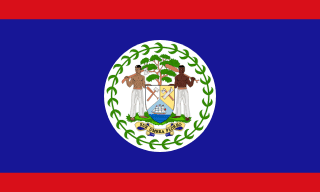
Belize
Belize
Population: UN WPP 2024, revision 1, projection for 1 July 2026. Sources and methodology.
Geography and territory
Belize sits on the Caribbean coast of Central America and is the only country on the region’s mainland with English as its official language. Covering 22,966 square kilometers, it borders Mexico to the north and Guatemala to the west and south, with the Caribbean Sea forming its entire eastern edge. Despite its modest size, Belize packs in a striking range of ecosystems, from coral reefs and coastal mangroves to dense tropical rainforest and pine-covered mountains in the interior.
The Belize Barrier Reef is the second largest in the Northern Hemisphere and the largest in the western Atlantic, stretching roughly 300 kilometers along the coastline. This reef system, a UNESCO World Heritage Site, includes three atolls, hundreds of small cayes, and the celebrated Great Blue Hole, a nearly perfect circular sinkhole about 300 meters across and 125 meters deep that ranks among the most famous dive sites on Earth.
The interior of Belize is covered by dense tropical rainforest that supports a wealth of wildlife, including jaguars, tapirs (the national animal), toucans, howler monkeys, and hundreds of bird species. The Maya Mountains in the south reach their highest point at Doyle’s Delight, 1,124 meters above sea level. The Belize River and other waterways cross the country, while extensive networks of limestone caves, many considered sacred by the ancient Maya, honeycomb the ground beneath the surface.
The country is divided into six districts, Corozal, Orange Walk, Belize, Cayo, Stann Creek, and Toledo, each with its own mix of coastline, farmland, and forest. Belize’s tropical climate is shaped by a distinct wet season from roughly June to November and a drier season for the rest of the year, with the coast and cayes occasionally in the path of Caribbean hurricanes. This combination of reef, rainforest, and river has made Belize one of the most biodiverse countries per square kilometer anywhere in the world.
History
The territory that is now Belize sat at the heart of Maya civilization during the Classic period, home to cities such as Caracol, Lamanai, Xunantunich, and Altun Ha, which supported populations in the tens of thousands. Caracol, the largest archaeological site in Belize, once covered more ground than the present-day capital, Belize City, and rivaled Tikal in importance. The Maya developed sophisticated systems of agriculture, trade, and astronomy here, leaving behind a monumental legacy of pyramids, carved stelae, and stone causeways.
Unlike the rest of Central America, Belize was colonized by the British rather than the Spanish. English pirates and logwood cutters began settling the coast from the seventeenth century onward, harvesting mahogany and dyewood. The colony, known as British Honduras, was formally established in 1862 and withstood repeated Spanish and later Guatemalan attempts to claim the territory. Enslaved Africans brought to the colony intermarried with British settlers and Indigenous peoples, giving rise to Belize’s distinctive Creole culture.
British Honduras gained self-government in 1964, changed its name to Belize in 1973, and achieved full independence on 21 September 1981 under the leadership of George Price, who is regarded as the father of the nation and served as its first prime minister. Guatemala historically claimed the entirety of Belizean territory, a dispute that was ultimately referred to the International Court of Justice in 2019 and remains unresolved, occasionally surfacing as a point of diplomatic tension between the two countries. Garifuna culture, a people of mixed African and Indigenous Caribbean descent who settled along Belize’s southern coast beginning in 1832, has been recognized by UNESCO as an Intangible Cultural Heritage of Humanity.
Culture and society
Belize is one of the most multicultural nations in Central America, its population encompassing Mestizo, Creole, Maya, Garifuna, Mennonite, Chinese, East Indian, and Lebanese communities, all living within a relatively small territory. English is the official language, but Belizean Creole, Spanish, Yucatec Maya, Mopan, Q’eqchi’, and Garifuna are all spoken daily, making Belize a unique linguistic meeting point between the English-speaking Caribbean and Spanish-speaking Latin America.
Garifuna culture deserves special recognition for its richness and originality. Its music, dance, and language were declared an Intangible Cultural Heritage of Humanity by UNESCO in 2001. Garifuna Settlement Day, celebrated on 19 November, ranks among the country’s most important national holidays, commemorating the arrival of the Garifuna people on Belizean shores. Punta, a hypnotic Garifuna dance and musical style, has become the most popular music genre in the country.
Mennonite communities, established in Belize since the 1950s, maintain a traditional agrarian way of life and are the country’s leading food producers. Belizean festivals, such as the September Celebrations marking independence and the Battle of St. George’s Caye, reflect this cultural diversity. Visual arts, woodcarving, Maya basketry, and Garifuna textiles remain living craft traditions that connect the present to the past.
Economy
Belize’s economy is small but diversified, resting on tourism, agriculture, and fishing. Tourism is the leading source of foreign exchange, drawing visitors to the barrier reef system, Maya archaeological sites, tropical rainforest, and Caribbean cayes. Diving and snorkeling along the barrier reef, tours of Maya ruins, and ecotourism in the country’s forest reserves are its most developed segments. Cruise ships calling at Belize City and Harvest Caye bring in hundreds of thousands of additional visitors each year.
Export agriculture centers on sugar, bananas, citrus, and seafood products, particularly shrimp and lobster. Mennonite communities account for much of the country’s poultry, dairy, and vegetable production for the domestic market. The timber industry, historically the backbone of the economy, has declined, though wood and forest products still hold some economic relevance. Modest oil exploration has yielded small-scale production in the Cayo District.
Belize faces economic challenges including high public debt, dependence on imports, and vulnerability to natural disasters. Even so, the country has sustained positive growth rates driven largely by tourism and foreign investment. A strong commitment to environmental conservation, with more than 40 percent of national territory under some form of protection, positions Belize as a premium ecotourism destination with real potential for sustainable growth.
Food and cuisine
Belizean cuisine mirrors the country’s cultural diversity, blending Caribbean, Mexican, Maya, and Garifuna influences. Rice and beans, cooked in coconut milk and served with stewed chicken, beef, or fish, is the everyday dish that unites communities across the country. Belizean tamales, wrapped in banana leaves and filled with chicken or pork in an achiote-based sauce, are a direct inheritance from Maya tradition and are especially popular during festivities.
Garifuna cooking contributes standout dishes such as hudut, a coconut milk fish soup served with machuca, or mashed green plantain, and ereba, cassava bread made through an age-old process of grating, pressing, and toasting bitter cassava. Conch ceviche, prepared with lime, onion, tomato, and cilantro, is a coastal classic found at restaurants and beachside stands across the country.
Garnaches (fried tortillas topped with beans, cheese, and salsa), panades (fried cornmeal turnovers filled with fish or beans), and salbutes (puffed fried tortillas topped with chicken and salad) reflect Mexican and Maya influence on everyday Belizean cooking. Popular drinks include seaweed shake, made from sea moss, milk, and spices, cashew wine, and Belikin, the country’s national beer. Belizean lobster, celebrated at dedicated annual festivals, is a delicacy that draws food lovers from around the world.
Tourism and landmarks
The Great Blue Hole, a marine sinkhole roughly 300 meters across and 125 meters deep, is Belize’s signature landmark and one of the most famous dive sites on the planet. Formed as a limestone cave during the last ice age and later flooded as sea levels rose, its vertical walls hold giant stalactites and abundant marine life, including Caribbean reef sharks, groupers, and sea turtles.
Caye Caulker and Ambergris Caye are Belize’s most visited islands. Caye Caulker, whose motto “go slow” captures its laid-back vibe, offers sandy streets, waterfront seafood restaurants, and easy reef access for snorkeling and diving. Ambergris Caye, the largest and most developed of the two, combines beaches and nightlife with the Hol Chan Marine Reserve, where visitors can swim with stingrays and nurse sharks at the famous Shark Ray Alley.
Belize’s Maya archaeological sites are remarkable in their own right. Caracol, set deep in the rainforest of the Maya Mountains, features a 43-meter pyramid, the tallest structure in the country; Xunantunich overlooks the Mopan River from its palace complex, El Castillo; and Lamanai, reached by boat through the jungle, preserves pyramids and stelae in a spectacular natural setting. The Cockscomb Basin Wildlife Sanctuary, the world’s first jaguar reserve, offers rainforest hiking with the chance to spot the largest cat in the Americas.
Fun facts about Belize
- The Great Blue Hole was popularized by ocean explorer Jacques Cousteau in 1971, who ranked it among the world’s best dive sites.
- Belize is the only country on the Central American mainland where English is the official language.
- Baird’s tapir, the largest land mammal in Central America, is Belize’s national animal and is protected in several reserves.
- Belize is home to the world’s first jaguar reserve, the Cockscomb Basin Wildlife Sanctuary, established in 1984.
- Belize’s Mennonite communities, many of whom live without electricity or motorized vehicles, produce a large share of the country’s food supply.
- Garifuna culture in Belize was among the earliest traditions recognized by UNESCO as an Intangible Cultural Heritage of Humanity, in 2001.
Belize in numbers
Latest World Bank and UNDP observations, each with its own year. “World median” is the middle value among the countries that report the same indicator; “#” ranks from the highest value.
Population since 1960
Belize had 91,318 people in 1960 and 422,924 in 2025 — 4.6 times as many.
People
41.6% of people live in towns and cities (world median 63.4%). 26.3% are under 15 and 5.2% are 65 or older — a middle-aged population. Women have 2.02 children on average, below the replacement level of about 2.1 needed to keep a population stable in the long run without migration.
Economy
The economy grew by 2.7% in real terms in 2025. Consumer prices rose by 1.1% in 2025. Services make up the largest share of output (62.4% of GDP); agriculture contributes 7.9%.
Development and environment
UNDP rates human development in Belize as high, with an index of 0.721 in 2023 (rank 115 of 193). 80.0% of people use the internet and 99.6% have access to electricity. Forest covers 58.0% of the land (world median 32.8%).
Sources: World Bank, World Development Indicators (CC BY 4.0), most recent observation from 2015 onward; UNDP Human Development Report 2025. Retrieved 2026-10-10. Sector shares need not add up to 100% because taxes and subsidies on products are excluded. Missing values are left blank rather than estimated. Sources and methodology.
Climate of Belize
Averaged across Belize, the warmest month is June (27.7 °C) and the coolest is January (23.1 °C), a seasonal swing of 4.6 °C. The annual mean is 25.7 °C.
About 2,088 mm of precipitation falls in a typical year. October is the wettest month (292 mm) and March the driest (52 mm). The wettest stretch is August to October, with 39% of the year's total.
Show monthly values as a table
| Month | Mean °C | Low °C | High °C | Precipitation, mm |
|---|---|---|---|---|
| January | 23.1 | 18.7 | 27.5 | 120 |
| February | 23.9 | 19.0 | 28.8 | 57 |
| March | 25.1 | 20.1 | 30.2 | 52 |
| April | 26.6 | 21.8 | 31.6 | 57 |
| May | 27.5 | 23.0 | 32.0 | 176 |
| June | 27.7 | 23.7 | 31.8 | 249 |
| July | 27.0 | 23.1 | 31.1 | 241 |
| August | 27.1 | 22.8 | 31.5 | 252 |
| September | 27.0 | 22.8 | 31.3 | 269 |
| October | 26.1 | 22.0 | 30.2 | 292 |
| November | 24.1 | 20.1 | 28.1 | 208 |
| December | 23.4 | 19.5 | 27.3 | 114 |
Figures are 1991–2020 averages across the whole land area of Belize, from the World Bank Climate Change Knowledge Portal, CRU TS 4.08 (CC BY 4.0). They are not readings from one weather station: the capital, the coast and high ground can be much warmer, cooler, wetter or drier.
Travel essentials for Belize
The practical details visitors ask about first. Traffic in Belize drives on the right, like most of the world.
- Emergency number
- 911
- Driving side
- Right
- Plug types
- Type B, Type GB: two flat pins plus a round earth pin; G: three rectangular pins (British)
- Dialling code
- +501From abroad: your exit code, then 501 and the number
- Currency
- Belize Dollar (BZD)
- Time zone
- CST (UTC-6)Current local time in Belize
Compiled from IEC plug and voltage standards, national emergency-service listings and the UN road-traffic conventions. Emergency numbers and local coverage can change — confirm them locally on arrival. Belize's internet domain is .bz.
Where Belize ranks in the world
Each position counts only the countries with data in that ranking guide. First place is the highest value — for price levels, the most expensive. Select a card to see the full table.
- Population171st of 196428,644UN projection, July 2026
- Land area147th of 19522,810 km²World Bank, 2023
- Population density172nd of 19418 per km²World Bank, 2023
- GDP (nominal)161st of 187$3.2BWorld Bank, 2024, current US$
- GDP per capita90th of 187$7,681World Bank, 2024, current US$
- Life expectancy99th of 19473.7 yearsWorld Bank, 2024
- Price level56th of 16556 (US = 100)ICP 2021, household consumption
Bordering countries of Belize


Compare Belize with another country
Frequently asked questions about Belize
What is the capital of Belize?
The capital of Belize is Belmopan.
What is the population of Belize?
The UN World Population Prospects projection for Belize is 428,644 people (428,644) on 1 July 2026. National statistical offices may publish different estimates.
What language is spoken in Belize?
The official language of Belize is English.
What currency is used in Belize?
The currency of Belize is the Belize Dollar (BZD).
How big is Belize?
Belize covers an area of 22,966 km².
What type of government does Belize have?
Belize is a constitutional parliamentary monarchy.
Which countries border Belize?
Belize shares land borders with Mexico, Guatemala.
What is the highest point in Belize?
The highest point in Belize is Doyle's Delight (1,124 m).


