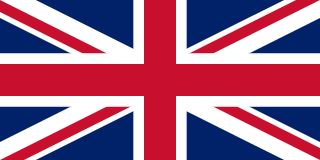
United Kingdom
United Kingdom of Great Britain and Northern Ireland
Population: UN WPP 2024, revision 1, projection for 1 July 2026. Sources and methodology.
Geography and territory
The United Kingdom of Great Britain and Northern Ireland is an island nation off the northwest coast of Europe, made up of four constituent countries: England, Scotland, Wales, and Northern Ireland. Covering 243,610 square kilometers, it occupies the island of Great Britain, the largest of the British Isles, the northeastern portion of the island of Ireland, and more than 6,000 smaller islands. Its only land border in the British Isles is with the Republic of Ireland; the overseas territory of Gibraltar also gives it a short border with Spain.
The terrain varies considerably across the four nations. England combines fertile lowlands in the southeast with hills and moorland farther north, anchored by the Pennines running down its spine. Scotland is the most mountainous region, home to the Highlands and to Ben Nevis, the country’s highest peak at 1,345 meters, along with thousands of lochs, including the famous Loch Ness. Wales is likewise dominated by mountains, centered on the Snowdonia massif, while Northern Ireland blends rolling hills and valleys with the dramatic basalt columns of the Giant’s Causeway.
Britain’s climate is temperate and oceanic, moderated by the Gulf Stream, which keeps temperatures relatively mild for the latitude. The country is famous for its changeable weather, with frequent rain and overcast skies, though rainfall varies considerably by region, with the west notably wetter than the east. Summers tend to be mild and winters comparatively gentle. The River Thames, which flows through London, along with the Severn and the Trent, are the country’s most significant waterways. Coastal cliffs, ancient woodlands, and rolling countryside crisscrossed by footpaths and dry-stone walls give the British landscape a character that has inspired centuries of painters, poets, and novelists.
History
Britain’s history ranks among the most influential in world civilization. The islands were inhabited from prehistoric times, as Stonehenge attests, and were conquered by Rome in the first century AD, which founded Londinium as its provincial capital. After Rome withdrew, waves of Angles, Saxons, and Jutes established a patchwork of Anglo-Saxon kingdoms. The Norman Conquest of 1066, led by William the Conqueror, reshaped English society and introduced lasting elements of French culture and language.
The medieval period produced the Magna Carta of 1215, a foundational document of modern constitutional government. The Wars of the Roses, the Henrician Reformation, the Elizabethan age of Shakespeare, and the defeat of the Spanish Armada in 1588 defined the fifteenth and sixteenth centuries. The English Civil War of the seventeenth century, followed by the Glorious Revolution of 1688 and its Bill of Rights, laid the groundwork for modern parliamentary government, and the 1707 Act of Union formally joined the kingdoms of England and Scotland into a single state.
The British Empire reached its greatest extent in the nineteenth century, at one point encompassing roughly a quarter of the world’s land area and population. The Industrial Revolution, which began in Britain in the eighteenth century, reshaped economies worldwide. The two world wars of the twentieth century eroded imperial power, and the decolonization that followed gave rise to the modern Commonwealth. In 2016, the Brexit referendum set the country on a new course, and the United Kingdom formally left the European Union in January 2020.
Culture and society
The United Kingdom’s cultural influence on the world is immense relative to its size. The English language, spoken as a first or second language by more than 1.5 billion people worldwide, stands as Britain’s most far-reaching cultural export. In literature, the country has produced towering figures, including William Shakespeare, widely regarded as the greatest writer in the English language, alongside Charles Dickens, Jane Austen, the Bronte sisters, George Orwell, Virginia Woolf, and, more recently, J.K. Rowling with the Harry Potter series.
British popular music has reshaped the global cultural landscape. The Beatles, the Rolling Stones, David Bowie, Queen, Pink Floyd, The Who, Led Zeppelin, Radiohead, and Adele are only a few of the artists who have defined entire genres and movements. London’s West End rivals Broadway as a global center for musical theater, and the BBC, founded in 1922, remains one of the world’s most trusted media institutions.
British society today is deeply multicultural, particularly in London, where more than 300 languages are spoken. Long-standing traditions such as afternoon tea, the monarchy, pub culture, and a distinctive strain of satirical humor coexist comfortably with a thoroughly modern, cosmopolitan society. Sport occupies a central place in national life, with football, cricket, rugby, tennis at Wimbledon, and horse racing all functioning as cherished institutions, while the Royal Family continues to command worldwide fascination.
Economy
The United Kingdom has one of the world’s largest economies by nominal GDP, with output of roughly $4.00 trillion. London stands alongside New York as one of the two preeminent financial centers on Earth, with the City of London and Canary Wharf serving as hubs for banking, insurance, currency trading, and capital markets. Financial services form a crucial pillar of the national economy.
The British economy is highly diversified beyond finance. Notable strengths include pharmaceuticals, home to giants such as AstraZeneca and GlaxoSmithKline, aerospace manufacturing through companies like Rolls-Royce and BAE Systems, premium automotive production, telecommunications, and the creative industries spanning music, film, video games, and advertising. British universities, led by Oxford and Cambridge, produce cutting-edge research and draw talent from around the globe.
The energy sector remains significant, with substantial oil and gas reserves in the North Sea, even as the country pushes aggressively toward renewable energy, particularly offshore wind, where it is a global leader. Brexit has reshaped the country’s trading relationships, prompting a search for new bilateral agreements while the United Kingdom maintains close ties with the Commonwealth and the United States. Manufacturing, though smaller than in past decades, still contributes meaningfully to output, and the country’s ports and logistics networks continue to support its role as a major trading nation.
Food and cuisine
British cuisine, long underestimated on the world stage, has undergone a remarkable transformation over recent decades. The traditional Sunday roast, featuring roasted meat, potatoes, Yorkshire pudding, and vegetables, remains the emblematic dish of British home cooking. The full English breakfast, with eggs, bacon, sausages, baked beans, toast, tomatoes, and mushrooms, is one of the most substantial and recognizable breakfasts in the world.
Fish and chips, battered fish served with fried potatoes and traditionally wrapped in paper, is the definitive national dish, found in every city and town across the country. Savory pies filled with meat, chicken, or vegetables, along with shepherd’s pie, bangers and mash, and Scottish haggis, round out the classic British repertoire. British baking traditions include the scone served with clotted cream, sticky toffee pudding, Christmas pudding, and Victoria sponge cake.
The culinary revolution of recent decades has helped establish London as one of the world’s great food capitals, home to an extraordinarily diverse restaurant scene. Chefs such as Gordon Ramsay, Heston Blumenthal, and Jamie Oliver have raised the international profile of British cooking. Pub culture, with its ales, lagers, and stouts such as the famous Guinness, along with the ritual of afternoon tea with sandwiches, scones, and pastries, remain distinctly British culinary institutions.
Tourism and landmarks
The United Kingdom ranks among the world’s most visited countries. London alone draws more than 20 million international visitors a year, offering an extraordinary concentration of attractions: Buckingham Palace and its changing of the guard, Big Ben and the Houses of Parliament, the Tower of London, Westminster Abbey, the British Museum, free to enter and home to more than eight million objects, the National Gallery, Tate Modern, and lively neighborhoods such as Soho, Camden, and Notting Hill.
Beyond London, Stonehenge and the Avebury stone circle stand as mysterious testaments to prehistory. Bath offers its Roman baths and Georgian architecture, while Oxford and Cambridge enchant visitors with centuries-old colleges. Stratford-upon-Avon is Shakespeare’s birthplace, the Cotswolds offer postcard villages built of honey-colored stone, and York preserves its medieval walls and imposing Gothic cathedral.
Scotland captivates with Edinburgh and its castle, the dramatic scenery of the Highlands, the Isle of Skye, and castles such as Eilean Donan. Wales offers the Snowdonia and Brecon Beacons national parks alongside the medieval castles of Caernarfon and Conwy. Northern Ireland draws visitors to Belfast, the UNESCO-listed Giant’s Causeway, and the scenic Antrim coast. The Lake District in northwest England, which inspired poets such as Wordsworth, continues to captivate with its natural beauty.
Fun facts about United Kingdom
- The United Kingdom has no single written constitution, relying instead on a body of statutes, conventions, and judicial precedent to form its constitutional framework.
- Oxford University, founded in the twelfth century, is the oldest English-speaking university in the world and has educated 28 British prime ministers.
- More than 300 languages are spoken in London, making it one of the most linguistically diverse cities on the planet.
- The world’s first passenger railway opened in 1825 between Stockton and Darlington, and the London Underground, which opened in 1863, was the first subway system in the world.
- Queen Elizabeth II was the longest-reigning monarch in British history, ruling for 70 years from 1952 until her death in 2022.
- With a population of about 69.9 million across an area of 243,610 square kilometers, the United Kingdom is one of the most densely populated large countries in Europe.
The United Kingdom in numbers
Latest World Bank and UNDP observations, each with its own year. “World median” is the middle value among the countries that report the same indicator; “#” ranks from the highest value.
Population since 1960
The United Kingdom had 52.4 million people in 1960 and 69.5 million in 2025 — 33% more.
People
83.3% of people live in towns and cities (world median 63.4%). 17.0% are under 15 and 19.7% are 65 or older — an ageing population. Women have 1.55 children on average, below the replacement level of about 2.1 needed to keep a population stable in the long run without migration.
Economy
The economy grew by 1.4% in real terms in 2025. Consumer prices rose by 3.9% in 2025. Services make up the largest share of output (73.1% of GDP); agriculture contributes 0.6%.
Development and environment
UNDP rates human development in the United Kingdom as very high, with an index of 0.946 in 2023 (rank 13 of 193). 95.5% of people use the internet and 100.0% have access to electricity. Forest covers 13.5% of the land (world median 32.8%).
Sources: World Bank, World Development Indicators (CC BY 4.0), most recent observation from 2015 onward; UNDP Human Development Report 2025. Retrieved 2026-10-10. Sector shares need not add up to 100% because taxes and subsidies on products are excluded. Missing values are left blank rather than estimated. Sources and methodology.
Climate of the United Kingdom
Averaged across the United Kingdom, the warmest month is July (15.4 °C) and the coolest is January (4.1 °C), a seasonal swing of 11.3 °C. The annual mean is 9.3 °C.
About 1,185 mm of precipitation falls in a typical year. December is the wettest month (130 mm) and May the driest (71 mm).
Show monthly values as a table
| Month | Mean °C | Low °C | High °C | Precipitation, mm |
|---|---|---|---|---|
| January | 4.1 | 1.7 | 6.6 | 120 |
| February | 4.2 | 1.4 | 7.0 | 95 |
| March | 5.8 | 2.5 | 9.2 | 86 |
| April | 7.9 | 4.0 | 12.0 | 72 |
| May | 10.8 | 6.5 | 15.1 | 71 |
| June | 13.5 | 9.3 | 17.7 | 78 |
| July | 15.4 | 11.2 | 19.6 | 85 |
| August | 15.2 | 11.2 | 19.3 | 95 |
| September | 13.1 | 9.3 | 16.9 | 95 |
| October | 9.9 | 6.8 | 13.1 | 129 |
| November | 6.7 | 4.1 | 9.4 | 130 |
| December | 4.5 | 2.0 | 7.0 | 130 |
Figures are 1991–2020 averages across the whole land area of the United Kingdom, from the World Bank Climate Change Knowledge Portal, CRU TS 4.08 (CC BY 4.0). They are not readings from one weather station: the capital, the coast and high ground can be much warmer, cooler, wetter or drier.
Travel essentials for the United Kingdom
The practical details visitors ask about first. Traffic in the United Kingdom drives on the left, one of 54 of the 196 countries profiled here that do — see the full list. Mains electricity is 230 V at 50 Hz, so devices made only for 110–120 V (common in North America) need a converter unless they are dual-voltage — most phone and laptop chargers are.
- Emergency number
- 999
- Driving side
- Left
- Plug types
- Type GG: three rectangular pins (British)
- Voltage
- 230 V50 Hz
- Dialling code
- +44From abroad: your exit code, then 44 and the number
- Currency
- Pound Sterling (GBP)
- Time zone
- GMT (UTC+0)Current local time in the United Kingdom
Compiled from IEC plug and voltage standards, national emergency-service listings and the UN road-traffic conventions. Emergency numbers and local coverage can change — confirm them locally on arrival. The United Kingdom's internet domain is .uk.
Where the United Kingdom ranks in the world
Each position counts only the countries with data in that ranking guide. First place is the highest value — for price levels, the most expensive. Select a card to see the full table.
- Population22nd of 19669.9 millionUN projection, July 2026
- Land area78th of 195241,930 km²World Bank, 2023
- Population density31st of 194283 per km²World Bank, 2023
- GDP (nominal)6th of 187$3.70TWorld Bank, 2024, current US$
- GDP per capita20th of 187$53,341World Bank, 2024, current US$
- Life expectancy35th of 19481.4 yearsWorld Bank, 2024
- Price level15th of 16599 (US = 100)ICP 2021, household consumption
Bordering countries of the United Kingdom


Compare the United Kingdom with another country
Frequently asked questions about the United Kingdom
What is the capital of the United Kingdom?
The capital of the United Kingdom is London.
What is the population of the United Kingdom?
The UN World Population Prospects projection for the United Kingdom is 69,931,528 people (69.9 million) on 1 July 2026. National statistical offices may publish different estimates.
What language is spoken in the United Kingdom?
The official language of the United Kingdom is English.
What currency is used in the United Kingdom?
The currency of the United Kingdom is the Pound Sterling (GBP).
How big is the United Kingdom?
The United Kingdom covers an area of 243,610 km².
What type of government does the United Kingdom have?
The United Kingdom is a constitutional parliamentary monarchy.
Which countries border the United Kingdom?
The United Kingdom shares land borders with Ireland, Spain (Gibraltar).
What is the highest point in the United Kingdom?
The highest point in the United Kingdom is Ben Nevis (1,345 m).


