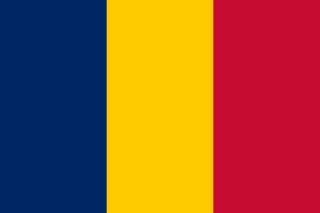
Chad
Republic of Chad
Population: UN WPP 2024, revision 1, projection for 1 July 2026. Sources and methodology.
Geography and territory
Chad is a vast, landlocked nation at the heart of Africa, covering 1,284,000 square kilometers that make it the fifth-largest country on the continent. Its landscape shifts dramatically from the Sahara Desert, which blankets the northern half of the territory, to the lush, humid savannas of the south. The Tibesti Mountains in the far north hold the country’s highest point, Emi Koussi, an extinct volcano rising to 3,445 meters whose 12-kilometer-wide crater ranks among the largest in Africa.
Lake Chad, which lends the country its name, is both its most iconic geographic feature and one of its most alarming. Sitting at the western edge of the country, the lake was once among the largest in Africa, covering roughly 25,000 square kilometers in the 1960s. A combination of prolonged droughts, heavy irrigation demands, and climate change has since shrunk its surface area by more than 90 percent, turning it into one of the starkest symbols of environmental crisis on the planet. Millions of people across four countries still depend on its dwindling waters for fishing, farming, and grazing livestock.
The central part of the country lies within the Sahel, a transitional band of acacia trees and drought-resistant grasses between desert and savanna. South of the Sahel, the land grows progressively greener and more wooded, fed by seasonal rains and by the Chari and Logone rivers, which empty into Lake Chad. This southern region is Chad’s most populous and most agriculturally productive, its fertile soils supporting cotton, sorghum, millet, and rice.
History
The land that is now Chad was home to some of the earliest chapters in human history. Paleontological finds in the Djurab Desert in the north include Sahelanthropus tchadensis, nicknamed Toumaï, a hominin roughly seven million years old that may represent one of the earliest known ancestors of humankind. In later eras, the Lake Chad basin became the center of powerful states, most notably the Kanem-Bornu Empire, which controlled trans-Saharan trade routes for more than a thousand years, from roughly the ninth century into the nineteenth.
French colonization took hold in the late nineteenth and early twentieth centuries, following the defeat of local kingdoms and the warlord Rabih az-Zubayr. The resulting Territoire Militaire du Tchad was absorbed into French Equatorial Africa and governed with little investment in infrastructure or public services. Independence was declared on August 11, 1960, under President François Tombalbaye, ushering in decades of internal conflict between the largely Arab and Muslim north and the predominantly African, Christian, and animist south.
The decades that followed independence were marked by civil wars, foreign interventions, and repeated coups. Libya occupied the Aouzou Strip in the north during the 1970s and 1980s, and France intervened militarily on several occasions. Idriss Déby seized power in 1990 and ruled for three decades until his death in 2021, after which his son Mahamat Idriss Déby took charge of a military transitional council. Achieving lasting political stability and economic development remains the defining challenge facing Chad today.
Culture and society
Chad is a fascinating ethnic and cultural mosaic, home to more than 200 ethnic groups speaking roughly 120 distinct languages. This diversity mirrors the country’s position as a crossroads between Arab North Africa and sub-Saharan Africa, and between the nomadic cultures of the desert and the settled farming societies of the south. The Sara in the south, Chadian Arabs, the Toubou of the Tibesti region, and the Kanembu near Lake Chad are among the largest groups, each with its own traditions, languages, and way of life.
Chad’s musical traditions reflect this same diversity. In the north, Arab-influenced music favors stringed instruments and percussion, while the south leans toward drum-driven rhythms and the ceremonial dances of the Sara peoples. Sai, a modern musical genre that emerged in the neighborhoods of N’Djamena, blends traditional melodies with rock and pop influences. Chadian craftsmanship includes Toubou silverwork, southern basketry, and the elaborate embroidered garments women wear during ceremonies and festivals.
Chadian society places great weight on family and community ties, respect for elders, and hospitality toward outsiders. The tea ceremony, especially prominent in the north, is a central social ritual performed three times in succession, following a well-known local saying: the first glass is bitter like life, the second sweet like love, and the third mellow like death. Islam, practiced by more than half the population, and Christianity, more common in the south, coexist alongside animist beliefs that persist in many communities.
Economy
Chad’s economy shifted dramatically with the start of oil production in 2003, when crude began flowing from fields in the south through a pipeline connecting the country to the Cameroonian port of Kribi. Petroleum quickly became the government’s chief source of revenue and the backbone of the country’s exports, though swings in global oil prices have repeatedly exposed the risks of relying so heavily on a single commodity, in an economy valued at roughly $21.47 billion.
Agriculture and livestock herding remain the sectors that employ the majority of Chadians. Cotton, grown in the south, was for decades the country’s leading export before the oil era began. Transhumant cattle herding, practiced by nomadic peoples across the Sahel and the north, remains an essential livelihood for millions and a major source of meat, milk, and hides. Clashes between settled farmers and nomadic herders over land and water have grown more frequent as climate change tightens the pressure on both.
Chad faces formidable economic and humanitarian challenges. It ranks among the poorest countries in the world, with severely underdeveloped infrastructure, some of the lowest literacy rates on the planet, and a fragile health care system. Food insecurity affects millions, particularly in the Sahelian north. The country also hosts hundreds of thousands of refugees from Sudan, the Central African Republic, and Nigeria, adding further strain to already scarce resources.
Food and cuisine
Chadian cuisine is fundamentally practical and traditional, shaped by the country’s cultural duality and by resourceful adaptation to a demanding environment. Boule, a firm dough made from millet, sorghum, or corn flour, is the country’s staple food, eaten with nearly every meal and shaped by hand into small portions used to scoop up accompanying sauces and stews. Sauce d’arachide, a thick peanut-based stew made with meat or dried fish, is perhaps the most widespread and beloved dish nationwide.
In the south, kissar, a thin fermented millet crepe, serves as a base for sauces made from okra, tomato, or leafy greens. Poisson en sauce, prepared with fresh or dried fish from Lake Chad or the southern rivers, is a staple for communities living along the waterways. Skewers of beef, goat, or camel, grilled over open coals and served with raw onion and hot pepper, are a ubiquitous street food found in markets and city streets across the country.
Tea, known locally as shai, is far more than a beverage — it is a social ritual that structures relationships and daily life. It is brewed in three successive rounds of increasing sweetness, and sharing it is regarded as a sign of hospitality and friendship. Karkanji, a chilled hibiscus-flower infusion, is the refreshment of choice during the hot dry season, while tamarind juice and lait caillé, a soured milk favored especially by pastoral communities in the north, round out the country’s traditional beverages.
Tourism and landmarks
The Tibesti Mountains, in Chad’s far north, form one of the most spectacular and remote landscapes anywhere in Africa. This range of extinct volcanoes and rugged rock formations rising out of the Sahara offers scenery of striking drama: volcanic calderas, hot springs, deep canyons, and ancient rock art. Emi Koussi, with its enormous crater, and Trou au Natron, an 8-kilometer-wide caldera lined with salt deposits that shimmer in the sunlight, draw some of the most adventurous travelers on the planet.
Zakouma National Park, in the southeast, is the centerpiece of Chadian conservation and one of the most authentic safari destinations in Africa. After decades of poaching decimated its elephant population, an ambitious protection program has driven a remarkable recovery, and the park is now home to elephants, giraffes, lions, leopards, buffalo, and one of the richest concentrations of birdlife in Central Africa. A safari in Zakouma, far removed from the crowds of East and Southern Africa, offers an intimate encounter with genuine wilderness.
The Lakes of Ounianga, in the northeastern Sahara, were designated a UNESCO World Heritage Site in 2012. This chain of 18 interconnected lakes, fed by ancient fossil groundwater, appears like a blue mirage amid the vastness of the desert, their waters ranging from deep blue to emerald green and ringed by palm trees and ochre-colored dunes. N’Djamena, the capital, offers the bustling Grand Marché and views over the confluence of the Chari and Logone rivers, which marks the border with Cameroon.
Fun facts about Chad
- The Djurab Desert yielded the 2001 discovery of Sahelanthropus tchadensis, nicknamed Toumaï, a roughly seven-million-year-old hominin that may be among the earliest known ancestors of humans.
- Lake Chad, which gave the country its name, has lost more than 90 percent of its surface area since the 1960s, shrinking from about 25,000 square kilometers to a fraction of that today.
- Chad borders six different countries, making it one of Africa’s most significant geopolitical crossroads.
- The traditional tea ceremony in northern Chad is always performed in three rounds, and declining an offered glass is considered a serious breach of etiquette.
- The Lakes of Ounianga, set deep in the Sahara, form the largest group of permanent lakes in a hyper-arid desert anywhere on Earth, sustained by groundwater that is thousands of years old.
Chad in numbers
Latest World Bank and UNDP observations, each with its own year. “World median” is the middle value among the countries that report the same indicator; “#” ranks from the highest value.
Population since 1960
Chad had 3.0 million people in 1960 and 21.0 million in 2025 — 6.9 times as many.
People
27.6% of people live in towns and cities (world median 63.4%). 46.0% are under 15 and 2.1% are 65 or older — a very young population. Women have 6.03 children on average, above the replacement level of about 2.1.
Economy
The economy grew by 5.6% in real terms in 2025. Consumer prices fell by 3.9% in 2025. Agriculture makes up the largest share of output (36.3% of GDP); agriculture contributes 36.3%, a large share that points to a farming-based economy.
Development and environment
UNDP rates human development in Chad as low, with an index of 0.416 in 2023 (rank 190 of 193). 12.6% of people use the internet and 13.4% have access to electricity. Forest covers 3.0% of the land (world median 32.8%).
Sources: World Bank, World Development Indicators (CC BY 4.0), most recent observation from 2015 onward; UNDP Human Development Report 2025. Retrieved 2026-10-10. Sector shares need not add up to 100% because taxes and subsidies on products are excluded. Missing values are left blank rather than estimated. Sources and methodology.
Climate of Chad
Averaged across Chad, the warmest month is May (32.0 °C) and the coolest is January (21.2 °C), a seasonal swing of 10.8 °C. The annual mean is 27.6 °C.
About 351 mm of precipitation falls in a typical year. August is the wettest month (124 mm) and January the driest (0 mm). The three wettest consecutive months, July to September, bring 76% of the year's total — a pronounced rainy season.
Show monthly values as a table
| Month | Mean °C | Low °C | High °C | Precipitation, mm |
|---|---|---|---|---|
| January | 21.2 | 12.6 | 29.9 | 0 |
| February | 23.9 | 15.1 | 32.7 | 1 |
| March | 27.6 | 19.2 | 36.1 | 2 |
| April | 30.9 | 22.8 | 39.1 | 7 |
| May | 32.0 | 24.4 | 39.7 | 22 |
| June | 31.7 | 24.6 | 38.8 | 34 |
| July | 30.1 | 24.0 | 36.2 | 80 |
| August | 28.9 | 23.2 | 34.7 | 124 |
| September | 29.4 | 22.7 | 36.2 | 61 |
| October | 28.4 | 20.7 | 36.2 | 19 |
| November | 25.0 | 16.6 | 33.3 | 1 |
| December | 22.1 | 13.6 | 30.7 | 1 |
Figures are 1991–2020 averages across the whole land area of Chad, from the World Bank Climate Change Knowledge Portal, CRU TS 4.08 (CC BY 4.0). They are not readings from one weather station: the capital, the coast and high ground can be much warmer, cooler, wetter or drier.
Travel essentials for Chad
The practical details visitors ask about first. Traffic in Chad drives on the right, like most of the world. Mains electricity is 220 V at 50 Hz, so devices made only for 110–120 V (common in North America) need a converter unless they are dual-voltage — most phone and laptop chargers are.
- Emergency number
- 17
- Driving side
- Right
- Plug types
- Type C, Type D, Type E, Type FC: two round pins (Europlug); D: three large round pins in a triangle; E: two round pins, earth pin in the socket; F: two round pins with side earth clips (Schuko)
- Voltage
- 220 V50 Hz
- Dialling code
- +235From abroad: your exit code, then 235 and the number
- Currency
- CFA Franc (XAF)
- Time zone
- WAT (UTC+1)Current local time in Chad
Compiled from IEC plug and voltage standards, national emergency-service listings and the UN road-traffic conventions. Emergency numbers and local coverage can change — confirm them locally on arrival. Chad's internet domain is .td.
Where Chad ranks in the world
Each position counts only the countries with data in that ranking guide. First place is the highest value — for price levels, the most expensive. Select a card to see the full table.
- Population64th of 19621.6 millionUN projection, July 2026
- Land area21st of 1951,259,200 km²World Bank, 2023
- Population density178th of 19415 per km²World Bank, 2023
- GDP (nominal)125th of 187$19.9BWorld Bank, 2024, current US$
- GDP per capita175th of 187$981World Bank, 2024, current US$
- Life expectancy193rd of 19455.2 yearsWorld Bank, 2024
- Price level113th of 16539 (US = 100)ICP 2021, household consumption
Bordering countries of Chad


Compare Chad with another country
Frequently asked questions about Chad
What is the capital of Chad?
The capital of Chad is N'Djamena.
What is the population of Chad?
The UN World Population Prospects projection for Chad is 21,560,380 people (21.6 million) on 1 July 2026. National statistical offices may publish different estimates.
What language is spoken in Chad?
The official language of Chad is French and Arabic.
What currency is used in Chad?
The currency of Chad is the CFA Franc (XAF).
How big is Chad?
Chad covers an area of 1,284,000 km².
What type of government does Chad have?
Chad is a presidential republic.
Which countries border Chad?
Chad shares land borders with Libya, Sudan, Central African Republic, Cameroon, Nigeria, Niger.
What is the highest point in Chad?
The highest point in Chad is Emi Koussi (3,445 m).


