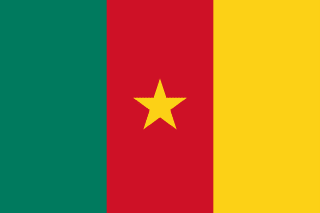
Cameroon
Republic of Cameroon
Population: UN WPP 2024, revision 1, projection for 1 July 2026. Sources and methodology.
Geography and territory
Cameroon is often called Africa in miniature, and with good reason: within its 475,442 square kilometers, the country packs in nearly every landscape and ecosystem found on the continent. From the volcanic beaches of the Gulf of Guinea in the southwest to the semi-arid plains near Lake Chad in the north, and through equatorial rainforest, savanna, mountains, and high plateau along the way, Cameroon offers a geographic range that few countries anywhere can match. Mount Cameroon, rising to 4,095 meters, is the highest point in West Africa and remains an active volcano, having last erupted in the year 2000.
Cameroon’s Atlantic coastline stretches for roughly 400 kilometers, lined with mangroves, beaches, and dense tropical forest. Inland, the terrain climbs toward the Adamawa Plateau, a highland region at around 1,000 meters of elevation that forms a natural divide between the country’s north and south. North of the Adamawa, the landscape gives way to wooded savanna that grows progressively drier until it reaches the shores of Lake Chad, whose surface area has shrunk dramatically over recent decades.
The rainforests of southern and eastern Cameroon form part of the second-largest continuous block of tropical forest on Earth, surpassed only by the Amazon. These forests shelter extraordinary biodiversity, including western lowland gorillas, chimpanzees, forest elephants, and hundreds of species of birds and endemic plants. Cameroon’s river system is similarly impressive, with the Sanaga, Wouri, and Benue rivers draining the country toward the Atlantic and the Lake Chad basin respectively.
History
Cameroon’s territory has been inhabited since prehistoric times and was the setting for migrations of profound importance to African history. The Bantu peoples, who today make up a majority of sub-Saharan Africa’s population, are believed to have originated near the present-day border between Cameroon and Nigeria roughly 4,000 years ago, before spreading out across the continent in one of the great migrations in human history. Precolonial kingdoms and chiefdoms, including those of Bamum, Bamenda, and the Fulani lamidates of the north, built sophisticated political systems and rich cultural traditions.
Cameroon was a German colony from 1884 until the First World War, a period that saw the construction of railways and plantations. Following Germany’s defeat, the territory was divided between France and Britain under League of Nations mandate. French Cameroon, covering most of the territory, gained independence on 1 January 1960. The British-administered portion split in 1961, with the north joining Nigeria and the south federating with the former French Cameroon, an arrangement that gave rise to the country’s official bilingualism.
Ahmadou Ahidjo governed the newly independent country until 1982, when he handed power to Paul Biya, who has remained in office ever since in one of the longest presidential tenures anywhere in the world. Tensions between Cameroon’s Anglophone and Francophone regions have been a recurring feature of national politics, and they escalated sharply after 2016 into a serious crisis in the Northwest and Southwest regions. Despite these challenges, Cameroon has maintained relative stability compared with several of its neighbors.
Culture and society
Cameroon’s cultural wealth mirrors its ethnic diversity, with more than 250 ethnic groups speaking some 280 distinct languages, making the country one of the most fascinating cultural laboratories in Africa. The Bamum sultanate in the west stands out for its extraordinary artistic legacy: in the late nineteenth century, Sultan Ibrahim Njoya devised his own writing system, known as Shu Mom, while promoting the arts and architecture, leaving behind a royal palace that today houses one of Central Africa’s richest museums.
Cameroonian music has had an outsized impact on the African and international music scenes. Makossa, a genre born in Douala, was carried to a global audience by Manu Dibango, whose 1972 hit Soul Makossa influenced artists such as Michael Jackson. Other genres, including bikutsi from the Yaounde region and assiko from Kribi, add further texture to a vibrant musical landscape. Cameroonian literature, with authors such as Mongo Beti, Ferdinand Oyono, and Leonora Miano, has produced landmark works of Francophone African fiction.
Football is a national passion that cuts across every ethnic and linguistic divide. The Indomitable Lions, as the national team is known, have delivered some of the most memorable moments in African football history, including their historic run to the quarterfinals of the 1990 World Cup in Italy, led by the legendary Roger Milla. Cameroon has won the Africa Cup of Nations five times and has produced world-class stars such as Samuel Eto’o, widely regarded as one of the continent’s greatest players.
Economy
Cameroon’s economy is one of the most diversified in Central Africa, which gives it greater resilience than many of its neighbors. Agriculture employs most of the workforce and generates a significant share of exports, with cocoa, coffee, cotton, bananas, and palm oil among the leading products. Cameroon ranks among Africa’s largest cocoa producers and is a major exporter of tropical timber, although deforestation raises serious questions about the long-term sustainability of that trade.
The hydrocarbons sector, centered on oil and natural gas production along the Atlantic coast and near Lake Chad, contributes substantial revenue to the national budget. Oil output, while modest compared with Africa’s largest producers, has helped finance infrastructure and development projects, and liquefied natural gas has become a growing source of export income as production facilities have come online.
The port of Douala, the largest in Central Africa, serves as the commercial gateway for landlocked neighbors such as Chad and the Central African Republic, generating significant income from transit trade and logistics. The services sector, including telecommunications, banking, and commerce, continues to expand steadily. Cameroon’s principal economic challenges include upgrading transport and energy infrastructure, reducing corruption, and developing the tourism potential of a country whose extraordinary natural and cultural diversity should, in principle, place it among Africa’s leading destinations.
Food and cuisine
Cameroonian cuisine is as diverse as the country itself, with each region and ethnic group contributing its own recipes and culinary traditions. Ndole, widely considered the national dish, is a sophisticated stew made with bitter leaves from the vernonia plant, ground peanuts, dried shrimp, and meat or fish, requiring hours of careful preparation and skills traditionally passed down from mother to daughter. Rich and deeply flavored, it is a fixture at weddings, funerals, and family celebrations.
Eru, made from the leaves of the eru vine and water spinach cooked with dried shrimp and palm oil; koki, a savory bean cake steamed in banana leaves; and achu, a yellow spiced soup served with pounded cocoyam, are other pillars of Cameroonian cooking. Poisson braisé, grilled fish marinated in spices and served with fried plantain and pepper, is one of the most popular street foods in Douala and other coastal cities, where grill stalls fill the evening air with irresistible aromas.
Plantain preparations are ubiquitous across the country: fried, boiled, roasted, or pounded, plantain accompanies nearly every meal in the south. Soya, spiced meat skewers sold on nearly every street corner, is the country’s favorite snack. Traditional drinks include palm wine, tapped fresh from palm trees and enjoyed either fresh or fermented, and bili bili, a millet beer typical of the north. Coffee grown in the western highlands produces an arabica bean of recognized quality on international markets.
Tourism and landmarks
Waza National Park, in Cameroon’s far north, is the country’s best-known safari destination. Its dry savanna is home to lions, elephants, giraffes, antelope, and an extraordinary variety of birdlife that make it one of the finest parks in West Africa. The dry season, from November to May, is the best time to visit, when wildlife congregates around scarce water sources. Farther south, the Dja Faunal Reserve, a UNESCO World Heritage Site, protects one of Africa’s best-preserved tropical forests and shelters western lowland gorillas and mandrills.
Mount Cameroon offers exceptional trekking, with a two- to three-day ascent crossing five distinct vegetation zones, from dense rainforest to bare volcanic rock at the summit. Each February, the Mount Cameroon Race of Hope draws runners from across the continent. The coastal town of Limbe, at the mountain’s foot, combines black volcanic sand beaches with a botanical garden and a wildlife center dedicated to primate conservation.
The traditional chiefdoms of western Cameroon offer a distinctive cultural experience. The royal palaces of Foumban and Bafut, with their traditional architecture and art museums, open a window onto the region’s sophisticated precolonial civilizations. Lake Nyos, in the northwest, is a site of major geological interest, tragically known for a catastrophic carbon dioxide release in 1986 that killed more than 1,700 people. Kribi, with its golden sand beaches and the Lobe Falls, a rare waterfall that empties directly into the sea, is a favorite coastal getaway for Cameroonians and a place of exceptional tropical beauty.
Fun facts about Cameroon
- Cameroon is nicknamed Africa in miniature because its territory encompasses nearly every climate, landscape, and ecosystem found on the continent, from desert to rainforest.
- Manu Dibango’s 1972 track Soul Makossa is considered one of the first African songs to achieve worldwide success, and it is often cited as an influence on Michael Jackson’s Wanna Be Startin’ Somethin’.
- Lake Nyos was the site of one of the strangest natural disasters on record: a 1986 limnic eruption released a cloud of carbon dioxide that suffocated more than 1,700 people and thousands of animals.
- The Lobe Falls near Kribi are among the very few waterfalls in the world that flow directly into the ocean.
- Sultan Ibrahim Njoya of the Bamum kingdom created his own alphabet, a map of his realm, and an early written system of government in the late nineteenth century, making him one of the most remarkable figures in precolonial African history.
- Cameroon has won the Africa Cup of Nations five times and produced Samuel Eto’o, one of the most celebrated footballers in African history.
Cameroon in numbers
Latest World Bank and UNDP observations, each with its own year. “World median” is the middle value among the countries that report the same indicator; “#” ranks from the highest value.
Population since 1960
Cameroon had 5.2 million people in 1960 and 29.9 million in 2025 — 5.8 times as many.
People
55.7% of people live in towns and cities (world median 63.4%). 41.1% are under 15 and 2.8% are 65 or older — a very young population. Women have 4.26 children on average, above the replacement level of about 2.1.
Economy
The economy grew by 3.2% in real terms in 2025. Consumer prices rose by 3.4% in 2025. Services make up the largest share of output (50.4% of GDP); agriculture contributes 16.8%.
Development and environment
UNDP rates human development in Cameroon as medium, with an index of 0.588 in 2023 (rank 155 of 193). 46.3% of people use the internet and 72.0% have access to electricity. Forest covers 40.7% of the land (world median 32.8%).
Sources: World Bank, World Development Indicators (CC BY 4.0), most recent observation from 2015 onward; UNDP Human Development Report 2025. Retrieved 2026-10-10. Sector shares need not add up to 100% because taxes and subsidies on products are excluded. Missing values are left blank rather than estimated. Sources and methodology.
Climate of Cameroon
Averaged across Cameroon, the mean temperature stays between 23.5 °C (August) and 26.6 °C (March) — a swing of only 3.1 °C, so seasons are marked by rainfall rather than by heat.
About 1,629 mm of precipitation falls in a typical year. September is the wettest month (266 mm) and January the driest (15 mm). The wettest stretch is August to October, with 45% of the year's total.
Show monthly values as a table
| Month | Mean °C | Low °C | High °C | Precipitation, mm |
|---|---|---|---|---|
| January | 24.1 | 17.6 | 30.8 | 15 |
| February | 25.6 | 19.0 | 32.3 | 28 |
| March | 26.6 | 20.6 | 32.7 | 89 |
| April | 26.6 | 21.1 | 32.1 | 133 |
| May | 25.7 | 20.7 | 30.7 | 175 |
| June | 24.6 | 20.1 | 29.1 | 180 |
| July | 23.8 | 19.7 | 27.9 | 184 |
| August | 23.5 | 19.7 | 27.5 | 236 |
| September | 23.9 | 19.5 | 28.3 | 266 |
| October | 24.4 | 19.5 | 29.3 | 229 |
| November | 24.5 | 18.7 | 30.2 | 75 |
| December | 23.9 | 17.7 | 30.2 | 19 |
Figures are 1991–2020 averages across the whole land area of Cameroon, from the World Bank Climate Change Knowledge Portal, CRU TS 4.08 (CC BY 4.0). They are not readings from one weather station: the capital, the coast and high ground can be much warmer, cooler, wetter or drier.
Travel essentials for Cameroon
The practical details visitors ask about first. Traffic in Cameroon drives on the right, like most of the world. Mains electricity is 220 V at 50 Hz, so devices made only for 110–120 V (common in North America) need a converter unless they are dual-voltage — most phone and laptop chargers are.
- Emergency number
- 117Fire 118
- Driving side
- Right
- Plug types
- Type C, Type EC: two round pins (Europlug); E: two round pins, earth pin in the socket
- Voltage
- 220 V50 Hz
- Dialling code
- +237From abroad: your exit code, then 237 and the number
- Currency
- CFA Franc (XAF)
- Time zone
- WAT (UTC+1)Current local time in Cameroon
Compiled from IEC plug and voltage standards, national emergency-service listings and the UN road-traffic conventions. Emergency numbers and local coverage can change — confirm them locally on arrival. Cameroon's internet domain is .cm.
Where Cameroon ranks in the world
Each position counts only the countries with data in that ranking guide. First place is the highest value — for price levels, the most expensive. Select a card to see the full table.
- Population51st of 19630.6 millionUN projection, July 2026
- Land area52nd of 195472,710 km²World Bank, 2023
- Population density125th of 19460 per km²World Bank, 2023
- GDP (nominal)89th of 187$53.3BWorld Bank, 2024, current US$
- GDP per capita154th of 187$1,830World Bank, 2024, current US$
- Life expectancy171st of 19464.0 yearsWorld Bank, 2024
- Price level122nd of 16536 (US = 100)ICP 2021, household consumption
Bordering countries of Cameroon


Compare Cameroon with another country
Frequently asked questions about Cameroon
What is the capital of Cameroon?
The capital of Cameroon is Yaounde.
What is the population of Cameroon?
The UN World Population Prospects projection for Cameroon is 30,640,817 people (30.6 million) on 1 July 2026. National statistical offices may publish different estimates.
What language is spoken in Cameroon?
The official language of Cameroon is French and English.
What currency is used in Cameroon?
The currency of Cameroon is the CFA Franc (XAF).
How big is Cameroon?
Cameroon covers an area of 475,442 km².
What type of government does Cameroon have?
Cameroon is a presidential republic.
Which countries border Cameroon?
Cameroon shares land borders with Nigeria, Chad, Central African Republic, Republic of the Congo, Gabon, Equatorial Guinea.
What is the highest point in Cameroon?
The highest point in Cameroon is Mount Cameroon (4,095 m).


