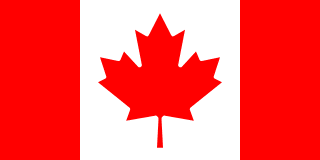
Canada
Canada
Population: UN WPP 2024, revision 1, projection for 1 July 2026. Sources and methodology.
Geography and territory
Canada is the second-largest country in the world by total area, spanning 9,984,670 square kilometers from the Atlantic Ocean in the east to the Pacific Ocean in the west, and from its border with the United States in the south to the Arctic Ocean in the far north. It possesses the longest coastline of any nation on Earth, running to roughly 243,000 kilometers, and it shares with the United States the longest land border between any two countries.
Canadian territory displays enormous geographic diversity. The Canadian Rockies dominate the west with peaks rising above 4,000 meters, while the Canadian Shield, an ancient Precambrian rock formation, covers much of the country’s center and east with boreal forest, lakes, and rivers. The prairie provinces of Alberta, Saskatchewan, and Manitoba make up one of the great agricultural regions of the world. Farther north, the landscape gives way to Arctic tundra and the islands of the Canadian Arctic Archipelago. Mount Logan, at 5,959 meters, is the country’s highest peak and the tallest mountain in Canada by a considerable margin.
Canada contains more lakes than every other country in the world combined, including portions of the Great Lakes it shares with the United States. Climate varies widely, from the temperate oceanic conditions along the coast of British Columbia to the extreme continental winters of the interior, where temperatures can plunge to minus 40 degrees Celsius or lower. The Arctic regions of the far north experience the midnight sun in summer and polar night in winter.
Canada is organized into ten provinces and three territories, each with its own distinct landscape and character, from the maritime fishing communities of the Atlantic provinces to the wheat fields of the prairies and the rugged fjords of the Pacific coast. Vast boreal forest covers much of the interior, supporting a timber industry alongside populations of black bears, wolves, and lynx, while the country’s network of national and provincial parks protects some of the most pristine wilderness remaining anywhere on the continent.
History
Indigenous peoples, including the First Nations, the Inuit, and the Metis, inhabited the land that is now Canada for thousands of years before European contact. Norse voyagers briefly reached Newfoundland around the year 1000, but sustained European exploration began with John Cabot in 1497 and Jacques Cartier in 1534. France and Britain went on to establish rival colonies that competed for control of the territory over the following centuries.
The British conquest of New France after the Seven Years’ War in 1763 marked a turning point. The Constitution Act of 1867 united the provinces of Ontario, Quebec, Nova Scotia, and New Brunswick into the Dominion of Canada, a federal state under the British Crown. The young country expanded steadily westward with the addition of Manitoba, British Columbia, Prince Edward Island, and the prairie provinces, and Newfoundland joined as the last province in 1949.
Canada achieved full legislative sovereignty with the Statute of Westminster in 1931, though the final patriation of its constitution did not occur until 1982, under Prime Minister Pierre Trudeau. Since then the country has forged a distinct national identity built on official multiculturalism, English-French bilingualism, and a strong commitment to international peacekeeping. Canada is a founding member of NATO, the United Nations, and the G7.
The twentieth century also brought difficult reckonings, including the government’s historical treatment of Indigenous peoples through the residential school system, a legacy that Canada has more recently worked to acknowledge and address through truth and reconciliation efforts. As a constitutional monarchy, Canada retains the British monarch as head of state, represented domestically by a governor general, while day-to-day governance rests with an elected prime minister and Parliament in Ottawa.
Culture and society
Canadian culture is shaped by an official policy of multiculturalism, adopted in 1971, that formally recognizes and celebrates the country’s ethnic and cultural diversity. That philosophy has helped make cities such as Toronto, Vancouver, and Montreal deeply cosmopolitan places where communities from around the world coexist. The parallel presence of Anglophone and Francophone culture, with Quebec serving as the heartland of French-Canadian identity, adds a further distinctive layer to the national mosaic.
Indigenous art has enjoyed a significant renaissance in recent decades, with growing recognition of the artistic traditions of the First Nations, the Inuit, and the Metis. In literature, Canada has produced internationally celebrated figures such as Margaret Atwood, Nobel laureate Alice Munro, Leonard Cohen, and Michael Ondaatje. The Montreal International Jazz Festival, the Toronto International Film Festival, and Cirque du Soleil are cultural institutions with a truly global reach.
Ice hockey is far more than a sport in Canada; it is a national passion that unites the country through its long winters. Teams such as the Maple Leafs, the Canadiens, and the Oilers are woven into the identity of their home cities. Canada is further defined by its universal health care system, its strong record on human rights, and its long tradition of welcoming refugees, all of which contribute to a society widely seen as tolerant and progressive.
Economy
Canada has one of the world’s strongest economies, with gross domestic product exceeding 2 trillion dollars. Its economic model combines abundant natural resources with an advanced services sector and a competitive manufacturing base. The country is among the world’s largest oil producers, thanks in large part to the oil sands of Alberta, and it is also a global leader in hydroelectric power generation.
The natural resources sector spans gold, potash, uranium, and diamond mining, alongside a substantial forestry and fishing industry. Canadian agriculture is highly productive, with major exports of wheat, canola, pulses, and meat. The technology corridor stretching between Toronto and Waterloo, sometimes called Canada’s Silicon Valley, hosts a growing ecosystem of artificial intelligence, fintech, and clean-technology companies.
International trade is central to the Canadian economy, with the United States as its dominant trading partner within the framework of the trade agreement linking Canada, the United States, and Mexico. Canada’s banking and financial sector is known for its stability, having weathered the 2008 global financial crisis with notable resilience. Vancouver and Toronto regularly rank among the cities with the highest quality of life in the world.
Canada’s labor market benefits from a highly educated workforce and a steady inflow of skilled immigrants, who play an important role in offsetting an aging domestic population and sustaining growth across sectors from health care to technology. Provincial economies vary considerably: Alberta relies heavily on energy, Ontario and Quebec anchor the country’s manufacturing and financial base, and British Columbia draws strength from trade with Asia-Pacific markets, tourism, and its film and technology industries.
Food and cuisine
Canadian cuisine reflects the country’s cultural diversity, drawing on traditions ranging from the French cooking of Quebec to Indigenous influences and the contributions of immigrant communities. Poutine, which originated in Quebec, is arguably the country’s most iconic dish: french fries topped with cheese curds and hot gravy, a beloved comfort food that has crossed borders and is constantly reinvented in gourmet variations.
Maple syrup is a national symbol, with Quebec producing the large majority of the world’s supply. It is used not only as a topping for pancakes and waffles but also in candies, sauces, marinades, and even craft beer. The springtime tradition of the sugar shack, where freshly made syrup is poured over snow, is a quintessentially Canadian experience.
Other specialties include tourtière, a traditional Quebec meat pie; smoked salmon from British Columbia; bison meat from the prairies; Indigenous bannock, a type of fried bread; beavertails, a fried pastry shaped like its namesake; and Nanaimo bars. The contemporary dining scenes of Toronto, Montreal, and Vancouver grow more sophisticated by the year, with restaurants blending global techniques with top-quality local ingredients.
Tourism and landmarks
Canada offers a travel experience dominated by natural landscapes of overwhelming scale. The Canadian Rockies, encompassing the national parks of Banff, Jasper, Yoho, and Kootenay, feature turquoise lakes such as Lake Louise and Moraine Lake, ancient glaciers, and wildlife including grizzly bears, moose, and caribou. Niagara Falls, on the border with the United States, draws millions of visitors every year.
Canadian cities combine modernity with charm. Toronto impresses with the CN Tower and its vibrant multicultural energy, Montreal captivates with Old Montreal, its festivals, and its French joie de vivre, and Vancouver dazzles set between mountains and ocean. Quebec City, with its Château Frontenac and its walled historic core, a UNESCO World Heritage Site, transports visitors to a distinctly European atmosphere on North American soil.
Northern Canada offers experiences found almost nowhere else, including the aurora borealis over Yellowknife, polar bear watching in Churchill, Manitoba, and cruising among Arctic fjords. Vancouver Island, the Atlantic coastline of Nova Scotia with its landmark Peggy’s Cove, the extreme tides of the Bay of Fundy, and Gros Morne National Park in Newfoundland complete a natural tourism offering with few rivals anywhere in the world.
Fun facts about Canada
- Canada holds roughly one-fifth of the world’s fresh water supply, spread across its countless lakes and rivers.
- The border between Canada and the United States, at 8,891 kilometers, is the longest international border in the world and remains largely unfortified.
- Alert, on Ellesmere Island, is the northernmost permanently inhabited settlement on Earth, located only about 817 kilometers from the North Pole.
- The name Canada comes from the Iroquoian word kanata, meaning village or settlement.
- Canada has more lakes than every other country in the world combined, with over two million lakes covering roughly nine percent of its total land area.
Canada in numbers
Latest World Bank and UNDP observations, each with its own year. “World median” is the middle value among the countries that report the same indicator; “#” ranks from the highest value.
Population since 1960
Canada had 17.9 million people in 1960 and 41.7 million in 2025 — 2.3 times as many.
People
82.9% of people live in towns and cities (world median 63.4%). 15.0% are under 15 and 20.3% are 65 or older — one of the oldest age structures in the world. Women have 1.25 children on average, below the replacement level of about 2.1 needed to keep a population stable in the long run without migration.
Economy
The economy grew by 1.7% in real terms in 2025. Consumer prices rose by 2.1% in 2025. Services make up the largest share of output (64.1% of GDP); agriculture contributes 1.9%.
Development and environment
UNDP rates human development in Canada as very high, with an index of 0.939 in 2023 (rank 16 of 193). 94.4% of people use the internet and 100.0% have access to electricity. Forest covers 42.0% of the land (world median 32.8%).
Sources: World Bank, World Development Indicators (CC BY 4.0), most recent observation from 2015 onward; UNDP Human Development Report 2025. Retrieved 2026-10-10. Sector shares need not add up to 100% because taxes and subsidies on products are excluded. Missing values are left blank rather than estimated. Sources and methodology.
Climate of Canada
Averaged across Canada, the warmest month is July (13.1 °C) and the coolest is January (−21.3 °C), a seasonal swing of 34.4 °C. The annual mean is −4.1 °C.
7 months have a national mean temperature below freezing.
About 549 mm of precipitation falls in a typical year. July is the wettest month (67 mm) and February the driest (28 mm).
Show monthly values as a table
| Month | Mean °C | Low °C | High °C | Precipitation, mm |
|---|---|---|---|---|
| January | −21.3 | −25.8 | −16.7 | 36 |
| February | −20.0 | −25.2 | −15.0 | 28 |
| March | −14.9 | −20.5 | −9.4 | 32 |
| April | −6.3 | −11.7 | −0.9 | 32 |
| May | 2.4 | −2.9 | 7.6 | 40 |
| June | 9.5 | 4.3 | 14.8 | 58 |
| July | 13.1 | 7.8 | 18.5 | 67 |
| August | 11.7 | 6.7 | 16.8 | 63 |
| September | 6.1 | 1.7 | 10.6 | 57 |
| October | −1.6 | −5.3 | 2.0 | 52 |
| November | −10.9 | −14.7 | −7.2 | 45 |
| December | −17.6 | −21.8 | −13.5 | 39 |
Figures are 1991–2020 averages across the whole land area of Canada, from the World Bank Climate Change Knowledge Portal, CRU TS 4.08 (CC BY 4.0). They are not readings from one weather station: the capital, the coast and high ground can be much warmer, cooler, wetter or drier.
Travel essentials for Canada
The practical details visitors ask about first. Traffic in Canada drives on the right, like most of the world. Mains electricity is 120 V at 60 Hz, so appliances built only for 220–240 V need a voltage converter.
- Emergency number
- 911
- Driving side
- Right
- Plug types
- Type A, Type BA: two flat parallel pins; B: two flat pins plus a round earth pin
- Voltage
- 120 V60 Hz
- Dialling code
- +1From abroad: your exit code, then 1 and the number
- Currency
- Canadian Dollar (CAD)
- Time zone
- UTC-3:30 to UTC-8Current local time in Canada
Compiled from IEC plug and voltage standards, national emergency-service listings and the UN road-traffic conventions. Emergency numbers and local coverage can change — confirm them locally on arrival. Canada's internet domain is .ca.
Where Canada ranks in the world
Each position counts only the countries with data in that ranking guide. First place is the highest value — for price levels, the most expensive. Select a card to see the full table.
- Population38th of 19640.5 millionUN projection, July 2026
- Land area4th of 1958,788,700 km²World Bank, 2023
- Population density186th of 1944.6 per km²World Bank, 2023
- GDP (nominal)9th of 187$2.27TWorld Bank, 2024, current US$
- GDP per capita18th of 187$55,016World Bank, 2024, current US$
- Life expectancy28th of 19482.1 yearsWorld Bank, 2024
- Price level13th of 165100 (US = 100)ICP 2021, household consumption
Bordering countries of Canada

Compare Canada with another country
Frequently asked questions about Canada
What is the capital of Canada?
The capital of Canada is Ottawa.
What is the population of Canada?
The UN World Population Prospects projection for Canada is 40,467,728 people (40.5 million) on 1 July 2026. National statistical offices may publish different estimates.
What language is spoken in Canada?
The official language of Canada is English and French.
What currency is used in Canada?
The currency of Canada is the Canadian Dollar (CAD).
How big is Canada?
Canada covers an area of 9,984,670 km².
What type of government does Canada have?
Canada is a federal parliamentary monarchy.
Which countries border Canada?
Canada shares land borders with United States.
What is the highest point in Canada?
The highest point in Canada is Mount Logan (5,959 m).
