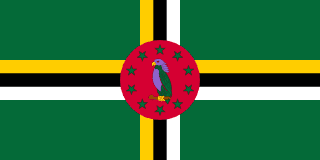
Dominica
Commonwealth of Dominica
Population: UN WPP 2024, revision 1, projection for 1 July 2026. Sources and methodology.
Geography and territory
Dominica, often called the “Nature Island” of the Caribbean, is a volcanic island covering 751 km² and home to a population of just 65,871, situated in the Lesser Antilles between the French islands of Guadeloupe to the north and Martinique to the south. Its terrain is the most rugged and mountainous of all the eastern Caribbean islands, with peaks rising sharply from the coast to Morne Diablotin, which at 1,447 meters is the country’s highest point and the second-highest summit in the Lesser Antilles.
The island’s interior is a world of pristine rainforest, rushing rivers, spectacular waterfalls, and active volcanic formations. Dominica boasts more than 365 rivers and streams, the highest concentration by area of any Caribbean island. The Boiling Lake, a flooded fumarole in a volcanic crater, is the second-largest hot lake in the world, and fumaroles, sulfurous hot springs, and active volcanic valleys throughout the island testify to its comparatively young geology and latent geothermal energy.
Dominica’s vegetation is exceptionally lush, with more than 60 percent of the island covered by primary tropical forest, an unmatched proportion in the Caribbean. This forest sustains remarkable biodiversity, including more than 170 bird species, among them the island’s two endemic parrots: the sisserou, the national bird, and the smaller jaco. Coral reefs off the island, especially along the west coast, offer world-class diving among giant sponges, seahorses, and schools of tropical fish.
Despite its tiny footprint, Dominica packs an outsized range of microclimates into its interior, from misty montane cloud forest on its highest peaks to warm, humid lowlands along the coast. Frequent, heavy rainfall in the interior feeds the island’s rivers and waterfalls year-round, while the leeward west coast, sheltered from the prevailing trade winds, tends to be considerably drier and sunnier than the windward east, a contrast that shapes both settlement patterns and agriculture across the island.
History
Dominica was the last Caribbean island to be colonized by Europeans, thanks to the fierce resistance of the Kalinago (Carib) people who inhabited it. Christopher Columbus sighted the island on a Sunday in November 1493 and named it after the Latin word for that day of the week. For more than a century, the Kalinago successfully repelled European colonization attempts, making Dominica the last Caribbean island to remain under indigenous control.
France and Britain contested Dominica throughout the eighteenth century, with the island changing hands several times before being ceded definitively to Britain in 1763. The colonial economy centered on coffee, cocoa, and sugar plantations worked by enslaved Africans. Dominica’s mountainous terrain made it difficult to establish large plantations, resulting in a higher proportion of small free landholders than on many other Caribbean islands.
Dominica gained independence from the United Kingdom on November 3, 1978, becoming a republic within the Commonwealth of Nations. A notable moment in its contemporary history came with the election of Dame Mary Eugenia Charles as prime minister in 1980, making her the first woman to head a government in the Caribbean. Dominica remains unique in the region for its surviving Kalinago community of roughly 3,000 people, who live in the Kalinago Territory on the island’s east coast and continue to preserve ancestral traditions.
Culture and society
Dominican culture is a fascinating blend of African, French, British, and Kalinago heritage that has produced a distinctive Caribbean identity. Although English is the official language, French-based Creole (Kwéyòl) is widely spoken in everyday life, a legacy of centuries of French influence that culturally links Dominica to its French-speaking island neighbors and to Saint Lucia, forming a bridge between the English- and French-speaking Caribbean.
Dominica’s Carnival, known as “Mas Domnik,” is celebrated before Lent with calypso, soca, bouyon, a homegrown musical genre that emerged in the 1990s, and the distinctive sensay characters, figures covered in leaves, cords, and cloth who represent ancestral spirits. Creole Day, held on the last Friday of October, celebrates Creole identity, with residents wearing traditional dress, speaking Kwéyòl, and honoring local food and customs.
Dominica’s Kalinago community is the last indigenous Caribbean people to retain its own territory and traditions in the Antilles. Its artisans weave baskets from natural fiber using ancestral techniques and continue to build traditional canoes. The legacy of the Maroons, escaped slaves who established free communities in the mountains, also lives on, influencing the island’s music, spiritual practices, and enduring identity of resistance.
Economy
Dominica’s economy is small, with a GDP of approximately $724 million, and has historically depended on agriculture, especially bananas, which for decades were the leading export. The loss of preferential access to the European market, combined with repeated hurricane damage, has diminished the importance of the banana sector, pushing the country toward economic diversification. Agriculture today also produces citrus, coconut, coffee, spices, and root crops for both local consumption and export.
Ecotourism has become a strategically important growth sector, drawing on the island’s extraordinary natural wealth. Dominica has positioned itself as a destination for nature and adventure tourism, attracting hikers, divers, birdwatchers, and visitors seeking its thermal springs. A bottled water industry, built on the island’s pristine natural springs, generates meaningful export revenue, and a citizenship-by-investment program has become an important source of public financing, helping the country achieve a Human Development Index of 0.761, ranked high.
Geothermal energy represents a transformative opportunity for Dominica, which aims to become the first nation in the world powered entirely by geothermal energy. A planned geothermal plant in the Roseau Valley has the potential to supply not only the island’s own electricity needs but also, via undersea cable, to export power to neighboring islands. Economic challenges include vulnerability to hurricanes, most devastatingly Hurricane Maria in 2017, and the ongoing need to modernize transport infrastructure.
Food and cuisine
Dominican cuisine is a Caribbean food tradition with strong French Creole and African influences, built around fresh, local ingredients. Mountain chicken, despite its name, is actually a giant endemic frog that was long considered the national dish, though the species is now critically endangered and its consumption tightly restricted. Callaloo soup has since emerged as the island’s signature dish: a creamy soup of dasheen (taro) leaves with coconut milk, crayfish, and spices.
Tropical root vegetables such as dasheen, yam, sweet potato, and cassava form the foundation of the Dominican diet, boiled, fried, or stewed. Bakes (fried bread), accras (saltfish fritters), titiri (tiny fried river fish), and stuffed, baked crab backs are classics of everyday Dominican cooking. Tropical fruit is abundant and varied, with mangoes, papayas, guavas, passion fruit, star fruit, and breadfruit eaten fresh or worked into sweet and savory dishes alike.
Traditional drinks include local rum punch, Kubuli beer, brewed on the island with spring water, fresh coconut water, and tropical fruit juices. Bay rum, an aromatic spirit infused with bay leaves, and bush tea, an infusion of wild medicinal herbs, reflect a deep herbal tradition on the island. Dominican cuisine as a whole reflects a philosophy of resourcefulness that connects land and sea directly to the table.
Tourism and landmarks
Morne Trois Pitons National Park, a UNESCO World Heritage Site, is Dominica’s natural crown jewel. The park protects a spectacular volcanic landscape that includes the Boiling Lake, reached via a six-hour hike through untouched rainforest, the Valley of Desolation with its sulfurous fumaroles and hot springs, the twin cascades of Trafalgar Falls, the Emerald Pool, and the Freshwater and Boeri Lakes, both set in volcanic craters.
The Waitukubuli National Trail, stretching 185 kilometers, is the longest long-distance hiking trail in the Caribbean, crossing the island from south to north through rainforest, old plantations, rural communities, and the Kalinago Territory. Diving in Dominica is exceptional: the west coast offers sites such as Champagne Reef, where bubbles of volcanic gas rise from the seafloor to create a uniquely effervescent dive, and Scotts Head, where the Caribbean Sea meets the Atlantic Ocean.
The Kalinago Territory offers visitors the chance to meet the Caribbean’s only surviving indigenous community, with demonstrations of traditional crafts, ceremonial dance, and canoe building. The Indian River, near Portsmouth, is explored by rowboat through a tunnel of tropical trees in a landscape that served as a filming location for the “Pirates of the Caribbean” franchise. The natural hot springs of Wotten Waven, with their sulfurous pools set amid tropical vegetation, offer a uniquely natural spa experience.
Fun facts about Dominica
- The Boiling Lake is the second-largest hot lake in the world, with edge temperatures reaching around 92 degrees Celsius.
- Dominica has more than 365 rivers, one for every day of the year, the densest concentration of any Caribbean island.
- The island is home to the only surviving indigenous Caribbean community, the Kalinago, numbering roughly 3,000 people.
- The sisserou parrot, Dominica’s national bird, is found nowhere else on Earth and is one of the rarest parrots in the world.
- Dominica aims to become the first country in the world powered entirely by geothermal energy.
- The island’s name comes from the Latin “dies dominica” (the Lord’s Day), after Columbus sighted it on a Sunday in November 1493.
Dominica in numbers
Latest World Bank and UNDP observations, each with its own year. “World median” is the middle value among the countries that report the same indicator; “#” ranks from the highest value.
Population since 1960
Dominica had 59,372 people in 1960 and 65,871 in 2025 — 11% more.
The population peaked at 73,083 in 1980 and has since declined.
People
74.0% of people live in towns and cities (world median 63.4%). 17.6% are under 15 and 13.2% are 65 or older — a middle-aged population. Women have 1.48 children on average, below the replacement level of about 2.1 needed to keep a population stable in the long run without migration.
Economy
The economy grew by 3.1% in real terms in 2025. Consumer prices rose by 2.5% in 2025. Services make up the largest share of output (57.2% of GDP); agriculture contributes 12.1%.
Development and environment
UNDP rates human development in Dominica as high, with an index of 0.761 in 2023 (rank 98 of 193). 82.0% of people use the internet and 100.0% have access to electricity. Forest covers 76.4% of the land (world median 32.8%).
Sources: World Bank, World Development Indicators (CC BY 4.0), most recent observation from 2015 onward; UNDP Human Development Report 2025. Retrieved 2026-10-10. Sector shares need not add up to 100% because taxes and subsidies on products are excluded. Missing values are left blank rather than estimated. Sources and methodology.
Climate of Dominica
Averaged across Dominica, the mean temperature stays between 25.4 °C (January) and 28.1 °C (August) — a swing of only 2.7 °C, so seasons are marked by rainfall rather than by heat.
About 2,166 mm of precipitation falls in a typical year. November is the wettest month (308 mm) and February the driest (86 mm). The wettest stretch is September to November, with 39% of the year's total.
Show monthly values as a table
| Month | Mean °C | Low °C | High °C | Precipitation, mm |
|---|---|---|---|---|
| January | 25.4 | 21.8 | 29.1 | 137 |
| February | 25.4 | 21.5 | 29.3 | 86 |
| March | 25.9 | 21.8 | 30.1 | 98 |
| April | 26.5 | 22.5 | 30.7 | 112 |
| May | 27.5 | 23.6 | 31.4 | 166 |
| June | 27.9 | 24.1 | 31.7 | 177 |
| July | 27.9 | 24.3 | 31.6 | 123 |
| August | 28.1 | 24.4 | 31.9 | 236 |
| September | 28.0 | 24.2 | 31.9 | 255 |
| October | 27.3 | 23.5 | 31.0 | 271 |
| November | 26.9 | 23.1 | 30.7 | 308 |
| December | 26.1 | 22.3 | 29.9 | 198 |
Figures are 1991–2020 averages across the whole land area of Dominica, from the World Bank Climate Change Knowledge Portal, CRU TS 4.08 (CC BY 4.0). They are not readings from one weather station: the capital, the coast and high ground can be much warmer, cooler, wetter or drier.
Travel essentials for Dominica
The practical details visitors ask about first. Traffic in Dominica drives on the left, one of 54 of the 196 countries profiled here that do — see the full list. Mains electricity is 230 V at 50 Hz, so devices made only for 110–120 V (common in North America) need a converter unless they are dual-voltage — most phone and laptop chargers are.
- Emergency number
- 999
- Driving side
- Left
- Plug types
- Type D, Type GD: three large round pins in a triangle; G: three rectangular pins (British)
- Voltage
- 230 V50 Hz
- Dialling code
- +1-767From abroad: your exit code, then 1-767 and the number
- Currency
- East Caribbean Dollar (XCD)
- Time zone
- AST (UTC-4)Current local time in Dominica
Compiled from IEC plug and voltage standards, national emergency-service listings and the UN road-traffic conventions. Emergency numbers and local coverage can change — confirm them locally on arrival. Dominica's internet domain is .dm.
Where Dominica ranks in the world
Each position counts only the countries with data in that ranking guide. First place is the highest value — for price levels, the most expensive. Select a card to see the full table.
- Population187th of 19665,511UN projection, July 2026
- Land area174th of 195750 km²World Bank, 2023
- Population density96th of 19489 per km²World Bank, 2023
- GDP (nominal)180th of 187$689MWorld Bank, 2024, current US$
- GDP per capita79th of 187$10,405World Bank, 2024, current US$
- Life expectancy123rd of 19471.3 yearsWorld Bank, 2024
- Price level48th of 16560 (US = 100)ICP 2021, household consumption
Compare Dominica with another country
Frequently asked questions about Dominica
What is the capital of Dominica?
The capital of Dominica is Roseau.
What is the population of Dominica?
The UN World Population Prospects projection for Dominica is 65,511 people (65,511) on 1 July 2026. National statistical offices may publish different estimates.
What language is spoken in Dominica?
The official language of Dominica is English.
What currency is used in Dominica?
The currency of Dominica is the East Caribbean Dollar (XCD).
How big is Dominica?
Dominica covers an area of 751 km².
What type of government does Dominica have?
Dominica is a parliamentary republic.
What is the highest point in Dominica?
The highest point in Dominica is Morne Diablotin (1,447 m).


